Classical Era Persians & Greeks
star
star
star
star
star
Last updated almost 7 years ago
10 Nsɛmmisa
1
1
1

1

1
1
1


1
1
1
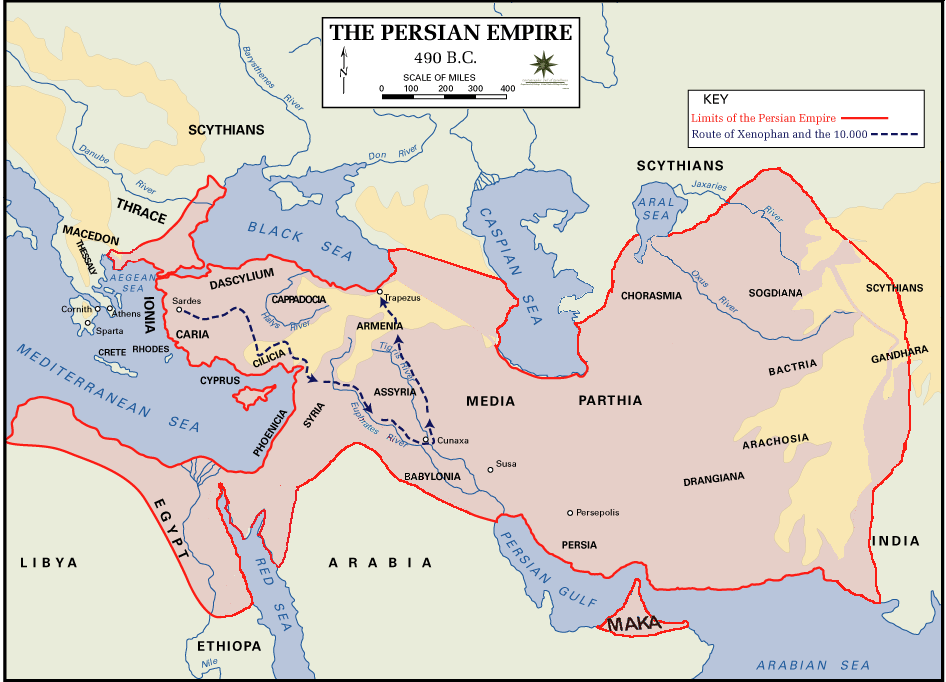
The Medes and the Persians lived in the Middle East on the Iranian Plateau between the Caspian Sea and the Persian Gulf. In 550 B.C., the Persian ruler Cyrus the Great united these two peoples. He then expanded Persia's territory westward by conquering Lydia and Babylonia and eastward by conquering territories as far as the Indus River.
BUILDING AN EMPIRE
PERSIAN EMPIRE, 500 B.C. The son of Cyrus the Great conquered Egypt. The next ruler, Darius, unified the Persian Empire by building a network of public roads, introducing a uniform set of weights and measures, and establishing several capital cities. Persia was now larger than any empire up to that time. It stretched more than 3,000 miles from the NIle to the Indus River. The Persians controlled this vast empire by dividing it into provinces, each ruled by a group of local officials loyal to the Persian king. The Persians collected tribute (a payment made as a sign of submission) and taxes from these provinces. Although they paid tribute, the provinces profited from extensive trade throughout the Persian Empire.
What two people shaped the growth and organization of the Persian Empire?
RELIGION
At first, the Persians worshipped many gods. In 570 B.C., a new religion was introduced into the Persian Empire by the religious leader Zoroaster. Zoroastrianism taught that there were only two gods: the god of truth, light, and goodness, and the god of darkness and evil. The whole universe was the battleground between these two forces. Those who led good lives would eventually go to Heaven, while those who were evil would be doomed to a fiery Hell.
What were the main teachings of Zoroastrianism?
PERSIA'S ACCOMPLISHMENTS
From the Lydians, Persians learned the practice of using coins. Under the rule of Darius, citizens were encouraged to use coins to purchase goods. Persians were now able to move from bartering to a “money economy.” The use of coins greatly improved trade throughout the empire. The Persians also built hundreds of miles of roads using gravel and stone. The Persian Royal Road was 1,500 miles long with more than 100 stations holding fresh horses. These roads fostered a feeling of unity within the Persian Empire. Darius established a postal service to make communication easier within the Persian Empire. Couriers carried letters over the new roads.
What were the most significant Persian achievements?
THE GEOGRAPHY OF GREECE
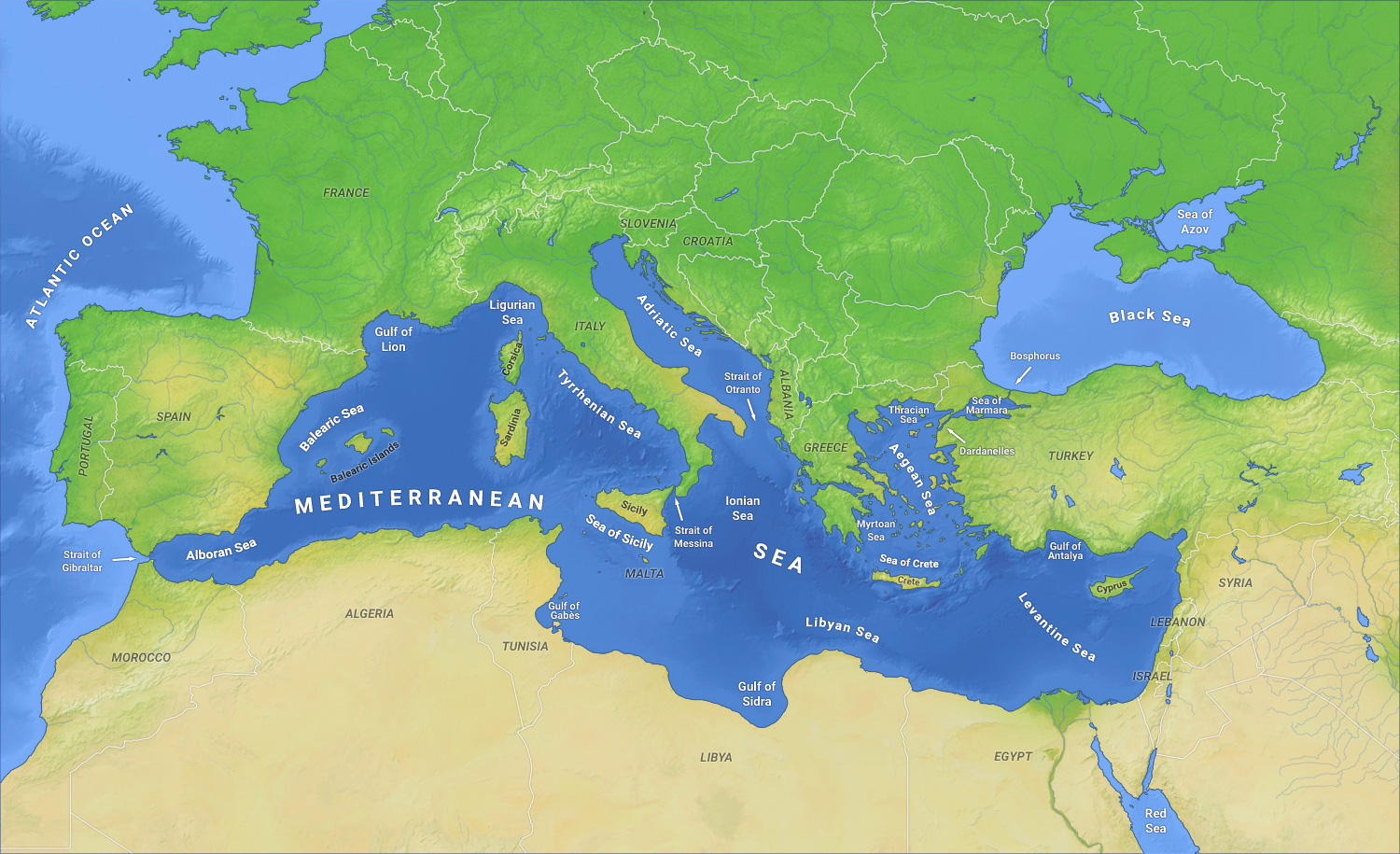
Ancient Greece consisted of a large mountainous peninsula, the islands of the Aegean Sea, and the coast of present-day Turkey. Because of Greece's hilly terrain, farming the land was quite difficult. Much of Greece is stony and suitable only for pasture. Its people came to rely on trade. Greeks produced wine, olive oil, and pottery, which they traded with other peoples of the Mediterranean. Through these contacts, the Greeks became expo to key achievements of other ancient civilizations, such as the alphabet, a way of writing, invented by the Phoenicians. In an alphabet, each sound has its own symbol or letter.
EARLY GREEK CIVILIZATION
The Minoan civilization flourished on the island of Crete from 2000 B.C. to 1400 B.C. The Minoans developed their own form of writing, used copper and bronze, and were skilled at shipbuilding. The Minoan civilization mysteriously collapsed around 1400 B.C. A second ancient Greek civilization thrived around Mycenae (on mainland Greece) and the coast of Asia Minor from 1400 to 1200 B.C. At this time the Dorians, a group of people from northern Greece, conquered the Greek mainland.
What can you foreshadow will happen when the society of the Minoans then the Mycenaean civilization collapses, what will people do to survive?
THE RISE OF GREEK CITY-STATES
Mountains and the sea caused Greek centers of population to be cut off from one another. As a result, separate city-states developed, each with its own form of government and system of laws. In Greek, the word for city-state was polis.
At the same time, Greeks also shared in a common culture, based on their language, religious beliefs, traditions, and close economic ties. For example, all Greeks believed in the same gods and goddesses, including Zeus, Athena, and Apollo, who were believed to live on Mount Olympus. Their myths, such as the story of Jason and the Golden Fleece, and the siege of Troy, still thrill us today. Citizens from all the Greek city-states participated every four years in Olympic games in honor of Zeus and the other Greek gods. The Greeks believed their gods were pleased by strong, graceful human bodies.
What were the common characteristics of Greek city-states?
MILITARY SPARTA
One of the most important city-states was Sparta. Sparta is located in the southern part of Greece, called the Peloponnesus. In 725 B.C., the Spartans conquered their neighbors. They forced these people, known as helots (Slaves), to farm for them. The Spartans constantly had to use force to maintain control over the helots. Due to this threat, life in Sparta was organized around military needs. Individualism and new ideas were discouraged. Strict obedience and self-discipline were highly valued. For example, if a newborn Spartan baby was found to be unhealthy, it was left on a hillside to die.
How and why did Sparta become a militaristic society ?
DEMOCRATIC ATHENS
The city-state of Athens developed a unique system of government. Every citizen could participate in government directly by voting on issues to be decided by the city-state. The main governing body of Athens was the Citizens Assembly. It was open to all citizens, but only the first 5,000 or so citizens who gathered could attend its meetings. It met regularly, at least ten times a year. The assembly directed foreign policy and made laws for Athens. Citizens who served on a council, jury, or as magistrates, were paid a reimbursement for lost earnings. This ensured that even poor citizens could participate in government.
This type of government, which Athens was the first to introduce, is known as a democracy. In a democracy, ordinary citizens participate in government, either or by elected representatives. Democracy means "rule of the people” in Greek. In Athens, only a minority of city residents were actually citizens. Women, foreigners, and slaves were not citizens and could not participate in government.
APPLYING WHAT YOU HAVE LEARNED
How was Athenian democracy different from American democracy today?
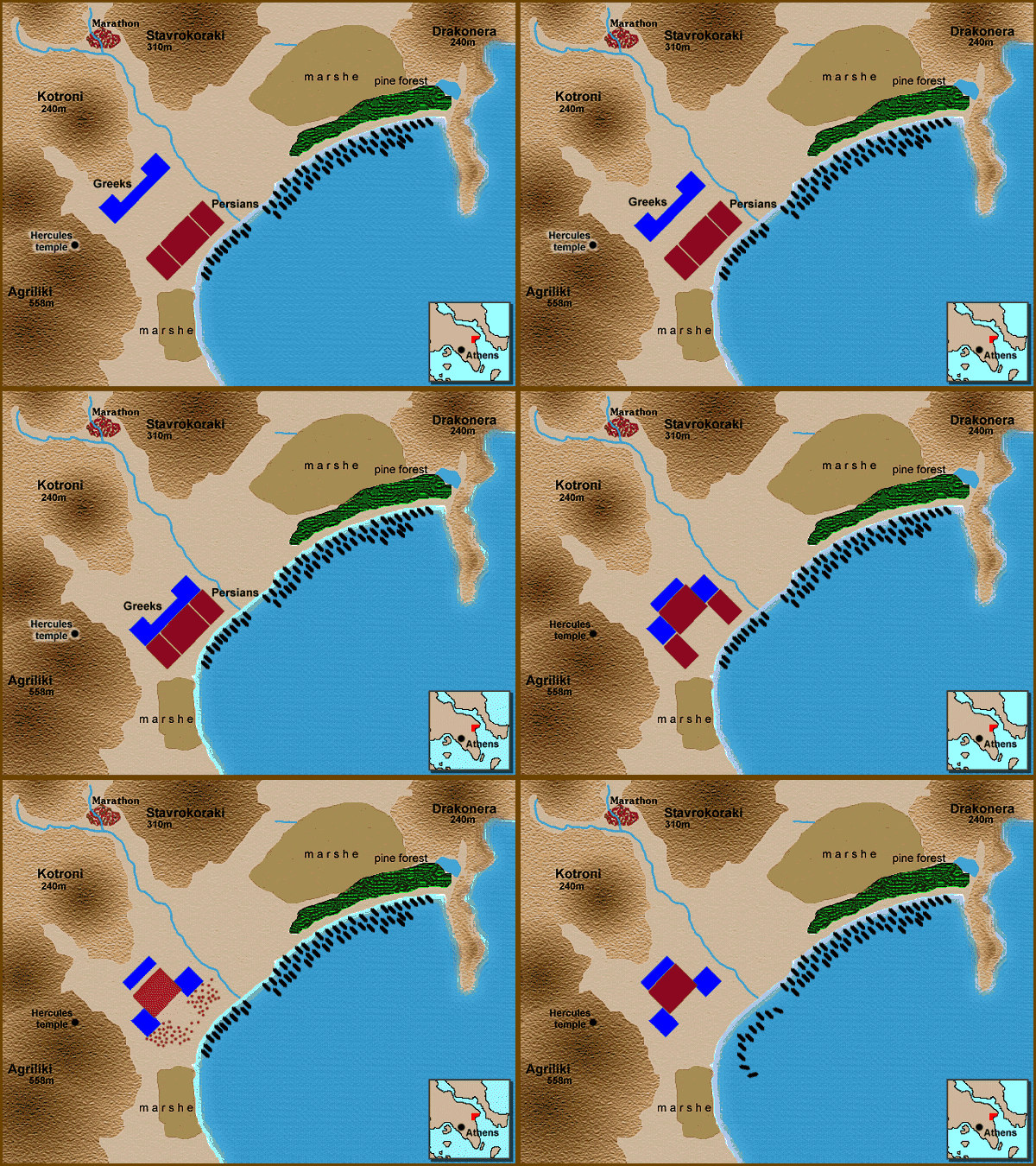
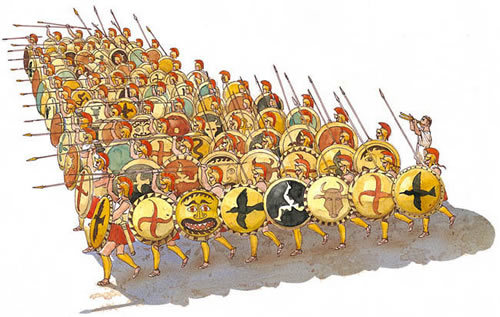
In the 500s BC, Persia had conquered Greek cities in Ionia, in what is now Turkey. When the Ionians rebelled, they asked their fellow Greeks for help. The Persians quickly put down the revolt, then attacked the Greek mainland, especially Athens, in revenge. In 490 BC, thousands of Persians landed near a town called Marathon. The Athenians surprised the Persians and defeated them. The Athenians fought in a phalanx (FAY-lanks), a tight rectangle formation in which soldiers held long spears out ahead of their shields.
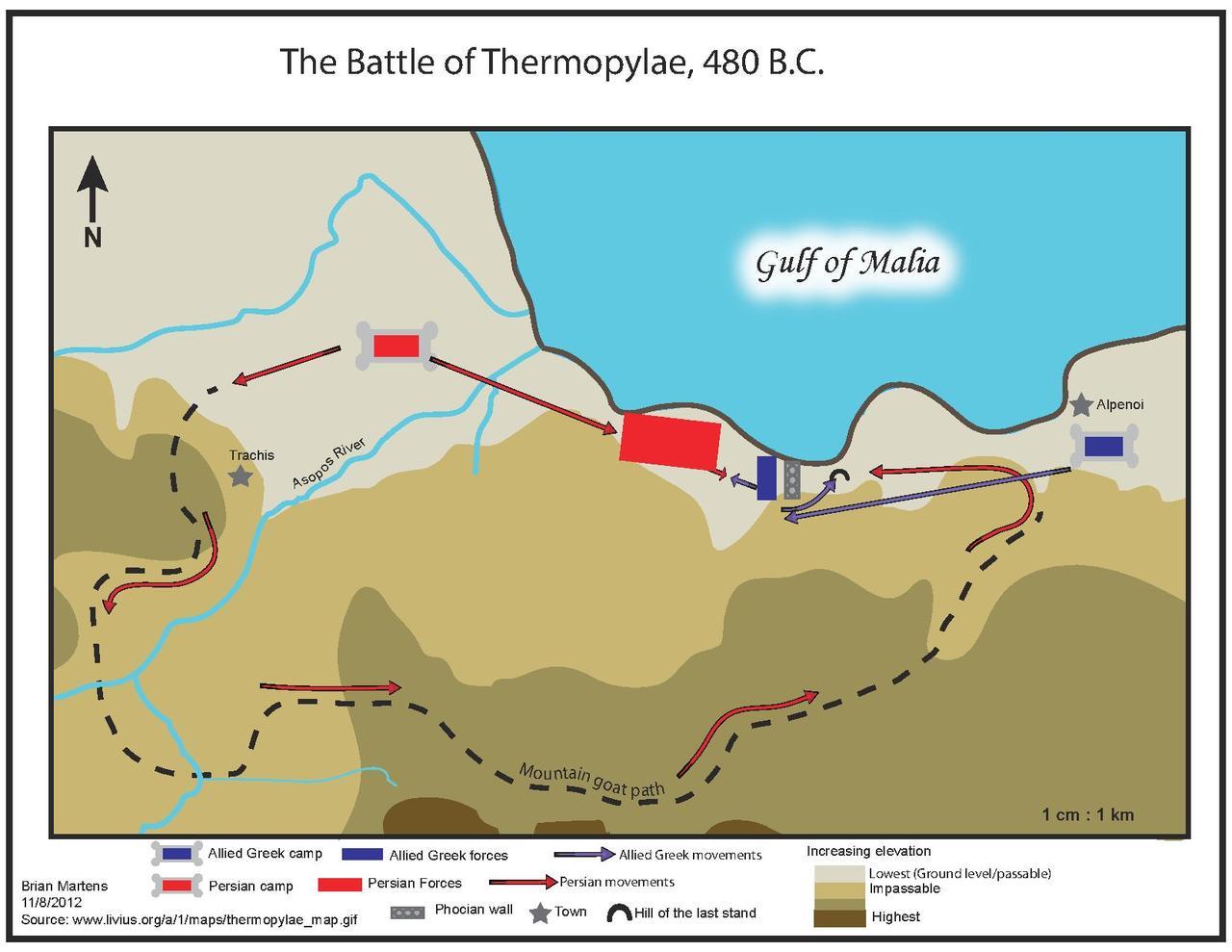
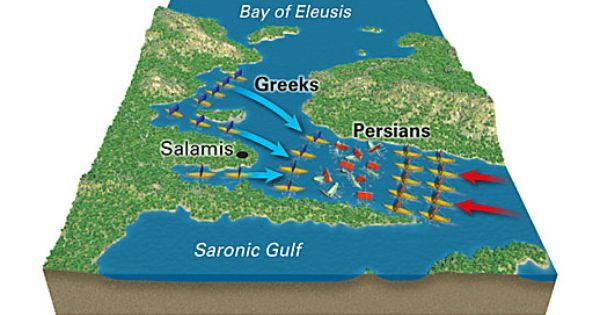
The Persians planned revenge. In 480 BC, a huge army entered Greece. The city-states worked together. The Persian were stalled on their invastion by the Battle of Thermopylae. However, the Persian did advance and burned Athens, but the entire Greek fleet was in the nearby Bay of Salamis. The Greeks destroyed Persian supply ships that tried to reach the mainland, stranding the Persia army. In 479, Sparta led the Greek army to victory in the Persian Wars.
In the 5th century B.C., the Persian Empire tried to conquer the Greek city-states. Surprisingly, the Persians failed. After the war, the Greeks enjoyed a “Golden Age.” Pericles championed democracy. He collected revenues from other city-states to rebuild Athens. Art, literature, and philosophy all flourished.
Philosophy.
The Greeks believed that human reason was powerful enough to understand the world and to solve its problems. A series of three philosophers — Socrates, Plato and Aristotle asked important questions and tried to find answers. Socrates questioned his students about the use of moral terms: What is goodness? What is morality and justice? In 399 B.C., Socrates' enemies persuaded the Athenian Council to condemn Socrates to death for corrupting the young. In the excerpt on the next page, written by his most famous student Plato, Socrates tells his students why he refuses to escape from prison and death:
Read the following document from Plato's Crito. Then answer the two questions that follow.
"Look at it this way. Suppose that while we are preparing to run away, the laws and Constitution of Athens were to come and ask: 'Now Socrates, what are you doing? Can you deny that by this act you are thinking of, you will have the power to destroy us, the laws, and the whole state as well? Do you imagine that a city can continue to exist and not be turned upside down, if the legal judgments pronounced have no force, and are destroyed by private persons? You have 70 years in which you could have left the country if you were not satisfied with us or felt the agreements were unfair. And now, after all of this, are you not going to stand by your agreement?'"
— Plato, Crito
What reasons does Socrates give to his students for his refusal to escape?
Would you have agreed with his reasoning? Explain your answer.
Plato took Socrates’ method of questioning a step further. He concluded that values like goodness, beauty, and justice actually exist as independent ideas that are more real than the changing "appearances” we see in daily life. In The Republic, Plato described an ideal city-state ruled by philosopher kings. He defined justice as the rule of reason over appetite (our desires). His most famous student, Aristotle, was less concerned with abstract concepts. Aristotle collected and classified things from animals to city-state constitutions, and studied their relationships.
Read the following document from Aristotle's Politics. Then answer the question on the next page.
"We have next to consider how many forms of government there are, and what they are ... The true forms of government are those in which the one, the few or the many govern with a view to the common interest ... Of forms of government in which one rules, we call that kingship; that in which more than one but not many rule, we call aristocracy: when citizens at large administer the state for the common interest, the government is called [a democracy]."
– Aristotle, Politics
What three types of government does Aristotle identify? How do they differ?
Art and Architecture. Greek sculptors and architects tried to design statues and buildings with ideal proportions. Greek buildings and statues were not the white marble you see in museums today. They were brightly painted with bold colors. The Parthenon, a splendid marble temple with beautiful columns, was constructed on the hill known as the Acropolis. Inside was a giant statue of Athena, patron goddess of the city.
The Parthenon
Science and Mathematics. Geographers like Eratosthenes showed the Earth was round and calculated its circumference. He also created a device (sieve) for discovering all prime numbers up to any limit. Archimedes is considered one of the greatest mathematicians of antiquity. His contributions in geometry revolutionized the subject. He was also a practical man who studied levers and pulleys, measured volume and density, designed catapults, and invented a large screw-like device inside a cylinder to pump water.
Music and Literature. Greeks listened to choral music and instruments like the stringed lyre and flute, and developed musical scales. Greek historians, like Herodotus and Thucydides, told the story of the past. Greek playwrights, like Sophocles, completed the first known comedies and tragedies. Greeks watched these plays in giant open-air amphitheaters.
A rivalry soon developed between Athens and Sparta. The Athenians had used their power to force some other city-states to pay them taxes. Sparta finally declared war on Athens in the Peloponnesian Wars. After 30 years of fighting, Sparta emerged as the victor. The Peloponnesian Wars greatly weakened the Greek city-states. The economic costs were considerable. Poverty became widespread, and Athens was completely devastated. Sparta emerged as the leading city-state.
In ancient Greece, men generally regarded women as inferior and excluded them from public life. Women managed the home, subject to their husband's will. Spartan women enjoyed greater status than elsewhere in Greece. Many were given an education and physical training. Athenian women could own clothing and slaves, but they could not own land or enter into contracts.
In 338 B.C., the King of Macedonia, an area located north of Greece, brought all the Greek city-states under his control. His son, Alexander the Great, was taught by Aristotle, Alexander went on to conquer most of the Mediterranean world, including Egypt and Persia. His conquests took him as far as the Indus River Valley. However, Alexander died at a young age, and his empire quickly fell apart.
Wherever Alexander went, he spread Greek culture. His followers also absorbed Eastern ideas and styles. Hellenistic culture refers to the fusion of Greek culture with the cultures of the Middle East and India. The greatest Hellenistic achievements were in mathematics and science. Alexander's construction of a great library at Alexandria encouraged scholarship. Hellenistic sculptors aimed at more emotional representations in art. Statues of the heads of ordinary people with their imperfections became common during this period. Many wealthy members of society, including women, began to study philosophy and to attend lectures of popular philosophers.
Democracy. Athens developed the first known democratic government – a system in which citizens take part in governing.
Science and Mathematics. Key advances were made by Pythagoras, Euclid, and Archimedes — mathematicians who are still studied today.
Literature and History. The Greeks developed the first known dramas and historical writings.
Art and Architecture. The Greek ideal of beauty was based on harmony and proportion. In architecture, the Greeks built temples with beautiful columns, such as the Parthenon in Athens.
Philosophy. Greeks believed in the dignity of the individual. Through the use of reason, they believed humans could understand how the world worked. Greek philosophers included Socrates, Plato, and Aristotle.

