BIO VIRTUAL DAY OCT 3, 2018

Last updated about 7 years ago
20 questions
Please watch and take notes of the video below. Then, answer the questions that follow each video in complete sentences (or by multiple choice). Please submit your answers when you are done. Please get this done by 3:45 PM TODAY.
1

COVALENT BONDS USUALLY OCCUR BETWEEN

5

Give 3 examples of molecules that have covalent bonds

1

A nonpolar covalent bond means

2

Which molecules are covalently bonded?

1

Ionic bonds usually form between

1

A cation has a

Please watch the following video and answer the worksheet questions ON THE DO... follow instructions to answer the worksheet questions and place the answers on the column to the right of the worksheet. BE SPECIFIC WITH YOUR ANSWERS (include the number of the question in your answer).
12

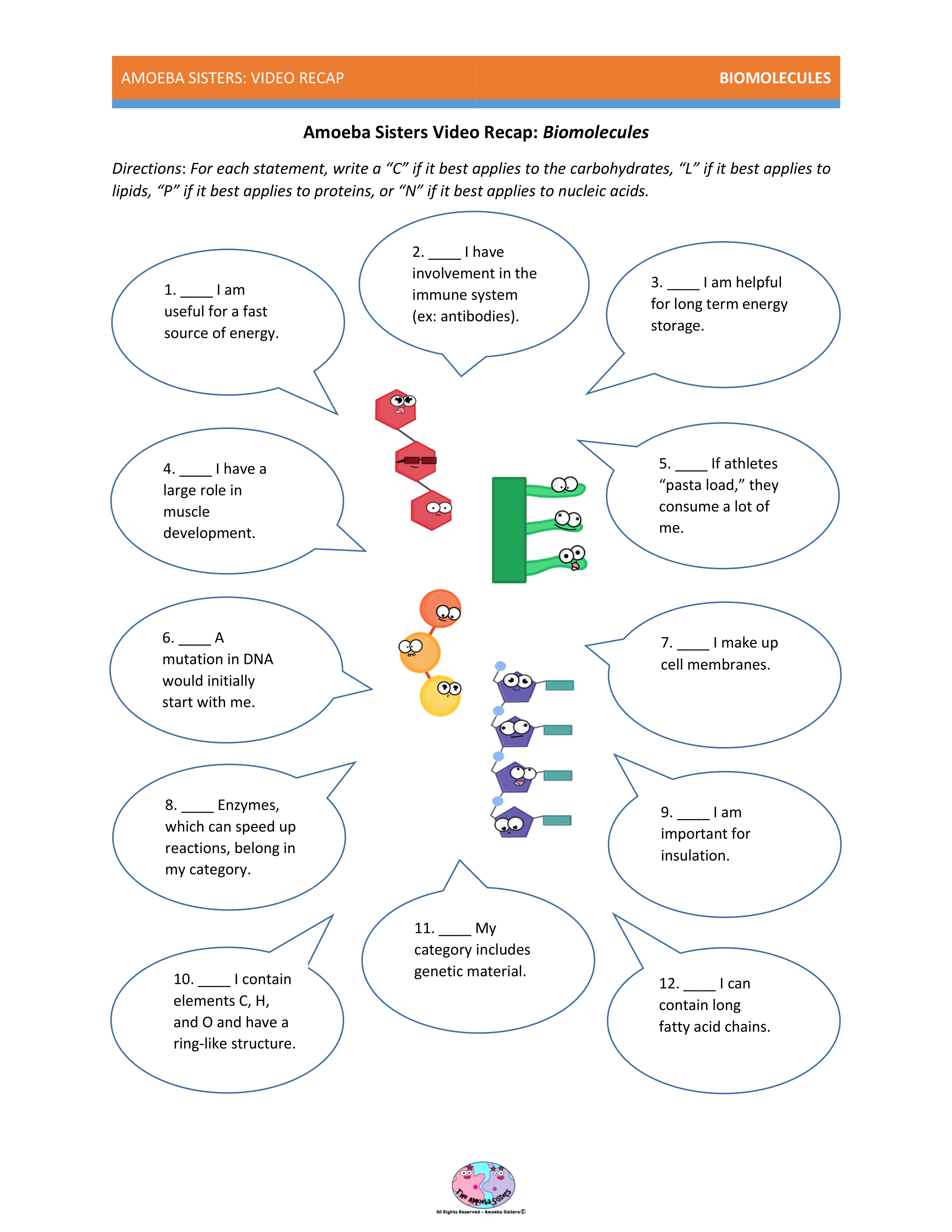
Please # this section from 1 to 12 and answer the talk bubble statements following the instructions on the worksheet to the left.
6

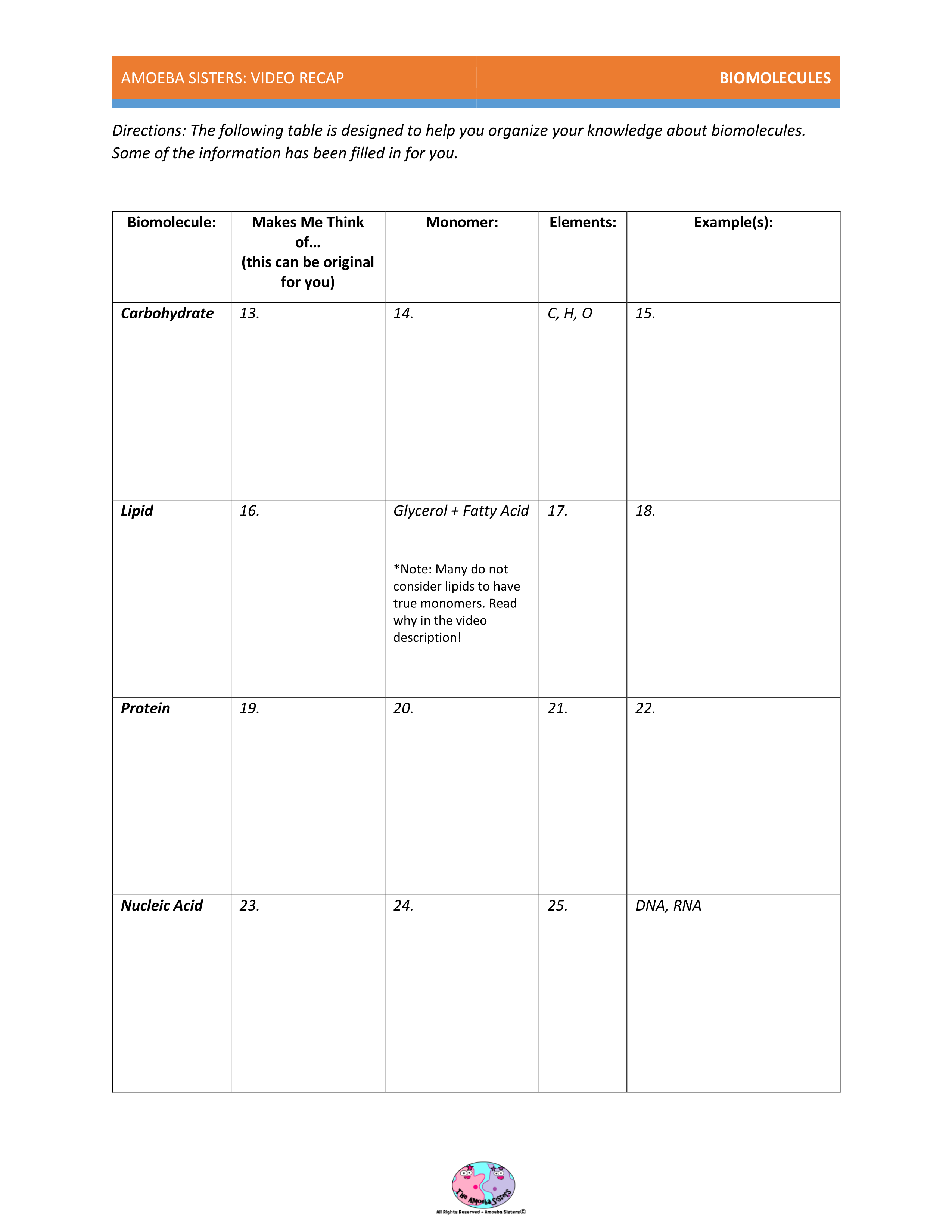
Please answer # 13, 14 and 15 here

6

Please answer #16, 17 and 18 here

8

Please answer #19, 20,21 and 22 here.

6

Please answer 23, 24, and 25 here.

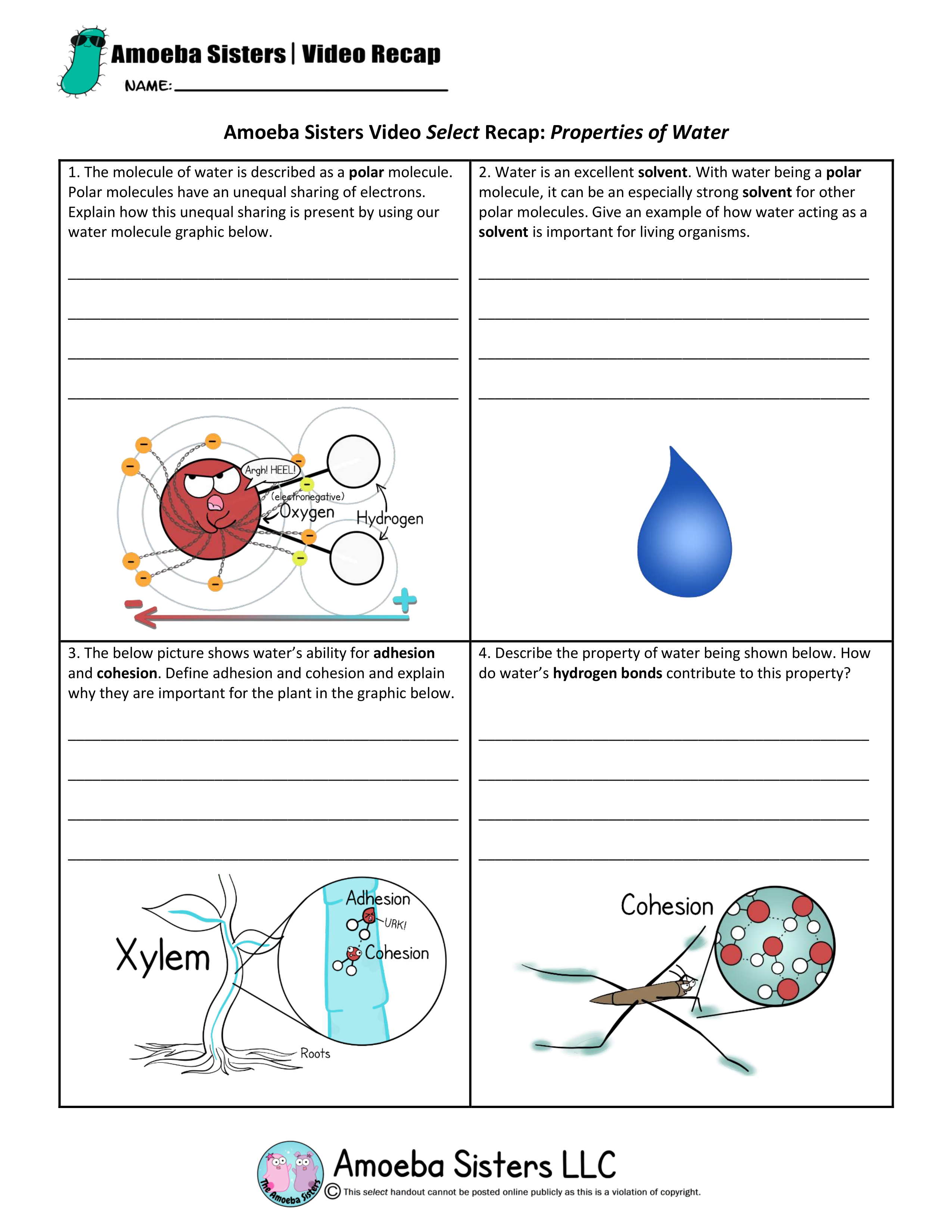
Watch the video on the properties of water and answer the questions below.
5

Explain how this unequal sharing of electrons is presented by using the water graphic in the square.

5

Give an example of how water acting as a solvent is important for living things (use complete sentences).

10

Define adhesion and cohesion and why they are important to the plant in the graphic to the left.

5

Describe the property of water being shown in the picture labeled cohesion to the left. How is water's hydrogen bonds contribute to this property?

3

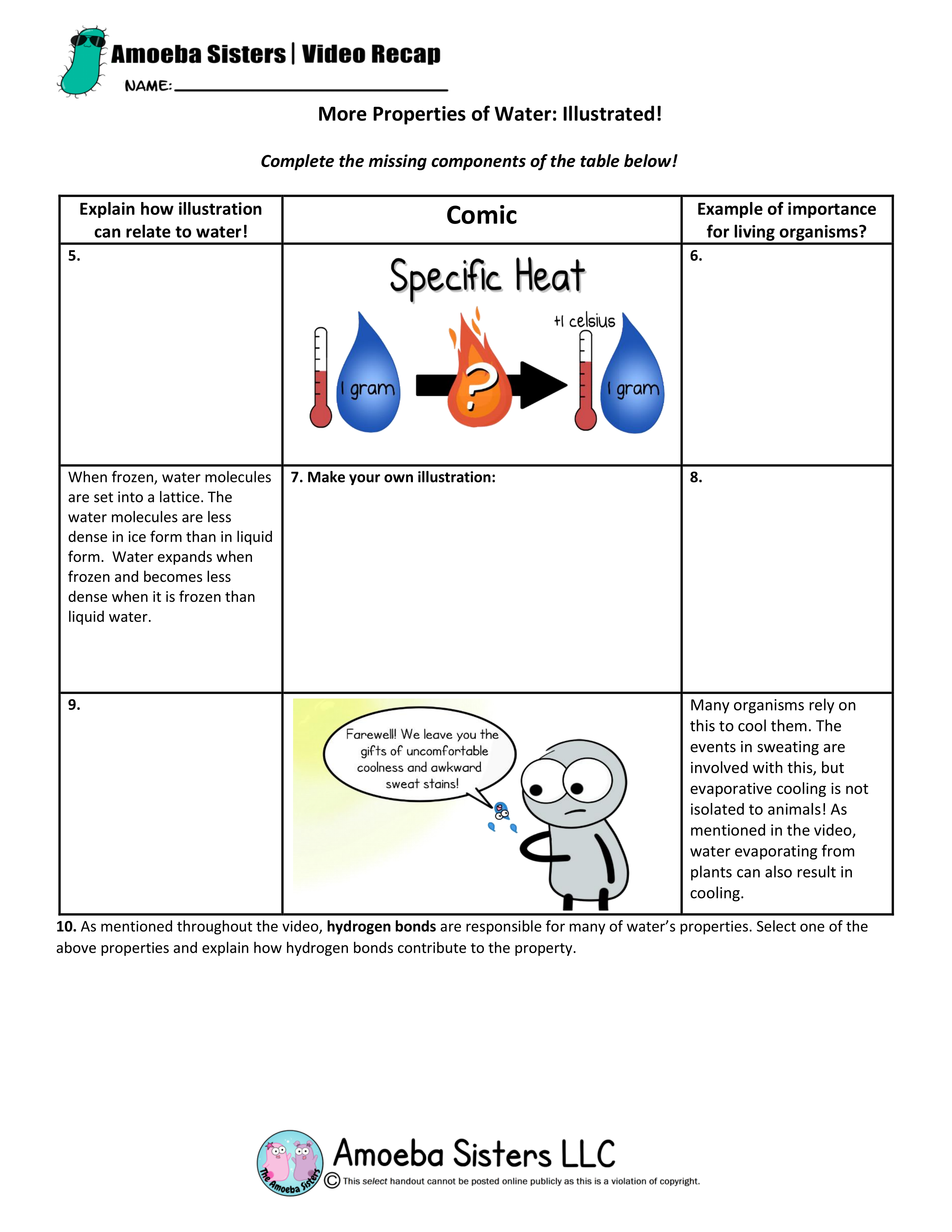
Explain specific heat according to the video (and other resources).

3

Explain the importance of specifc heat for living organisms explained in the example from the video.

3

Explain why floating ice is important to living things.

3

Explain how evaporative qualities of water helps with cooling off organisms like humans.

5

Use one of the properties listed above and explain how hydrogen bonds contribute to the property.