Log in
Sign up for FREE
arrow_back
Library

10/2-10/3 DOL WG 3B

star
star
star
star
star
Last updated over 7 years ago
5 questions
1
describe the physical processes that affect the environments of regions, including weather, tectonic forces, erosion, and soil-building processes; and
1
describe the physical processes that affect the environments of regions, including weather, tectonic forces, erosion, and soil-building processes; and
1
describe the physical processes that affect the environments of regions, including weather, tectonic forces, erosion, and soil-building processes; and
1
describe the physical processes that affect the environments of regions, including weather, tectonic forces, erosion, and soil-building processes; and
1
describe the physical processes that affect the environments of regions, including weather, tectonic forces, erosion, and soil-building processes; and
Question 1
1.

Question 2
2.

Question 3
3.

Question 4
4.

Question 5
5.

The most frequent cause of major earthquakes is the
gravitational pull of the moon as it orbits Earth
change in underwater currents
occurence of landslides
pressure from tectonic plate movement
Which best explains why we experience four seasons on Earth
the distance between Earth and the Sun
the gravitational pull of the moon
the effect of tectonic plate movement on Earth's oceans
the tilt of the Earth on its axis as it revolves around the Sun
A farmer sees an area he beieves will be good for farming because of its rich topsoil. Which process contributed most to forming this rich topsoil?
sand storms
folding of Earth's crust
ocean currents
decaying plant life
Erosion is the process by which rock, sand and soil are broken down and carried away
True
False
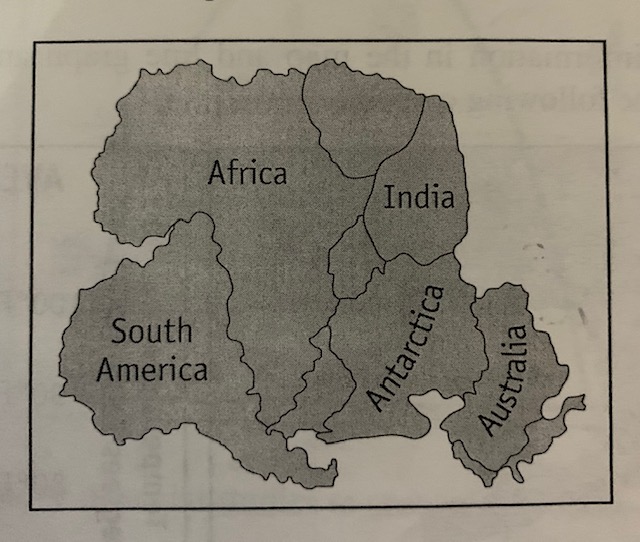
The diagram illustrates an important scientific theory. What does that theory claim?
Earth's continents are slowly moving together
There is little difference in the climatic patterns found on most continents
Millions of years ago, Earth's continents formed on giant continent
Earth moves around the Sun