Adapted from the http://plateboundary.rice.edu/home.html activity
Pre-Lab Questions
1 point
1
Question 1
1.
What is a plate boundary?
1 point
1
Question 2
2.
The study of earthquakes is called ____________________.
1 point
1
Question 3
3.
The study of volcanic activity is called ____________________.
1 point
1
Question 4
4.
The study of how old the Earth's crust is called ____________________.
1 point
1
Question 5
5.
The mapping of geologic features on Earth is called ____________________.
1 point
1
Question 6
6.
Geography encompasses all of the following: (select all that apply)
1 point
1
Question 7
7.
Plates that move away from eachother are called________________.
1 point
1
Question 8
8.
Plates that move towoard from eachother are called________________.
1 point
1
Question 9
9.
Plates that slide past eachother are called________________.
Lab Instructions:
Carefully analyze the maps below to answer the questions. To get full credit, you must write in full sentences and include multiple pieces of evidence to support your answer (patterns & comparison questions).
1 point
1
Question 10
10.
What does this map show?
1 point
1
Question 11
11.
What do the colors on the map represent?
1 point
1
Question 12
12.
Red dots mean ____________________ earthquakes, and blue dots mean________________ earthquakes.
5 points
5
Question 13
13.
Draw ORANGE lines to show where there are patterns of earthquakes. Then mark an X in 2-3 places where there are large concentration of earthquakes.
1 point
1
Question 14
14.
There is a correlation between plate boundaries and earthquakes.
3 points
3
Question 15
15.
What patterns do you notice when comparing the seismology (earthquake) map and plate boundary map?
1 point
1
Question 16
16.
What does this map show?
1 point
1
Question 17
17.
What do the red dots on the map represent?
3 points
3
Question 18
18.
Draw GREEN lines to show where there are patterns of volcanoes.
1 point
1
Question 19
19.
There is a correlation between ____________________ and ________________. (Select all that apply)
3 points
3
Question 20
20.
What patterns do you notice when comparing the volcanology map and plate boundary map?
3 points
3
Question 21
21.
What patterns do you notice when comparing the seismology (earthquake) map and volcanology map?
1 point
1
Question 22
22.
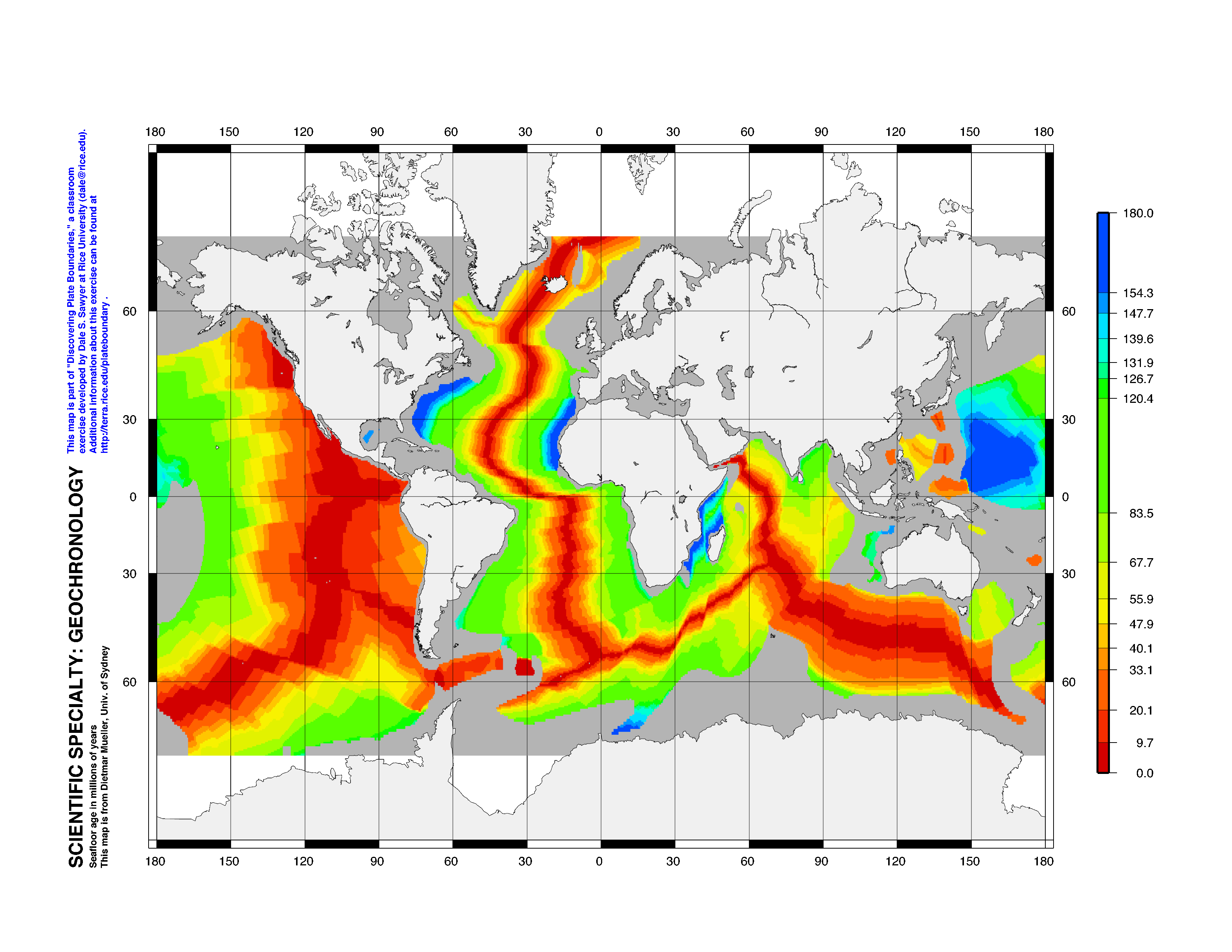
What does this map show and in what units?
1 point
1
Question 23
23.
The red areas on the map show ________________ crust, while the blue & green areas show _________________ crust.
5 points
5
Question 24
24.
Draw YELLOW lines to show where new crust is being created. Then draw BLACK arrows to show which way the Earth's crust is moving in these areas to create new crust.
1 point
1
Question 25
25.
The areas where new crust is created is called: (select all that apply)
3 points
3
Question 26
26.
What patterns do you notice when comparing the geochronolgy map and volcanology map?
1 point
1
Question 27
27.
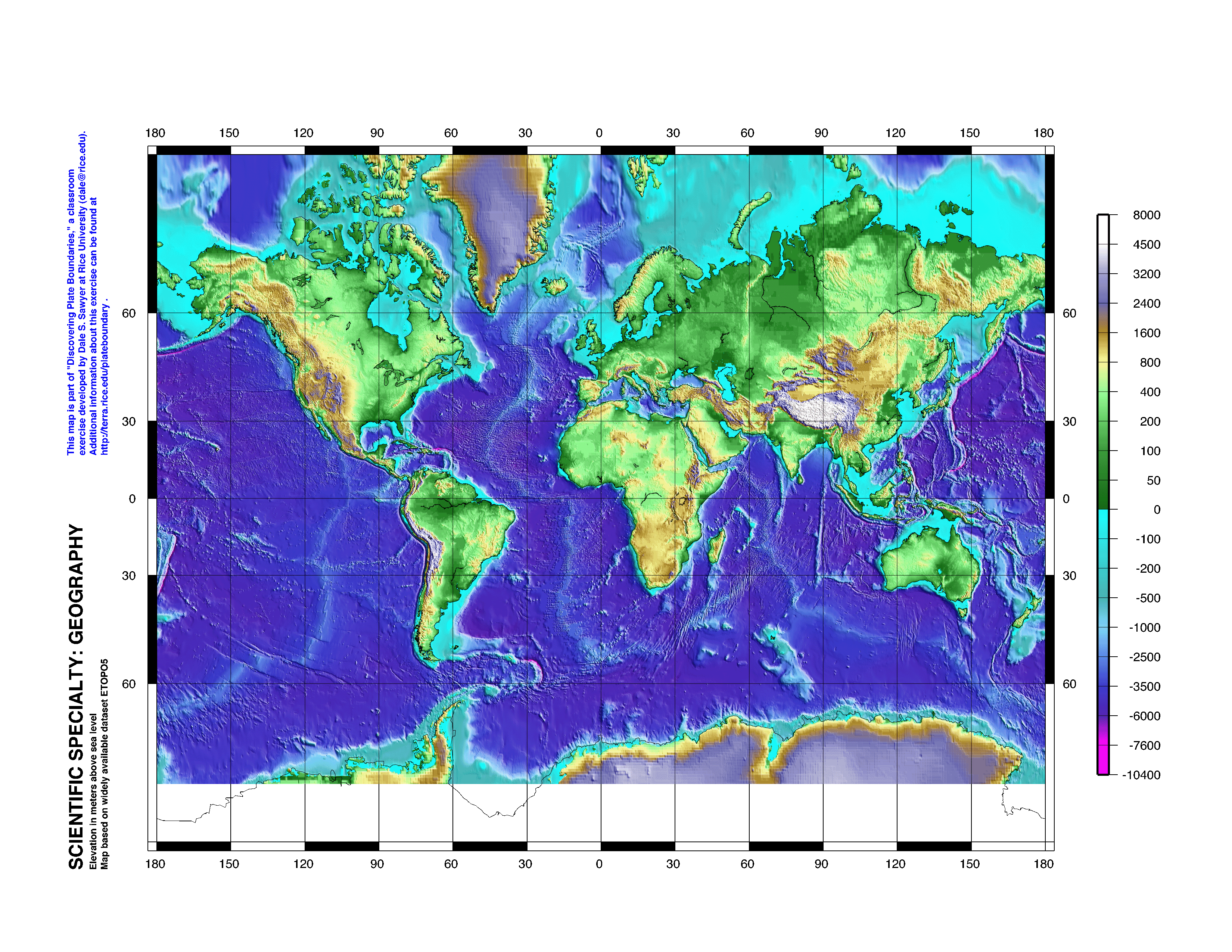
What does this map show and in what units?
1 point
1
Question 28
28.
The areas that are dark blue & white show lower elevations.
1 point
1
Question 29
29.
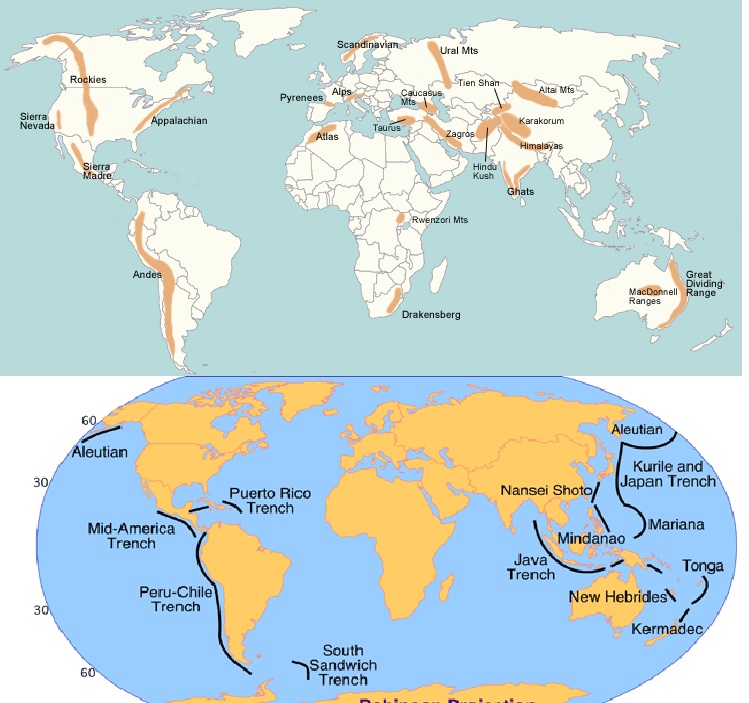
From the map, the lowest places on the Earth are: (select all that apply)
1 point
1
Question 30
30.
Areas with higher elevation will have/ be
5 points
5
Question 31
31.
Circle the areas with the highest elevation with LIGHT BLUE. Then mark an X in ORANGE for the areas with the lowest elevation.
3 points
3
Question 32
32.
Compare the geochronolgy map and the geography map. What patterns do you see?
1 point
1
Question 33
33.
Compare these maps to the Geography map above. What patterns do you notice? How are all three maps related?
Post Lab Questions (worth 21 points alone):
15 points
15
Question 34
34.
Use your completed maps above to label the following:
1. Label in BLACK one convergent plate boundary, one divergent plate boundary, and one transform plate boundary. Use arrows to show the direction the plates are moving.
2. In ORANGE circle two areas with the most earthquakes.
3. In YELLOW draw three lines that show large chains of volcanoes.
4. In GREEN mark an X for three sea-floor spreading centers.
5. In PINK mark an X for the mountain range with the highest elevation.
6. In LIGHT BLUE mark an X for two of the deepest trenches.
6 points
6
Question 35
35.
Write a CER to answer this question: What is the relationship between earthquakes, volcanoes, sea-floor spreading, and geographic landforms?