Genetic Diseases of the Metabolism- Distance Learning
star
star
star
star
star
Last updated about 6 years ago
16 Nsɛmmisa
1
1
1
1
1
1
1
1
1
1
1
1
1
1
1
1
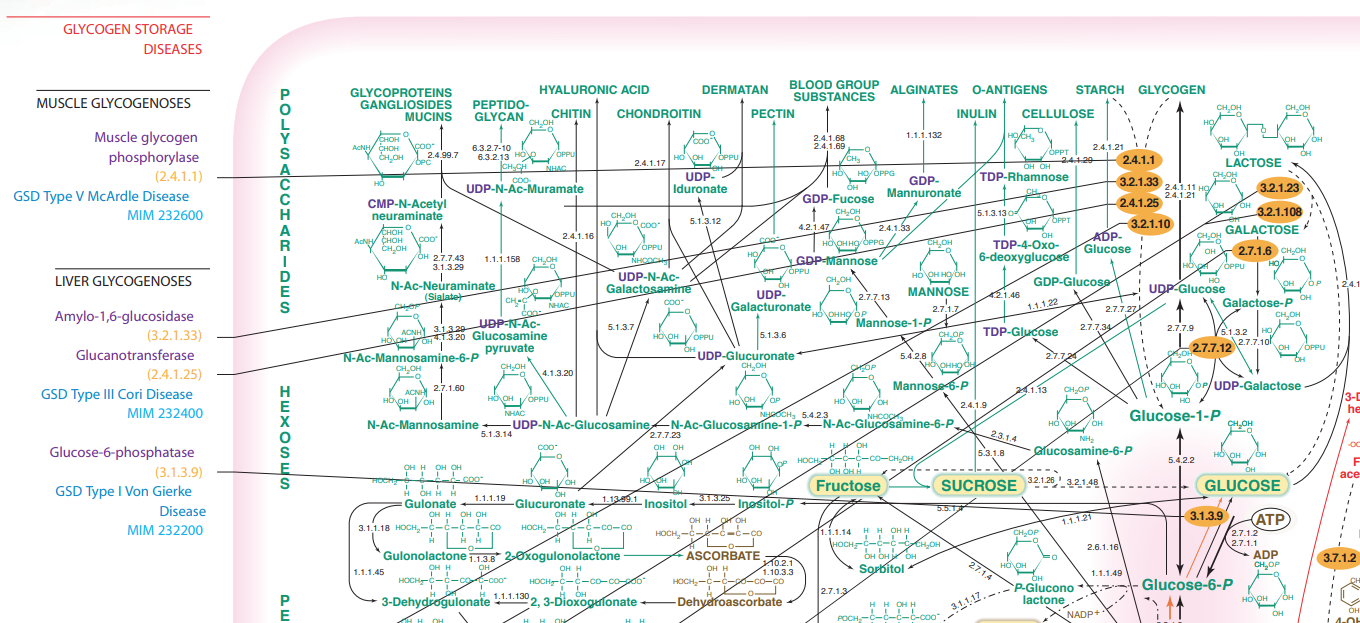
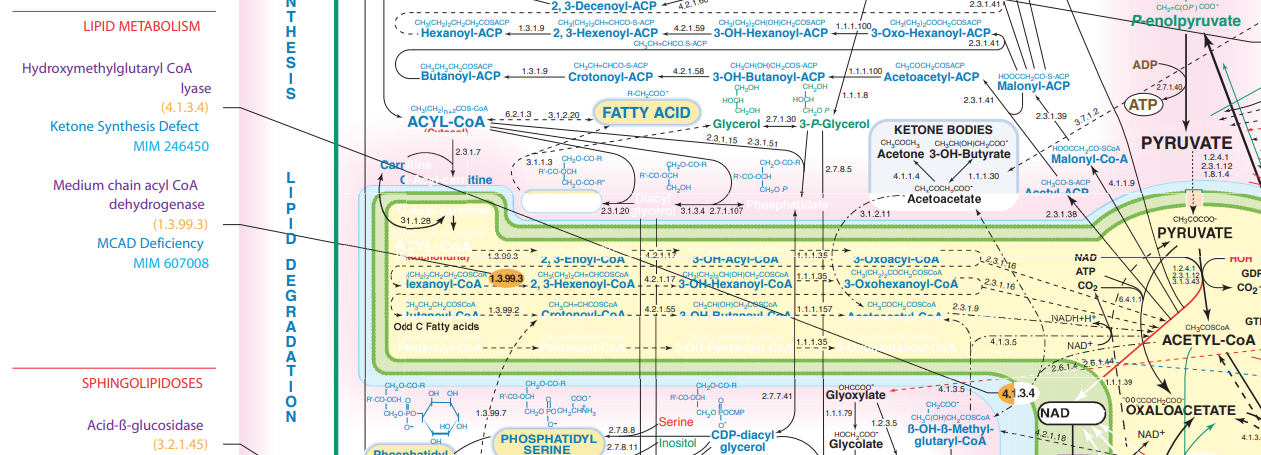
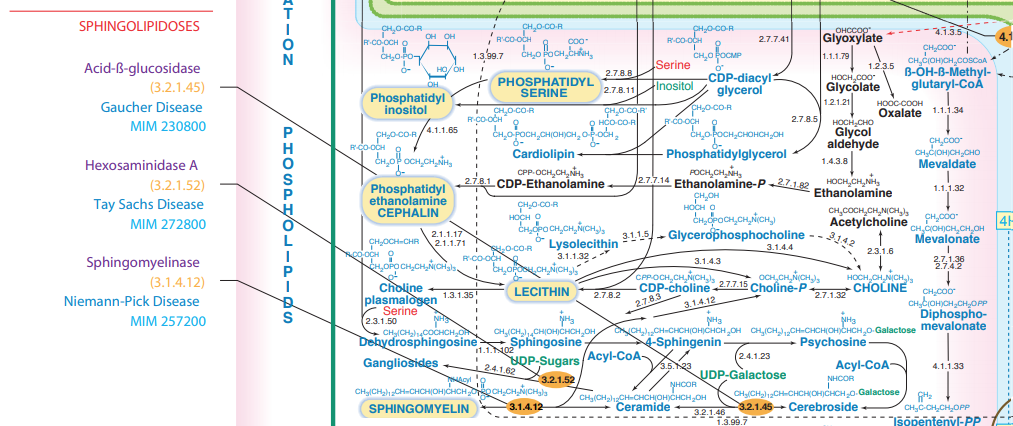
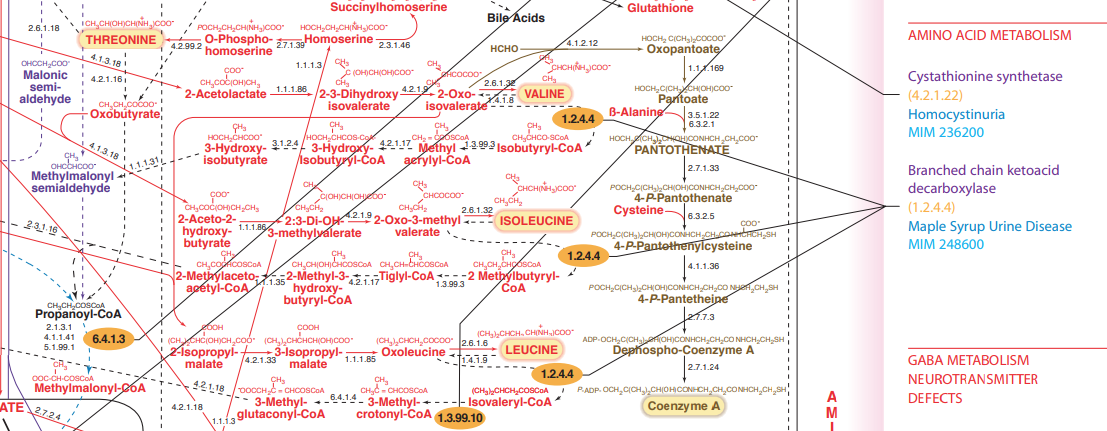
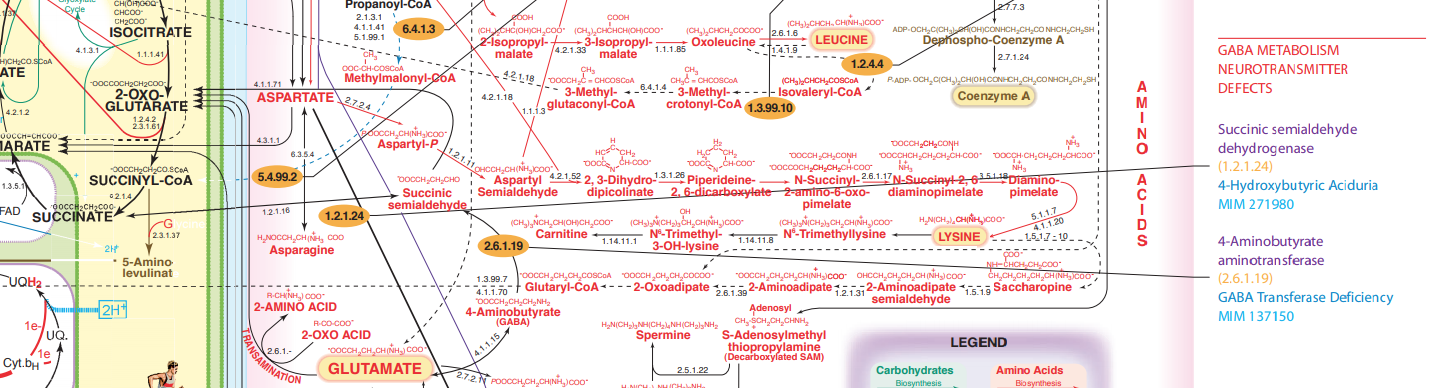
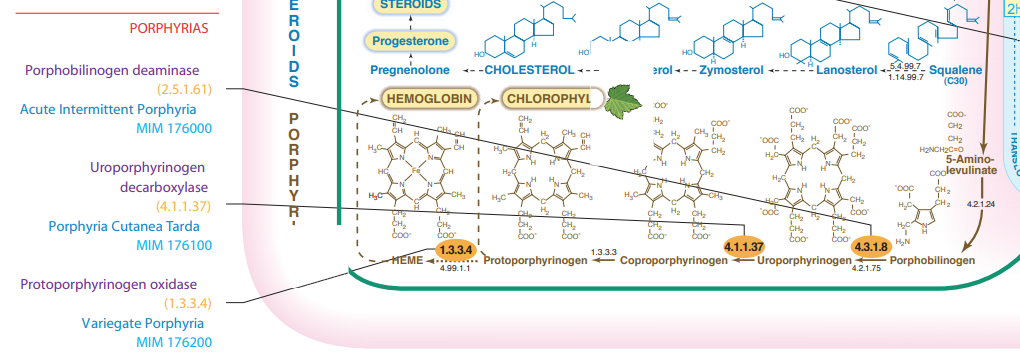
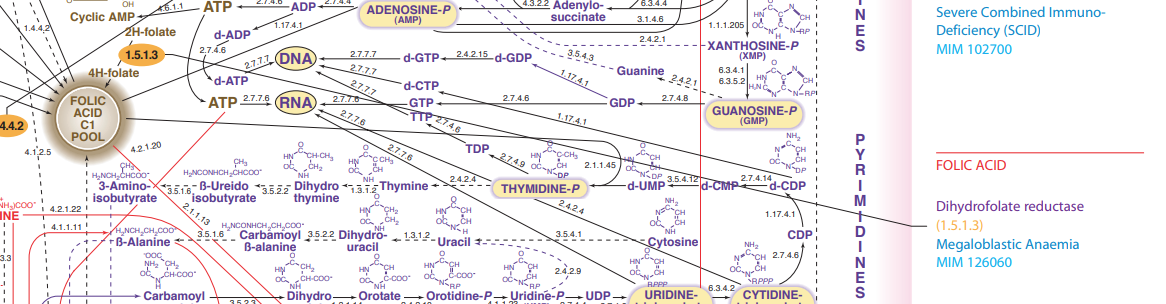
For this assignment, you only need to answer ONE of the questions between #1 and #15. Everyone also needs to answer the last question (#16). Your teacher will asign you a number between 1 and 15. With your partner, use the image with that question number to locate your assigned metabolic disease. Using the internet, research that disorder and include the following information:
1. The name of the enzyme associated with this disease
2. The substrate for that enzyme
3. The product of that enzyme
4. The symptoms of the disorder
5. Explanation of how either a) how a build up of the substrate causes the symptoms or b) how a lack of the product causes the symptoms
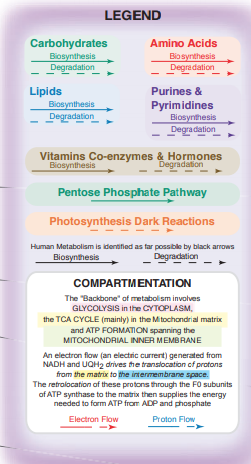
Look at the above Legend for the images. Notice that solid lines are for synthesis (making larger molecules) and dotted lines are for degradation (breaking apart large molecules to make smaller ones). Also notice that different colors represent different types of biomolecules. To see the entire "Inborn Errors of the Metabolism Enzyme Chart" all in one image (warning, it is very large and the print is small), go to this link: https://drive.google.com/file/d/0B43cknUMDoOSUkVtWEJaSGhBV0U/view
For GSD Type V McArdle Disease answer the following questions:
The name of the enzyme associated with this disease (in purple text on the image)
The substrate for that enzyme
The product of that enzyme
The symptoms of the disorder
Explanation of either:
how a build up of the substrate causes the symptoms or
how a lack of the product causes the symptoms
For GSD Type I Von Gierke Disease answer the following questions:
The name of the enzyme associated with this disease (in purple text on the image)
The substrate for that enzyme
The product of that enzyme
The symptoms of the disorder
Explanation of either:
how a build up of the substrate causes the symptoms or
how a lack of the product causes the symptoms
For GSD Type III Cori Disease answer the following questions:
The name of the enzyme associated with this disease (in purple text on the image)
The substrate for that enzyme
The product of that enzyme
The symptoms of the disorder
Explanation of either:
how a build up of the substrate causes the symptoms or
how a lack of the product causes the symptoms
For Ketone Synthesis Defect answer the following questions:
The name of the enzyme associated with this disease (in purple text on the image)
The substrate(s) for that enzyme
The product(s) of that enzyme
The symptoms of the disorder
Explanation of either: a) how a build up of the substrate causes the symptoms and/or b) how a lack of the product causes the symptoms
For MCAD Deficiency answer the following questions:
The name of the enzyme associated with this disease (in purple text on the image)
The substrate(s) for that enzyme
The product(s) of that enzyme
The symptoms of the disorder
Explanation of either: a) how a build up of the substrate causes the symptoms and/or b) how a lack of the product causes the symptoms
For Gaucher Disease answer the following questions:
The name of the enzyme associated with this disease (in purple text on the image)
The substrate(s) for that enzyme
The product(s) of that enzyme
The symptoms of the disorder
Explanation of either: a) how a build up of the substrate causes the symptoms and/or b) how a lack of the product causes the symptoms
For Tay-Sachs Disease answer the following questions:
The name of the enzyme associated with this disease (in purple text on the image)
The substrate(s) for that enzyme
The product(s) of that enzyme
The symptoms of the disorder
Explanation of either: a) how a build up of the substrate causes the symptoms and/or b) how a lack of the product causes the symptoms
For Niemann Pick Disease answer the following questions:
The name of the enzyme associated with this disease (in purple text on the image)
The substrate(s) for that enzyme
The product(s) of that enzyme
The symptoms of the disorder
Explanation of either: a) how a build up of the substrate causes the symptoms and/or b) how a lack of the product causes the symptoms
For Maple Syrup Urine Disease answer the following questions:
The name of the enzyme associated with this disease (in purple text on the image)
The substrate(s) for that enzyme
The product(s) of that enzyme
The symptoms of the disorder
Explanation of either: a) how a build up of the substrate causes the symptoms and/or b) how a lack of the product causes the symptoms
For 4-Hydroxybutyric Aciduria answer the following questions:
The name of the enzyme associated with this disease (in purple text on the image)
The substrate(s) for that enzyme
The product(s) of that enzyme
The symptoms of the disorder
Explanation of either: a) how a build up of the substrate causes the symptoms and/or b) how a lack of the product causes the symptoms
For GABA Transferase Deficiency answer the following questions:
The name of the enzyme associated with this disease (in purple text on the image)
The substrate(s) for that enzyme
The product(s) of that enzyme
The symptoms of the disorder
Explanation of either: a) how a build up of the substrate causes the symptoms and/or b) how a lack of the product causes the symptoms
For Acute Intermittent Porphyria answer the following questions:
The name of the enzyme associated with this disease (in purple text on the image)
The substrate(s) for that enzyme
The product(s) of that enzyme
The symptoms of the disorder
Explanation of either: a) how a build up of the substrate causes the symptoms and/or b) how a lack of the product causes the symptoms
For Porphyria Cutanea Tarda answer the following questions:
The name of the enzyme associated with this disease (in purple text on the image)
The substrate(s) for that enzyme
The product(s) of that enzyme
The symptoms of the disorder
Explanation of either: a) how a build up of the substrate causes the symptoms and/or b) how a lack of the product causes the symptoms
For Variegate Porphyria answer the following questions:
The name of the enzyme associated with this disease (in purple text on the image)
The substrate(s) for that enzyme
The product(s) of that enzyme
The symptoms of the disorder
Explanation of either: a) how a build up of the substrate causes the symptoms and/or b) how a lack of the product causes the symptoms
For Megaloblastic Anaemia answer the following questions:
The name of the enzyme associated with this disease (in purple text on the image)
The substrate(s) for that enzyme
The product(s) of that enzyme
The symptoms of the disorder
Explanation of either: a) how a build up of the substrate causes the symptoms and/or b) how a lack of the product causes the symptoms
Follow the link your teacher gave you in the slides to a shared presentation in order to write a Claim-Evidence-Reasoning summarizing your findings from this activity.