Plate Tectonics Lab Report
star
star
star
star
star
Last updated almost 8 years ago
14 Nsɛmmisa
6
4
1
1
1
1

1
1
1
1
1
1
1
5
Submit the Mid-Atlantic Seafloor Profile Maps (from Divergent Plate Boundary Lab) by taking a picture of the profile and inserting it by clicking on Show your Work below, then click on picture icon to upload the image.
1. The diagram below shows both a spreading zone and a subduction zone with appropriate features labeled.
a) Label the location of the asthenosphere. (1)
b) Draw in arrows to represent convectional movements in the asthenosphere. (1)
c) Label the location of the mid-ocean ridge and the trench at the surface. (2)
The diagram shows the magnetic orientation of igneous rocks on the seafloor on the east side of a mid-ocean ridge. The pattern on the west side of the ridge has been omitted. The age of the igneous rock and its distance from the ridge center are shown.
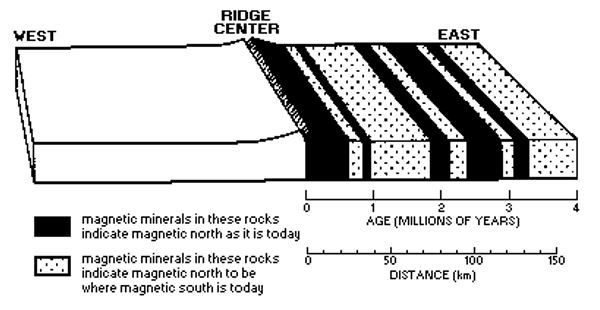
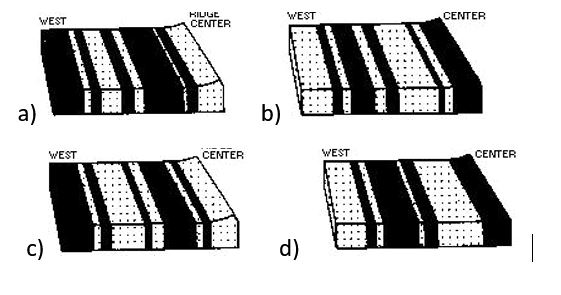
Which diagram below best represents the pattern of magnetic orientation in the seafloor on the west side of the ocean ridge?
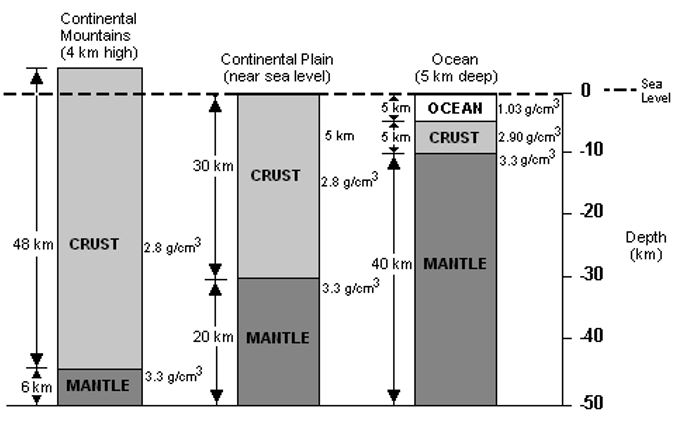
Which material is most likely to be found 20 kilometers below sea level at the continental mountain location?
Which statement about the Earth’s mantle is confirmed by the diagram?
Compared with the oceanic crust, the continental crust is
What is the approximate temperature range at point X?
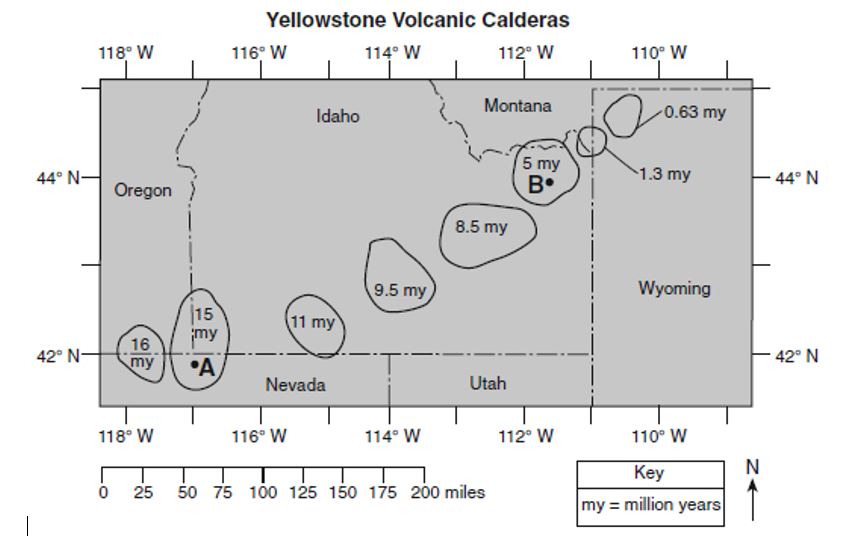
Volcanoes are often located near ridges or trenches. State one reason why Yellowstone is not near either of these features
Based on the age pattern of the calderas shown on the map, in which compass direction has the North American Plate moved during the last 16 million years?
Calculate the rate at which the North American Plate has moved over the Yellowstone Hot Spot between point A and point B.
Fire and Ice — and Sluggish Magma
On the night of November 13, 1985, Nevado del Ruiz, a 16,200-foot (4,938 meter) snowcapped volcano in northwestern Colombia, erupted. Snow melted, sending a wall of mud and water raging through towns as far as 50 kilometers away, and killing 25,000 people. Long before disaster struck, Nevado del Ruiz was marked as a trouble spot. Like Mexico City, where an earthquake killed at least 7,000 people in October 1985, Nevado del Ruiz is located along the Ring of Fire. This ring of islands and the coastal lands along the edge of the Pacific Ocean are prone to volcanic eruptions and crustal movements.
The ring gets its turbulent characteristics from the motion of the tectonic plates under it. The perimeter of the Pacific, unlike that of the Atlantic, is located above active tectonic plates. Nevado del Ruiz happens to be located near the junction of four plate boundaries. In this area an enormous amount of heat is created, which melts the rock 100 to 200 kilometers below Earth’s surface and creates magma.
Nevado del Ruiz hadn’t had a major eruption for 400 years before this tragedy. The reason: sluggish magma.
Unlike the runny, mafic magma that makes up the lava flows of oceanic volcanoes such as those in Hawaii, the magma at this type of subduction plate boundary tends to be sticky and slow moving, forming the rock andesite when it cools. This andesitic magma tends to plug up the opening of the volcano. It sits in a magma chamber underground with pressure continually building up.
Suddenly, tiny cracks develop in Earth’s crust, causing the pressure to drop. This causes the steam and other gases dissolved in the magma to violently expand, blowing the magma plug free. Huge amounts of ash and debris are sent flying, creating what is called an explosive eruption. Oddly enough, the actual eruption of Nevado del Ruiz didn’t cause most of the destruction. It was caused not by lava but by the towering walls of sliding mud created when large chunks of hot ash and pumice mixed with melted snow.
What caused most of the destruction associated with the eruption of Nevado del Ruiz?
Why are eruptions of Nevado del Ruiz generally more explosive than most Hawaiian volcanic eruptions?
Describe one emergency preparation that may reduce the loss of life from a future eruption of the Nevado del Ruiz volcano
Imagine that you are a paleogeologist in the 1960s that helped develop the theory of plate tectonics. You are assigned to write press release to the public announcing the new theory that builds upon continental drift – describe this theory to the masses in a way that is easy to understand, but with clear evidence that will convince people that this radical idea is correct. Your answer should include at least three separate pieces of evidence, include relevant scientific vocabulary, and clearly explain how the evidence supports Plate Tectonic theory (scientific reasoning).