States of Matter Summative
star
star
star
star
star
Last updated over 7 years ago
20 Nsɛmmisa
10
10
10
10
10
10
10
11
10
10
10
10
10
10
10
10
10
10
10
10
Matter is...
What are the four states of matter?
Draw the particles as they would appear in each state of matter.
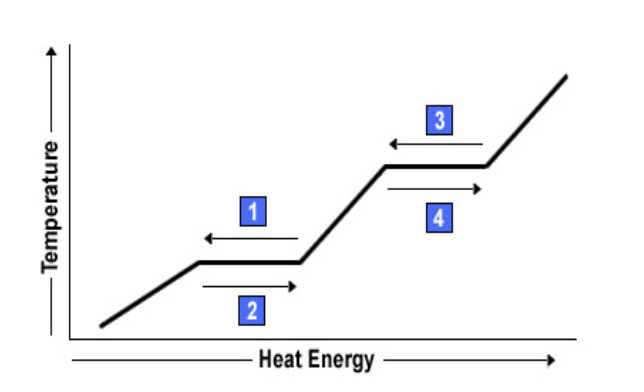
Below is a heating curve for a substance over time. Draw a line to connect the 3 states of matter to the diagram where where they would exist.
On the heating curve above what is happening at number 4?
On the heating curve above what is happening at number 3?
Draw the lines and label sublimation and plasma.
Type the name (or number) for each change of state.
Substances are usually the most dense when they are in the solid state.
Which substance is this fact not true for?
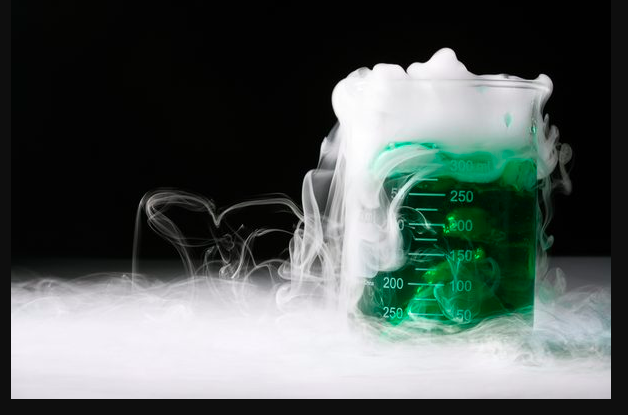
What molecule is the picture above an example of?
What phase change is shown in the picture above?
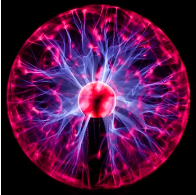
What is shown in the image below?
Select all that apply.
Substances will expand when they change from gas to a liquid.
The freezing point and melting point of a substance are at the same temperature.
Which of the following is NOT true? As thermal energy is added to a substance...
What happens to the temperature of a substance when it is changing state?
Which 2 states of matter have a definite volume?
How are liquids and gases similar?
If a substance has a melting point of 15 degrees Celsius and a boiling point of 25 degrees Celsius, what state of matter will it be in at room temperature (21 degrees C)?