European Union

Last updated over 6 years ago
4 questions
0

Reorder these ADVANTAGES from most important to least important

  1. Free Movement
    Movement between all of the countries in the EU is completely free and open for all citizens. This opens up many more job and education opportunities for people. Especially ones who are in poor countries.
  2. Culture Is Not Lost
    The EU has never had an “official language” and doesn’t interfere with the cultural aspects of any country. This helps to ensure that, while you are part of the Euroepan Union, you are also your own country.
  3. Tax Free Trading Among Members
    Countries of the EU are free to trade with other members with no additional taxes. This helps to keep prices of goods, foods, and services down in these countries.
  4. A Common Currency
    All of the countries of the EU have the same type of currency, the Euro. This makes doing business, traveling, or moving to other countries, and buying things much easier. It also creates a sense of unity among the countries.
  5. No Conflict Between Countries
    There are strict guidelines followed for any issues that occur within the EU. This prevents any of these countries from getting into problems with one another and promotes peace throughout the European continent.
1

Reorder these DISADVANTAGES from most important to least important

  1. Leaving the EU Is Difficult
    Once a country decides to join the EU, it is extremely difficult for them to leave it. It takes years for a country to officially leave the EU.
  2. Communication Barriers
    It becomes very difficult for the EU to communicate with all of it’s citizens because they all speak different languages.
  3. Shared Wealth Is Not Always Good
    Large and wealthy countries that are members of the European Union, like Germany, France, and Great Britain, have to share their wealth with much smaller and poorer countries, like Croatia. This prevents any one country from becoming too powerful, which is a bad thing for countries that have the ability to become world leaders.
  4. Takes Power From Governments
    The EU has power over the government in these countries. This means that if they do not like a political leader, they can simply kick them out of office. It is very easy for this to cause major problems in governments.
  5. Serves The Interest As A Whole, Not A Country
    The rules set in place by the EU are not there to protect the best interest of each individual country. Instead, their goal is to advance the EU as a whole. This has caused many damages in smaller countries, whose voices are often unheard.
4

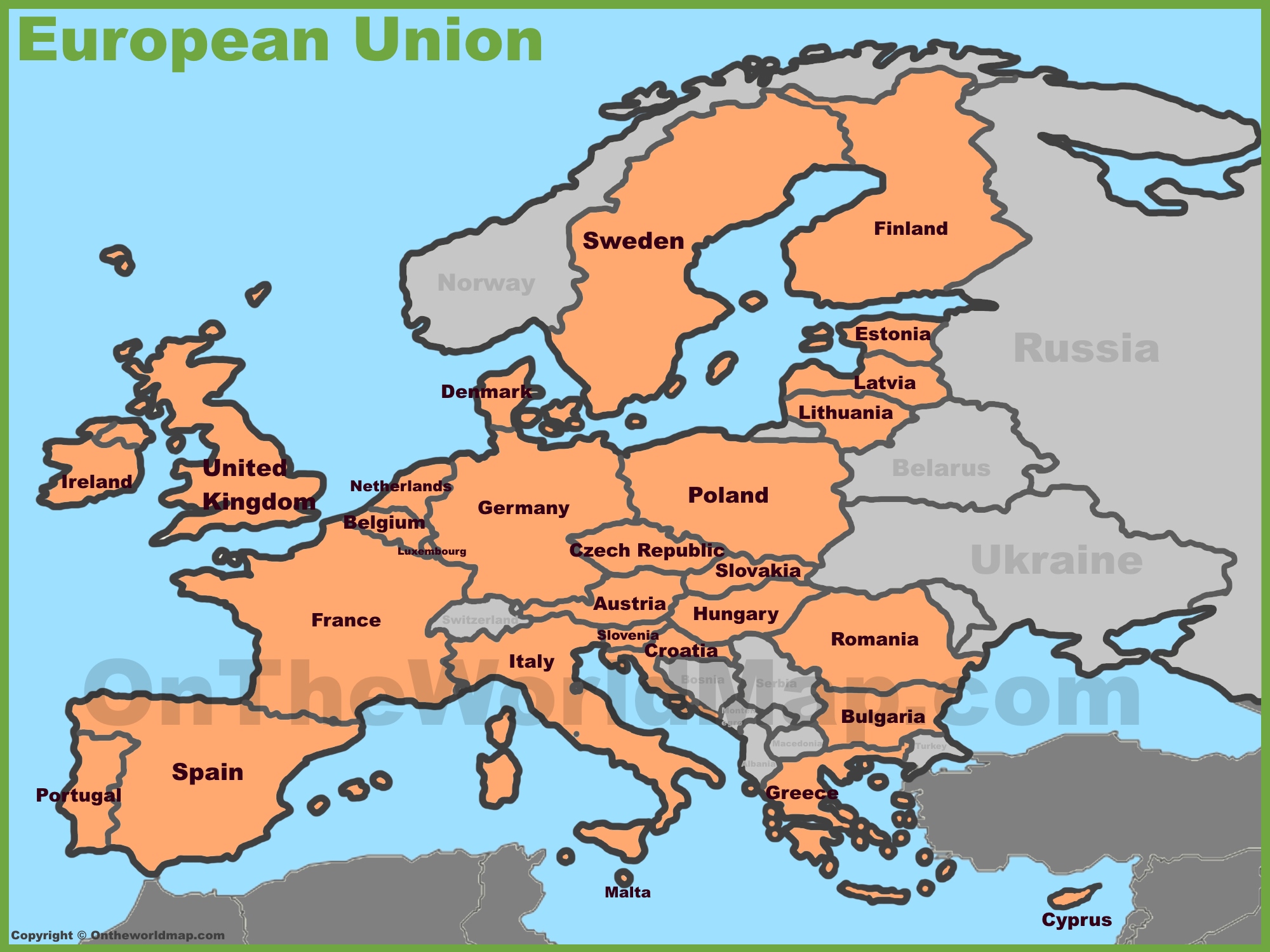
Looking at a map of EU countries, you will notice that Norway isn't part of the EU. Based on the two lists above, should Norway join the EU? What would you tell the citizens in Norway to convince them of your decision?

Reasons for Migration

Pull Factors

People often migrate, or move, because of money. Many migrants—people who migrate—hope for a better paying job in a new country. This type of reason is called a pull factor. It pulls, or convinces, people to move. Better schooling is a pull factor. Infrastructure is things such as modern roads, hospitals, and public transportation. Better infrastructure is another pull factor. In the past few years, people from developing countries in Asia and Africa have moved to EU nations. They are hoping for a better life.

Push Factors

Pull factors, however, are not the only reasons people migrate. War, or not having enough food, may cause people to move from their homeland to another country. Some people move because they cannot practice their religion. These types of reasons are called push factors. They push people out of their home countries. For example, during the 1990s, the countries of Bosnia and Kosovo experienced war and ethnic persecution. Ethnic persecution refers to mistreating people just because they belong to a different tradition or culture. Some groups of people were killed. This caused thousands of people living there to escape to other European countries. People in this situation are known as refugees.
9
  • mistreating people because they are different
  • war
  • not having enough food
  • public transportation
  • hoping for a better life
  • better paying job
  • improved hospitals
  • not allowed to practice their religion
  • better education
  • Push Factors
  • Pull Factors

Open Borders

The European Union (EU) makes immigration more of a problem. The EU is a group of 28 European countries. They have joined together for economic reasons. People who live in EU countries can live and work in other EU countries. It is as easy as working in their own country. In the United States, a person from Texas can live and work in Maine. In the EU, a person from Poland can live and work in Ireland. Both countries are EU countries.

With the EU, movement from one country to another in Europe is now much easier than before. This has made controlling immigration very hard. People who live in different EU countries can move around Europe as they please. Also, people from outside Europe come to Europe. They are also able to move freely across the borders. Controlling immigration within the separate countries in the EU has become very difficult as a result.