Geologic Features Mapping Activity Analysis

Last updated about 7 years ago
41 questions
Note from the author:
Essential Question: How can we use geologic features to identify plate boundaries?
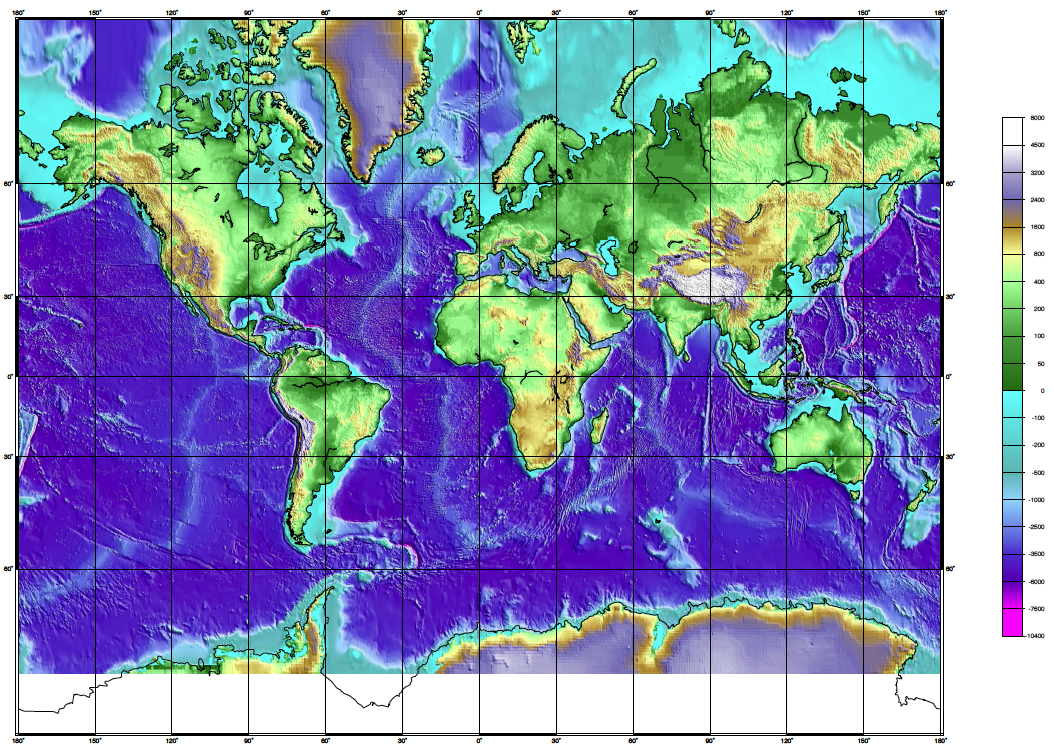
DIRECTIONS: After completing the mapping activity, use your notes and world map to answer the questions below.

Analysis Questions

Geography Map
1

Where do you see mountain ranges around the world?

1

What kind(s) of plate movement can create mountain ranges (volcanic or non-volcanic)?

1

Where do you see ocean ridges around the world?

1

What kind(s) of plate movement can create ocean ridges?

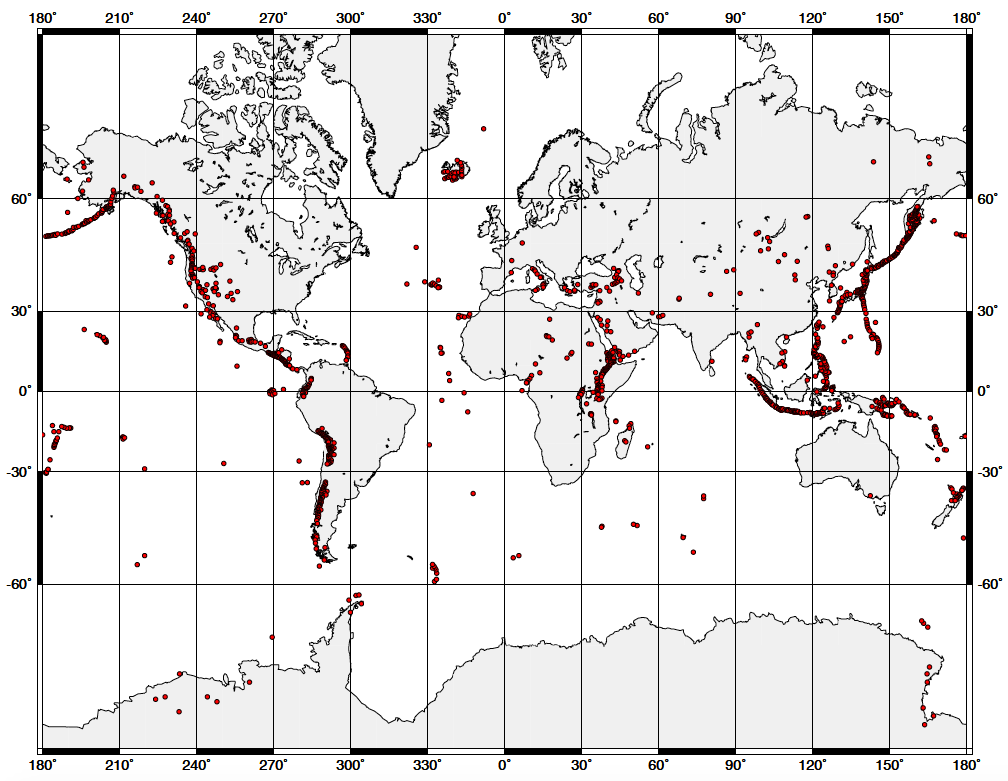
Volcanology Map
1

Where on continental crust does volcanic activity tend to occur?

1

Where on oceanic crust does volcanic activity tend to occur?

1

Why do you think that volcanoes tend to form in these locations?

1

What does a chain of volcanic activity on land or in the ocean indicate?

1

What kind(s) of plate movement can create volcanic mountain ranges?

1

Where are there non-volcanic mountain ranges?

1

How do you know that there are non-volcanic mountain ranges in these locations?

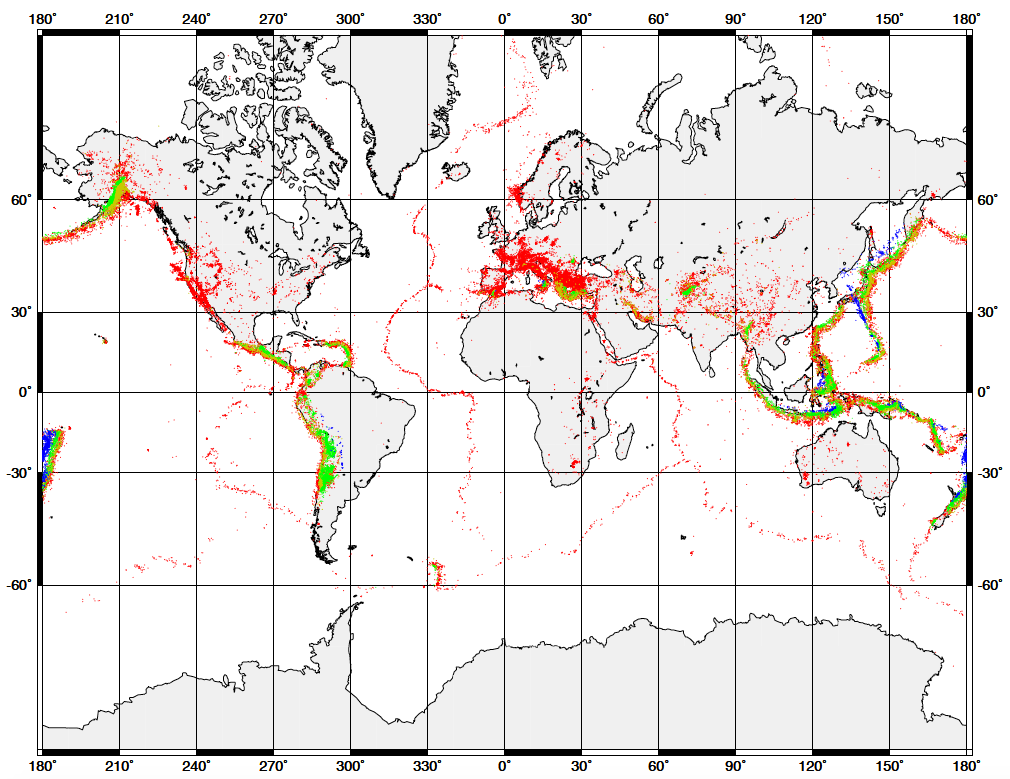
Seismology Map
1

Where on continental crust does seismic activity tend to occur?

1

Where on oceanic crust does seismic activity tend to occur?

1

Why do you think that seismic activity tends to occur in these locations?

1

What does a cluster of seismic activity indicate?

1

What kind(s) of plate movement can create seismic activity (earthquakes)?

1

Where on continental crust does seismic activity tend to occur?

1

Where on oceanic crust does seismic activity tend to occur?

1

Describe the relationship you see between the locations of volcanoes and earthquakes.

1

Why does this relationship between the locations of volcanoes and earthquakes exist?

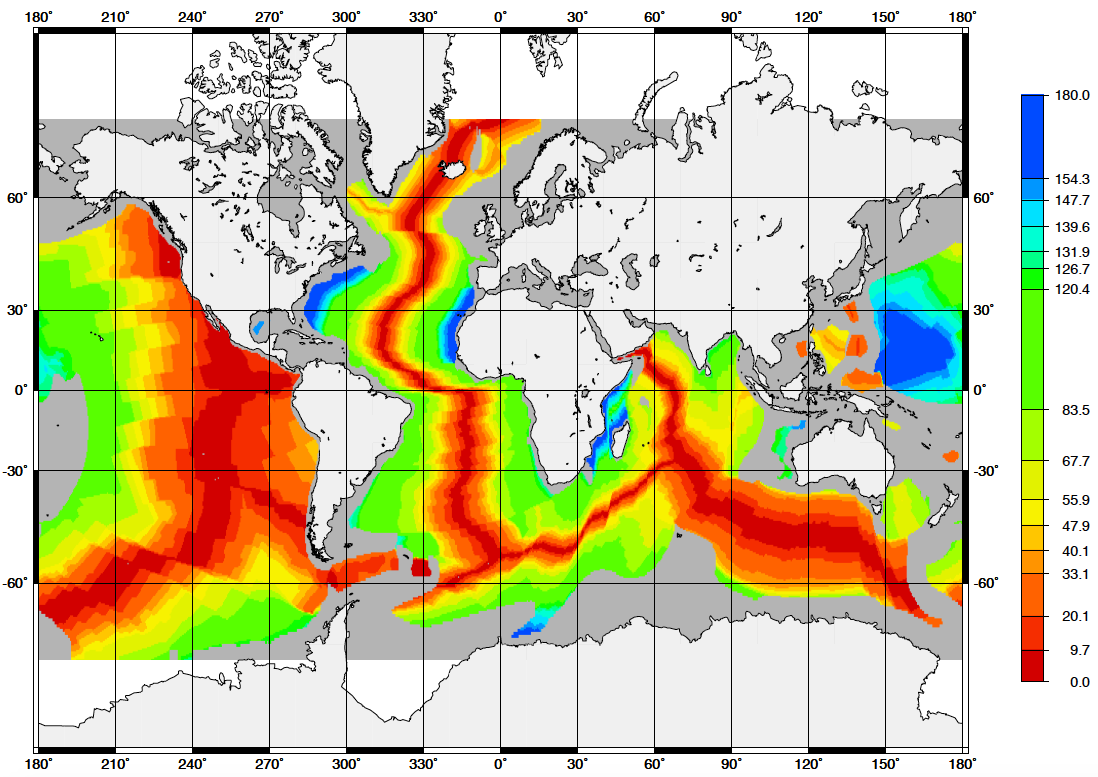
Geochronology Map
1

Where does the youngest crust in the oceans tend to be located?

1

Why is the youngest crust located there?

1

Where does the oldest crust in the oceans tend to be located?

1

Why is the oldest crust located there?

1

Describe what happens to the age of the seafloor as you move away from the youngest crust.

1

What kind(s) of plate movement can create new crust?

1

What kind(s) of plate movement can destroy old crust?

Conclusion Questions

1

How do the locations of these geologic features relate to the locations of tectonic plate boundaries?

1

How do the locations of these geologic features relate to the movement of tectonic plates?

Application Questions

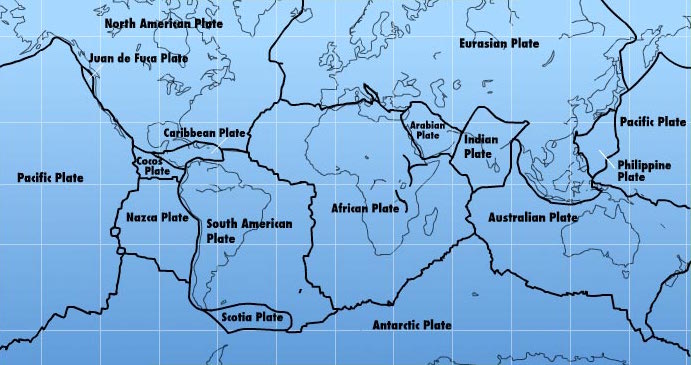
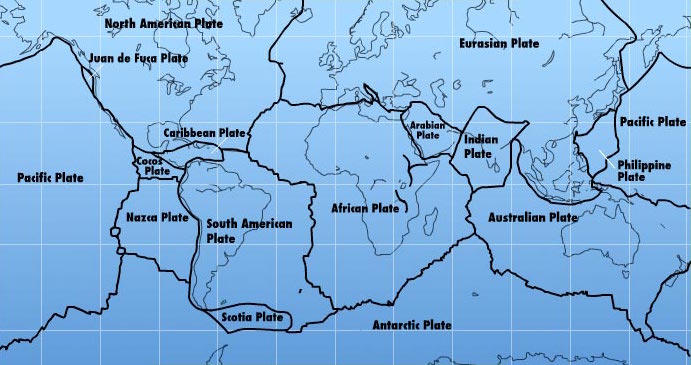
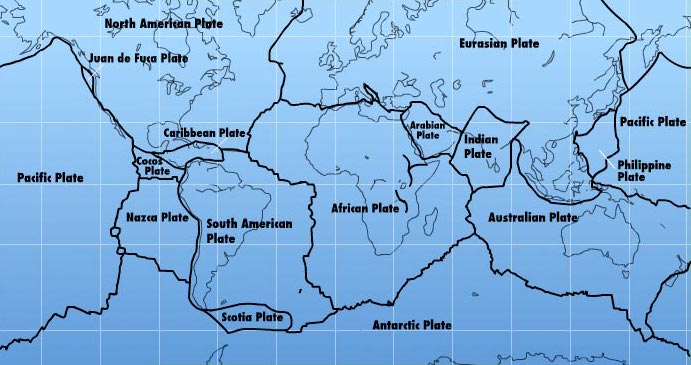
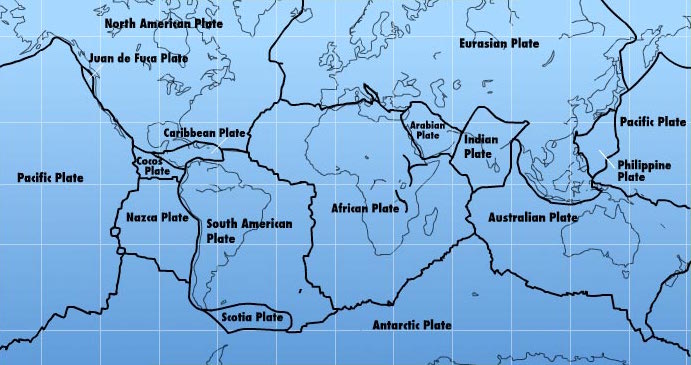
Plate Boundary Map
Locate the plate boundary between the South American Plate and the African Plate.
1

Which geologic features occur along this boundary?

1

Based on the geologic features that occur along this boundary, what type of plate boundary do you think this is?

1

Explain how you came to this conclusion.

Locate the plate boundary between the African Plate and the Eurasian Plate.
1

Which geologic features occur along this boundary?

1

Based on the geologic features that occur (and the features that do NOT occur) along this plate boundary, what type of plate boundary do you think this is?

1

Explain how you came to this conclusion.

Locate the plate boundary between the Indian Plate and the Eurasian Plate.
1

Which geologic features occur along this boundary?

1

Based on the geologic features that occur (and the features that do NOT occur) along this plate boundary, what type of plate boundary do you think this is?

1

Explain how you came to this conclusion.

Locate the plate boundary between the Philippine Plate and the Pacific Plate.
1

Which geologic features occur along this boundary?

1

Based on the geologic features that occur along this boundary, what type of plate boundary do you think this is?

1

Explain how you came to this conclusion.

Please review and submit your responses