Log in
Sign up for FREE
arrow_back
Library

Algebra 2 5-1 Complete Lesson: Polynomial Functions

star
star
star
star
star
Last updated about 4 years ago
29 questions
Note from the author:
A complete formative lesson with embedded slideshow, mini lecture screencasts, checks for understanding, practice items, mixed review, and reflection. I create these assignments to supplement each lesson of Pearson's Common Core Edition Algebra 1, Algebra 2, and Geometry courses. See also mathquest.net and twitter.com/mathquestEDU.

10
10
10
10
10
10
10
10
10
10
10
10
10
10
10
5
5
5
100
10
Question 1
1.

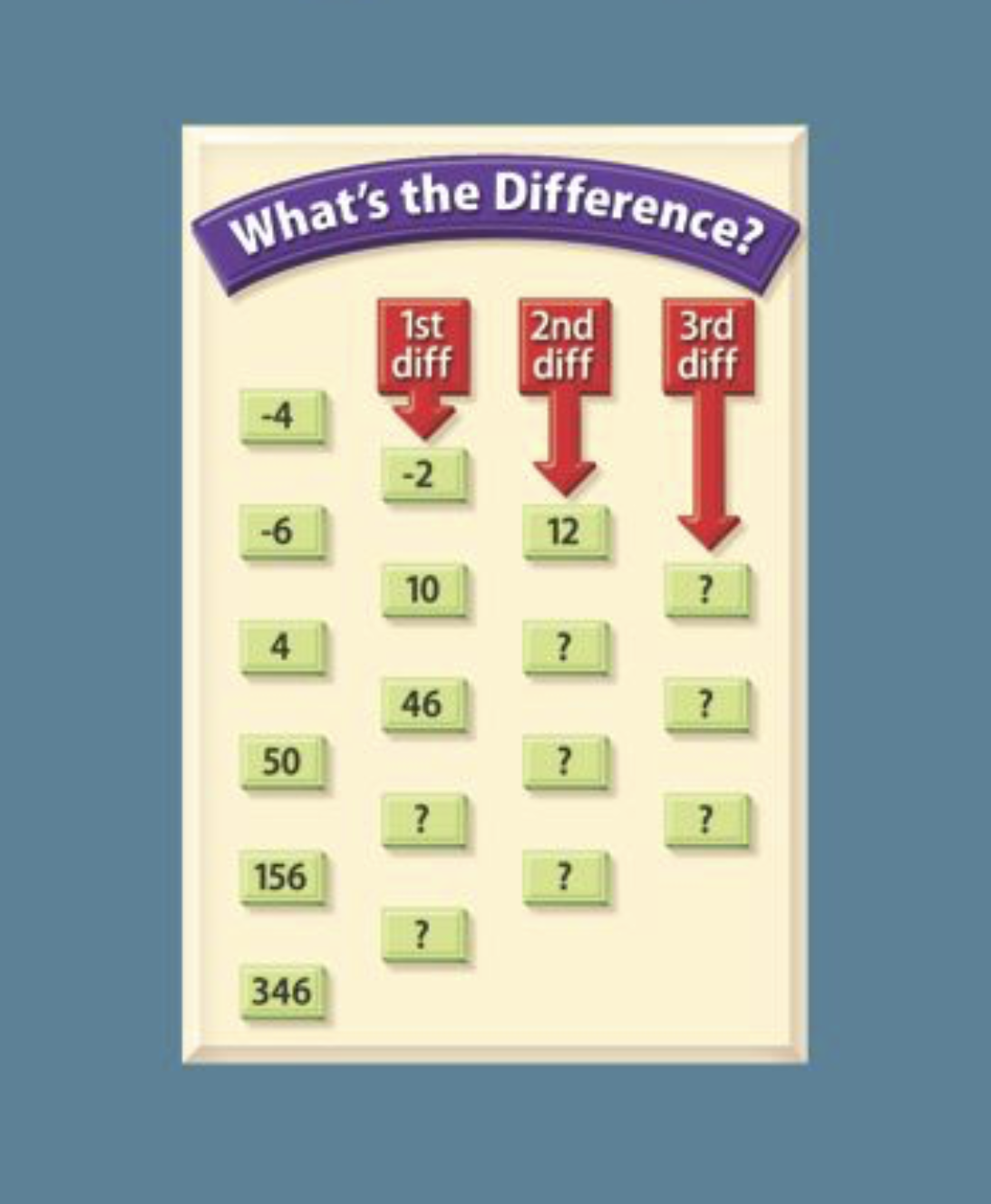
Solve It! The first column shows a sequence of numbers.
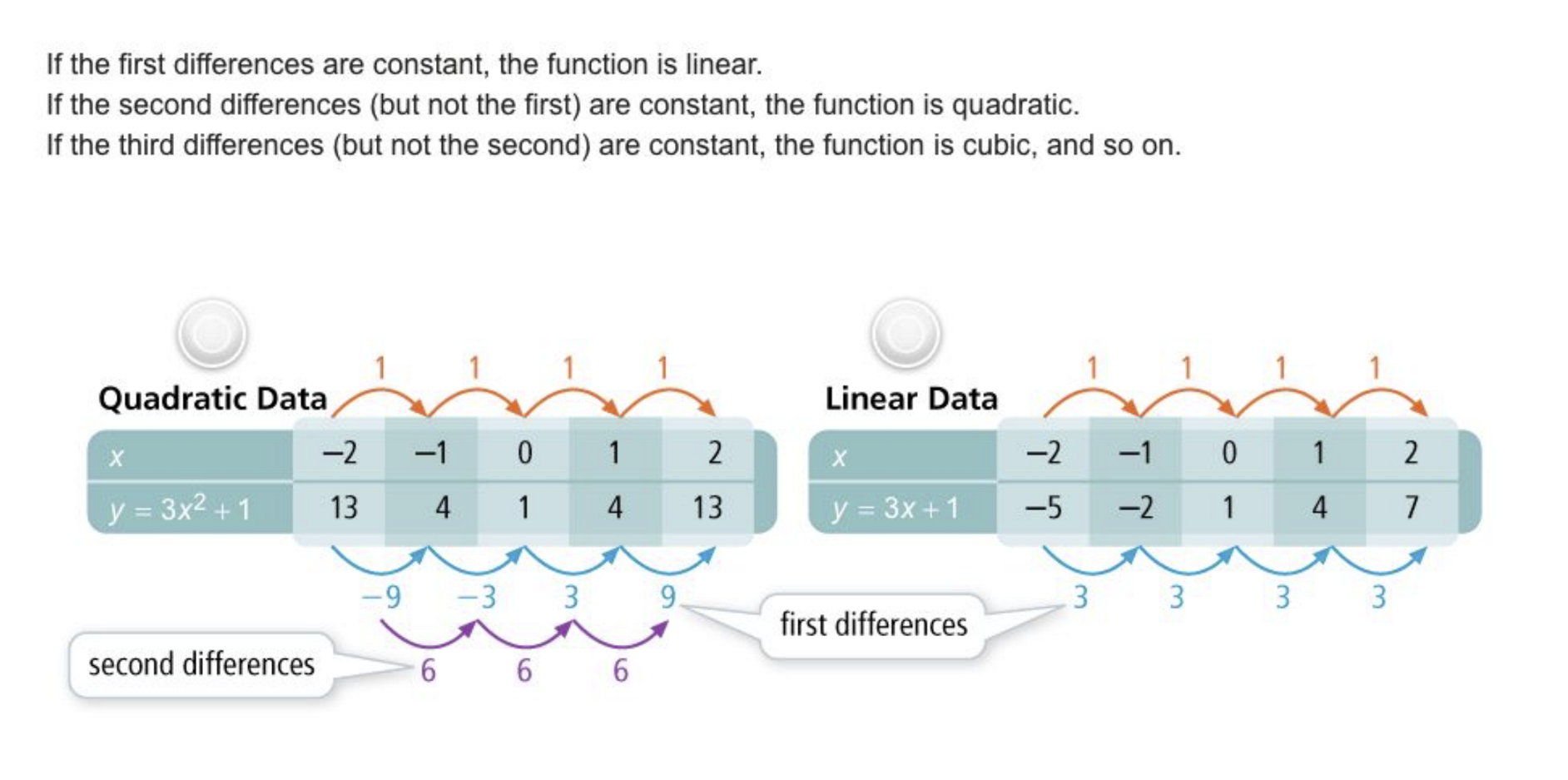
â—† For 1st differences, subtract consecutive numbers in the sequence: -6-(-4) = -2, 4-(-6) = 10, and so on.
â—† For 2nd differecnes, subtract consecutive first differences.
â—† For 3rd differences, subtract consecutive second differences.


If the pattern continues, what is the 8th number in the first column?

10
Question 2
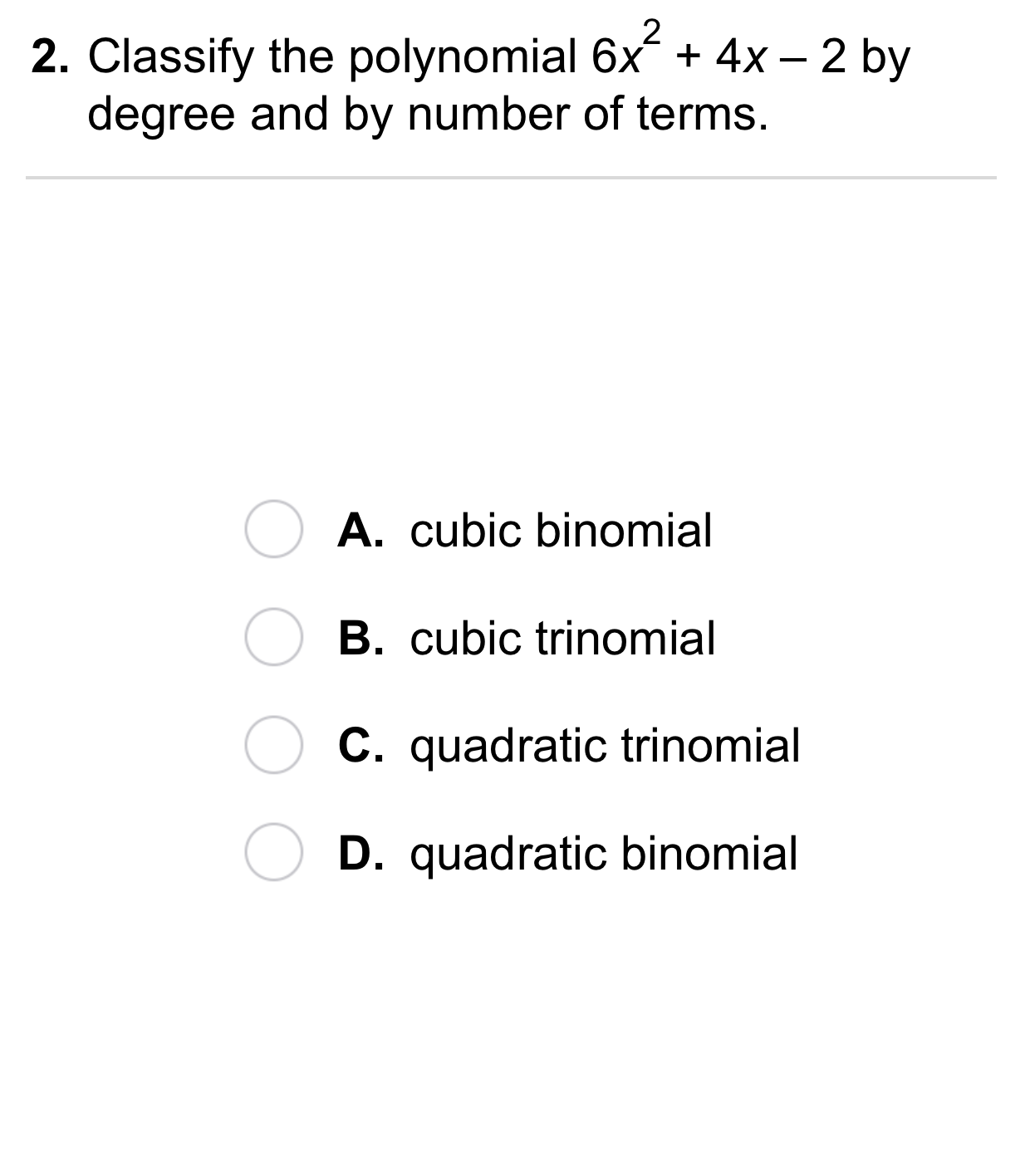
2.

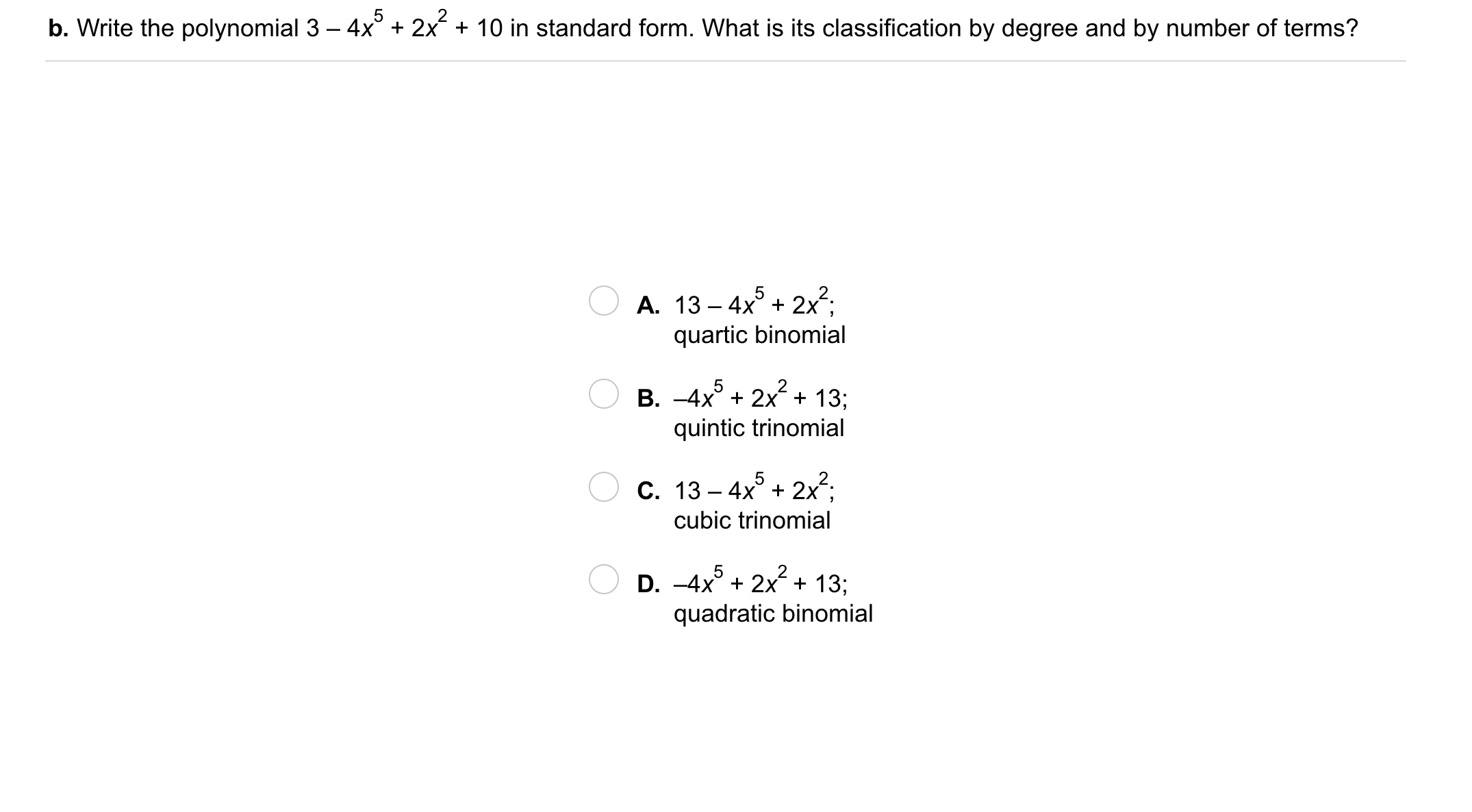
Problem 1 Got It?

10
Question 3
3.

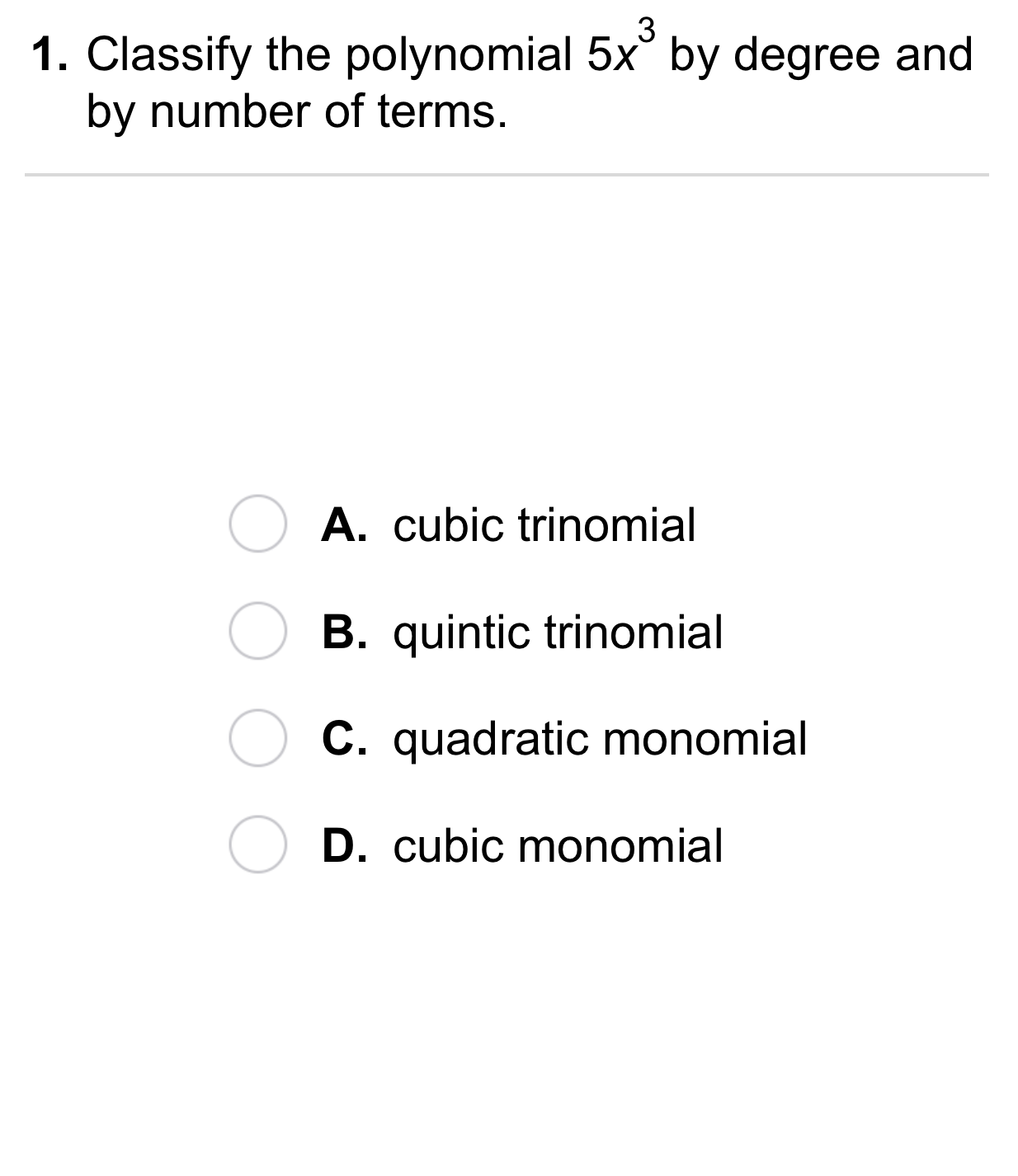
Problem 1 Got It?

10
Question 4
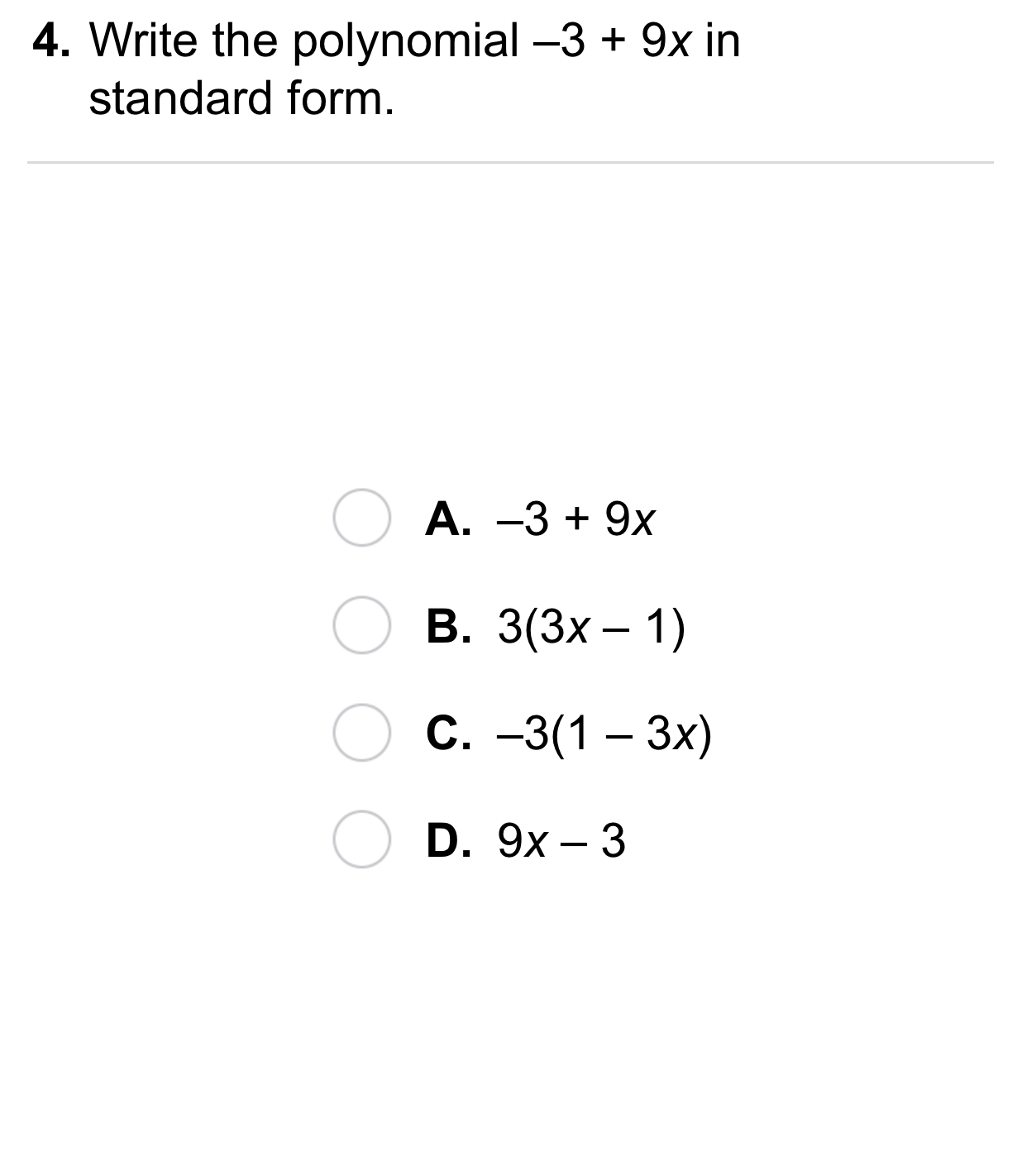
4.

Problem 2 Got It?

Question 5
5.

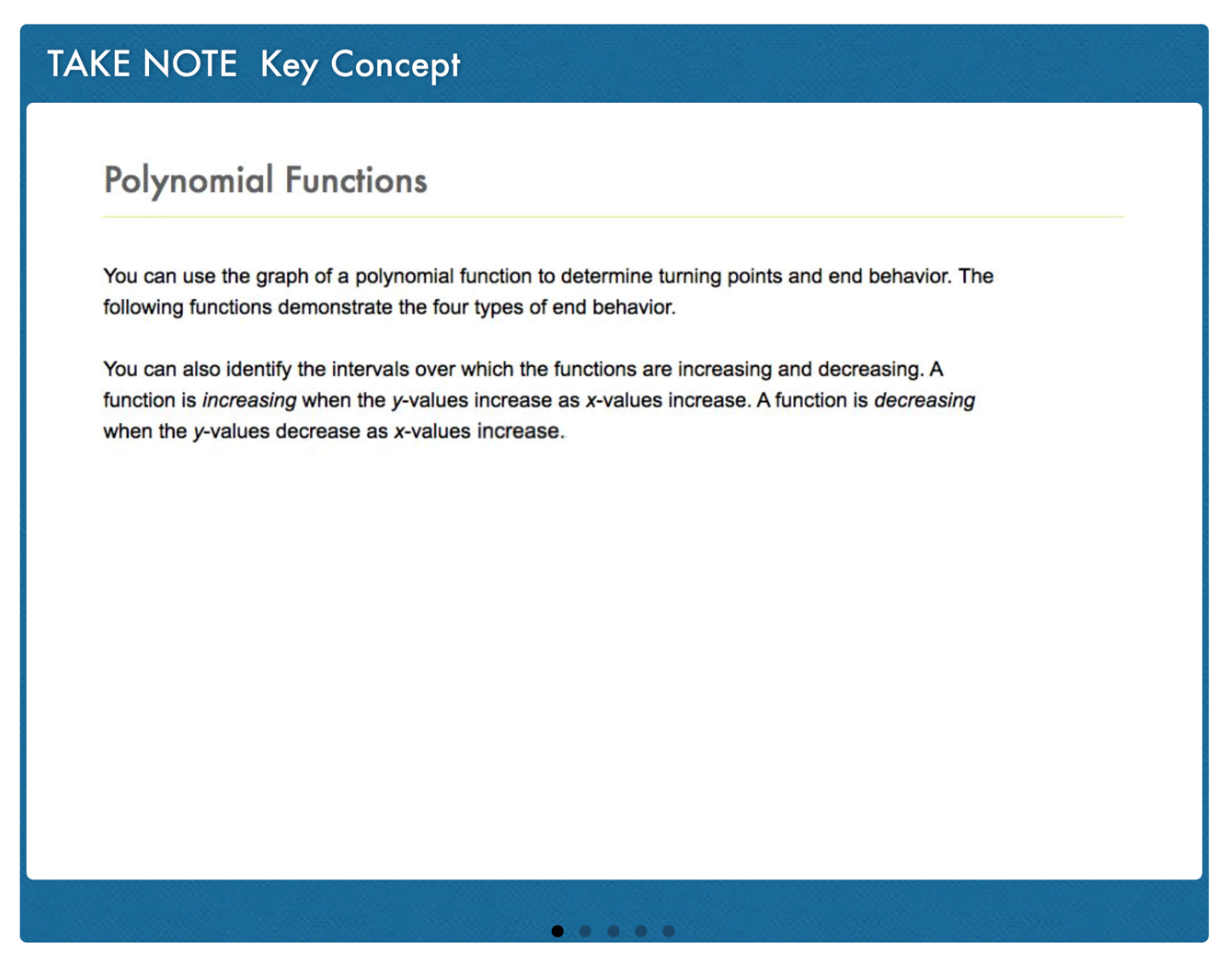
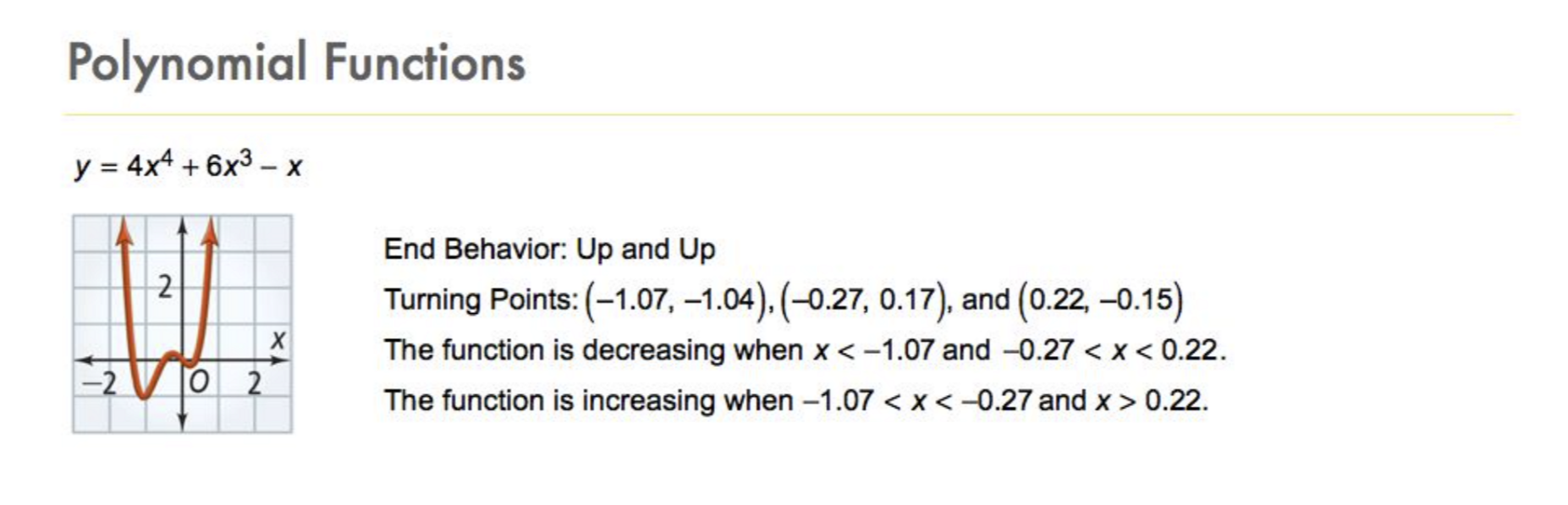
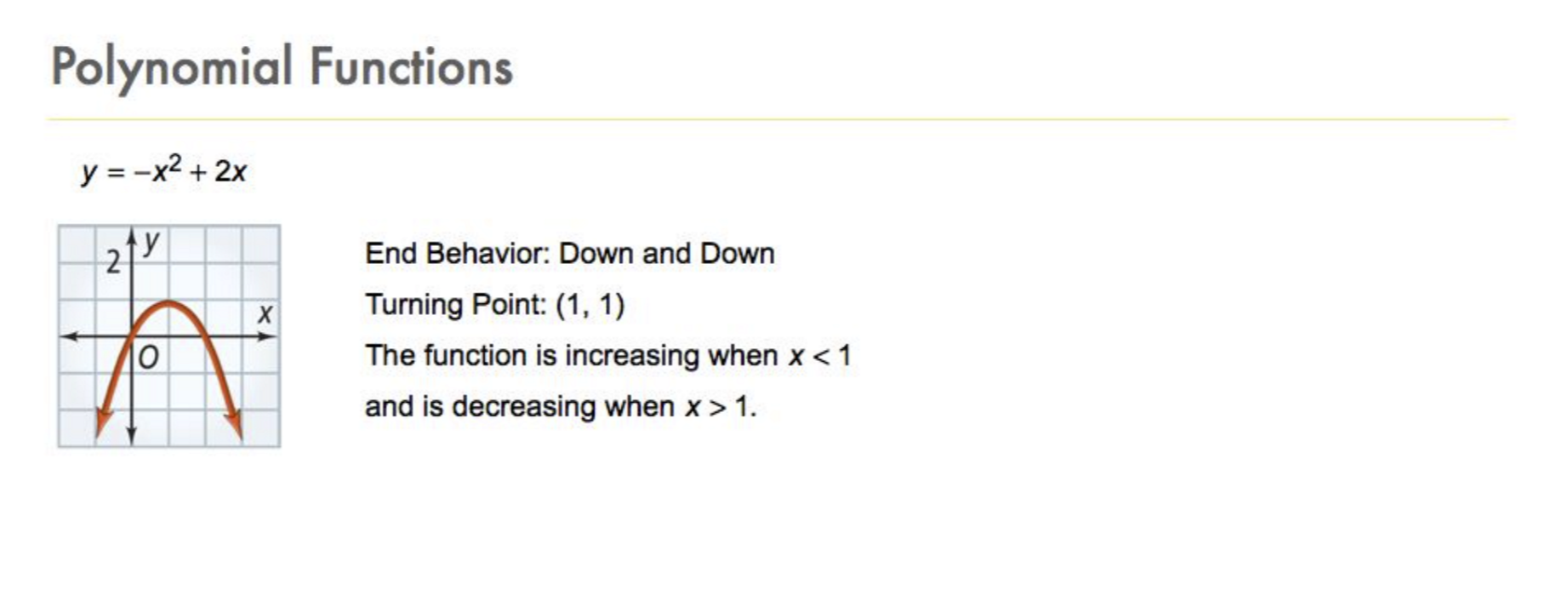
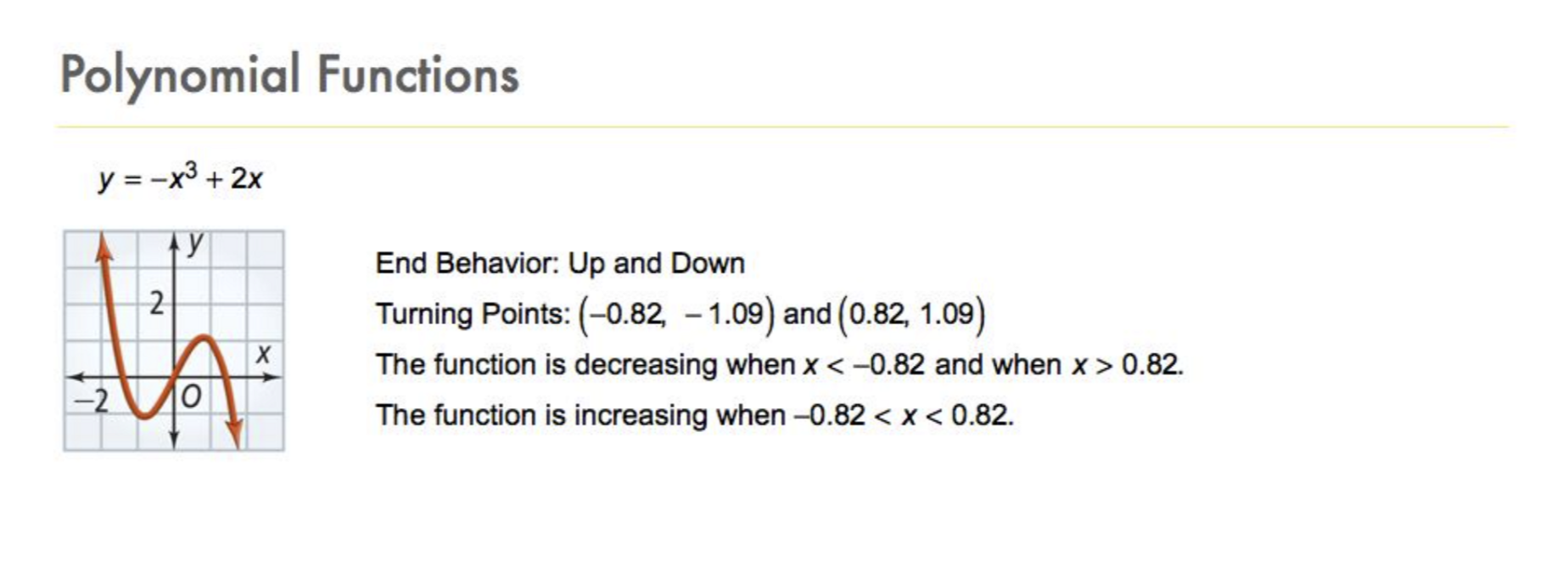
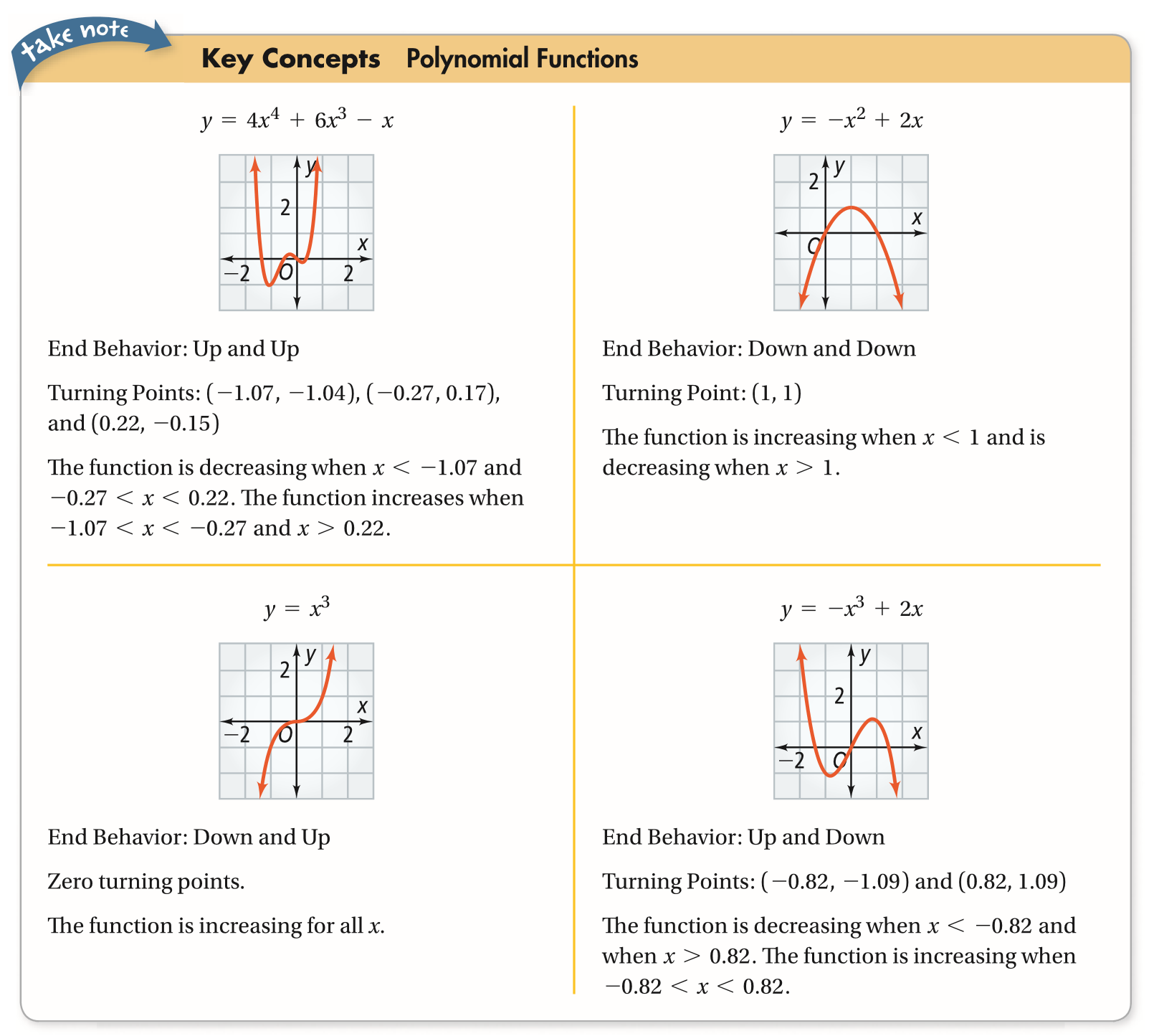
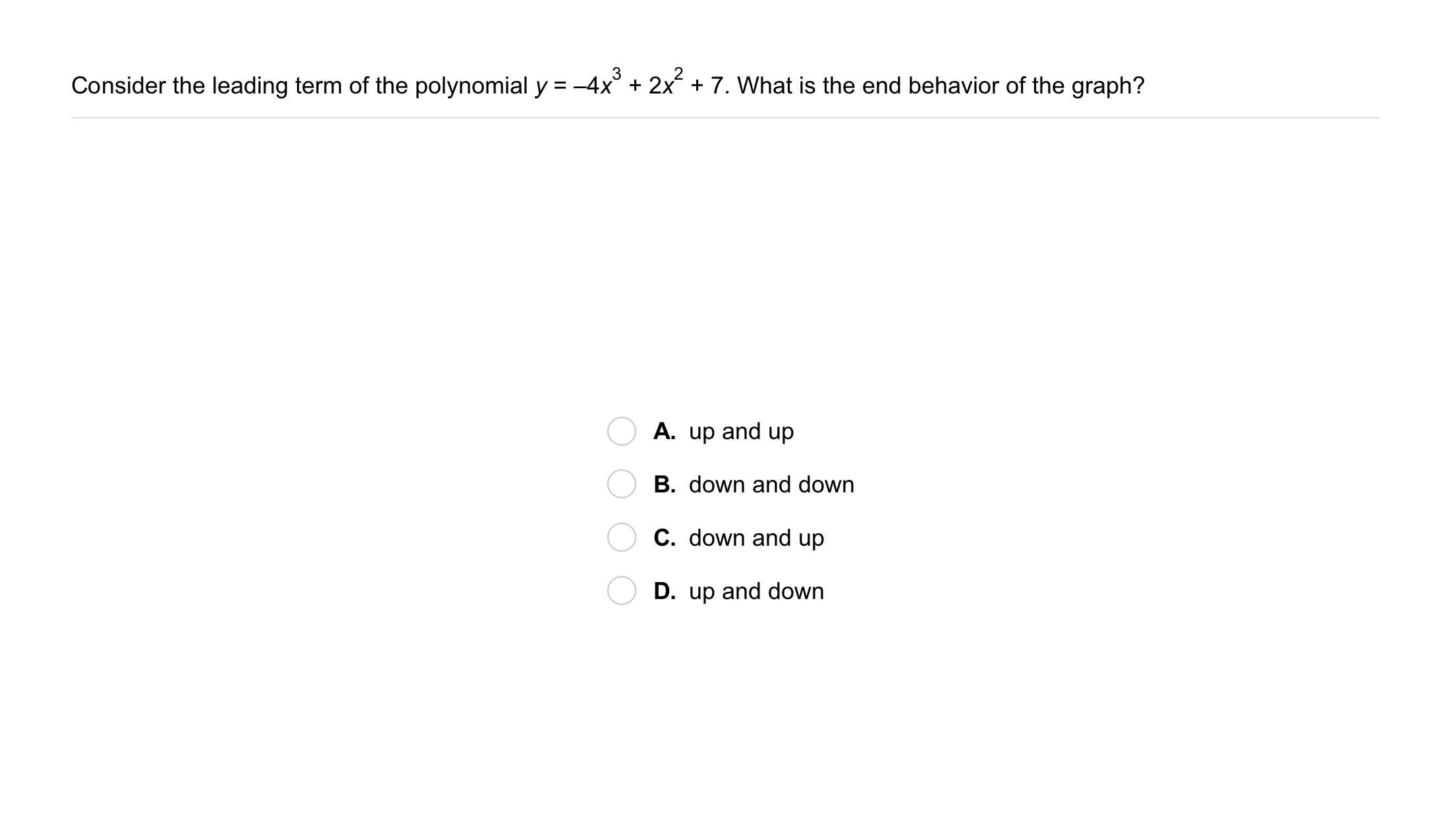
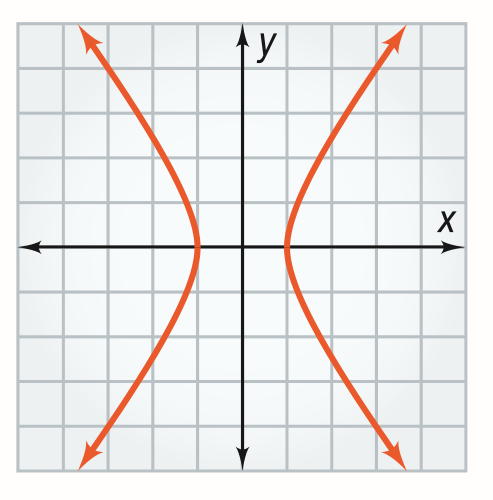
Problem 3 Got It? Identify the end behavior and turning points of the graph of the function as well as any intervals in which the graph is increasing or decreasing.

  • up and down
  • down and up
  • End behavior
  • Turning points
  • Increasing
  • Decreasing
Question 6
6.

Problem 3 Got It? Graph the function. Zoom and pan your graph to establish an appropriate viewing window. Note the end behavior and turning points of the graph and any intervals in which the graph is increasing or decreasing. You may revise your responses to the previous item, as needed.

We have released a new and improved Graphing question type! Students will no longer be able to answer this question.
Question 7
7.

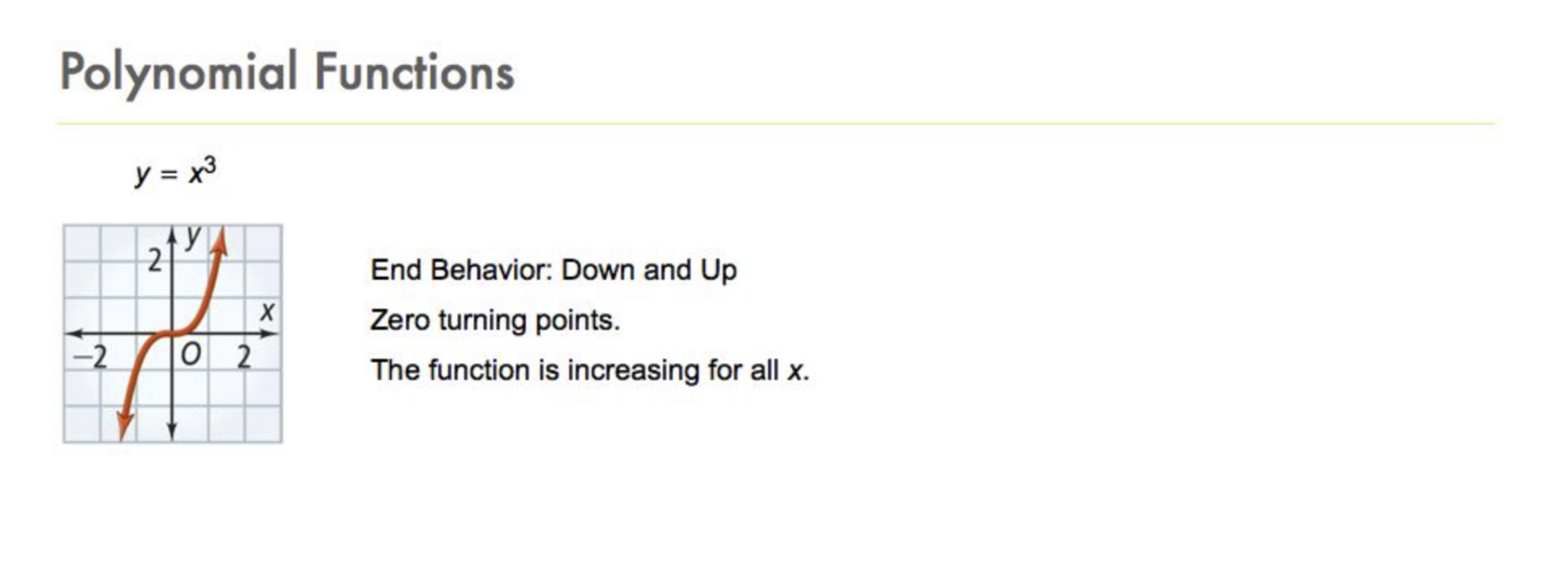
Problem 3 Got It? Identify the end behavior and turning points of the graph of the function as well as any intervals in which the graph is increasing and/or decreasing.

  • up and down
  • down and up
  • no turning points
  • End behavior
  • Turning points
  • Increasing
Question 8
8.

Problem 3 Got It? Graph the function. Zoom and pan your graph to establish an appropriate viewing window. Note the end behavior and turning points of the graph and any intervals in which the graph is increasing or decreasing. You may revise your responses to the previous item, as needed.

We have released a new and improved Graphing question type! Students will no longer be able to answer this question.
10
10
Question 10
10.

Problem 4 Got It? Reasoning: What is an example of a polynomial function whose fifth differences are constant, but whose fourth differences are not constant?

10
Question 11
11.
10
Question 12
12.
10
Question 13
13.
10
Question 14
14.
Question 15
15.

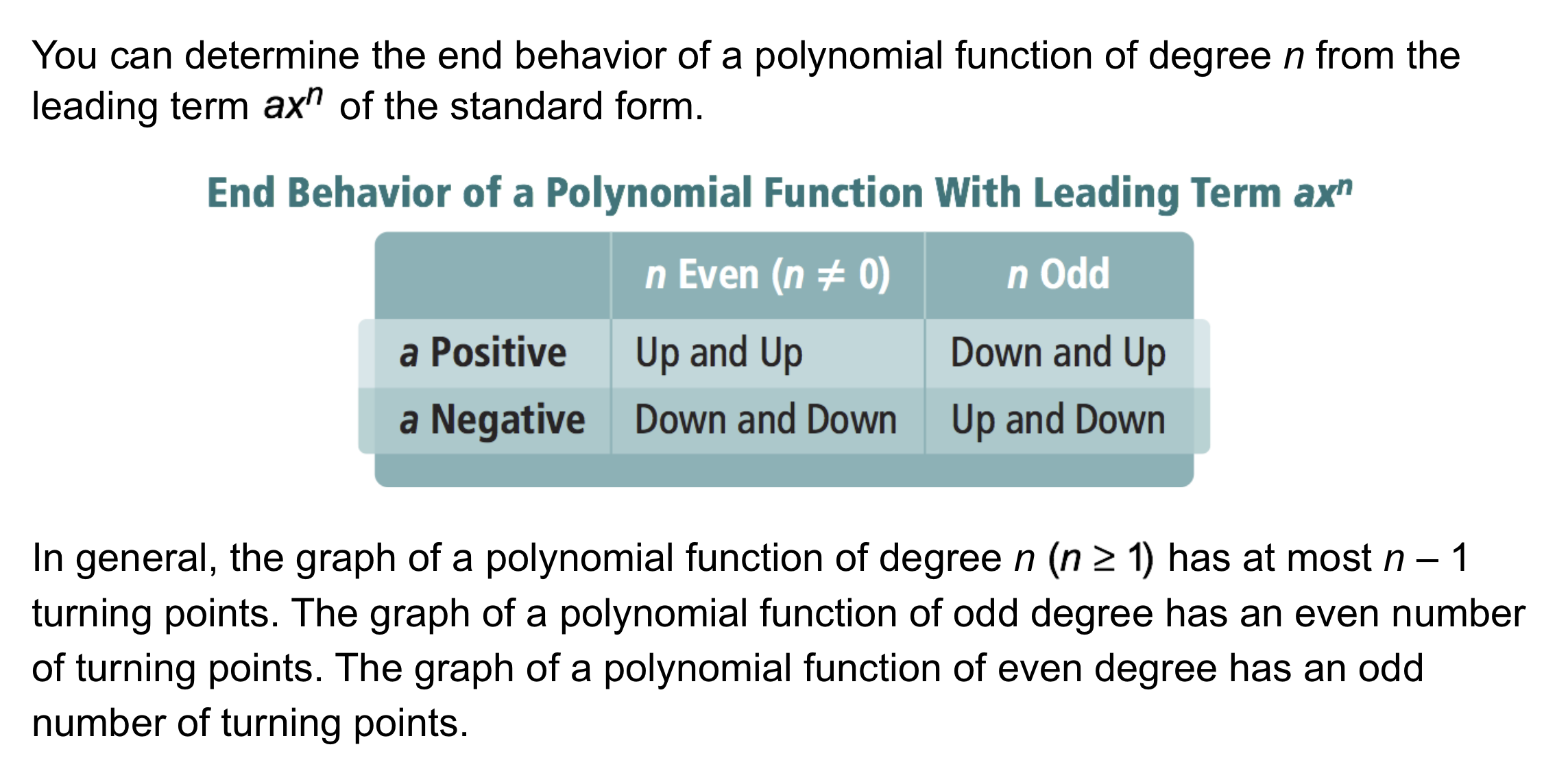
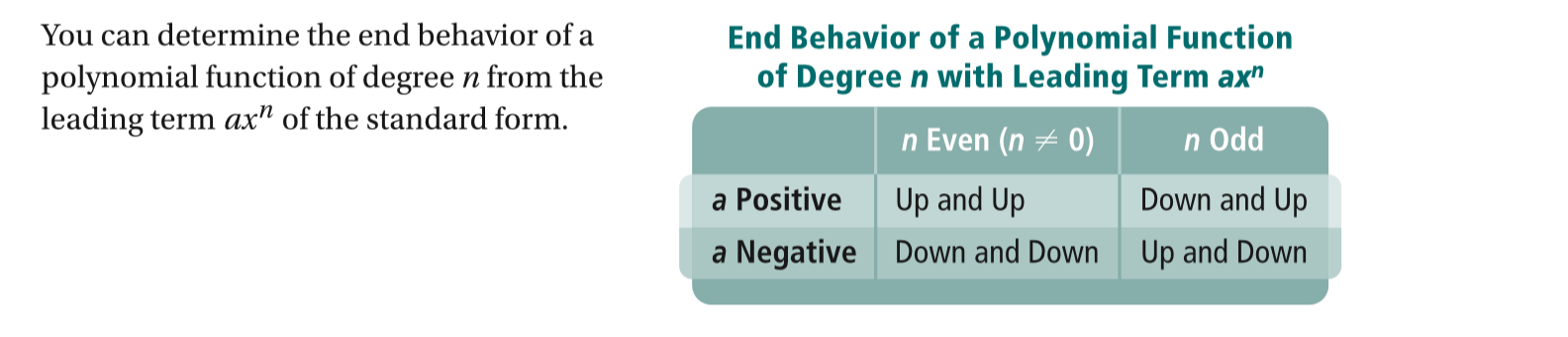
Vocabulary: Describe the end behavior of the graph of the function.

Question 16
16.

Reasoning: Can the graph of a polynomial function be a straight line? If so, give an example.

Question 18
18.

Review Lesson 2-4: Match each equation in the left column with its standard form version in the right column.

Question 19
19.

Review Lesson 4-4: Factor the quadratic expression.

Question 20
20.

Review Lesson 4-4: Factor the quadratic expression.

Question 21
21.

Review Lesson 4-4: Factor the quadratic expression.

Question 22
22.

Vocabulary Review: Tag each quadratic espression based on whether or not it is in standard form.

  • standard form
  • NOT standard form
Question 23
23.

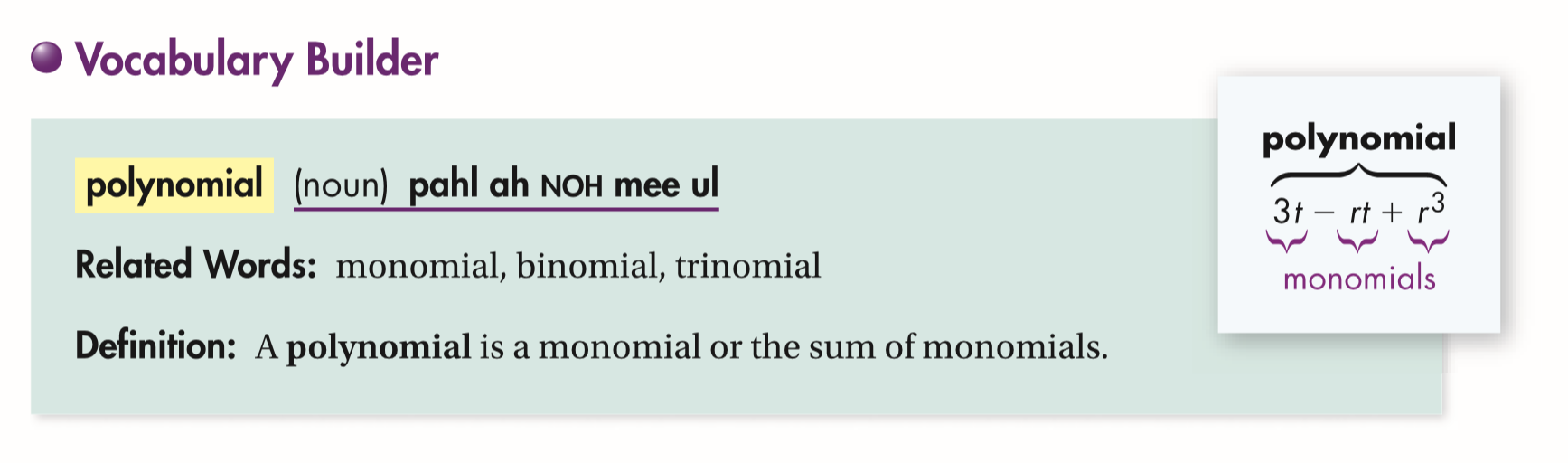
Use Your Vocabulary: Identify the polynomial expression.

  • Polynomial expression
Question 24
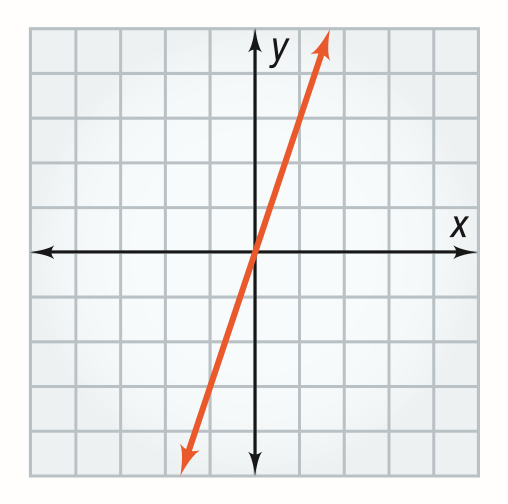
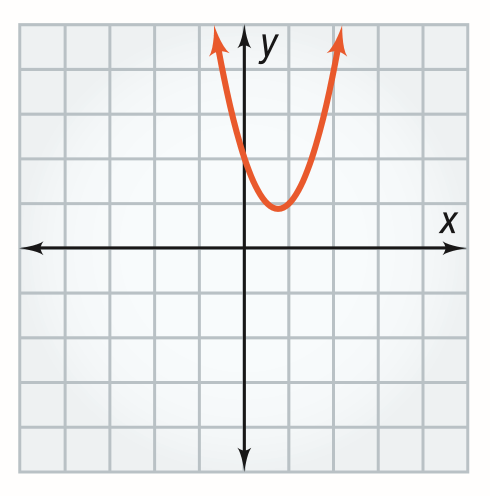
24.

Vocabulary Review: Identify the graphs that can be represented by a polynomial.

  • Can be represented by a polynomial
Question 25
25.

Use Your Vocabulary: How many terms are in the polynomial ?
Enter only a number.

Question 26
26.

Use Your Vocabulary: How many terms are in the polynomial ?
Enter only a number.

Question 27
27.

Use Your Vocabulary: How many terms are in the polynomial ?
Enter only a number.

Question 28
28.

Notes: Take a clear picture or screenshot of your Cornell notes for this lesson. Upload it to the canvas. Zoom and pan as needed.

For a refresher on the Cornell note-taking system, click here.

Question 29
29.

Reflection: Math Success

Question 9
9.

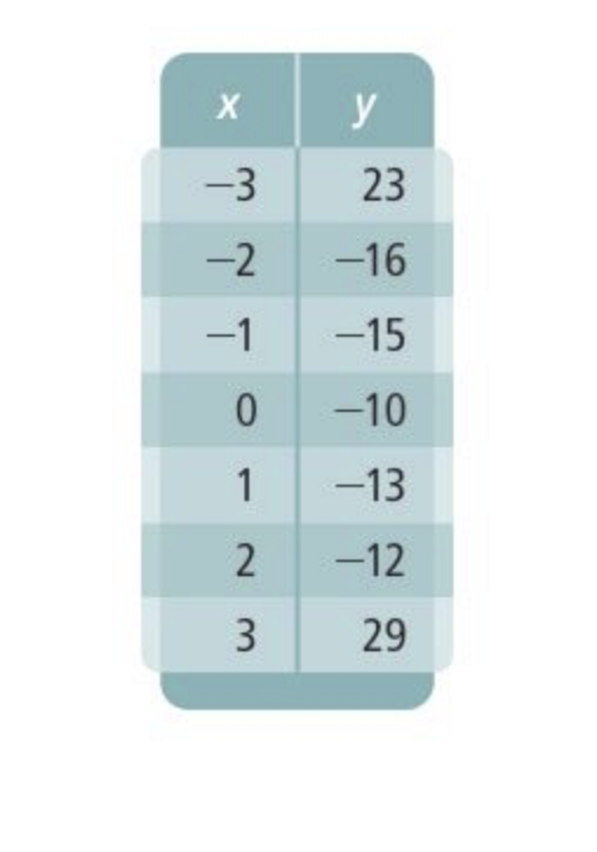
Problem 4 Got It? What is the degree of the polynomial function that generates the data in the table?