Algebra 2 2-2 Guided Practice: Direct Variation
star
star
star
star
star
Last updated about 4 years ago
20 Nsɛmmisa

3

3
3

3
3
10
A.CED.2

3
20
A.CED.2

Video Check: Select all that apply with regards to the video embedded directly above this item.

Video Check: Select all that apply with regards to the video embedded directly above this item.

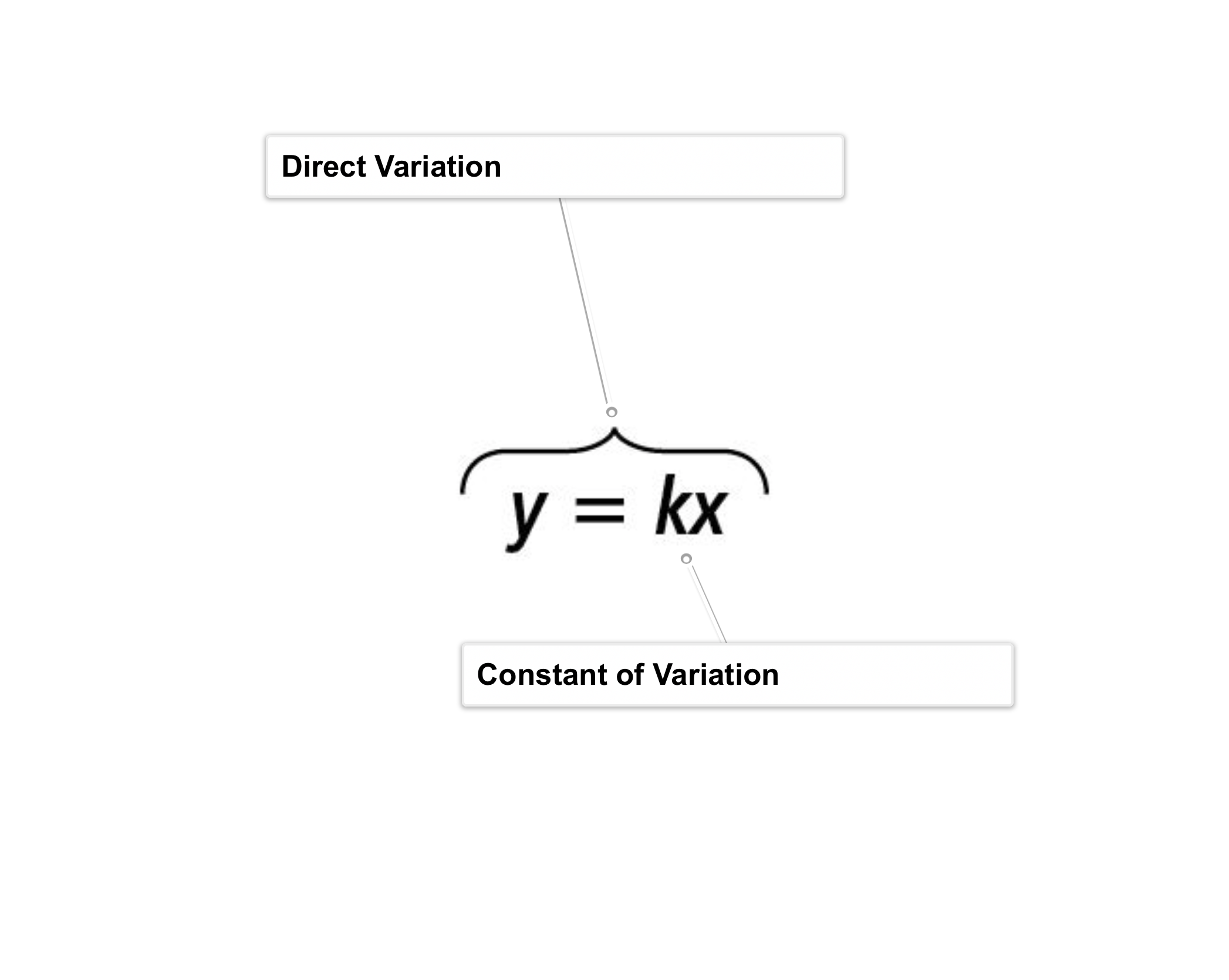
Take Note: Define what it means for two variables to have a direct variation relationship.
Take Note: Provide an example equation that represents a direct variation relationship.

Problem 1 Got It?

Problem 1 Got It?
Video Check: Select all that apply with regards to the video embedded directly above this item.

Problem 2 Got It?

Problem 2 Got It?
Video Check: Select all that apply with regards to the video embedded directly above this item.

Problem 3 Got It?
Video Check: Select all that apply with regards to the video embedded directly above this item.
Problem 4 Got It? The number of Calories varies directly with the mass of cheese. If 50 grams of cheese contain 200 Calories, how many Calories are in 70 grams of cheese?
Video Check: Select all that apply with regards to the video embedded directly above this item.

Take Note: What do all graphs of direct variation functions have in common?
Take Note: Graph an example of a direct variation function. Zoom and pan your graph to establish an appropriate viewing window.
Problem 5 Got It? Graph each direct variation equation on the canvas. Use contrasting colors.

🧠 Retrieval Practice:
Summarize the mathematical content of this lesson. What topics, ideas, and vocabulary were introduced?
Solve It! You are building a roof. You mark off four equal intervals from point A to point B. Then you place vertical posts as shown in the diagram. What are the heights of the four vertical posts? Select all that apply.
Take Note: Which of the following graphs represent direct variation functions? Select all that apply.