Algebra 2 7-3 Complete Lesson: Logarithmic Functions as Inverses

Last updated almost 4 years ago
38 questions
Note from the author:
A complete formative lesson with embedded slideshow, mini lecture screencasts, checks for understanding, practice items, mixed review, and reflection. I create these assignments to supplement each lesson of Pearson's Common Core Edition Algebra 1, Algebra 2, and Geometry courses. See also mathquest.net and twitter.com/mathquestEDU.

10

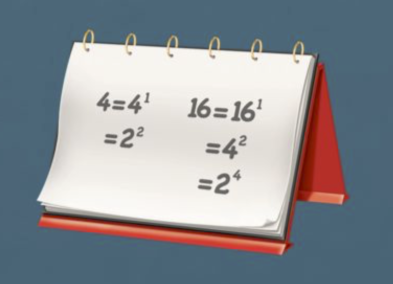
Solve It! The chart shows different ways you can write 4 and 16 in the form ab, in which a and b are integers and a ≠ 1.


What is the smallest number you can write in this ab form in four different ways? In five different ways? In seven different ways?

  • 64
  • 4096
  • 16,777,216
  • 24,287,916
  • In four different ways
  • In five different ways
  • In seven different ways
10

Problem 1 Got It?

10

Problem 1 Got It?

10

Problem 1 Got It?

10

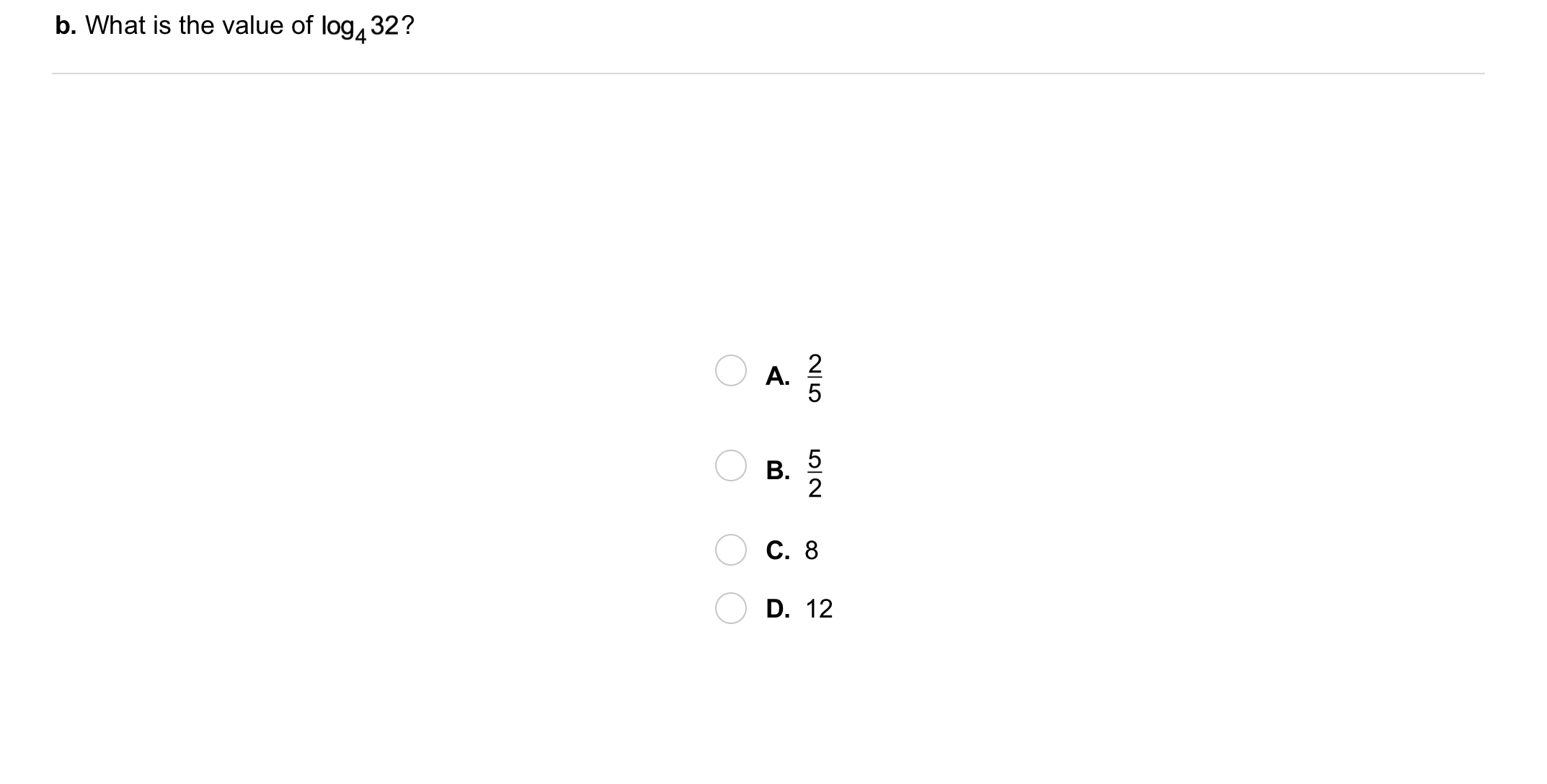
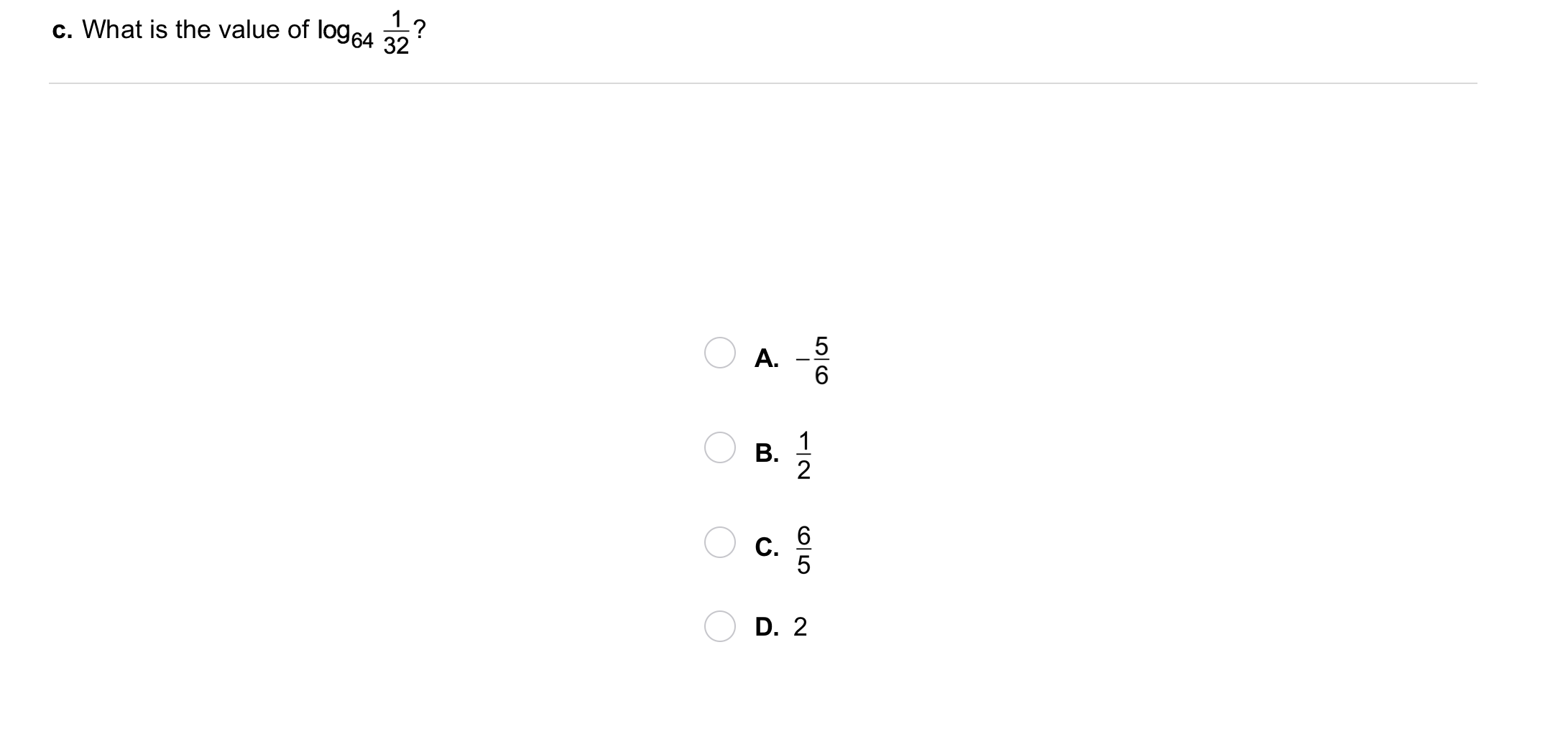
Problem 2 Got It?

10

Problem 2 Got It?

10

Problem 2 Got It?

10

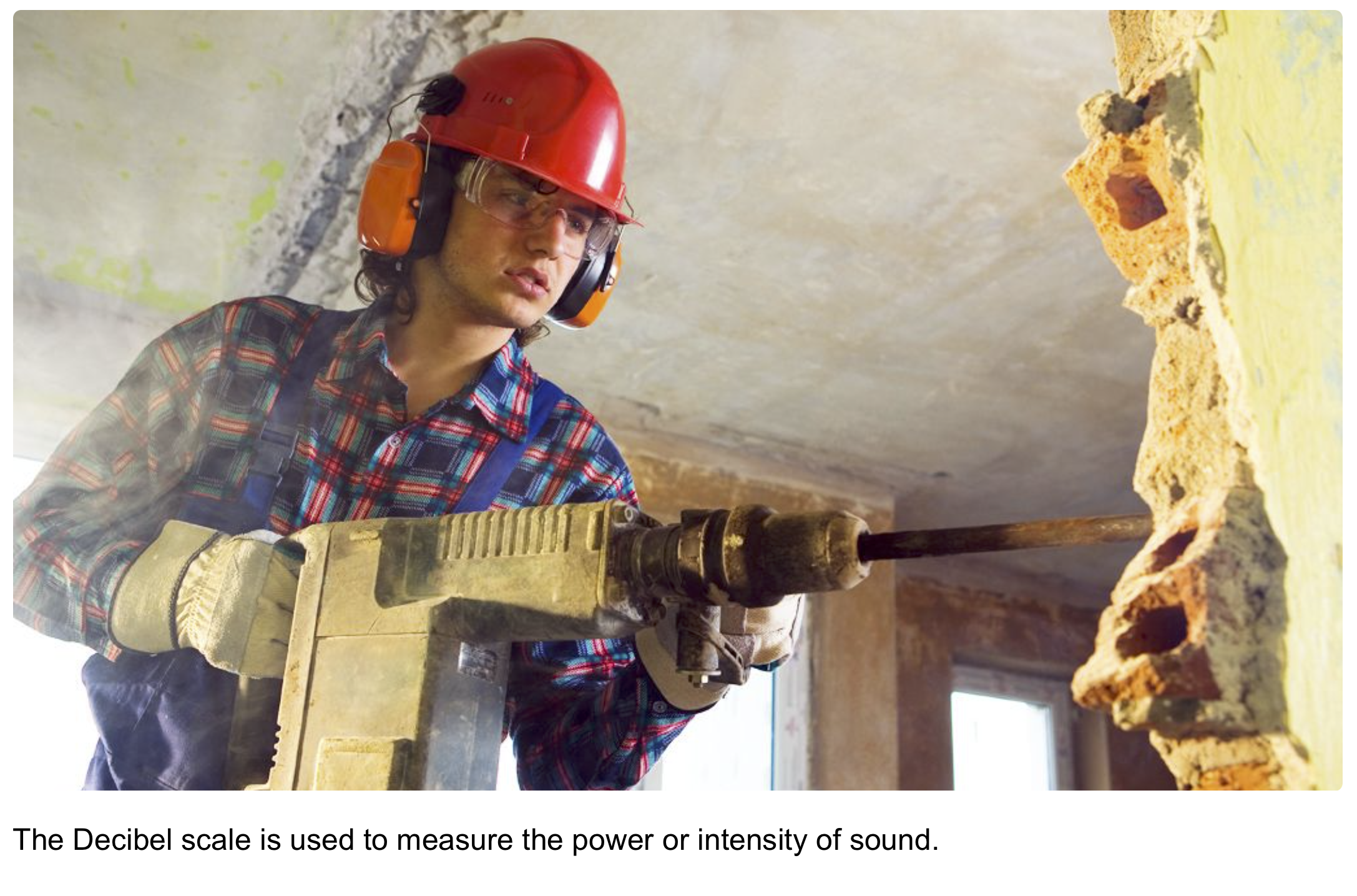
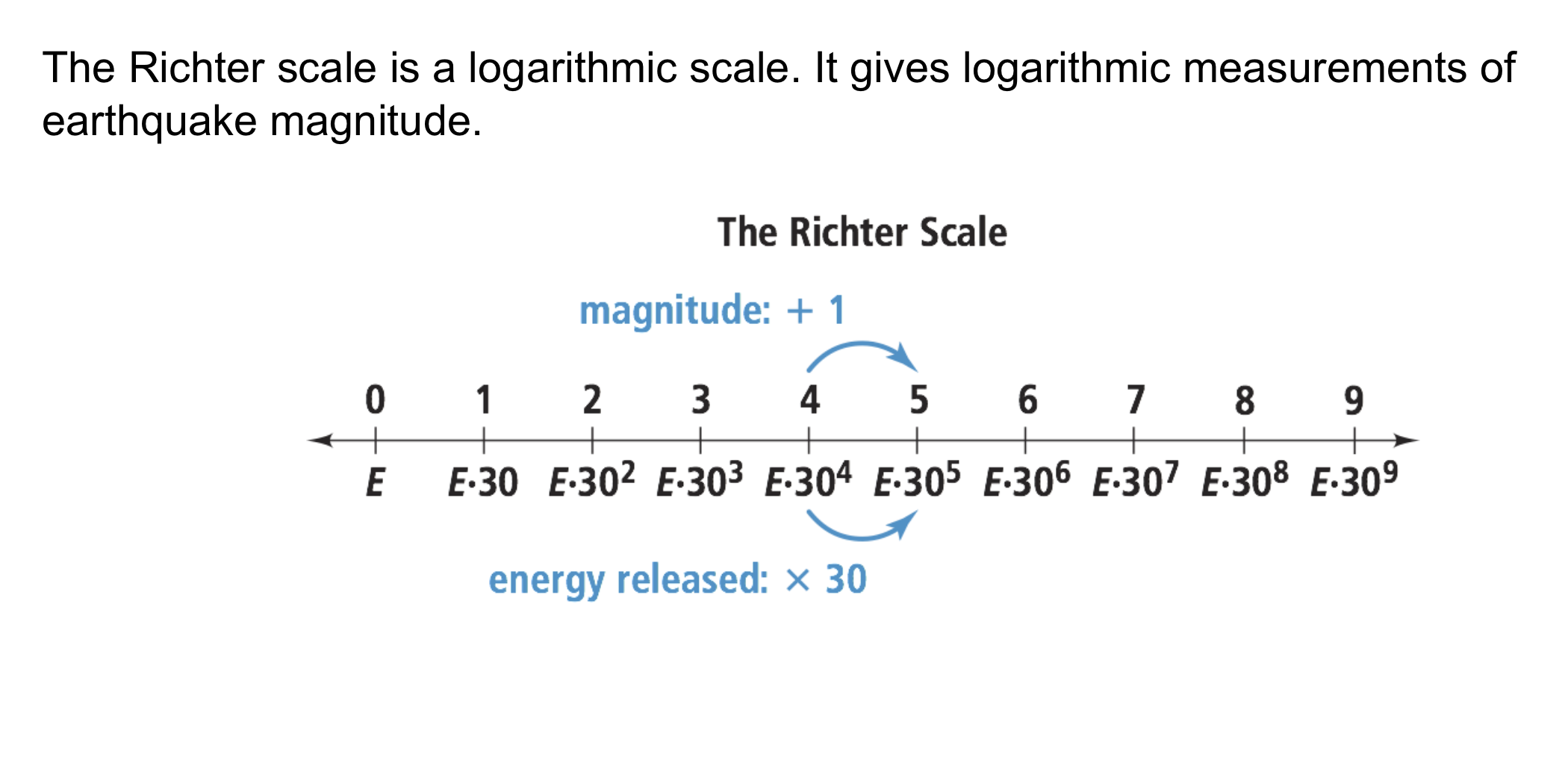
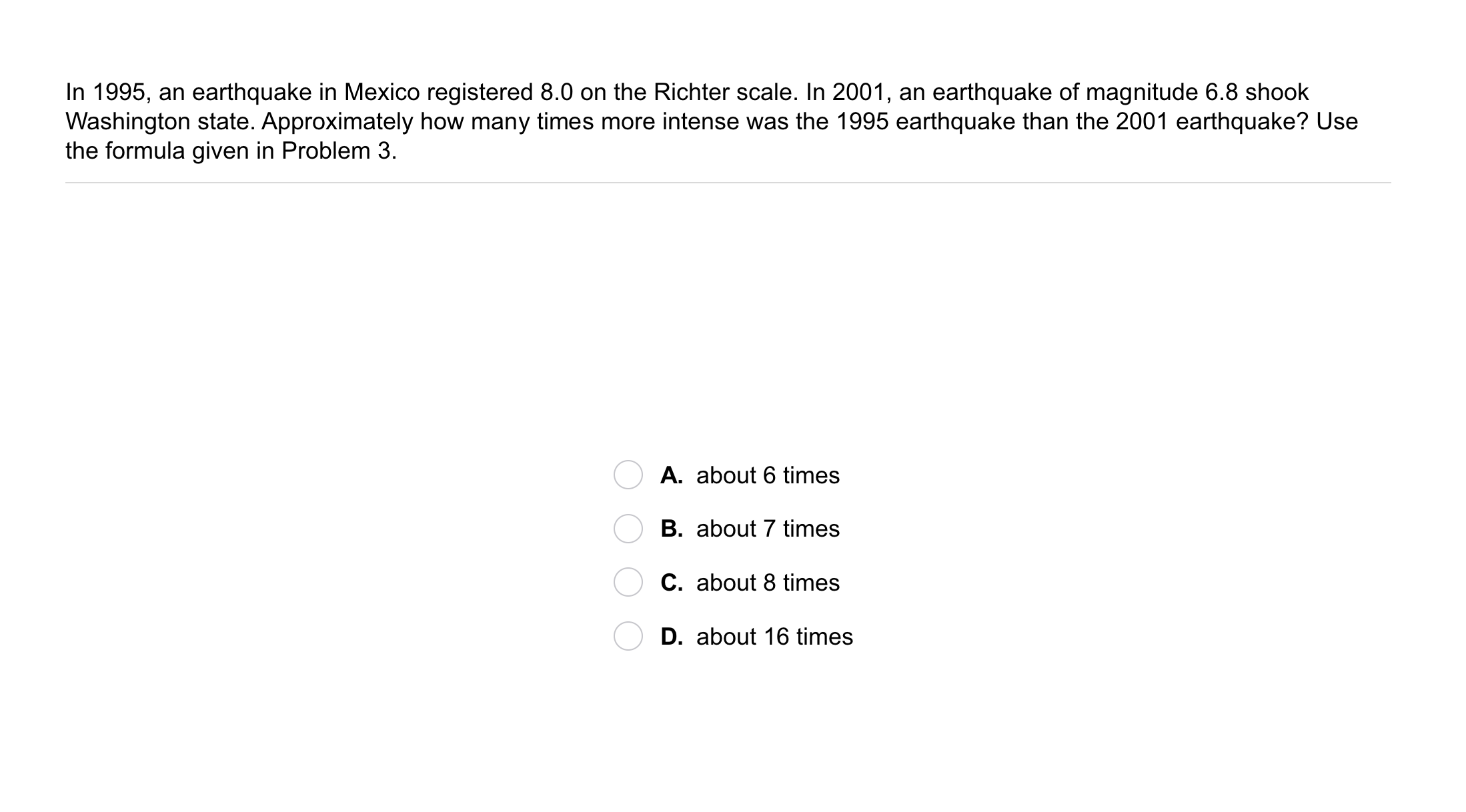
Problem 3 Got It? In 1995, an earthquake in Mexico registered 8.0 on the Richter scale. In 2001, an earthquake of magnitude 6.8 shook Washington state. Approximately how many times more intense was the 1995 earthquake than the 2001 earthquake? Use the Formula in Problem 3.

10

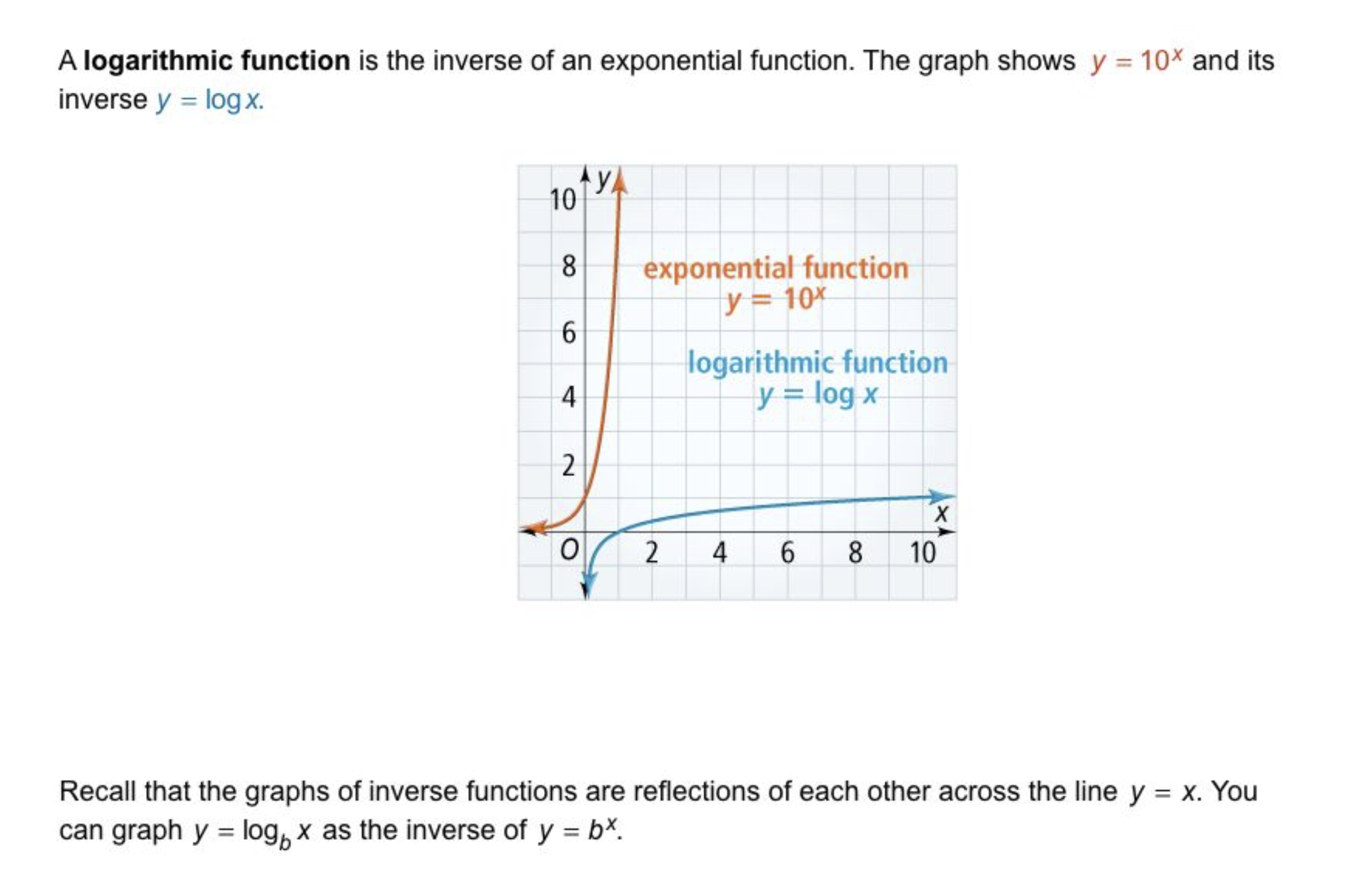
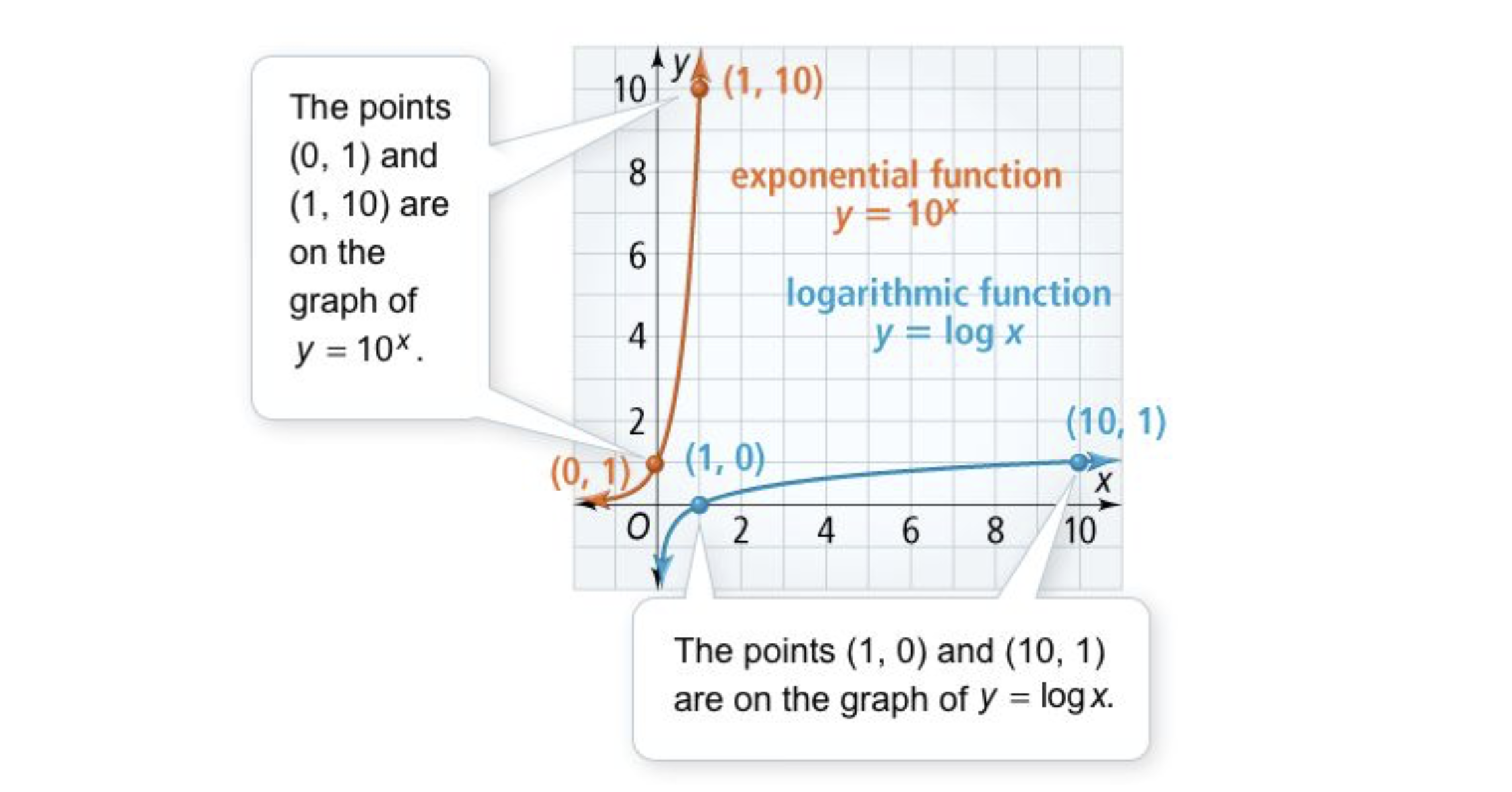
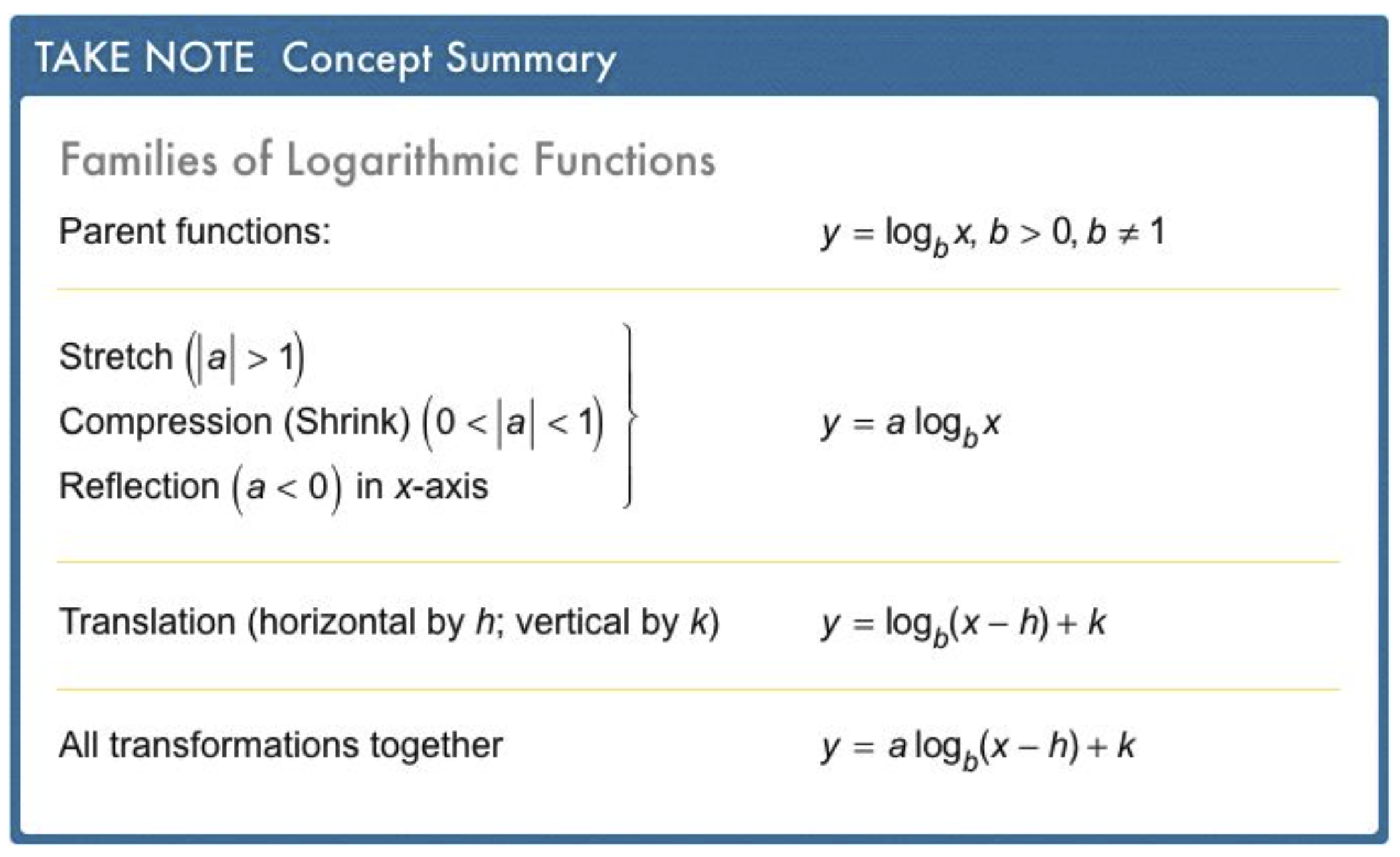
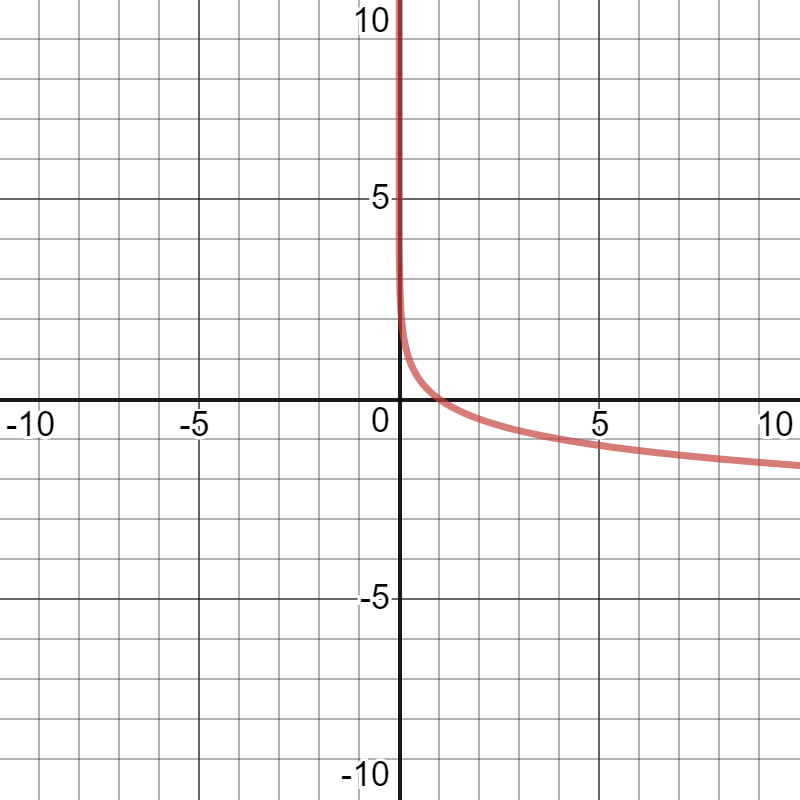
Problem 4 Got It? What is the graph of y = log4x ? Identify the domain, range, y-intercept, and asymptote(s).

  • Domain: x > 0
  • Domain: x > 4
  • Range: y > 0
  • Range: all real numbers
  • y-intercept: 4
  • No y-intercept
  • Vertical asymptote: x = 0
  • No asymptotes
  • Graph of y = log4x
  • Domain of y = log4x
  • Range of y = log4x
  • y-intercept of y = log4x
  • Asymptote(s) of y = log4x
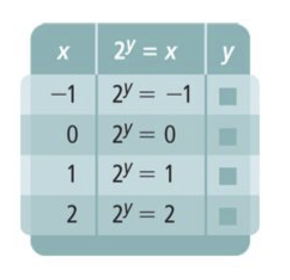
Problem 4 Got It? Reasoning: Suppose you use the table to help you graph y = log2x. (Recall that if y = log2x, then 2y = x.) Complete the table.
2
2
2
2
21

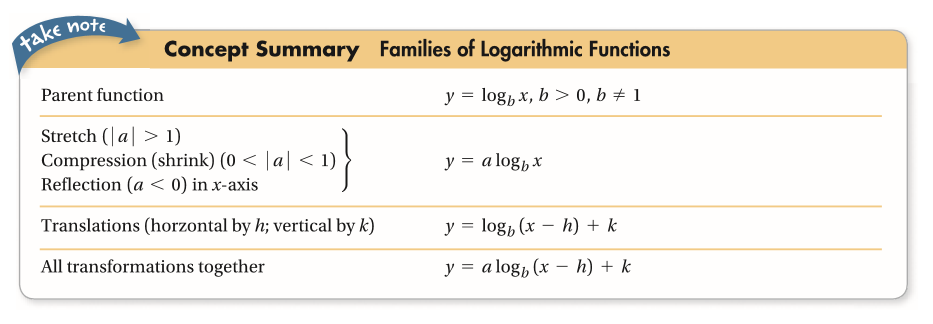
Problem 5 Got It? How does the graph of each function compare to the graph of the parent function? Match the appropriate transformation(s) and domain, range, and asymptote changes with each function on the right.

  • Translate 3 units right
  • Translate 3 units left
  • Translate 4 units down
  • Translate 4 units up
  • Domain, range, and asymptote remain the same
  • Domain changes from x > 0 to x > 3
  • Range remains all real numbers
  • Asymptote changes from x = 0 to x = 3
  • Stretch vertically by a factor of 3
5
5
5
5
5
5
5
5
5

Vocabulary: Determine whether the logarithm is a common logarithm.

5

Vocabulary: Determine whether the logarithm is a common logarithm.

5

Vocabulary: Determine whether the logarithm is a common logarithm.

5

Vocabulary: Determine whether the logarithm is a common logarithm.

10
20

Compare and Contrast: Compare the graph of the functions.
How are the graphs alike? How are they different?

Complete your response to this item using what you know about translating logarithmic functions before graphing both functions on the embedded Desmos graphing calculator below.
Revise your response, if necessary.

5

Review Lesson 7-2: Graph the function. Zoom and pan your graph to establish an appropriate viewing window.

5

Review Lesson 7-2: Graph the function. Zoom and pan your graph to establish an appropriate viewing window.

5

Review Lesson 7-2: Graph the function. Zoom and pan your graph to establish an appropriate viewing window.

10

Review Lesson 4-4: Factor the expression.

10

Review Lesson 4-4: Factor the expression.

10

Review Lesson 1-3: Evaluate each expression for the given value of the variable.

  • ¼
  • 2
  • 256
10

Vocabulary Review: Identify the base in each power.

  • x
  • x - 2
  • -2
  • 2
  • 4x
  • 4
  • The base of the power
  • The base of the power
  • The base of the power
10

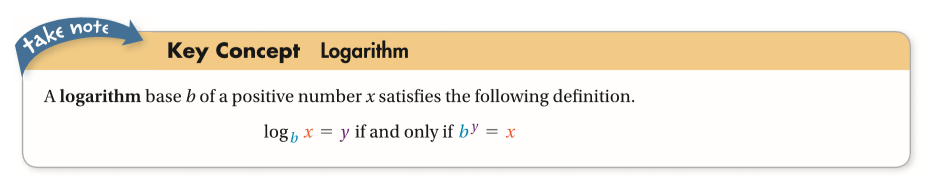
Use Your Vocabulary: Match each logarithmic expression with its description in words.

  • log base x of y
  • log base 3 of 4
  • log base 4 of 3
  • log base y of x
100

Notes: Take a clear picture or screenshot of your Cornell notes for this lesson. Upload it to the canvas. Zoom and pan as needed.

For a refresher on the Cornell note-taking system, click here.

10

Reflection: Math Success