What does the photograph portray that helps the reader understand the passage?

What does the photograph portray that helps the reader understand the passage?
RCSD- Oakdale elementary 6th grade
The Chicago Poet
By Carl Sandburg
I saluted a nobody.
I saw him in a looking-glass.
He smiled—so did I.
He crumpled the skin on his forehead, frowning—so did I.
[5] Everything I did he did.
I said, “Hello, I know you.”
And I was a liar to say so.
Ah, this looking-glass man!
Liar, fool, dreamer, play-actor,
[10] Soldier, dusty drinker of dust—
Ah! He will go with me
Down the dark stairway
When nobody else is looking,
When everybody else is gone.
[15] He locks his elbow in mine,
I lose all—but not him.
Part A. What is a theme of "Chicago Poet"?
Part B. Which two lines from the poem supports the theme?
What does the photograph portray that helps the reader understand the passage?
In the poem, "Chicago Poet," what is the author referring to as "a looking glass"?
Who is the poet referring to in lines 9-10 when he says, "Liar, fool, dreamer, play-actor, soldier, dirty drinker of dust—"?
What does the reader learn about the poet through his use of the word liar in line 7?
The Village Blacksmith
By Henry Longsworth Longfellow
Under a spreading chestnut-tree
The village smithy stands;
The smith, a mighty man is he,
With large and sinewy hands;
[5] And the muscles of his brawny arms
Are strong as iron bands.
His hair is crisp, and black, and long,
His face is like the tan;
His brow is wet with honest sweat,
[10] He earns whate’er he can,
And looks the whole world in the face,
For he owes not any man.
Week in, week out, from morn till night,
You can hear his bellows blow;
[15] You can hear him swing his heavy sledge,
With measured beat and slow,
Like a sexton ringing the village bell,
When the evening sun is low.
And children coming home from school
[20] Look in at the open door;
They love to see the flaming forge,
And hear the bellows roar,
And catch the burning sparks that fly
Like chaff from a threshing-floor.
[25] He goes on Sunday to the church,
And sits among his boys;
He hears the parson pray and preach,
He hears his daughter’s voice,
Singing in the village choir,
[30] And makes his heart rejoice.
It sounds to him like her mother’s voice,
Singing in Paradise!
He needs must think of her once more,
How in the grave she lies;
[35] And with his hard, rough hand he wipes
A tear out of his eyes.
Toiling, -rejoicing, -sorrowing,
Onward through life he goes;
Each morning sees some task begun,
40Each evening sees its close!
Something attempted, something done,
Has earned a night’s repose.
Thanks, thanks to thee, my worthy friend,
For the lesson thou hast taught!
[45] Thus at the flaming forge of life
Our fortunes must be wrought;
Thus on its sounding anvil shaped
Each burning deed and thought.
How do the poems "Chicago Poet" and "The Village Blacksmith" show different views of life?
Which lines from "The Village Blacksmith" can be used to support the theme that people can overcome life's hardships?
How does the phrase “Onward through life he goes” in line 38 impact the tone of the poem?
What does the phrase “And looks the whole world in the face, For he owes not any man” in lines 11-12 mean?
Which inference can be drawn about the blacksmith in lines 31-36?
Choose two statements that should be included in an accurate summary of the poem.
Accidental Invention
1. People have been chewing forms of gum for thousands of years. Early fossil records from Finland have shown teeth marks in the tar of bark. Whether or not the Neolithic people knew it, the bark was very good for their dental hygiene. Aztecs, Ancient Greeks, and even American Indians all had their own variations of the chewy substance, but the modern version that many Americans have come to enjoy was invented accidentally by a man named Thomas Adams in 1870.
2. During the 1860s, Adams was a photographer living in Staten Island, New York. He bounced around from job to job and had a passion for experiments and inventions, but he experienced little success until a chance encounter with an exiled general from Mexico.
3. General Antonio Lopez de Santa Anna was over 70 years old and had experienced many historical events in his lifetime before his encounter with Adams. The general had fought in coups to overthrow tyrannical Mexican presidents, defended Mexico's freedom from Spain, and had even been a leading force in the Battle of the Alamo when Mexico tried to take back Texas from the United States. Santa Anna had also led Mexico as its 8th president and later as a dictator. It was after his dictatorship that Santa Anna was exiled from Mexico for the second time, and he ended up as a boarder in Thomas Adams' house in New York.
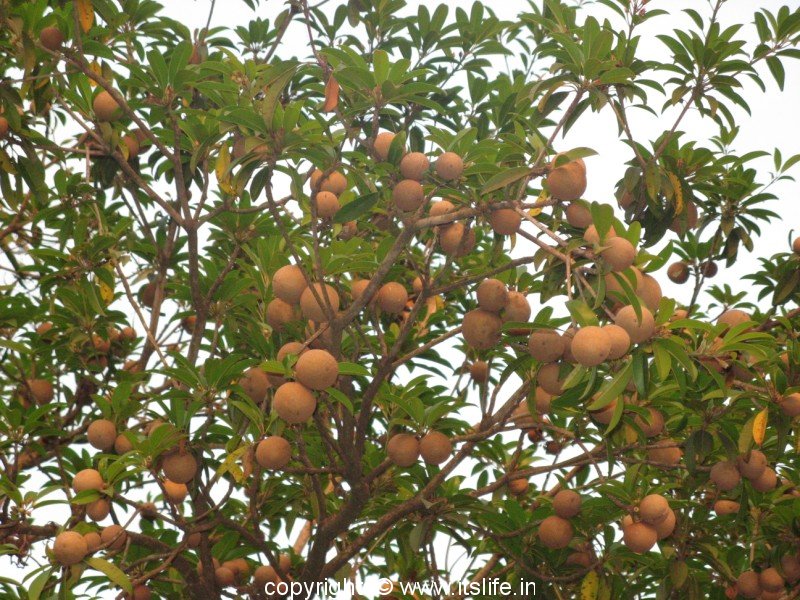
4. While Santa Anna was staying with Thomas, Thomas attempted to develop a cheap synthetic replacement for rubber because of its high demand. At the time, rubber was used for tires, shoes, toys, and many other products, but it was expensive, and there were few factories still producing it immediately after the Civil War. Santa Anna witnessed these experiments and suggested that Thomas try chicle which was a substance obtained from Mexican sapodilla trees. It naturally had a rubbery texture, and Santa Anna would chew on small pieces absent-mindedly. The former Mexican general used some of his remaining connections in Mexico to deliver a shipment of the tree product to Staten Island.
5. Thomas first attempted to make bicycle tires from the chicle, but the substance was not tough enough to maintain the necessary shape. Thomas spent months trying to develop a viable use for the chicle, but every experiment failed, and he had to give up on it as a replacement for rubber. By this time, Thomas had quit his job as a photographer and faced difficult financial problems. The only asset he had was the large shipment of chicle that Santa Anna had provided, and he had no way of making money from it until a day in 1869 when he happened across a candy store.
6. Thomas saw a young girl buy a piece of candy that she popped into her mouth and started chewing. It reminded Thomas of Santa Anna chewing chicle, so Thomas asked the store owner about the candy and found out that it was a gum made from gooey wax and was quite popular. Thomas ran home and immediately began experimenting with the chicle as a candy and soon developed the modern version of chewing gum. He went back to the candy store owner, and the owner agreed to sell the gum and see how his customers liked it. The rest is history.
7. Within two years, Thomas' Adams New York Chewing Gum company was producing "Chiclets" and other flavored gum in factories and became a national phenomenon. At one penny a piece, the chewing gum was affordable, and it increased in popularity as Thomas invented flavored gums and the gum vending machine. Thomas never became a famous photographer, but his accidental invention (with the help of an exiled Mexican general) definitely made a mark on American history.
Which line from the text summarizes the central idea?
Which of the following would occur last in an accurate summary of "The Accidental Invention"?
Part A. How does the passage support the idea that Thomas Adams made a significant impact on history by inventing chewing gum?
Part B. Which of the sentences from the passage shows evidence of the answer in Part A.
Based on its use in paragraph 5, what does the word viable mean?
What does the author mean by the phrase “absent-mindedly” in paragraph 4?
How does the photograph help the reader develop an understanding of the topic?
Using the topic of “Chewing Gum,” create 3 key points with 2 details for each to organize this information using a "boxes and bullets essay structure."
(Your teacher will give you instructions on how to format this)