Algebra 2 5-0 Get Ready for Chapter 5
star
star
star
star
star
Last updated over 3 years ago
14 Nsɛmmisa

15
20
10
10
10
10
10
10
15
15

10
5
5
10
Graphing Quadratic Functions (Lesson 4-2)
Use the graphing utility at desmos.com to graph the quadratic function
Zoom and pan your graph to establish an appropriate viewing window.
Click on the vertex of the parabola to label its coordinates.
Graph a vertical line to represent the axis of symmetry of the parabola.
Take a screenshot of your final graph.
Upload or paste your screenshot onto the canvas.
Writing Equations of Parabolas (Lesson 4-3)
Write in standard form the equation of the parabola passing through the given points.
Show all of your work on the canvas. If you use Desmos to generate the regression equation, you may add a screenshot of that work to the canvas.
You may also complete your work on paper or on a whiteboard and upload a clear picture of it to the canvas.
Solving Quadratic Equations by Graphing (Lesson 4-5)
Rewrite the quadratic equation in standard form.
Substitute
Zoom and pan your graph to establish an appropriate viewing window.
Click on both x-intercepts of your graph to label their coordinates.
Take a screenshot of your graph.
Upload or paste the screenshot to the canvas.
Solving Quadratic Equations by Graphing (Lesson 4-5)
Identify the solution(s) of the quadratic equation from the graph in the previous item.
Select all that apply.
Solving Quadratic Equations by Graphing (Lesson 4-5)
Replace
Zoom and pan your graph to establish an appropriate viewing window.
Click on both x-intercepts of your graph to label their coordinates.
Take a screenshot of your graph.
Upload or paste the screenshot to the canvas.
Solving Quadratic Equations by Graphing (Lesson 4-5)
Identify the solution(s) of the quadratic equation from the graph in the previous item.
Select all that apply.
Solving Quadratic Equations by Factoring (Lesson 4-5)
Solve the equation by factoring. Show your work on the canvas. You may also complete your work on paper or on a whiteboard and upload a clear picture of it to the canvas.
Select all that apply.
Solving Quadratic Equations by Factoring (Lesson 4-5)
Solve the equation by factoring. Show your work on the canvas. You may also complete your work on paper or on a whiteboard and upload a clear picture of it to the canvas.
Select all that apply.
Finding the Number and Type of Solutions (Lesson 4-7)
Evaluate the discriminant of the equation. Tell how many solutions the equation has and whether the solutions are real or imaginary.
real
imaginary
The discriminant is __?__.
The equation has __?__ solutions.
The solution(s) are __?__.
Finding the Number and Type of Solutions (Lesson 4-7)
Evaluate the discriminant of the equation. Tell how many TOTAL solutions the equation has (not just real solutions, consider the Quadratic Formula) and whether the solutions are real or imaginary.
real
imaginary
The discriminant is __?__.
The equation has __?__ solutions.
The solution(s) are __?__.
A turning point is a place where a graph changes direction. Suppose you start hiking north on a winding trail, and the trail makes a turn and heads south, and then north again.
If you begin hiking north make a total of three 180 degree turns, in which direction will you be hiking after the last turn?
A relative maximum is the greatest value in a region.
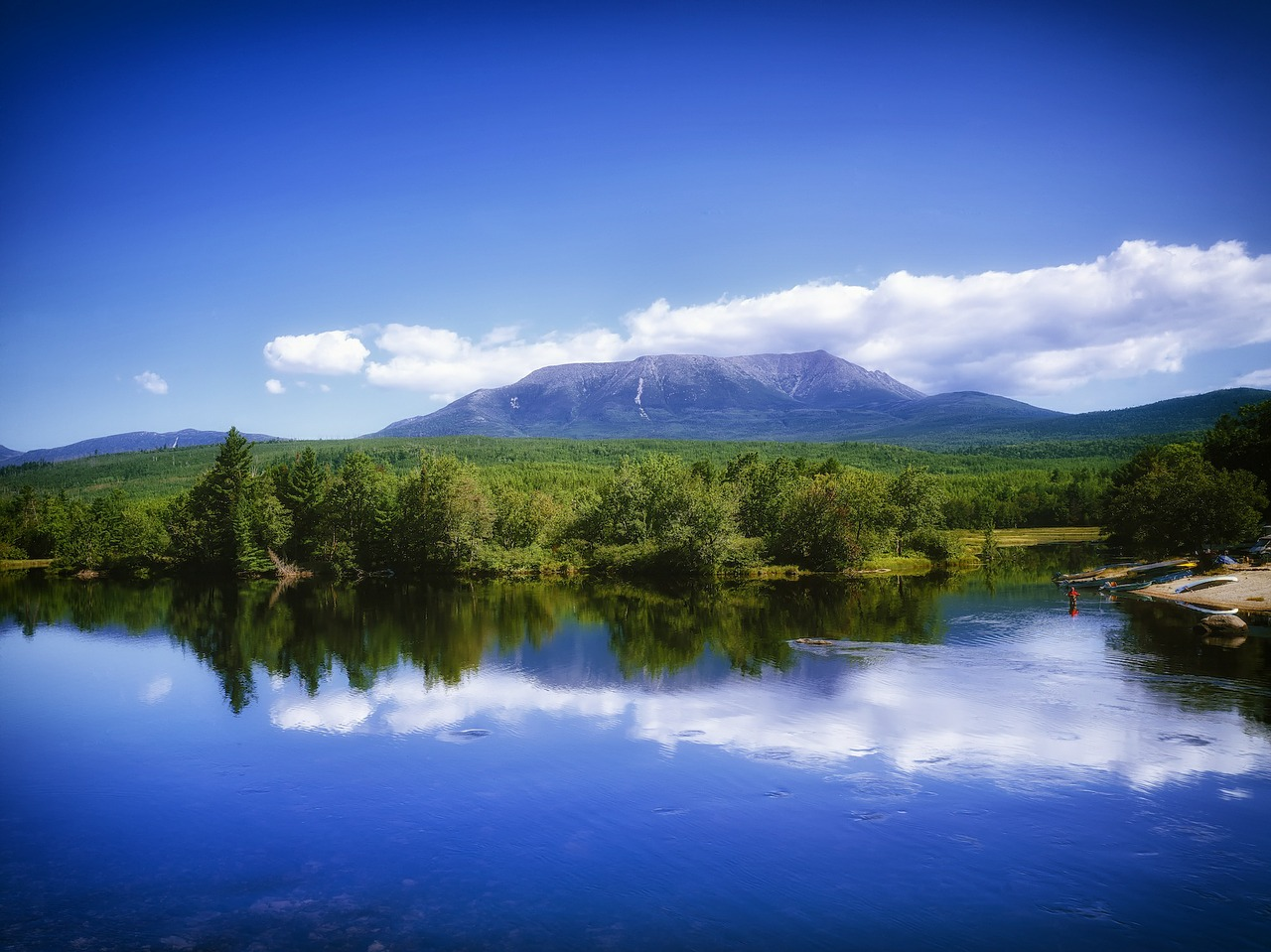
The highest point in Maine is Mt. Katahdin at 5267 ft. How might that compare to the highest point in the United States?
A relative maximum is the greatest value in a region.
What might the relative maximum of a graph be?
A contraction is a shortened form of a word or phrase.
The expanded form of the contraction "don't" is "do not."
You can expand a math phrase by multiplying it out.
For example,
Expand