Twa kɔ nsɛm atitiriw so
Log in
Sign up for FREE
arrow_back
Laabri

Algebra 2 5-2 Complete Lesson: Polynomials, Linear Factors, and Zeros

star
star
star
star
star
Last updated over 4 years ago
27 Nsɛmmisa
Hyɛ no nsow a efi ɔkyerɛwfo no hɔ:

A complete formative lesson with embedded slideshow, mini lecture screencasts, checks for understanding, practice items, mixed review, and reflection. I create these assignments to supplement each lesson of Pearson's Common Core Edition Algebra 1, Algebra 2, and Geometry courses. See also mathquest.net and twitter.com/mathquestEDU.

30
F.IF.7.c
10
A.APR.3
10
F.IF.7.c
10
F.IF.7.c

10
A.APR.3
10
F.IF.7.c
10
F.IF.7.c
10
A.APR.3
10
A.APR.3

10
10
10
A.APR.3
10
A.REI.4.b
A.SSE.3.a

10
A.SSE.1.a
10
10
F.IF.7.c
10
100
10
A.APR.3
F.IF.7.c
Asemmisa {{asɛmmisaAhyɛnsode}}
1.

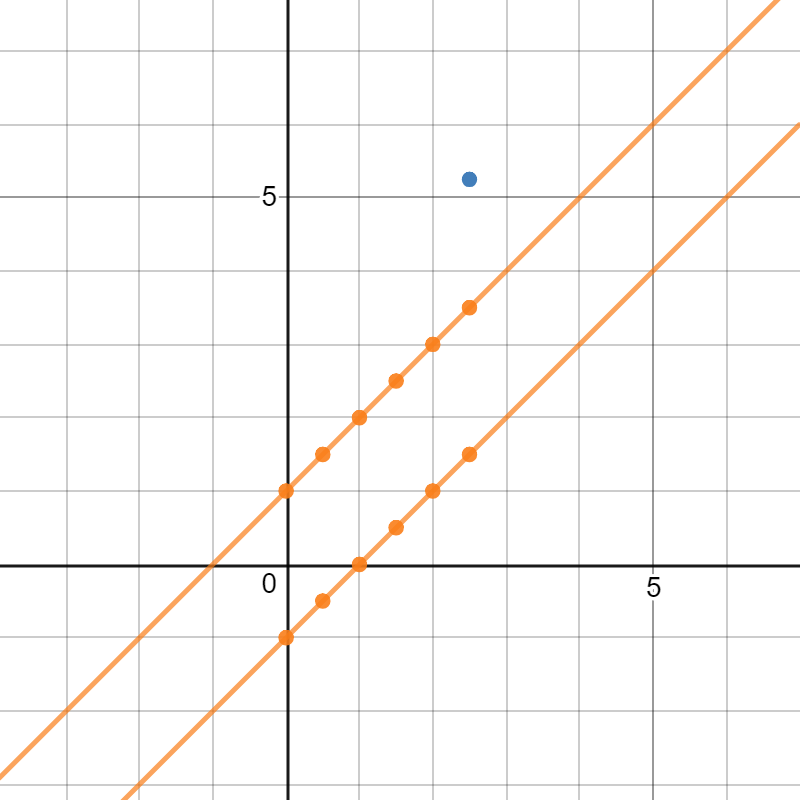
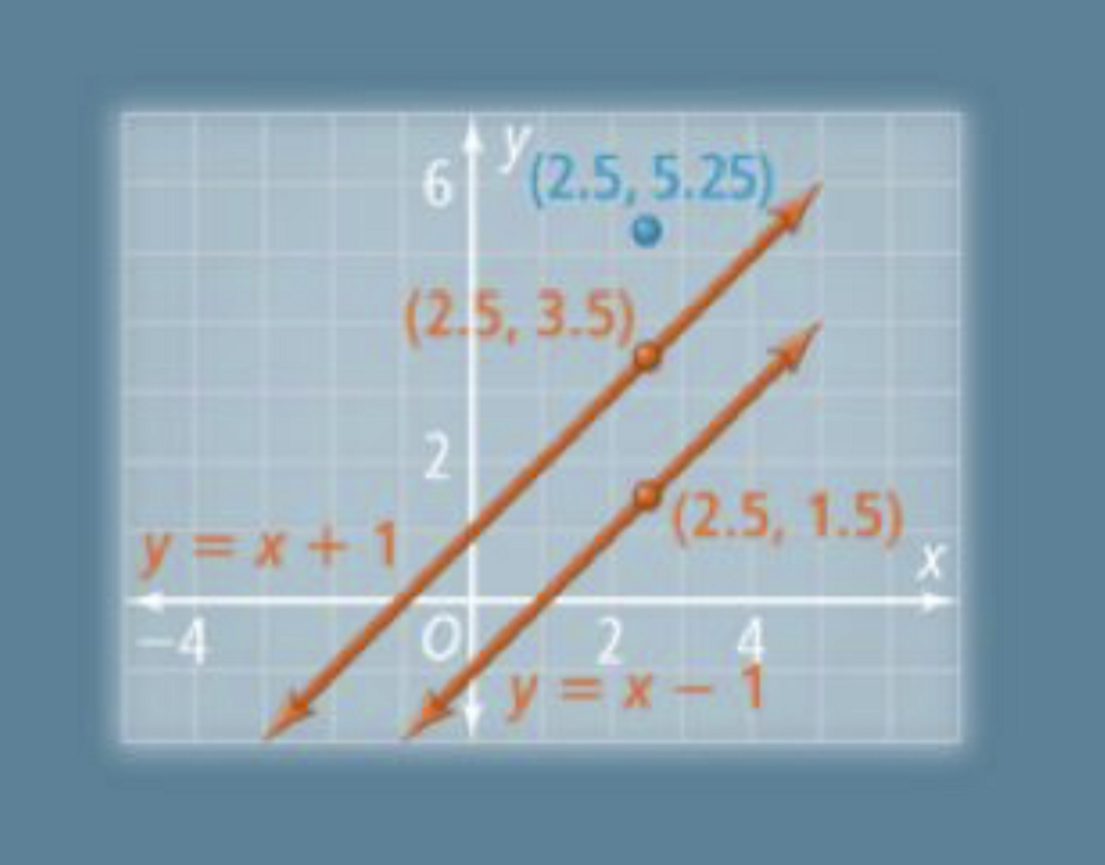
Sovle It! Two linear equations are graphed in orange. At x =2.5, the product of the y-values on the two graphs is 1.5 • 3.5 = 5.25. The resulting product point, (2.5, 5.25), is shown in blue.

This diagram has been recreated using Desmos.

Instructions

1. Open a copy of the Desmos graph by clicking here.

2. Plot product points at inputs of 0, 0.5, 1, 1.5, and 2.

Take note of any patterns you see as you calculate and plot product points.

3. Click each product point to create coordinate labels.

4. Take a screenshot of your completed graph. Make sure you capture each product point and its label.

5. Upload your screenshot to the canvas.

10
Asemmisa {{asɛmmisaAhyɛnsode}}
2.

Problem 1 Got It?

A.APR.3
Asemmisa {{asɛmmisaAhyɛnsode}}
3.

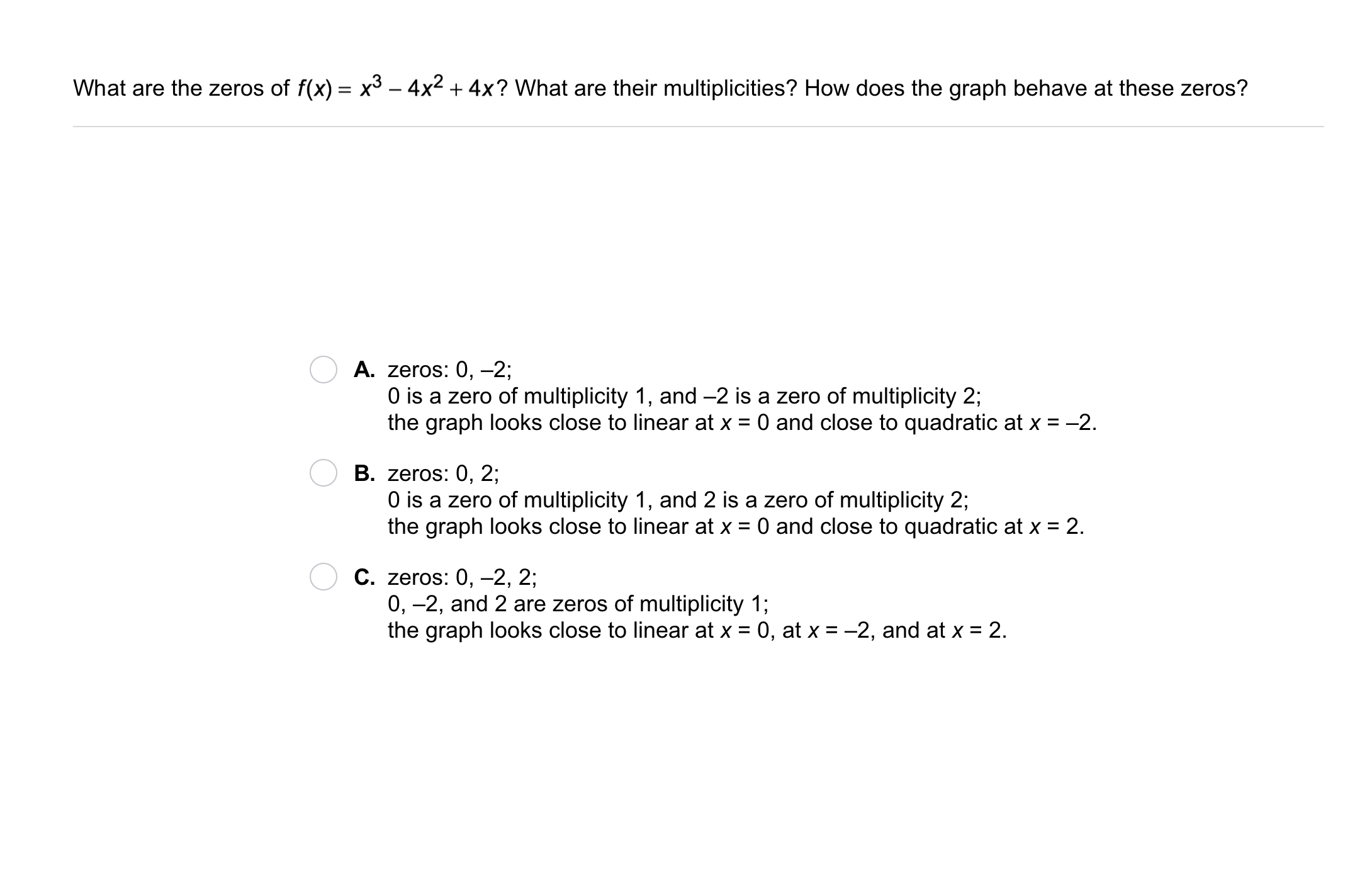
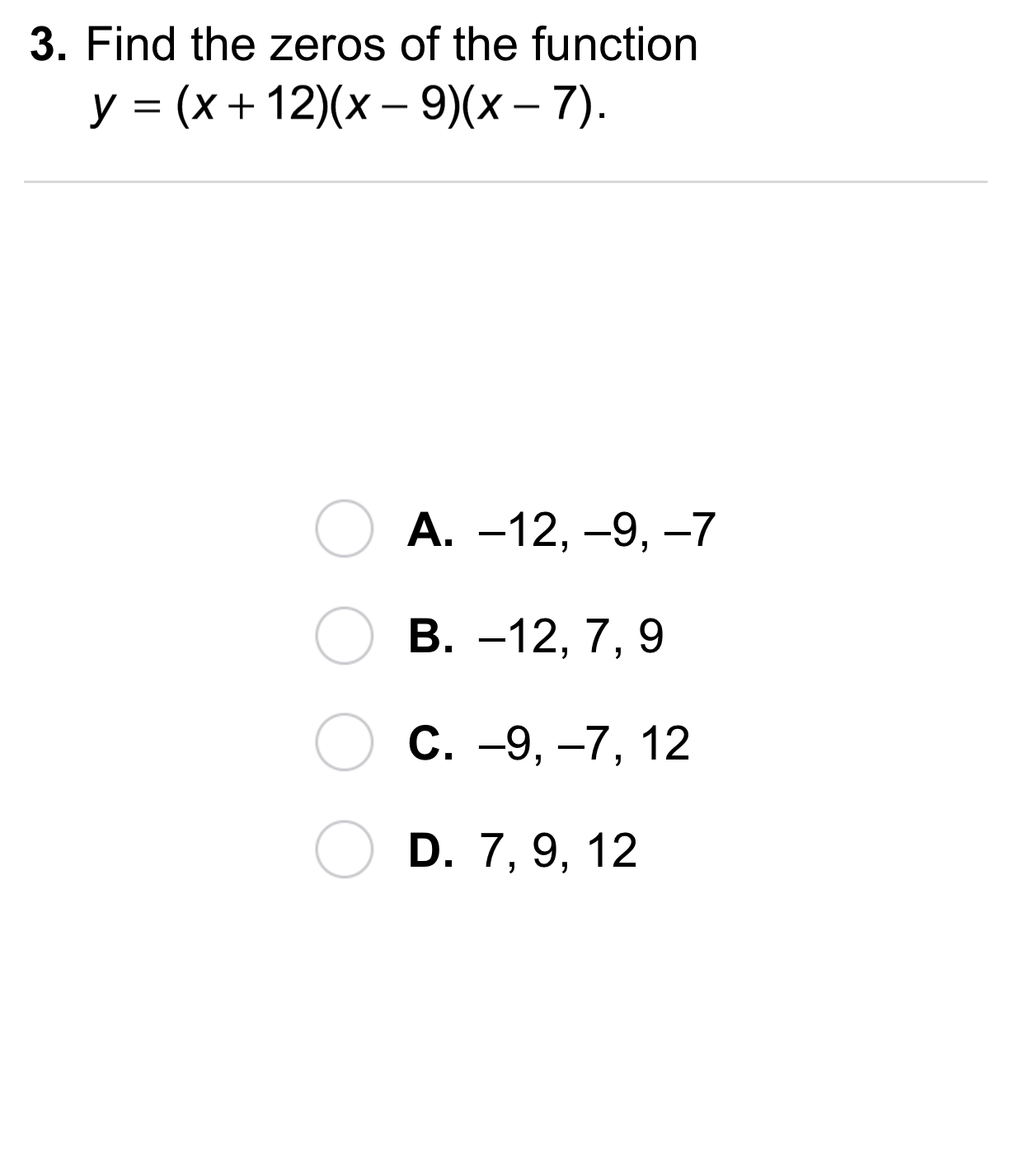
Problem 2 Got It? What are the zeros of the polynomial function?

Select all that apply.

Asemmisa {{asɛmmisaAhyɛnsode}}
4.

Problem 2 Got It? Sketch a graph of the polynomial function. Use a color other than black.

Be sure to include relevant graph detail: label axes, indicate units and scale on both axes, and use arrows to represent end behavior, as appropriate.

Asemmisa {{asɛmmisaAhyɛnsode}}
5.

Problem 2 Got It? Graph of the polynomial function. Zoom and pan you graph to establish an appropriate viewing window.

You may edit your sketched graph in the previous item, if necessary.

Yɛayi Graphing asɛmmisa type foforo a wɔatu mpɔn adi! Asuafo rentumi mmua saa asɛmmisa yi bio.
Asemmisa {{asɛmmisaAhyɛnsode}}
6.

Problem 3 Got It? Use the factors in the left column to group polynomial expressions that, when set equal to y, match each description in the right column.

  • x

  • (x - 3)

  • (x + 3)

  • A quadratic polynomial function with zeros 3 and -3.

  • A cubic polynomial function with zeros 0, 3, and -3.

Asemmisa {{asɛmmisaAhyɛnsode}}
7.

Problem 3 Got It? Graph the quadratic function and cubic function you created in the previous item on the same plane. Zoom and pan your graph to establish an appropriate viewing window.

Yɛayi Graphing asɛmmisa type foforo a wɔatu mpɔn adi! Asuafo rentumi mmua saa asɛmmisa yi bio.
Asemmisa {{asɛmmisaAhyɛnsode}}
8.

Problem 3 Got It? Reasoning: How are the graphs you created in the previous item different? How are they the same?

10
Asemmisa {{asɛmmisaAhyɛnsode}}
9.

Problem 4 Got It?

A.APR.3
10
Asemmisa {{asɛmmisaAhyɛnsode}}
10.

Problem 5 Got It?

F.IF.7.c
10
Asemmisa {{asɛmmisaAhyɛnsode}}
11.

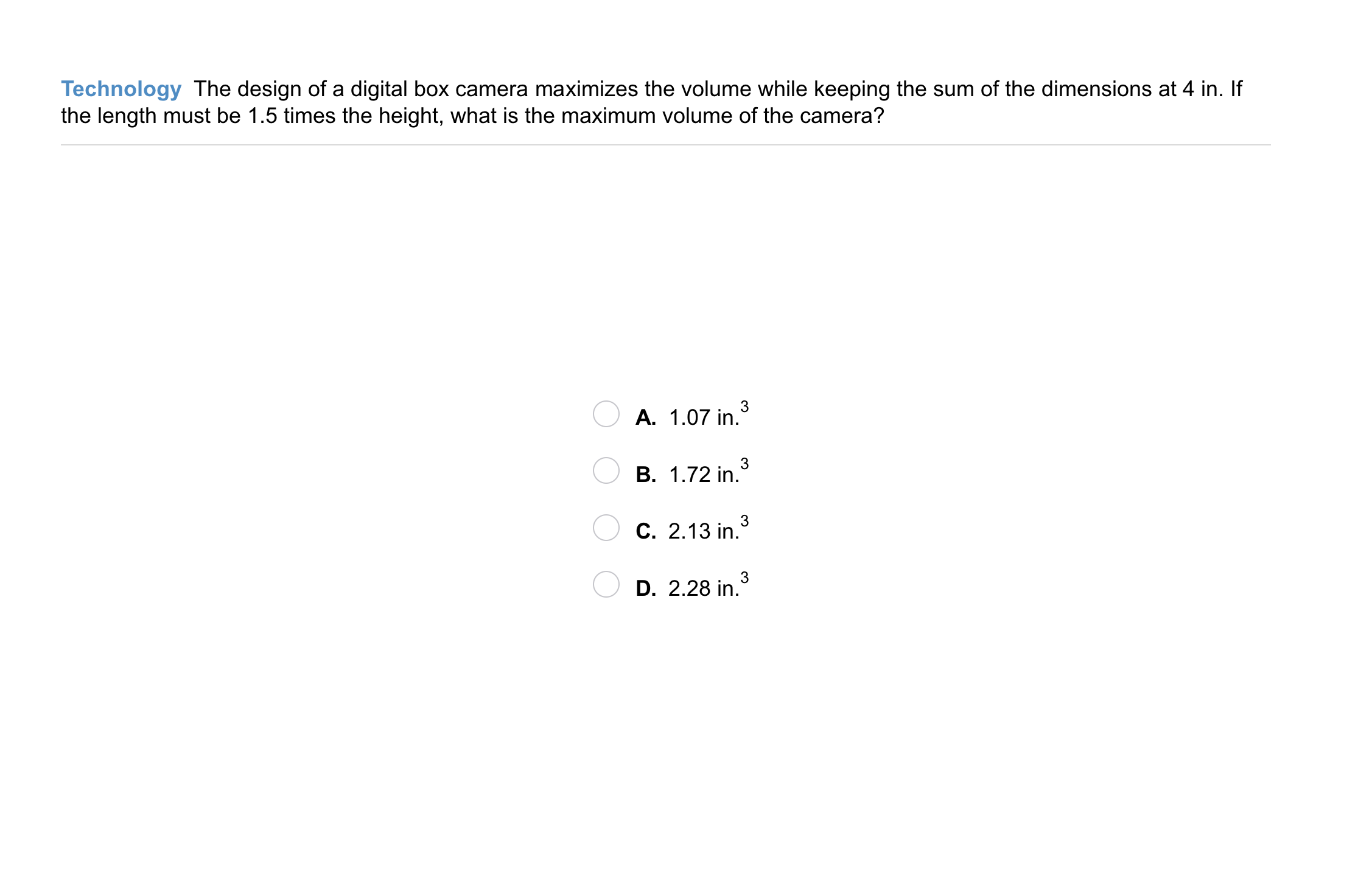
Problem 6 Got It? Technology: The design of a digital box camera maximizes the volume while keeping the sum of the dimensions at 4 in. If the length must be 1.5 times the height, what is the maximum volume of the camera?

F.IF.7.c
10
Asemmisa {{asɛmmisaAhyɛnsode}}
12.
A.APR.3
10
Asemmisa {{asɛmmisaAhyɛnsode}}
13.
A.APR.3
10
Asemmisa {{asɛmmisaAhyɛnsode}}
14.
A.APR.3
10
Asemmisa {{asɛmmisaAhyɛnsode}}
15.

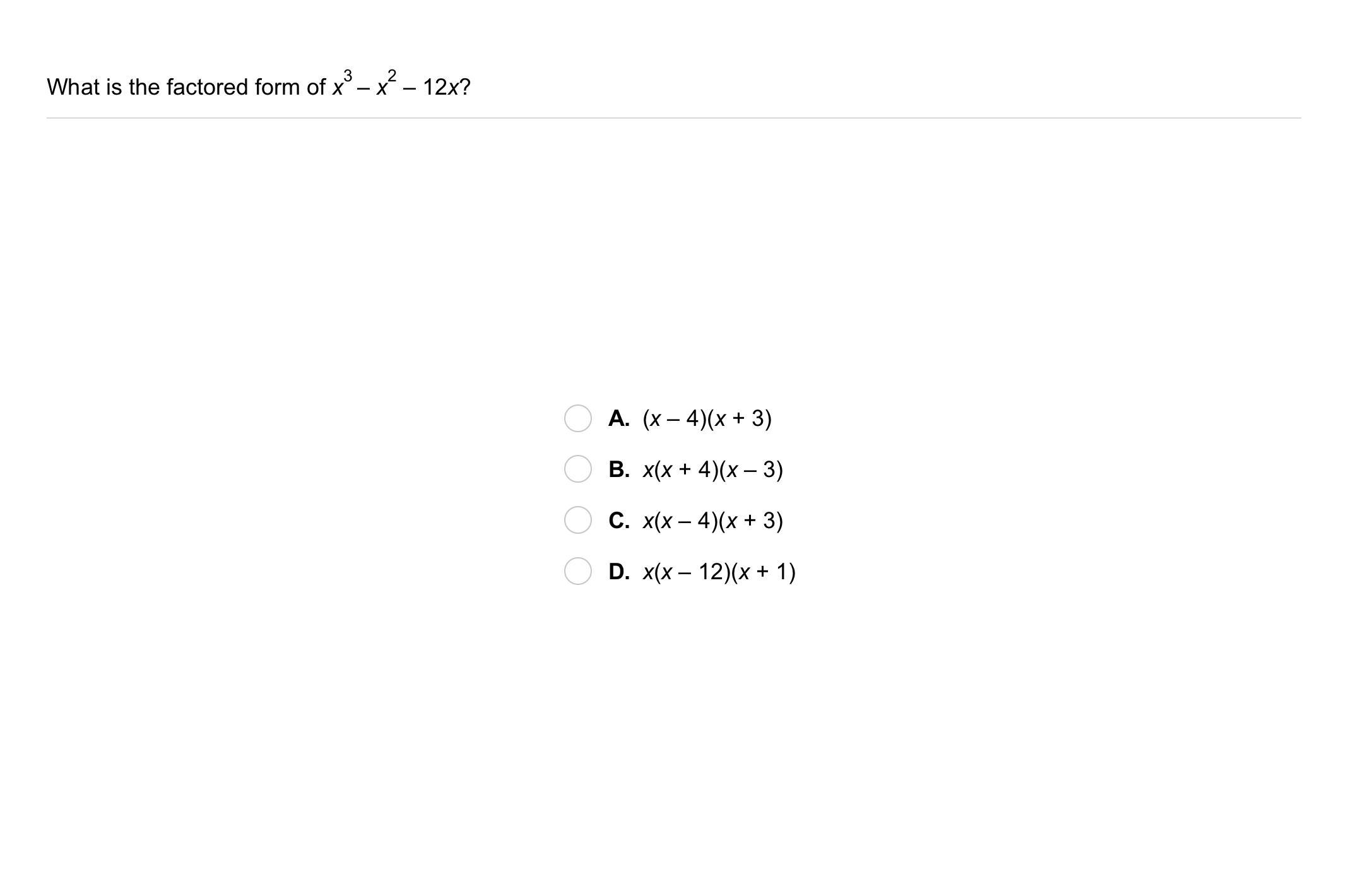
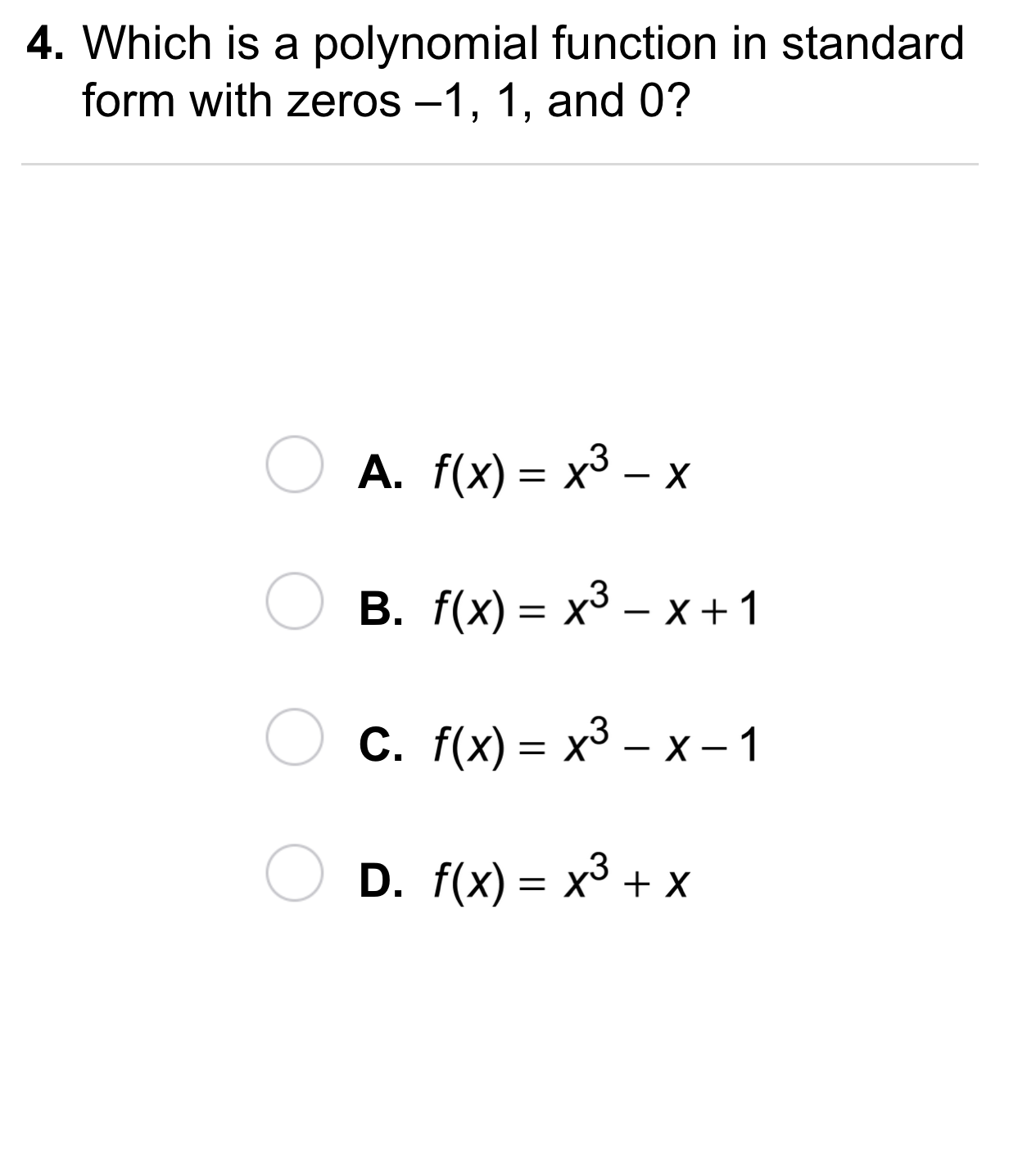
Which is a polynomial function in standard form with zeros -1, 1, and 0?

A.APR.3
Asemmisa {{asɛmmisaAhyɛnsode}}
16.

Vocabulary: Write a polynomial function h in standard form that has 3 and -5 as zeros of multiplicity 2.

Asemmisa {{asɛmmisaAhyɛnsode}}
17.

Error Analysis: Your friend says that to write a function that has zeros 3 and -1, you should multiply the two factors (x + 3) and (x - 1) to get the function below.

Describe and correct your friend's error.

If necessary, use ^2 notation to represent exponents.

Asemmisa {{asɛmmisaAhyɛnsode}}
18.

Review Lesson 5-1: Match each polynomial equation on the left with its version in standard form on the right.

Asemmisa {{asɛmmisaAhyɛnsode}}
19.

Review Lesson 5-1: Classify each polynomial equation on the right by both its degree AND number of terms.

  • quadratic

  • cubic

  • quartic

  • quintic

  • monomial

  • binomial

  • trinomial

Asemmisa {{asɛmmisaAhyɛnsode}}
20.

Review Lesson 4-4: Drag and group the factors (left column) of each expression (right column).

Not all factors will be used.

  • (x - 5)

  • (x + 4)

  • (x - 6)

  • (x + 1)

  • (x + 3)

Asemmisa {{asɛmmisaAhyɛnsode}}
21.

Review Lesson 4-7: Match the solutions on the left with the quadratic equation(s) they solve on the right.

Not all solutions will be used.

  • 2

  • 0.5

  • 2.5

  • -3

  • 3

  • -2.5

  • -0.5

  • -2

Asemmisa {{asɛmmisaAhyɛnsode}}
22.

Vocabulary Review: Which expression does NOT have x⁴ as a factor ?

Asemmisa {{asɛmmisaAhyɛnsode}}
23.

Vocabulary Review: Which factor tree shows the prime factorization of 14x² ?

Asemmisa {{asɛmmisaAhyɛnsode}}
24.

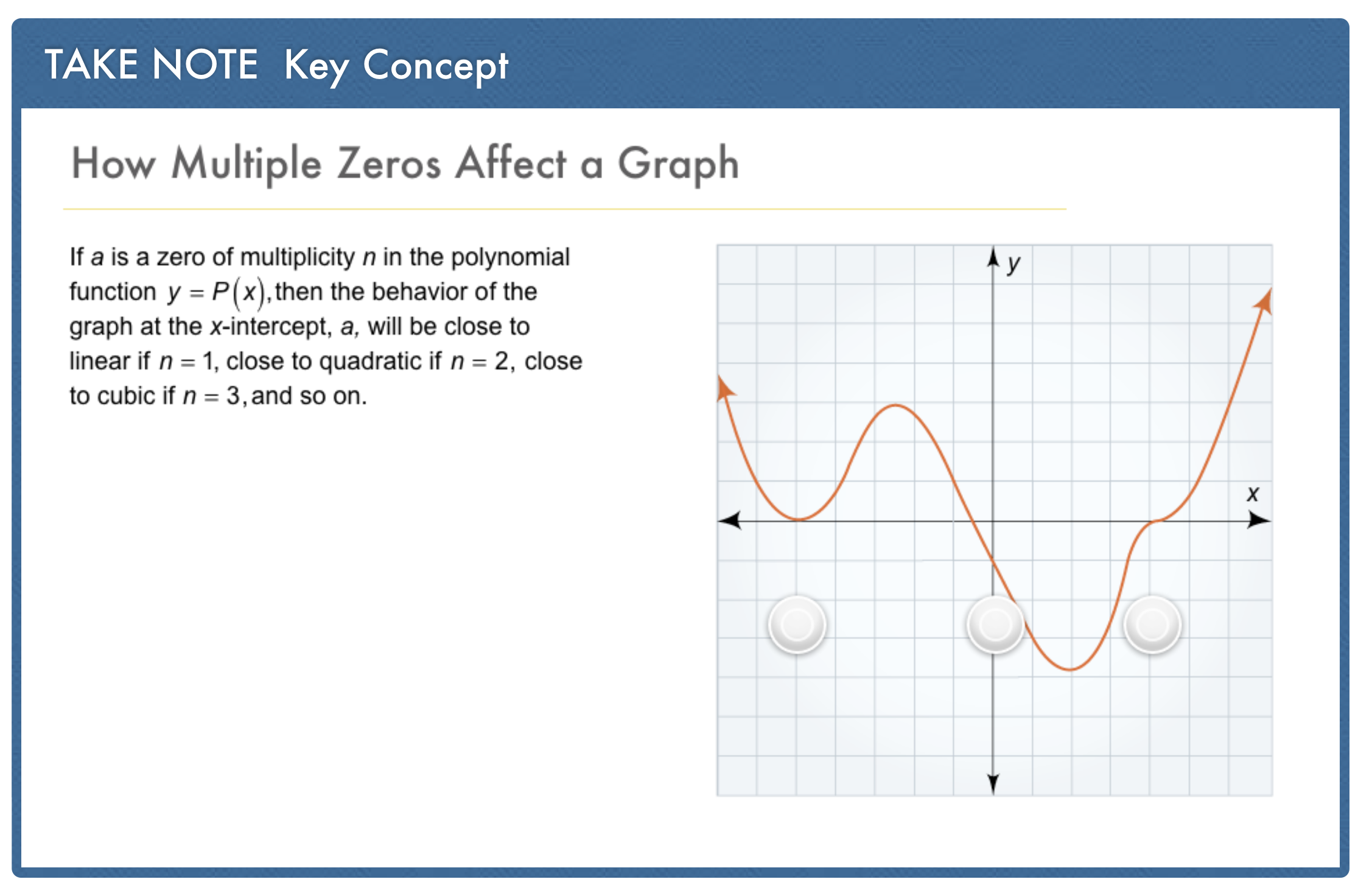
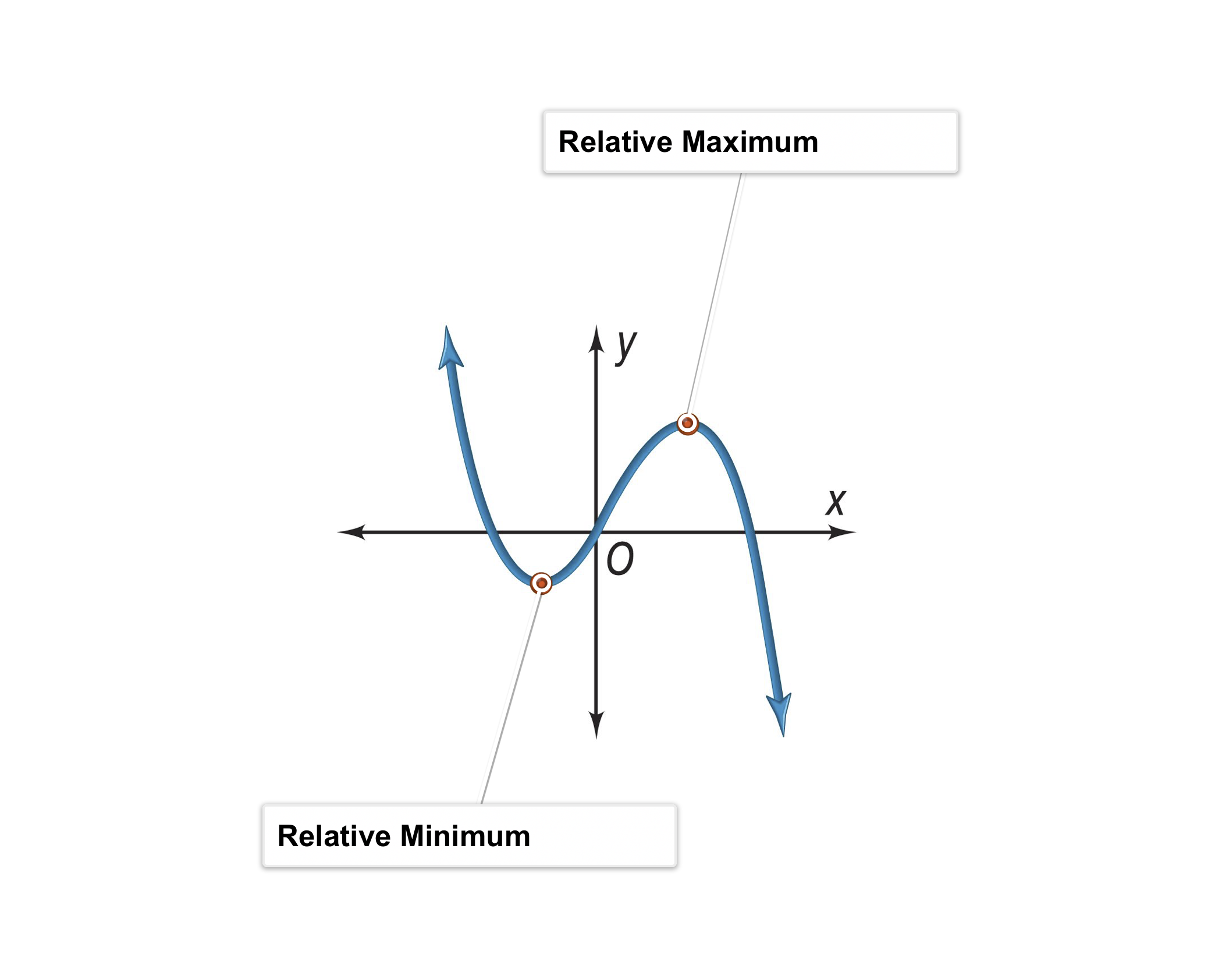
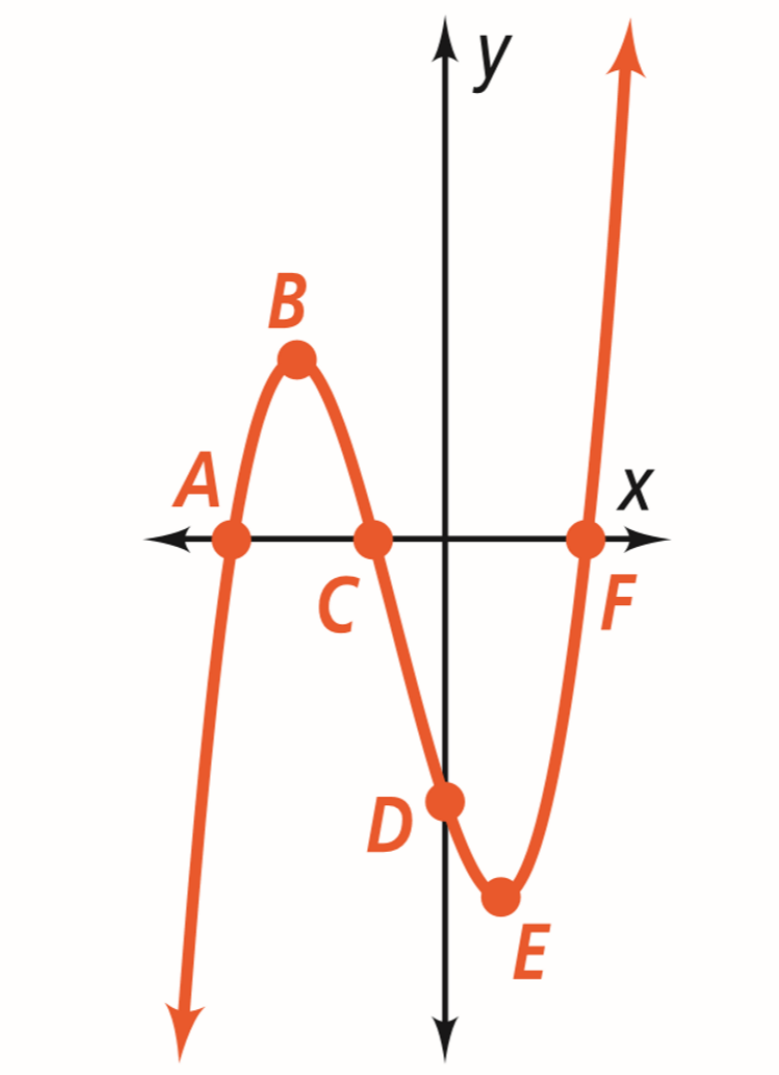
Use Your Vocabulary: Consider the diagram.

Classify each turning point and intercept on the left by dragging it to the appropriate description on the right.

  • A

  • B

  • C

  • D

  • E

  • F

  • relative maximum

  • relative minimum

  • y-intercept

  • x-intercept

Asemmisa {{asɛmmisaAhyɛnsode}}
25.

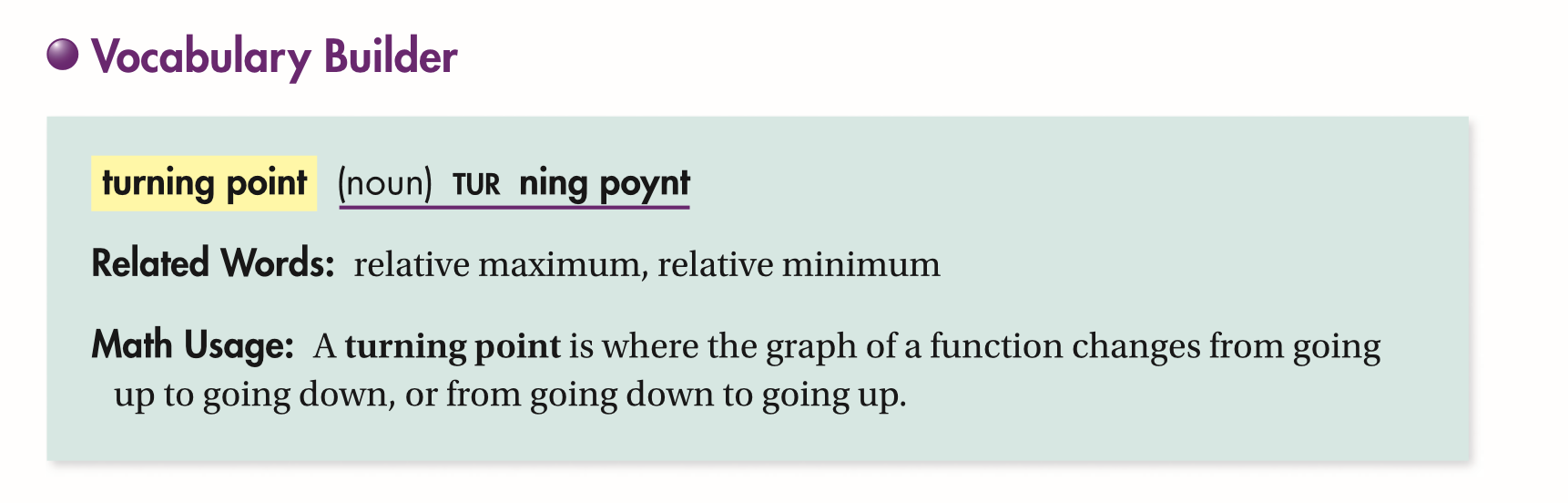
Use Your Vocabulary: Identify the sentence(s) that show the correct use of turning point.

Select all that apply.

Asemmisa {{asɛmmisaAhyɛnsode}}
26.

Notes: Take a clear picture or screenshot of your Cornell notes for this lesson. Upload it to the canvas. Zoom and pan as needed.

For a refresher on the Cornell note-taking system, click here.

Asemmisa {{asɛmmisaAhyɛnsode}}
27.

Reflection: Math Success