Twa kɔ nsɛm atitiriw so
Log in
Sign up for FREE
arrow_back
Laabri

Algebra 2 5-5 Complete Lesson: Theorems About Roots of Polynomial Equations

star
star
star
star
star
Last updated over 4 years ago
22 Nsɛmmisa
Hyɛ no nsow a efi ɔkyerɛwfo no hɔ:

A complete formative lesson with embedded slideshow, mini lecture screencasts, checks for understanding, practice items, mixed review, and reflection. I create these assignments to supplement each lesson of Pearson's Common Core Edition Algebra 1, Algebra 2, and Geometry courses. See also mathquest.net and twitter.com/mathquestEDU.

10
10
10

10
N.CN.3
10
10

10
A.APR.1
A.APR.2
10

10
A.REI.4.b
10
A.REI.4.b
10
100
10
N.CN.7
N.CN.8
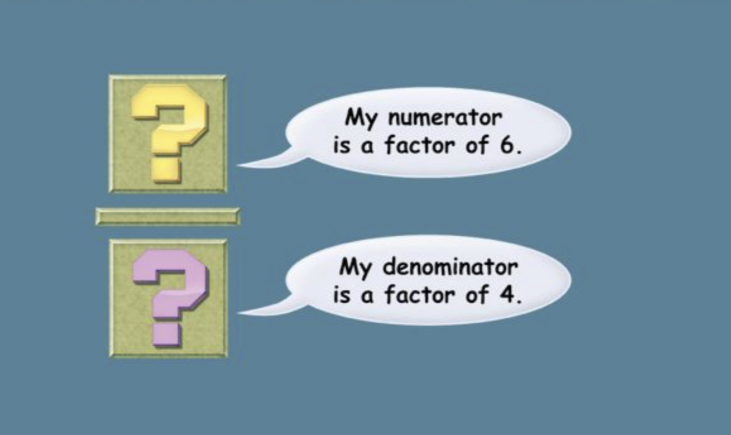
Asemmisa {{asɛmmisaAhyɛnsode}}
1.

Solve It! I am greater than my square. The sum of my numerator and denominator is 5. What fraction am I?

10
Asemmisa {{asɛmmisaAhyɛnsode}}
2.

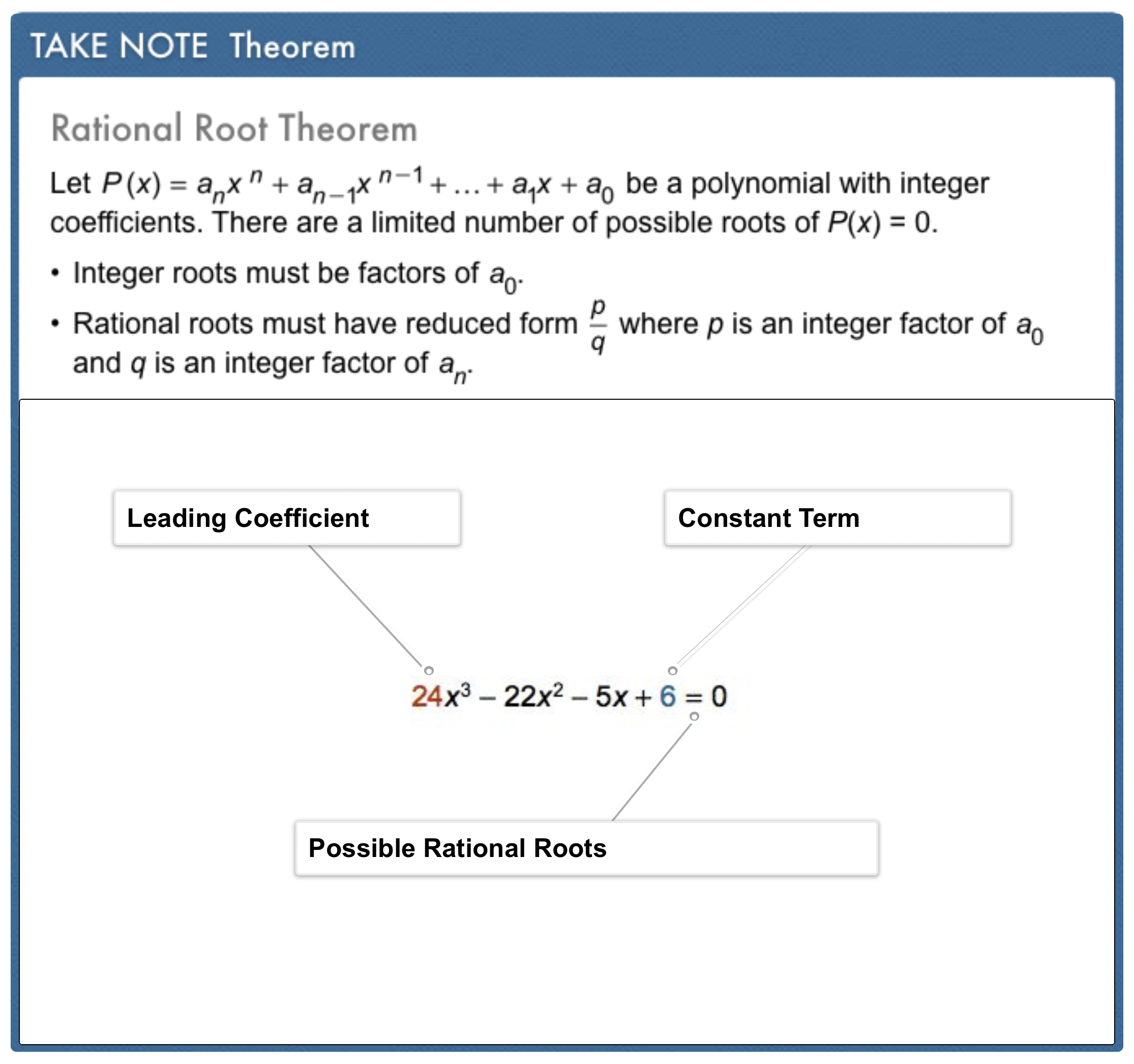
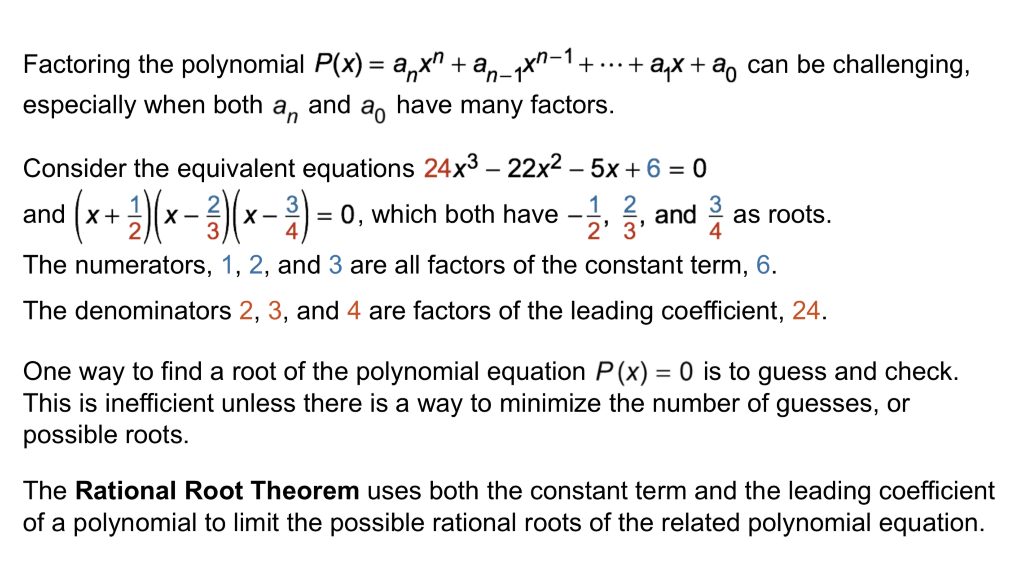
Problem 1 Got It?

N.CN.7
N.CN.8
10
Asemmisa {{asɛmmisaAhyɛnsode}}
3.

Problem 2 Got It?

N.CN.7
N.CN.8
10
Asemmisa {{asɛmmisaAhyɛnsode}}
4.

Problem 3 Got It?

N.CN.7
N.CN.8
10
Asemmisa {{asɛmmisaAhyɛnsode}}
5.

Problem 4 Got It?

HINT: you will need to multiply factors derived from the given roots, including (x - (2 - 3i)) and (x - (2 + 3i)).

N.CN.7
N.CN.8
Asemmisa {{asɛmmisaAhyɛnsode}}
6.

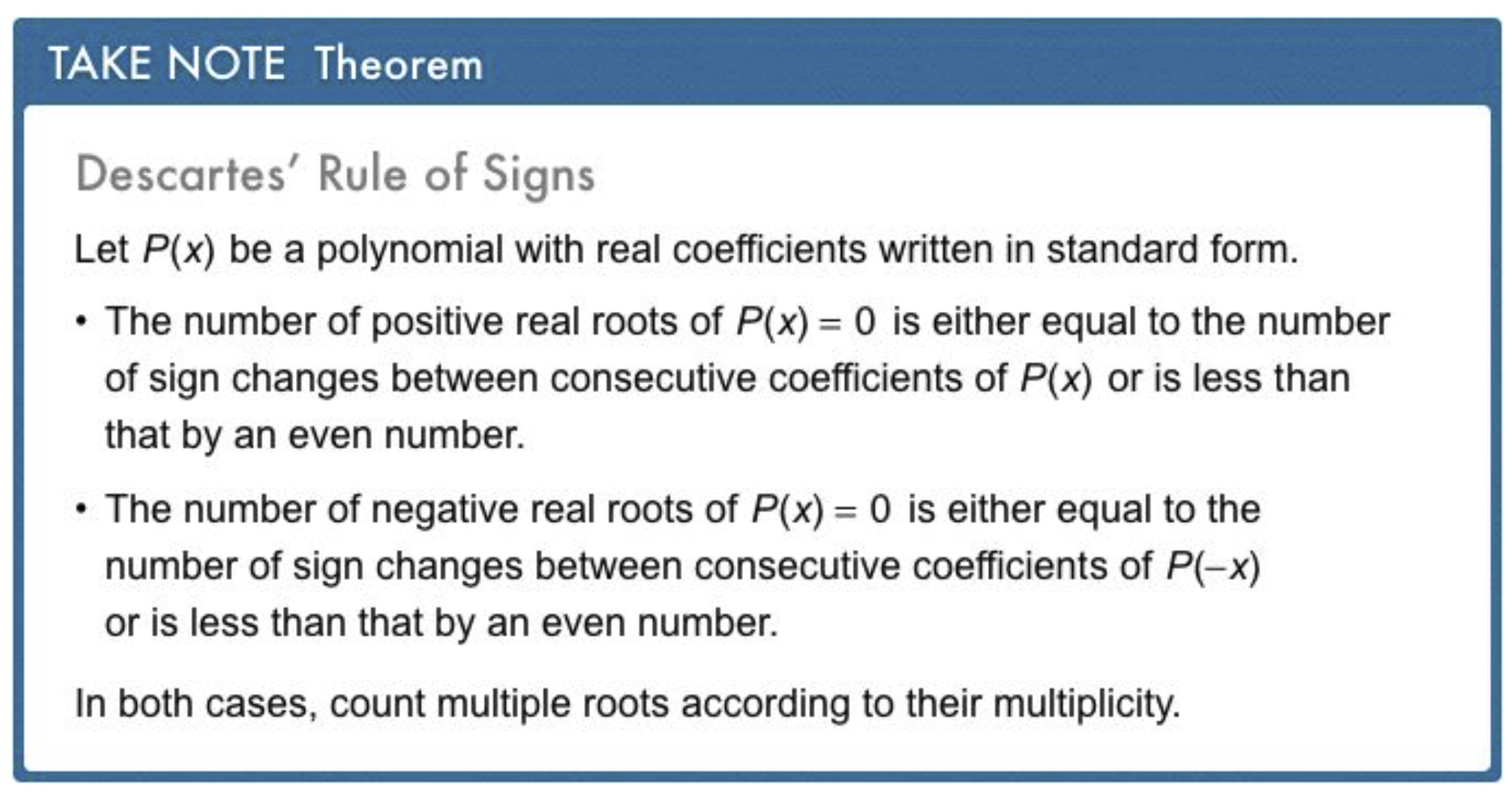
Problem 5 Got It? Identify the statements that can be made using Descartes' Rule of Signs regarding the function.

  • There is one negative real root.

  • There are two negative real roots.

  • There are one or three positive real roots.

  • There are two or four positive real roots.

  • According to Descartes' Rule of Signs:

Asemmisa {{asɛmmisaAhyɛnsode}}
7.

Problem 5 Got It? Reasoning: Can you confirm real and complex roots graphically? Explain. Identify the true statements below.

10
Asemmisa {{asɛmmisaAhyɛnsode}}
8.
N.CN.7
N.CN.8
10
Asemmisa {{asɛmmisaAhyɛnsode}}
9.
N.CN.7
N.CN.8
10
Asemmisa {{asɛmmisaAhyɛnsode}}
10.
N.CN.7
N.CN.8
10
Asemmisa {{asɛmmisaAhyɛnsode}}
11.
N.CN.7
N.CN.8
10
Asemmisa {{asɛmmisaAhyɛnsode}}
12.
N.CN.7
N.CN.8
Asemmisa {{asɛmmisaAhyɛnsode}}
13.

Vocabulary: Drag a complex number from the left to create a conjugate pair.

Asemmisa {{asɛmmisaAhyɛnsode}}
14.

Reasoning: In the statement below, r and s represent integers. Is the statement always, sometimes, or never true?

Asemmisa {{asɛmmisaAhyɛnsode}}
15.

Reasoning: In the statement below, r and s represent integers. Is the statement always, sometimes, or never true?

Asemmisa {{asɛmmisaAhyɛnsode}}
16.

Review Lesson 5-4: Match each expression on the left with its quotient on the right.

Asemmisa {{asɛmmisaAhyɛnsode}}
17.

Review Lesson 5-1: Consider the standard form of each polynomial. Then classify it by its degree AND number of terms.

  • monomial

  • binomial

  • trinomial

  • polynomial of four terms

  • constant

  • linear

  • quadratic

  • cubic

  • quartic

  • quintic

Asemmisa {{asɛmmisaAhyɛnsode}}
18.

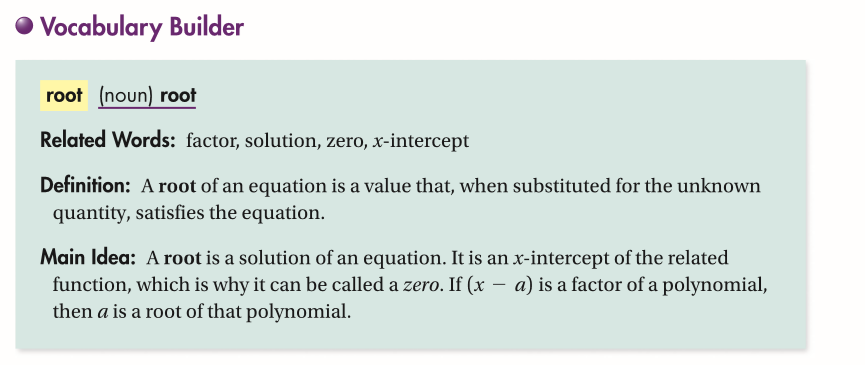
Use Your Vocabulary: True or False? 1 and -1 are roots of the equation.

Asemmisa {{asɛmmisaAhyɛnsode}}
19.

Use Your Vocabulary: True or False? The equation has roots 4 and -4.

Asemmisa {{asɛmmisaAhyɛnsode}}
20.

Use Your Vocabulary: Identify the number of roots each polynomial has.

  • 1

  • 2

  • 4

  • 6

  • 7

  • 8

Asemmisa {{asɛmmisaAhyɛnsode}}
21.

Notes: Take a clear picture or screenshot of your Cornell notes for this lesson. Upload it to the canvas. Zoom and pan as needed.

For a refresher on the Cornell note-taking system, click here.

Asemmisa {{asɛmmisaAhyɛnsode}}
22.

Reflection: Math Success