British East India Company
star
star
star
star
star
Last updated over 5 years ago
12 Nsɛmmisa
1
1
1
1
1
1
1
1
1
1
1

1
The British East India Company grew to power in the early- to mid-1700s by using slave labor. The company shipped in slaves from East Africa to produce its goods. During this time, the British East India Company had no real competitors in Asian trade, which allowed it to hold economic and political control. It is an example of private business that contolled/governd the colony.
The British east India Company developed during the Age of Exploration.
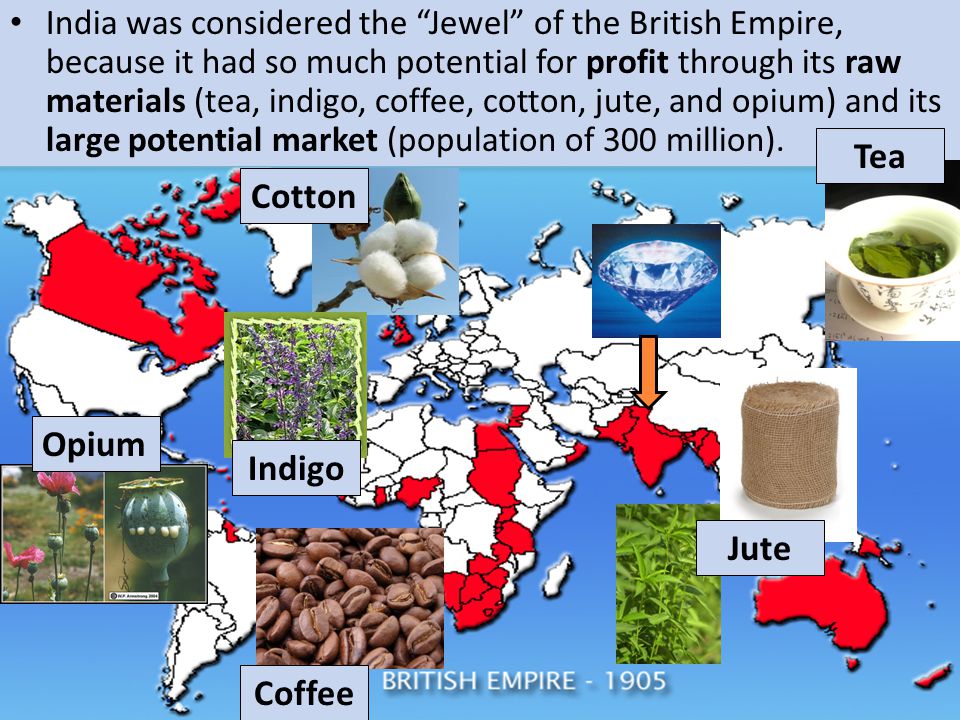
The British East India Company was a British trading company that dominated trade in India, China, and Africa during the 1600s and 1700s. It was founded in 1600 and at first specialized in the trade of tea and spices in India. As the company grew, so did its network of exports. Over time, the company also traded cotton, silk, and other goods to other countries in Asia.
The British East India company was run by the British government.
The British East India Company won rights to trade with India in the 1600s. They started small and gradually took more and more territory. To defend this territory from invaders the company built up its own army, made up of British and Sepoys, who were the Indian soldiers. By 1857 there were 230,000 Sepoys in the British East India Company’s army and only 40,000 British soldiers. That an almost 6-1 ratio.
Who were the sepoys?
There were more British Soldiers in the company's army than Indian soldiers.
Identify some of the raw materials that were produced for the British East India Company.
What were ways that India benefitted from the British East India trading company?
Profit means
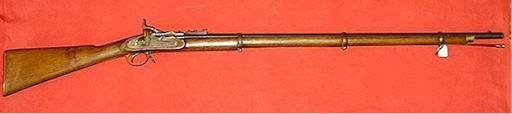
The mutiny was, literally, triggered by a gun. Sepoys throughout India were issued with a new rifle, the Pattern of 1853 Enfield Percussion cap rifled musket - a more powerful and accurate weapon than the rifle they had been using for the last several decades. To load the new Enfield, just like the previous muskets they were issued, soldiers had to bite the cartridge open and pour the gunpowder it contained into the rifle's muzzle, then stuff the cartridge case, which was typically paper coated with some kind of grease to make it waterproof, into the musket as wadding, before loading it with a ball.
A rumor spread that the cartridges issued with this rifle were greased with lard (pork fat) or tallow (beef fat) - this was offensive to Hindu and Muslim soldiers alike, who were forbidden by their religions to eat beef or pork.
Why would the bullets being covered with animal fat be a problem for the Sepoys?
The British officers said it was just rumors that the new bullets were coated with animal fat. They suggested that the sepoys make a fresh batch of cartridges and coat them with beeswax. This suggestion made the Sepoys suspicious that the rumors of the animal fat were true.
The Commander in Chief in India, General George Anson reacted to this crisis by saying, "I'll never give in to their beastly prejudices", and despite the pleas of his junior officers he did not compromise.
The tension growing between the British soldiers and the Sepoys was caused by
The people of India were beginning to resent the British. In March 1857, a sepoy named Mangal Pandey attacked British officials in India. The British arrested Pandey and executed him in April. This led to violent clashes, as many sepoys throughout India rose against their British officers. Sepoys joined together to fight against the British in the cities of Delhi, Kanpur, and Lucknow from 1857 to 1858. Nana Sahib led the sepoys as they attempted to gain control over the British. However, Sahib lacked military knowledge and experience. The British ultimately regained control, and fighting ended in July 1858.
Did the presence of the British East India Company unite or divide the sepoys? Defend your answer.
During the Sepoy Rebellion, many people were killed, including Indian and British women and children. Although the sepoys were ultimately defeated, the rebellion changed the way the British treated the people of India. The British government took over control of India from the British East India Company and became more respectful of Indian customs and traditions.
In complete sentences, idetify at least two results from the sepoy rebellion.
Use the cause-effect chart above to explain how the Sepoy Rebellion affected Great Britain's relationship with India.