Which function is modeled in this table?
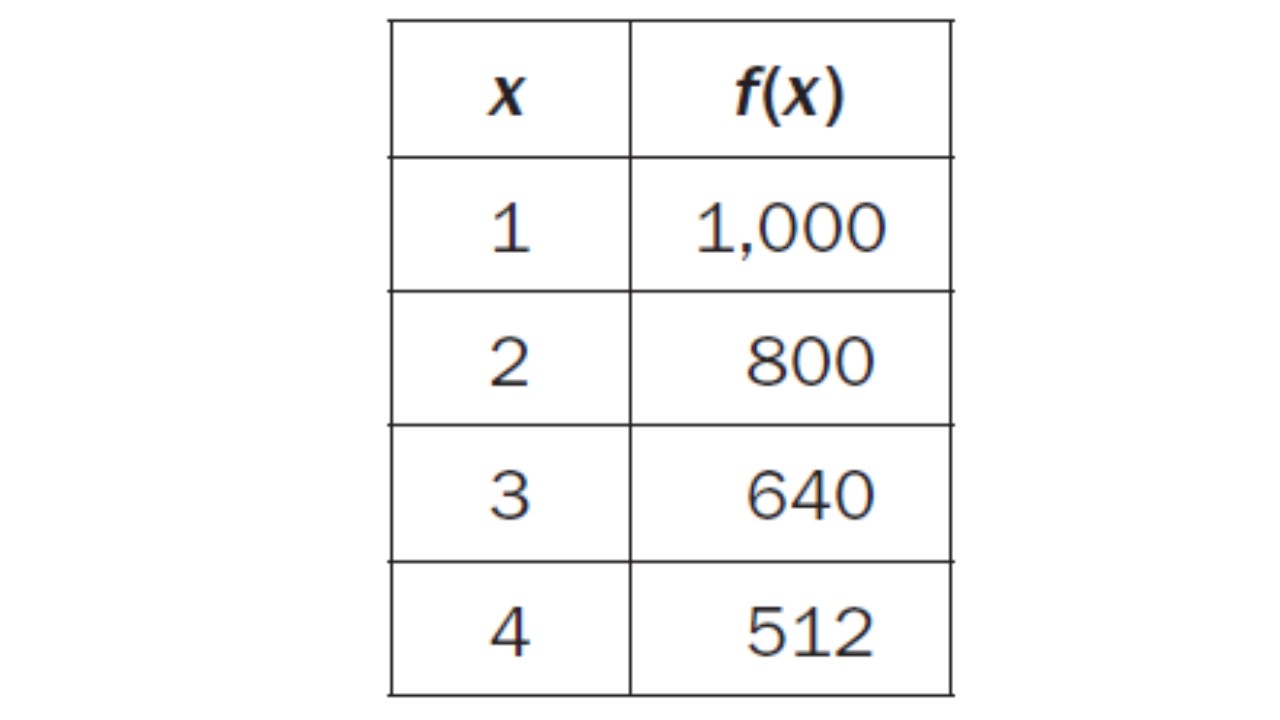
Which function is modeled in this table?
Pre and post test for Algebra 1
Which function is modeled in this table?
Which explicit formula describes the pattern in this table?
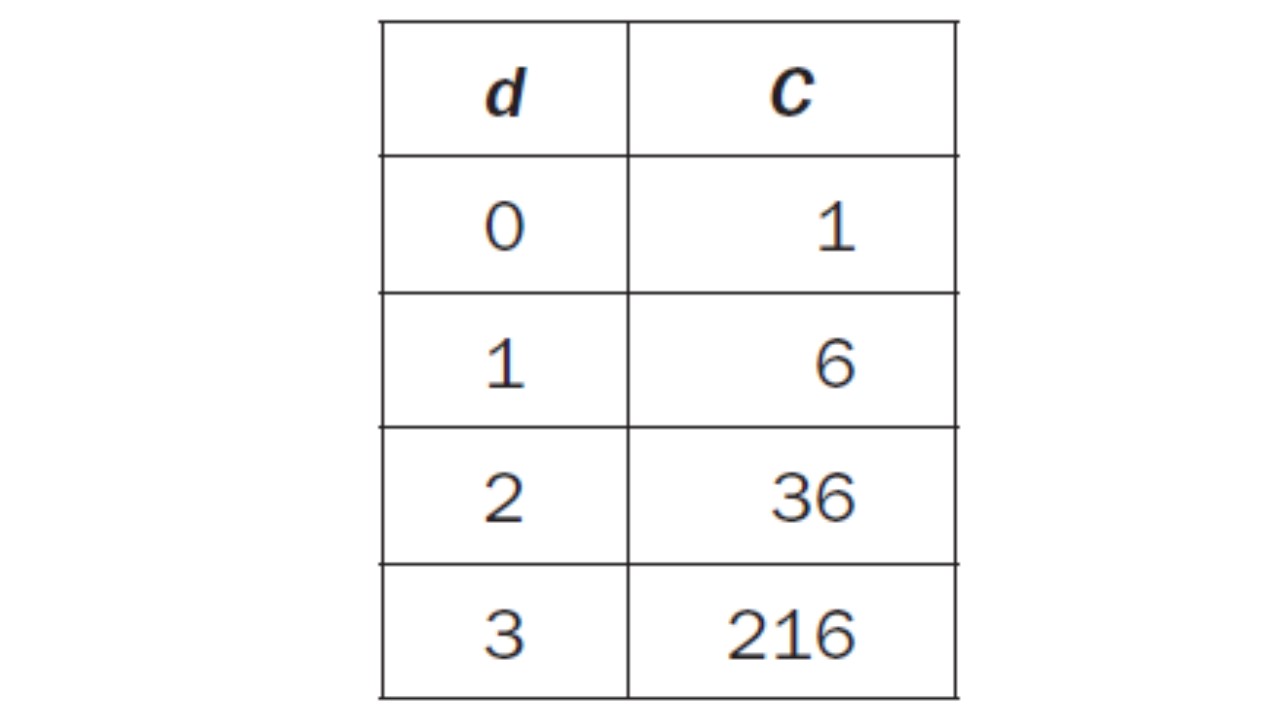
Which statement BEST describes the graph of f(x + 6)?
If
which expression gives f(x)?
The function f(x) = 3x – 9 is shifted 2 units up. Which equation correctly describes the new function?
A quadratic function is shown.
What is the factored form of f(x) that reveals the zeros of the function?
What is the equivalent form of
that reveals the minimum value of the function?
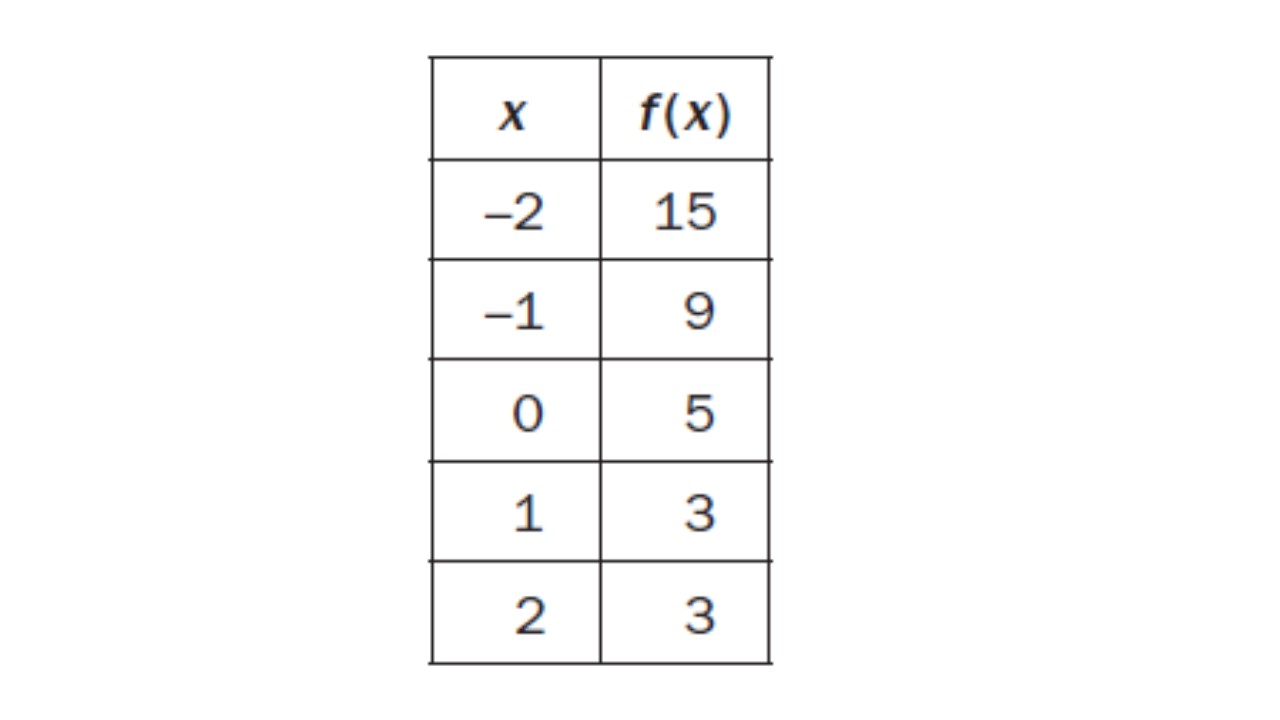
Use this table to answer the question.
What is the average rate of change of x over the interval –2 ≤ x ≤ 0?
What is the end behavior of the graph of
Which of these is an even function?
Which statement BEST describes how the graph of
compares to the graph of
Use this graph to answer the question.
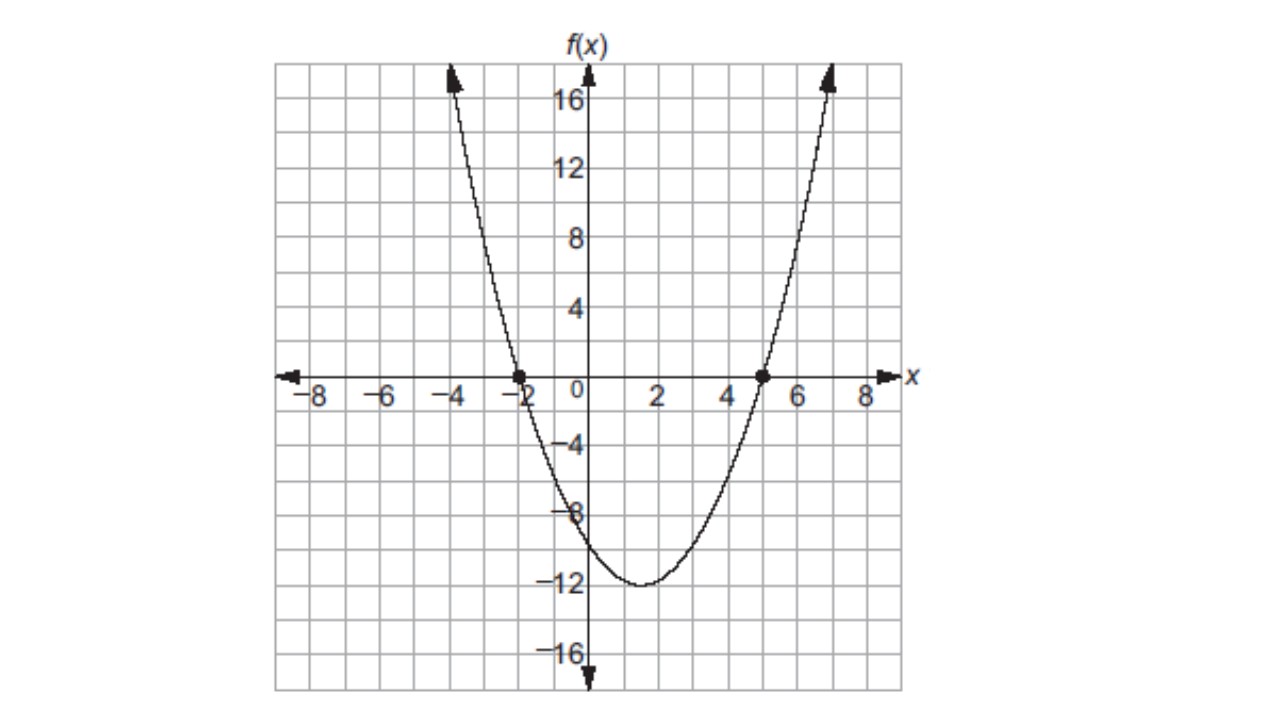
Which function is shown in the graph?
The function
models the height of a ball that was hit into the air, where t is measured in seconds and h is the height in feet. This table represents the height, g(t), of a second ball that was thrown into the air.
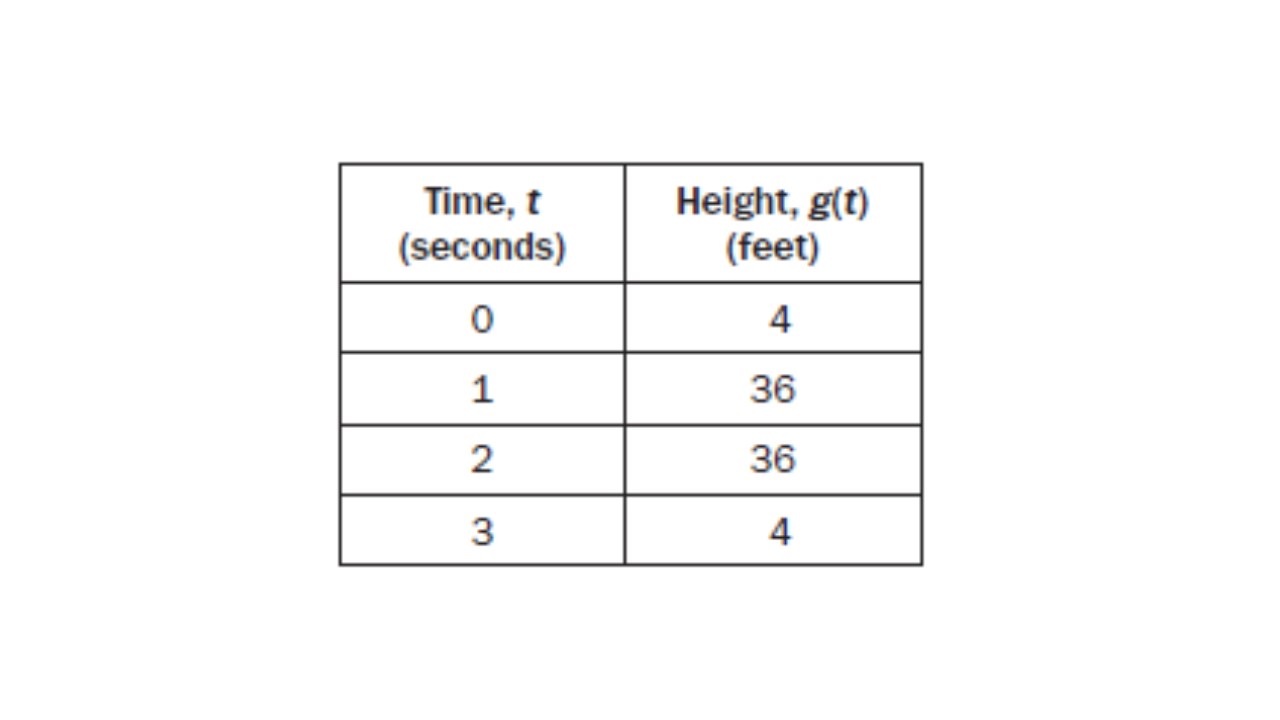
Which statement BEST compares the length of time each ball is in the air?
A certain population of bacteria has an average growth rate of 2%. The formula for the growth of
the bacteria’s population is
is the original population and t is the time in hours. If you begin with 200 bacteria, about how many bacteria will there be after 200 hours?
The function graphed on this coordinate grid shows f(x), the height of a dropped ball, in feet, after its xth bounce.
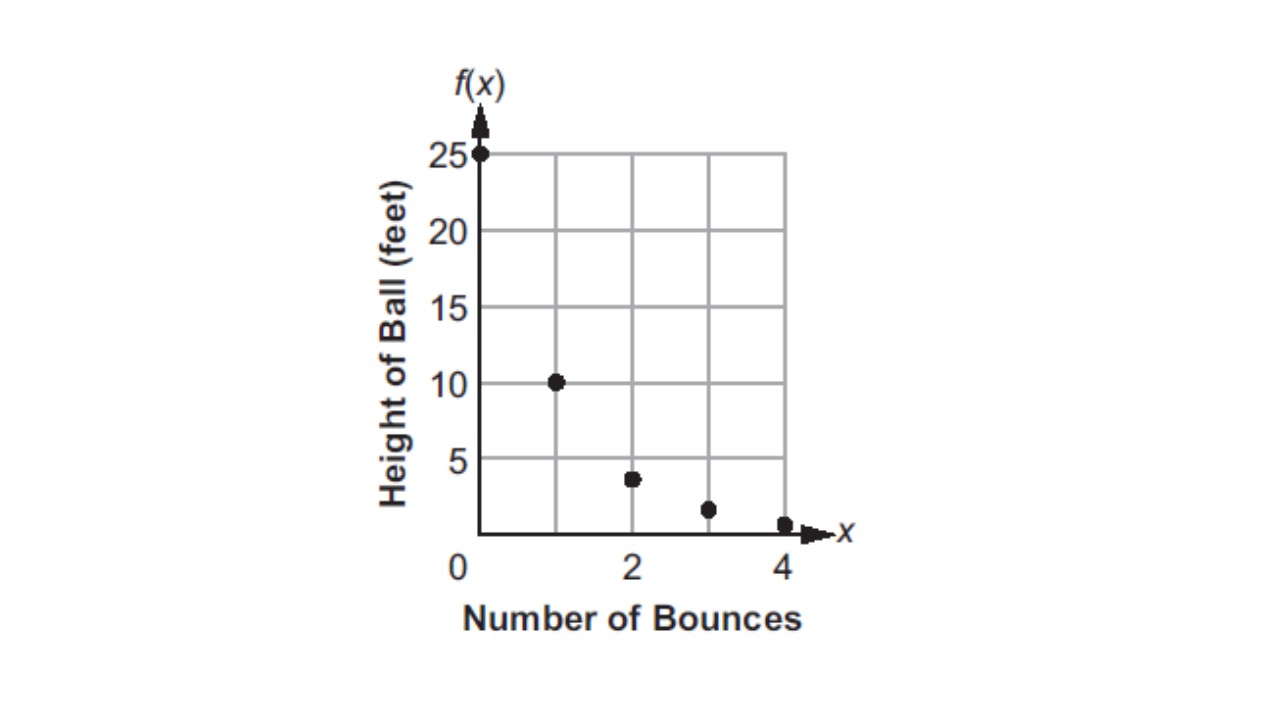
On which bounce was the height of the ball 10 feet?
A population of squirrels doubles every year. Initially, there were 5 squirrels. A biologist studying the squirrels created a function to model their population growth:
where t is the time in years. The graph of the function is shown.
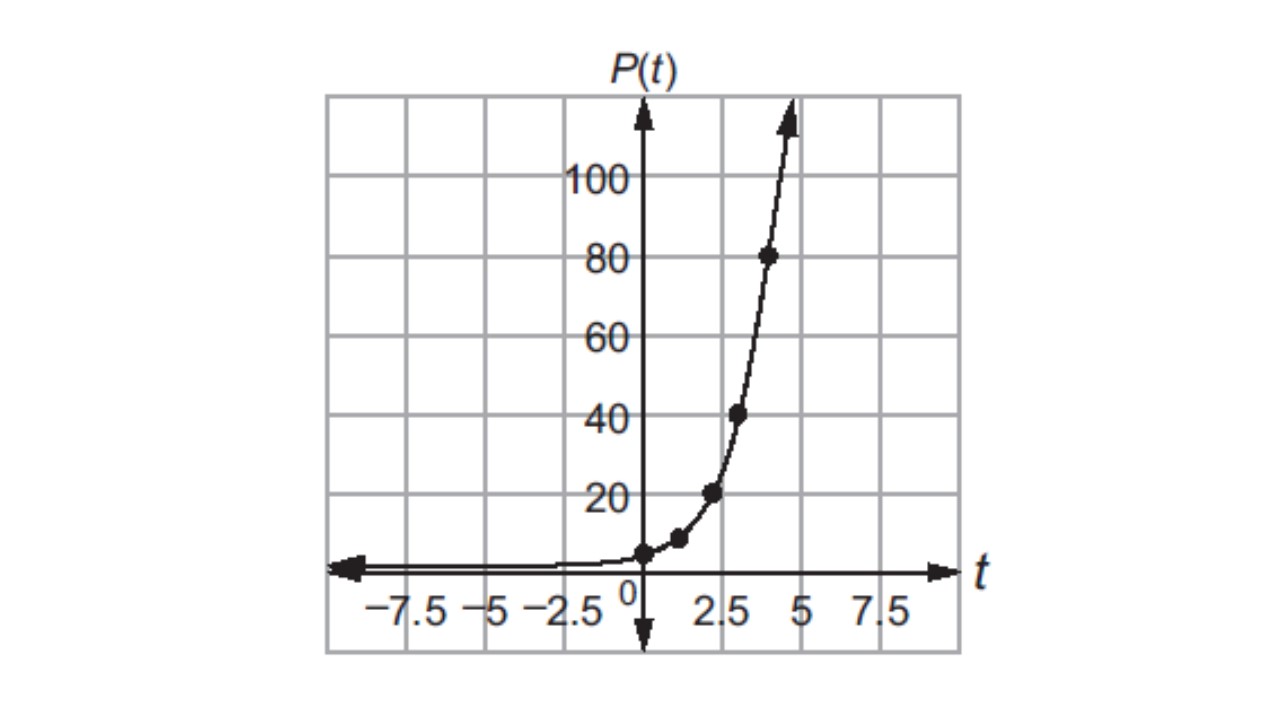
Which values best describe the range of the population?
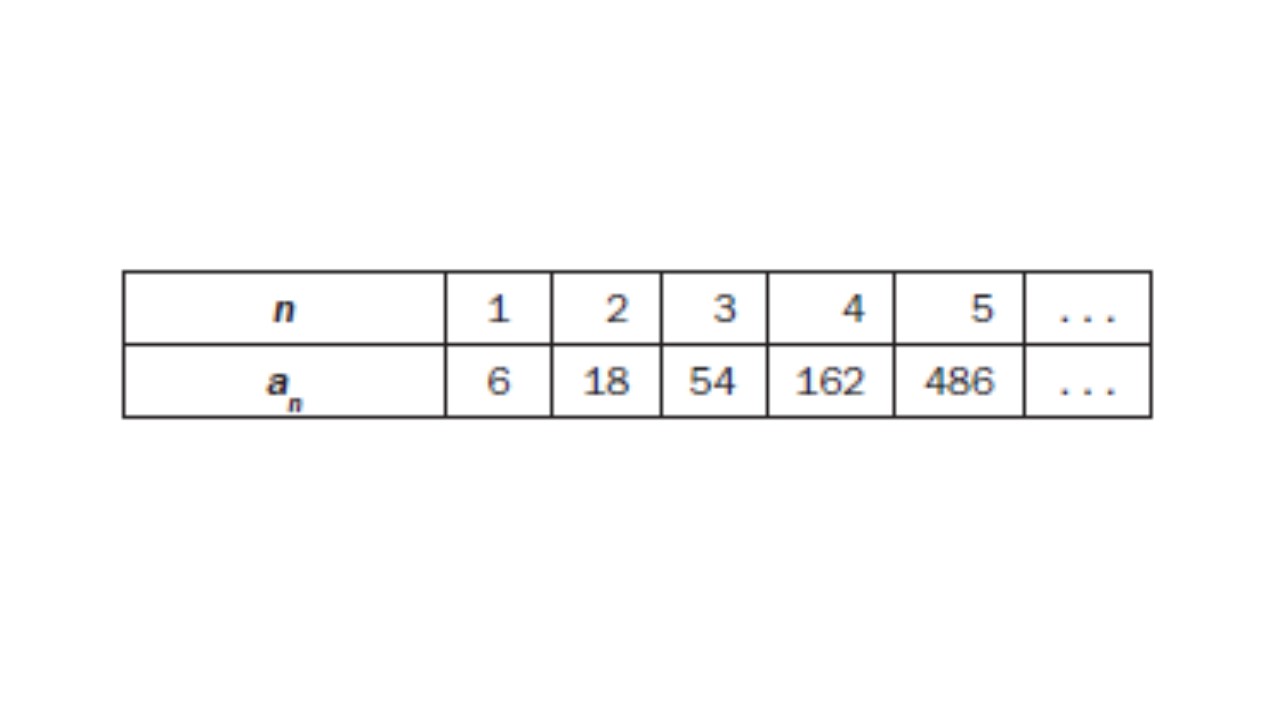
Which function represents this sequence?
The points (0, 1), (1, 5), (2, 25), and (3, 125) are on the graph of a function. Which equation represents that function?
Which function shows the function f(x) = 3x being translated 5 units down?
Which scatter plot BEST represents a model of linear growth?
Which scatter plot BEST represents a model of exponential growth?
Which table represents an exponential function?
A table of values is shown for f(x) and g(x).
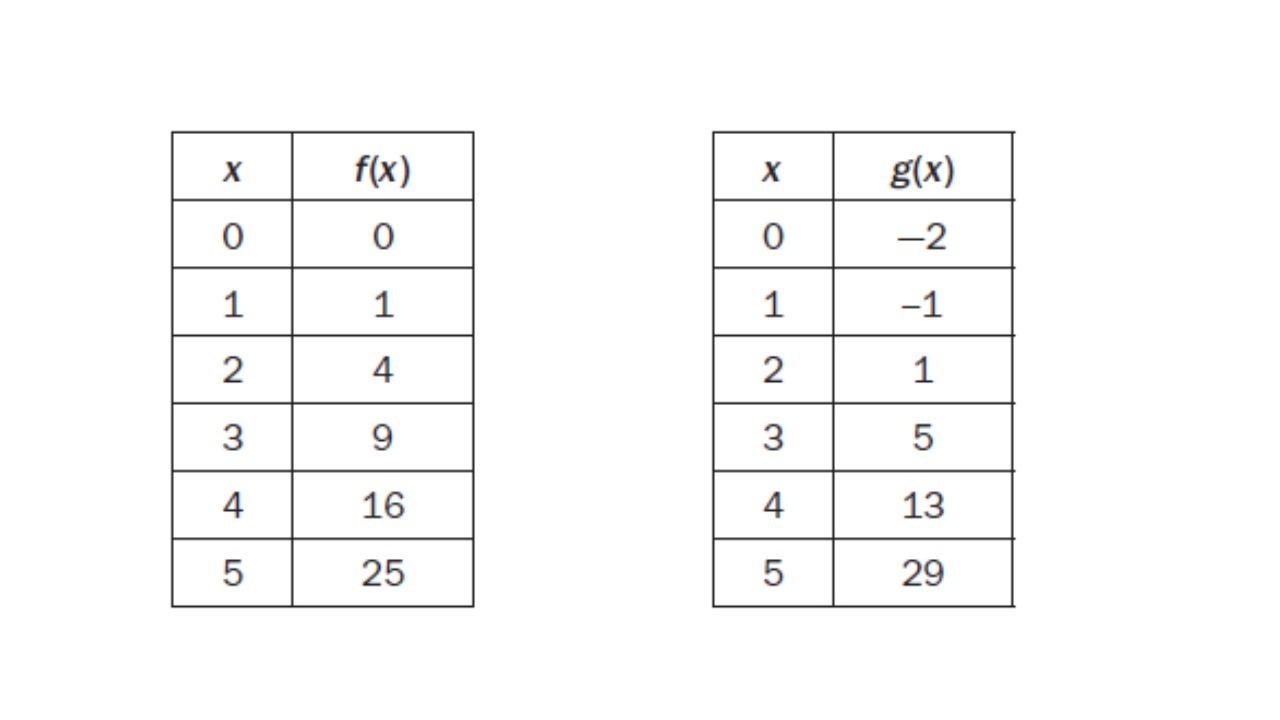
Which statement is true about the graphs of exponential functions?
Which statement BEST describes the comparison of the function values for f(x) and g(x)?
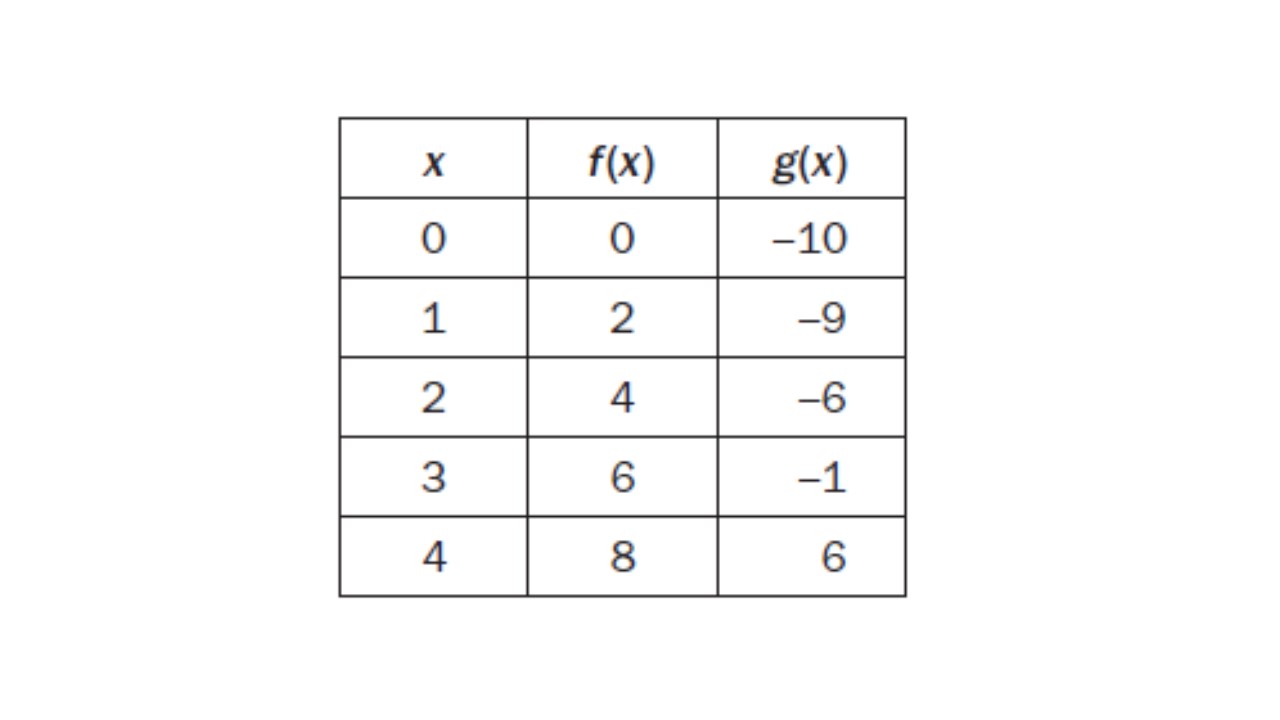
If the parent function is f(x) = mx + b, what is the value of the parameter m for the line passing
through the points (–2, 7) and (4, 3)?
Consider this function for cell duplication. The cells duplicate every minute.
What is the y-intercept of the graph of
What is the range of the graph of f(x) = –3(x – 4)?
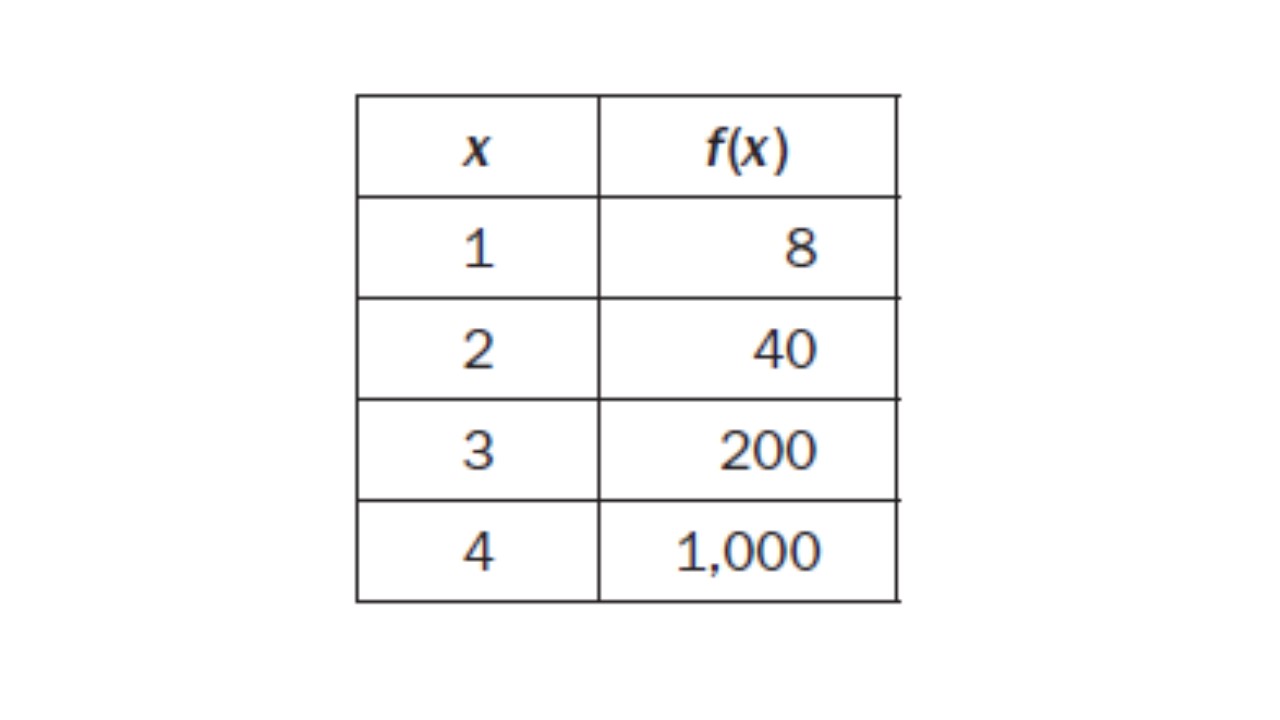
Which function is modeled in this table?
If f(12) = 4(12) – 20, which function gives f(x)?
Which function has a range of
1. A sample of 1,000 bacteria becomes infected with a virus. Each day, one-fourth of the bacteria sample dies due to the virus. A biologist studying the bacteria models the population of the bacteria with the function
What is the range of this function in this context?
The graph shows the height, y, in meters, of a rocket above sea level in terms of the time, t, in seconds, since it was launched. The rocket landed at sea level.
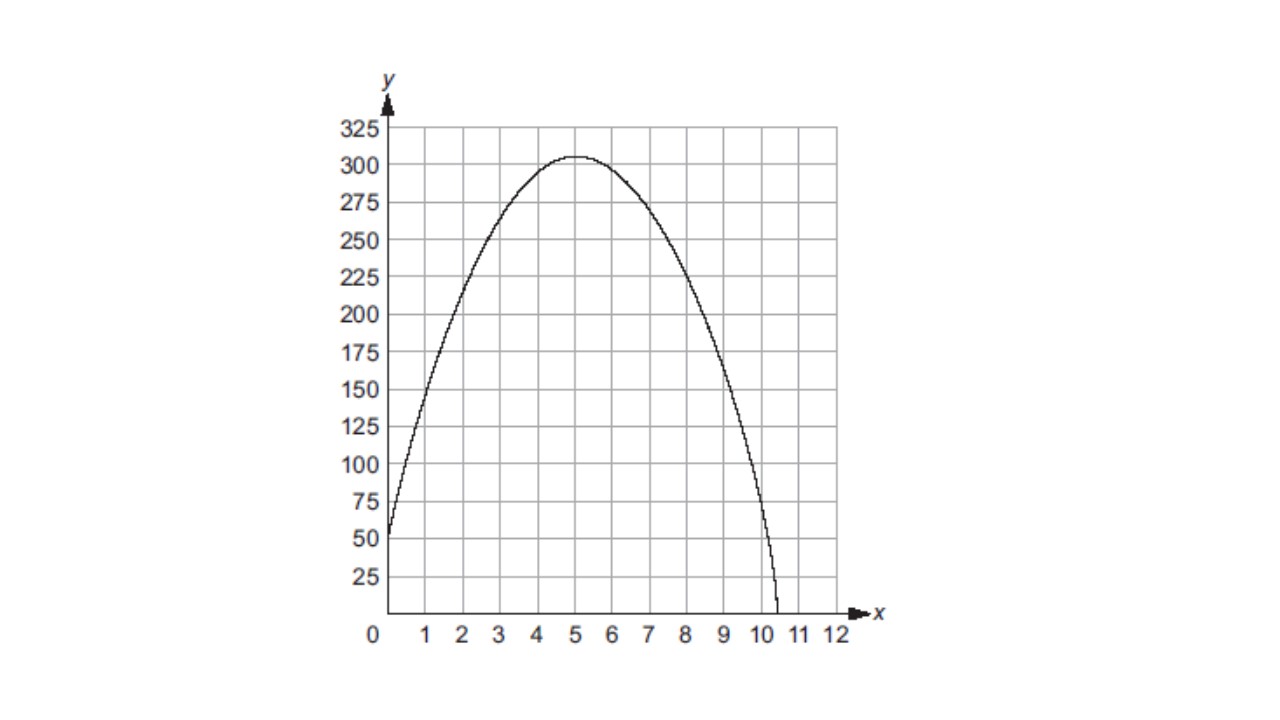
What does the x-intercept represent in this situation?
Directions: Answer questions 1- 37 independently (Please do not help others or cheat.) If you complete this assessment today please work on B-day ALEKS.
Consider the pattern.
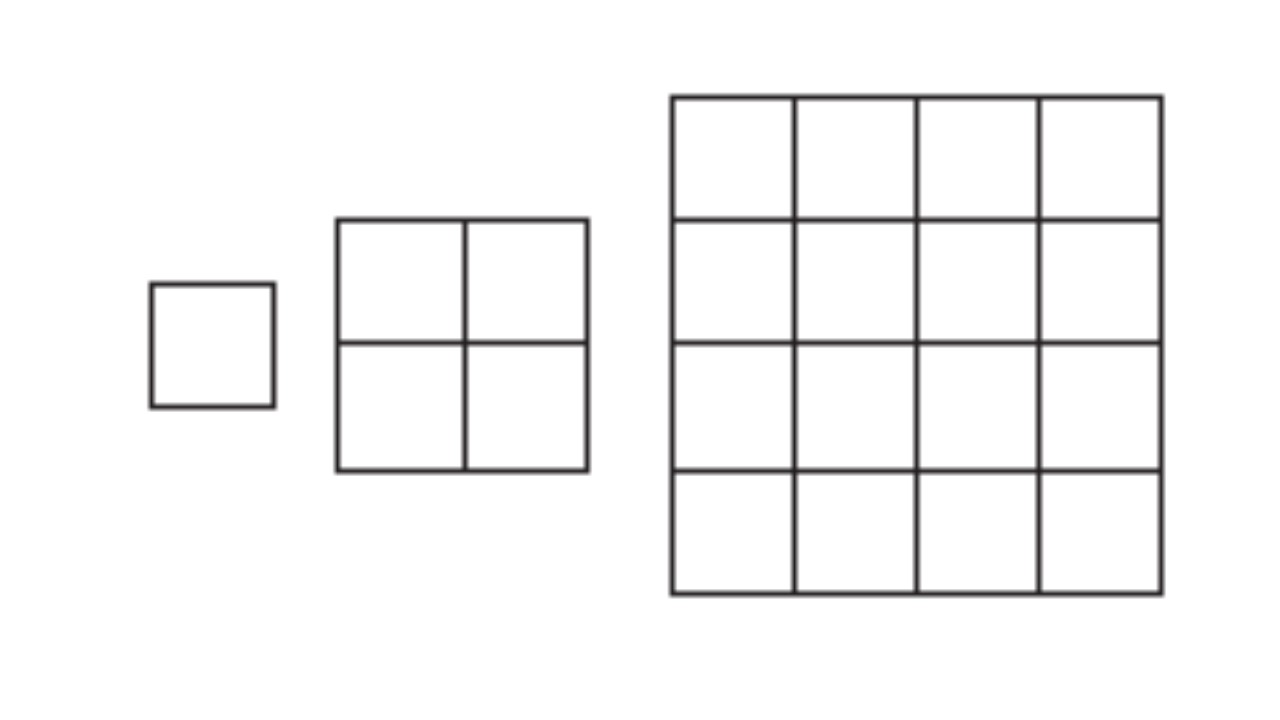
Which recursive formula represents the sequence that represents the pattern?
Look at the graph.
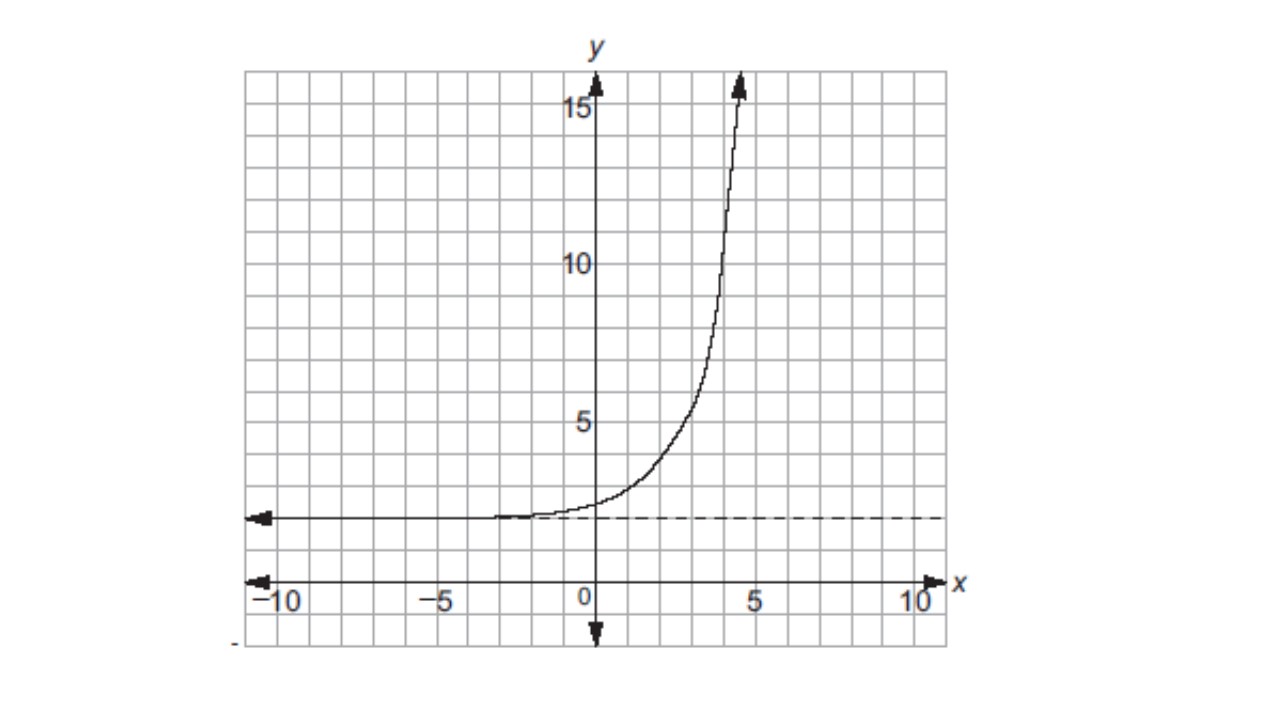
Which equation represents this graph?
The function f(x) is graphed below.
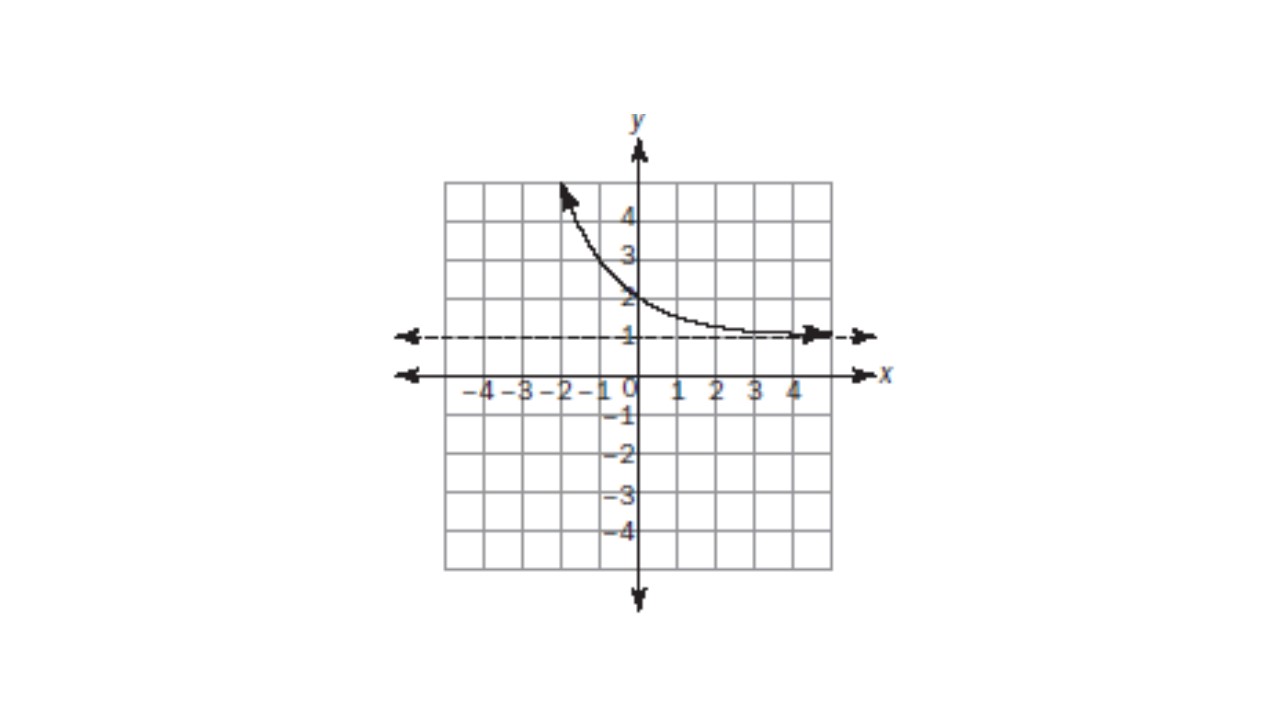
Which graph shows f(x) + 2?