Punnett squares can be used to predict the probability of:
1 point
1
Question 2
2.
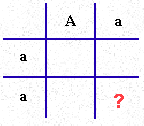
Punnett squares are used by geneticists to determine the probability of different offspring genotypes. In the one shown below, what letter(s) belong in the lower right box?
1 point
1
Question 3
3.
If two people who are both carriers for a genetically inherited fatal recessive disease decide to become parents, what will be the odds that their children will also be carriers?
1 point
1
Question 4
4.
If a woman is homozygous normal and her husband is heterozygous for a genetically inherited recessive disease and they decide to become parents, what is the probability that they will have a healthy child?
1 point
1
Question 5
5.
If two parents are heterozygous for a genetically inherited dominant trait, what is the probability that they will have a child together who has this trait in his or her phenotype?
1 point
1
Question 6
6.
If two parents are heterozygous for a genetically inherited dominant trait, what is the probability that they will have a child together who has this trait in his or her phenotype?
1 point
1
Question 7
7.
If two parents are homozygous for a genetically inherited recessive trait, what is the probability that they will have a child who does not have this trait in his or her phenotype?
1 point
1
Question 8
8.
If two parents are homozygous for a genetically inherited recessive trait, what is the probability that they will have a child who does not have this trait in his or her phenotype?