The First Amendment
star
star
star
star
star
Last updated over 6 years ago
12 questions
Note from the author:
this was a part of a HyperDoc I made on The First Amendment and Freedom of Religion: https://docs.google.com/document/d/1B-u_ZyiWF64beWUdx-UlGaDz_2wz2wTzXxo53n1MgBY/edit?usp=sharing
1
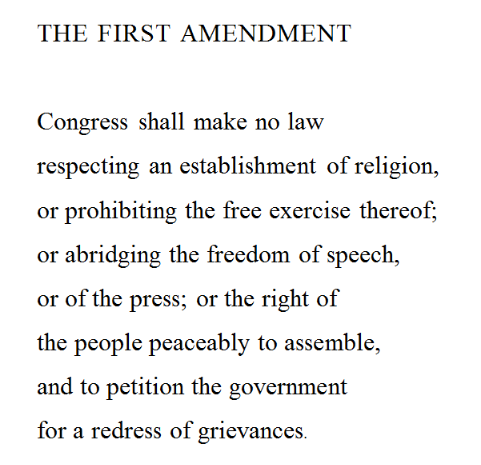
“Congress shall make no law respecting an establishment of religion…”
1
"... or prohibiting the free exercise thereof"
1
In "Rights": The meaning of the word "conscience." As defined by The American Heritage Dictionary, it means "conformity to one's own sense of right conduct."
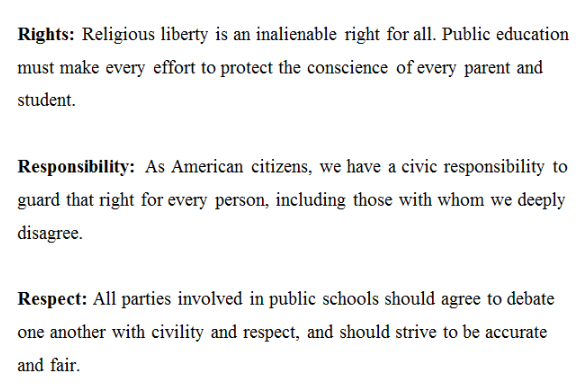
In your own words, what do you think the first R, " Rights: Religious liberty is an inalienable right for all. Public education must make every effort to protect the conscience of every parent and student", means?
In "Rights": The meaning of the word "conscience." As defined by The American Heritage Dictionary, it means "conformity to one's own sense of right conduct."
In your own words, what do you think the first R, " Rights: Religious liberty is an inalienable right for all. Public education must make every effort to protect the conscience of every parent and student", means?
1
In "Responsibility": The meaning of the term "civic responsibility" means addressing social problems in an informed, committed, and positive manner -- is not an intuitive process.
In your own words, what do you think the second R, "Responsibility: As American citizens, we have a civic responsibility to guard that right for every person, including those with whom we deeply disagree", means?
In "Responsibility": The meaning of the term "civic responsibility" means addressing social problems in an informed, committed, and positive manner -- is not an intuitive process.
In your own words, what do you think the second R, "Responsibility: As American citizens, we have a civic responsibility to guard that right for every person, including those with whom we deeply disagree", means?
1
In "Respect": The meaning of the word "civility." As defined by The American Heritage Dictionary, it means "courteous behavior; politeness." In your own words, what do you think the third R, " Respect: All parties involved in public schools should agree to debate one another with civility and respect, and should strive to be accurate and fair", means?
In "Respect": The meaning of the word "civility." As defined by The American Heritage Dictionary, it means "courteous behavior; politeness."
In your own words, what do you think the third R, " Respect: All parties involved in public schools should agree to debate one another with civility and respect, and should strive to be accurate and fair", means?
1
What challenges might prayer cause for practicing at school or at work? (Possible answers: Having to stop at specific times to pray; not having privacy.)
1
Discuss ONE of the following:
1. Is it constitutionally appropriate for public schools to lead students in religious activities? Why?
2. What about those students who have no religious beliefs? How would that affect them?
3. What are some instances in which public religious practices or references might violate some people's conscience?
(Note: Teachers can, for example, allow students to pray, but may not lead them in prayer. The establishment clause in the First Amendment also protects those with no religious beliefs.)
Discuss ONE of the following:
1. Is it constitutionally appropriate for public schools to lead students in religious activities? Why?
2. What about those students who have no religious beliefs? How would that affect them?
3. What are some instances in which public religious practices or references might violate some people's conscience?
(Note: Teachers can, for example, allow students to pray, but may not lead them in prayer. The establishment clause in the First Amendment also protects those with no religious beliefs.)

1
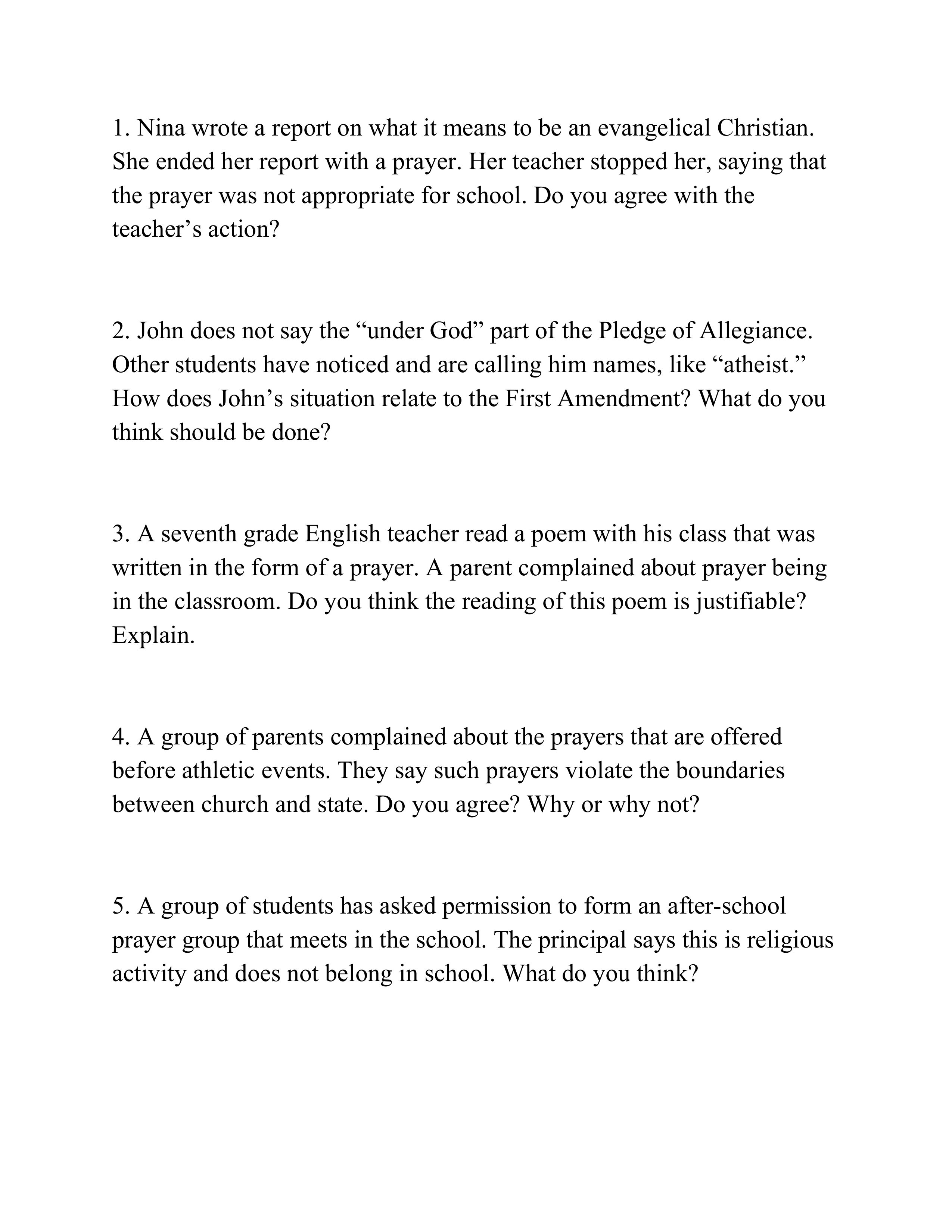
Do you agree with the teacher's action?
1
What do you think should be done?
1
Do you think the reading of this poem is justifiable?
1
Do you agree? Why or why not?
1
What do you think?
What do you think?