Algebra 2 6-7 Guided Practice: Inverse Relations and Functions
star
star
star
star
star
Last updated over 3 years ago
30 Nsɛmmisa

3
5
F.BF.1.c
3
10
F.BF.4.a
10
F.BF.4.c
F.IF.1

3
3
9
10

3
3


3
10
F.BF.4.a

Video Check: Select all that apply with regards to the video embedded directly above this item.
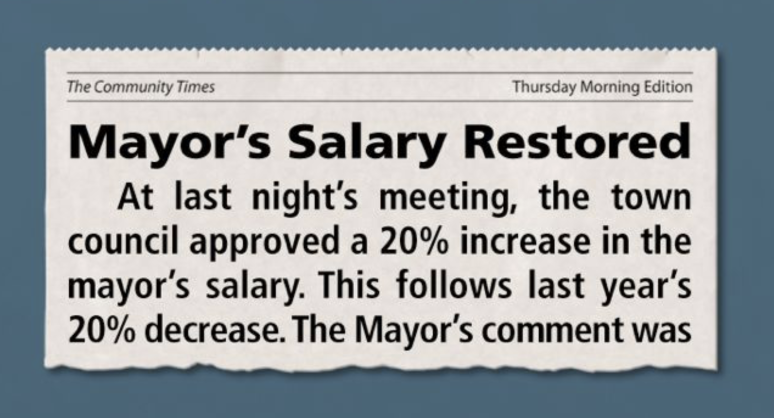
Solve It! What's wrong with the headline? Why? What is a more appropriate headline?
Video Check: Select all that apply with regards to the video embedded directly above this item.

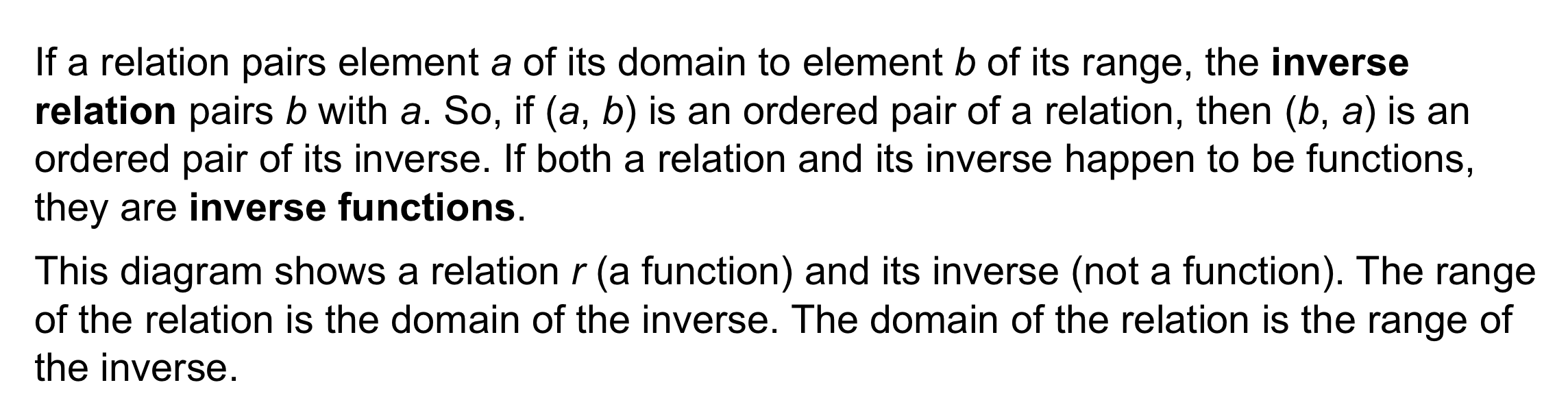
Take Note: What is an inverse function?
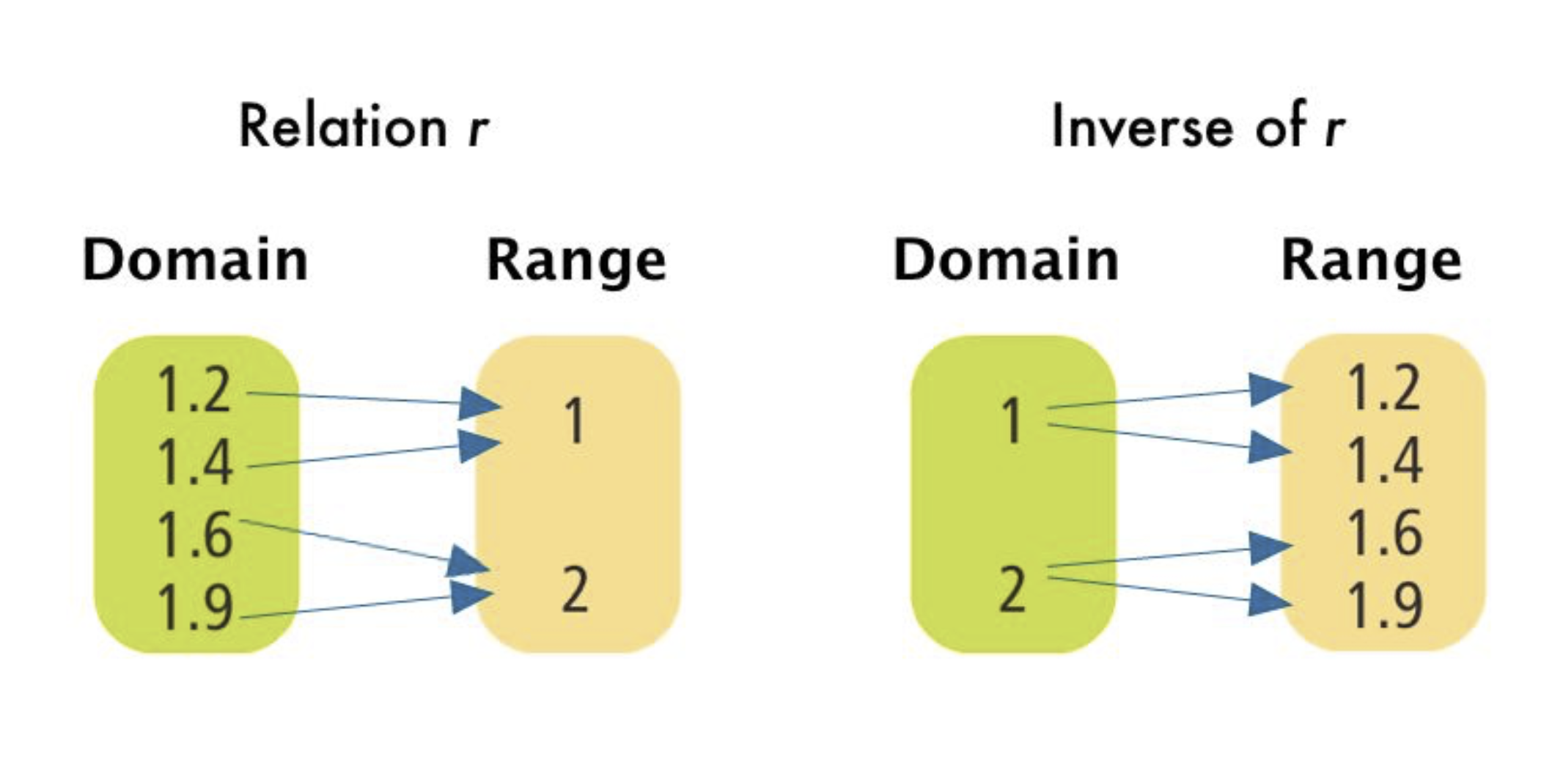
Take Note: Create a mapping diagram on the right side of the canvas that represents the inverse of the function shown on the left.
Problem 1 Got It? What are the graphs of t and its inverse? Represent both relations as mapping diagrams on the canvas.
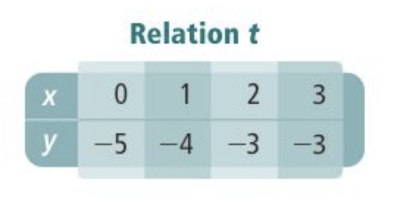
Problem 1 Got It? Reasoning: Refer to the mapping diagrams you created in the previous item.
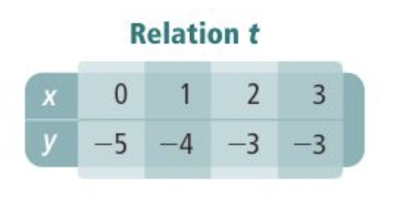
Is t a function? Is the inverse of t a function? Explain.
Video Check: Select all that apply with regards to the video embedded directly above this item.

Take Note: In general, what is the process for finding the equation for the inverse of a given equation.
Take Note: Consider finding the inverse of the relation described by
Place the steps below in the correct order.
Add 2 to each side.
Find the square root of each side.
Switch x and y.
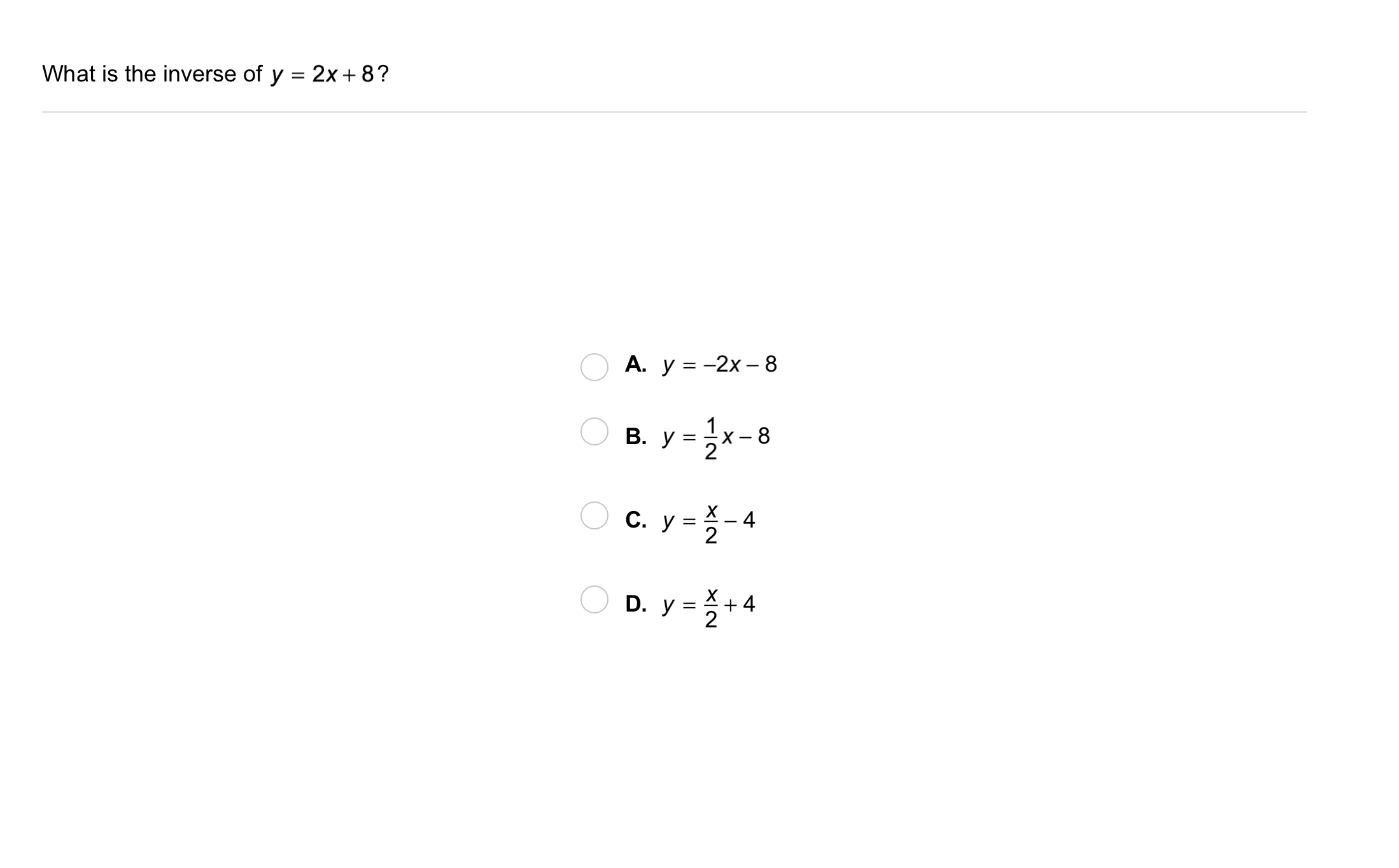
Problem 2 Got It?
Video Check: Select all that apply with regards to the video embedded directly above this item.

Take Note: How can you tell whether two relations are inverses just by looking at their graphs?
You may use the canvas to help illustrate your written response.

Take Note: Categorize each graph based on whether or not the relations represented are inverses.
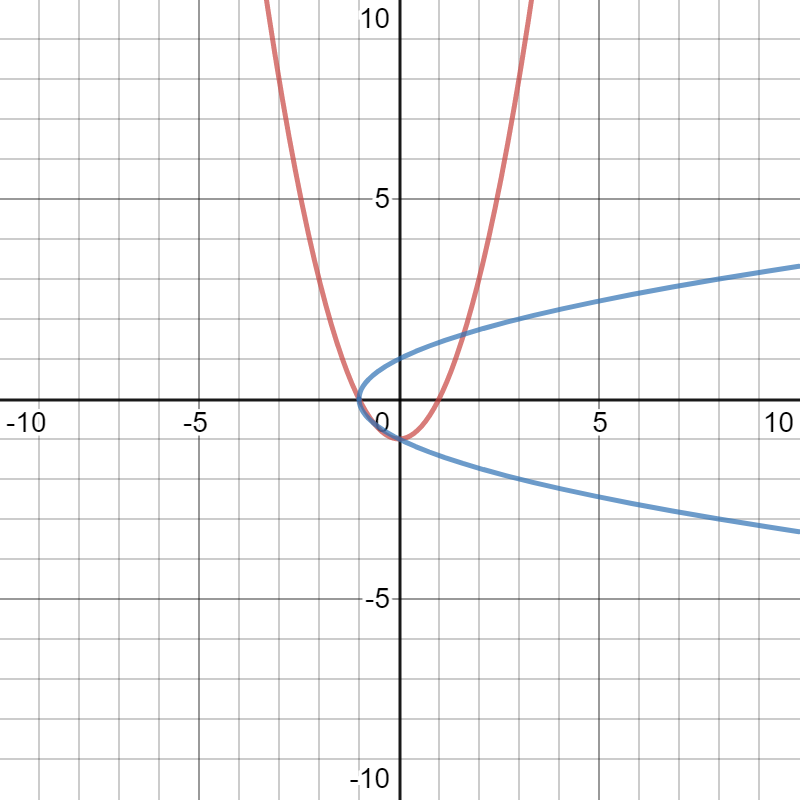
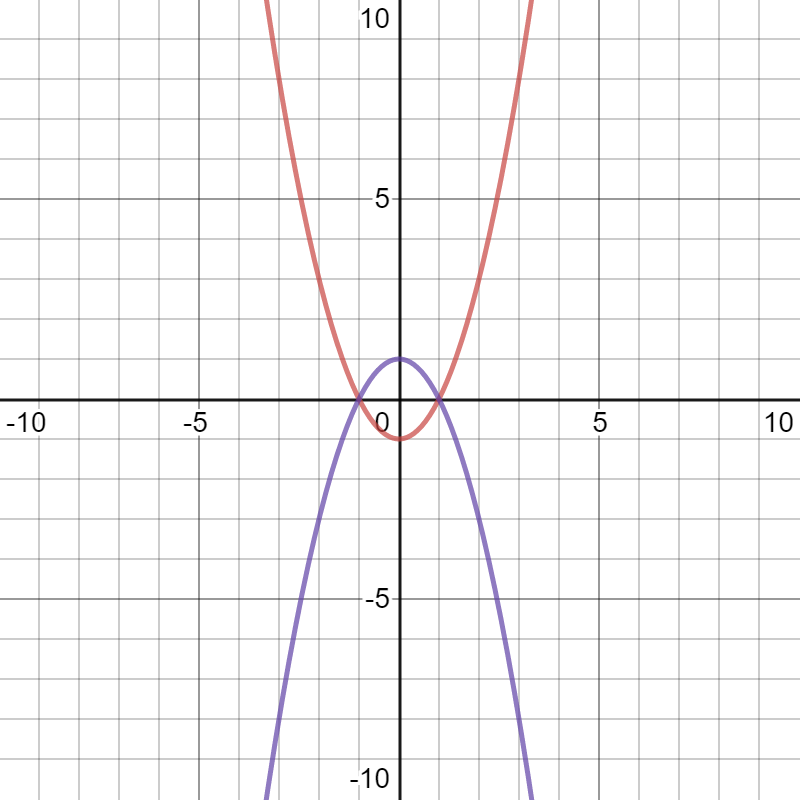
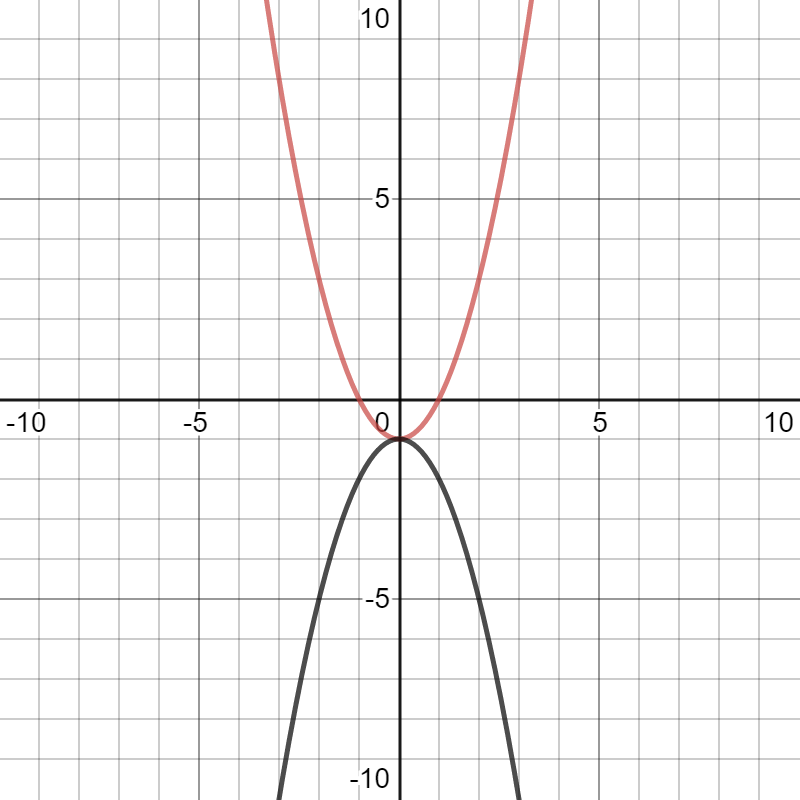
The relations are inverses
The relations are NOT inverses
Problem 3 Got It? Graph the following 3 lines:
Graph 1: Graph the function
Graph 2: Graph the inverse of the function.
Graph 3: Graph the function
Note that the function and its inverse are reflections across the line
Video Check: Select all that apply with regards to the video embedded directly above this item.

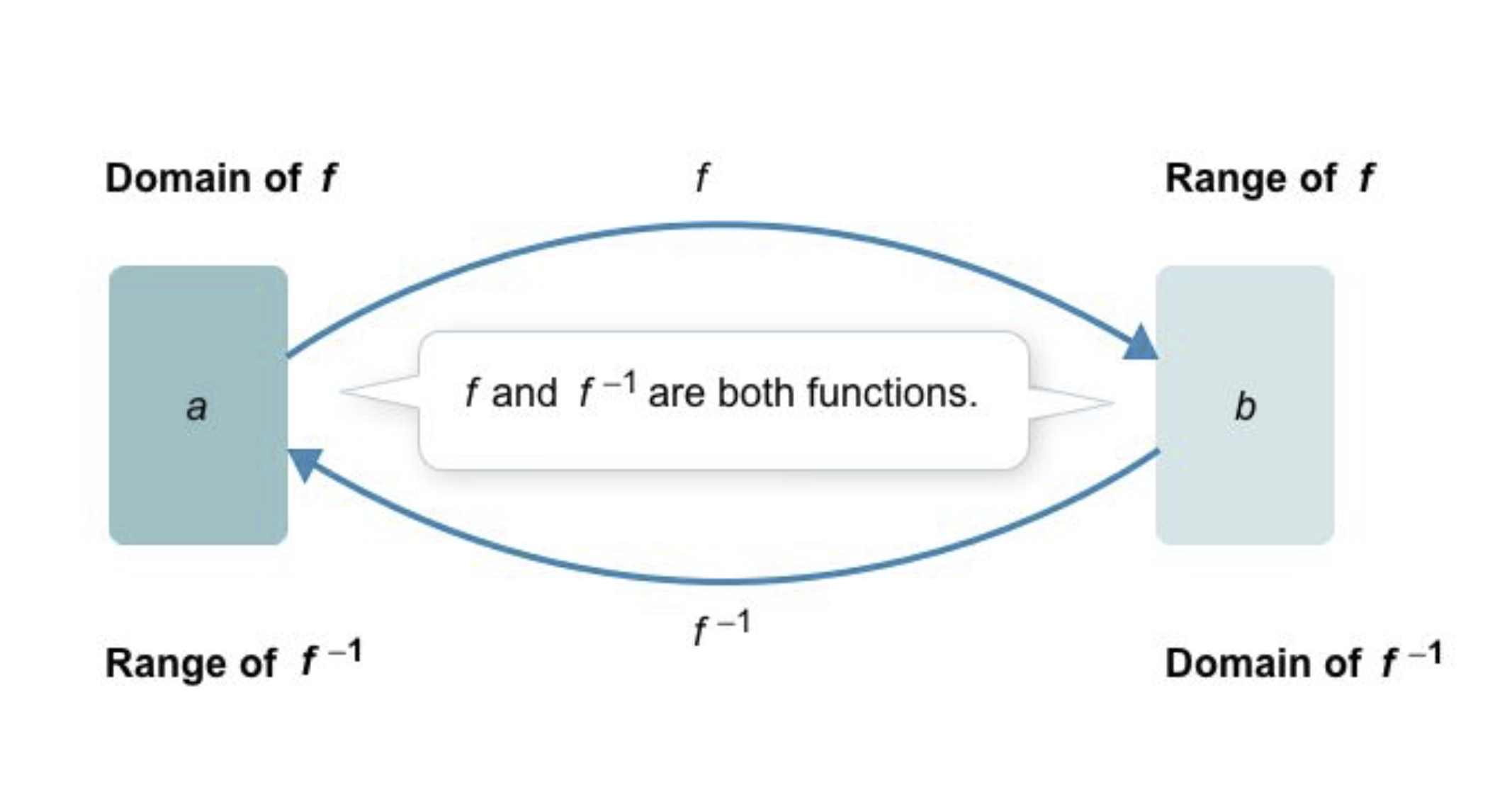
Take Note: How are the domain and range of a function and the domain and range of the function's inverse related?
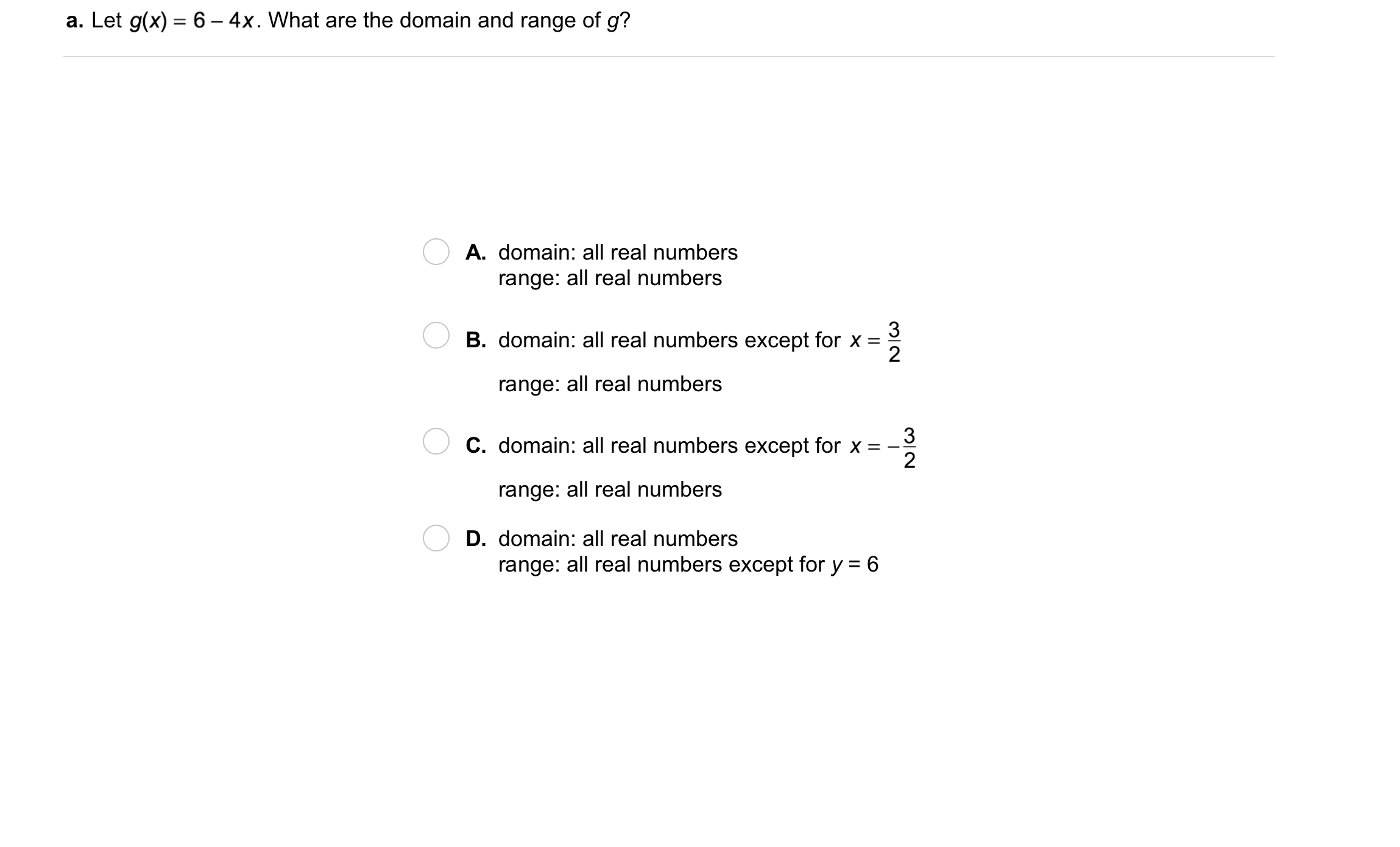
Problem 4 Got It?
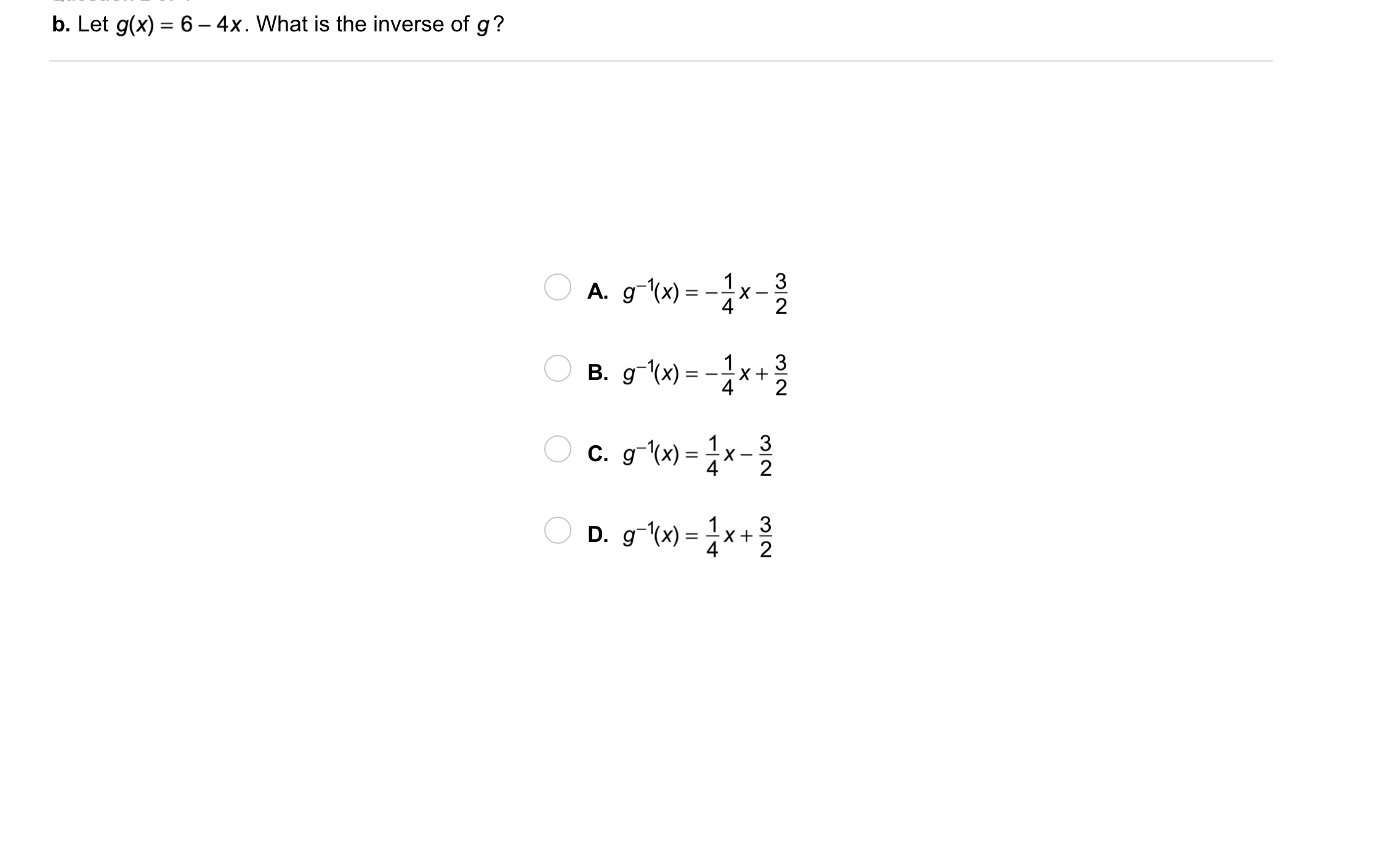
Problem 4 Got It?
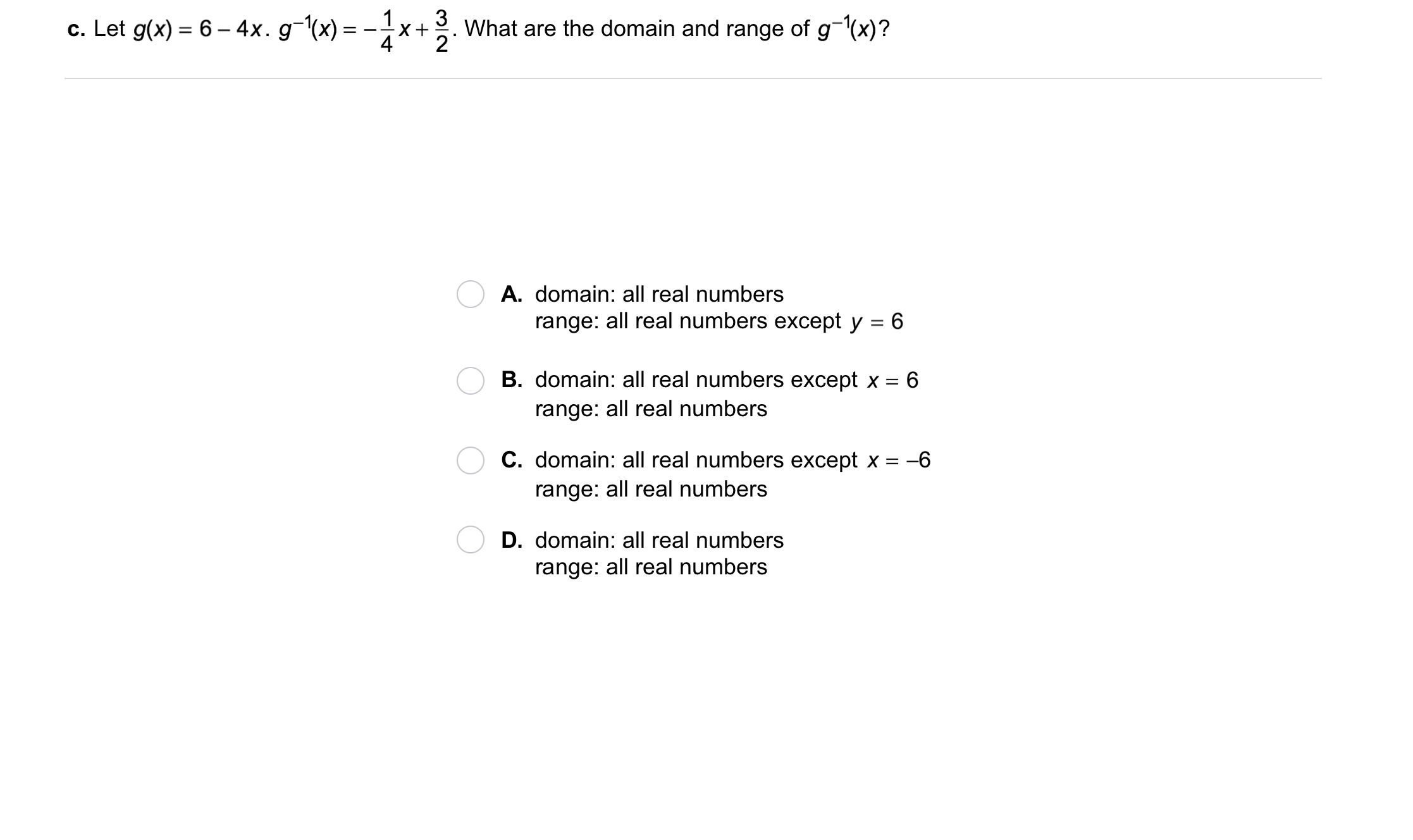
Problem 4 Got It?
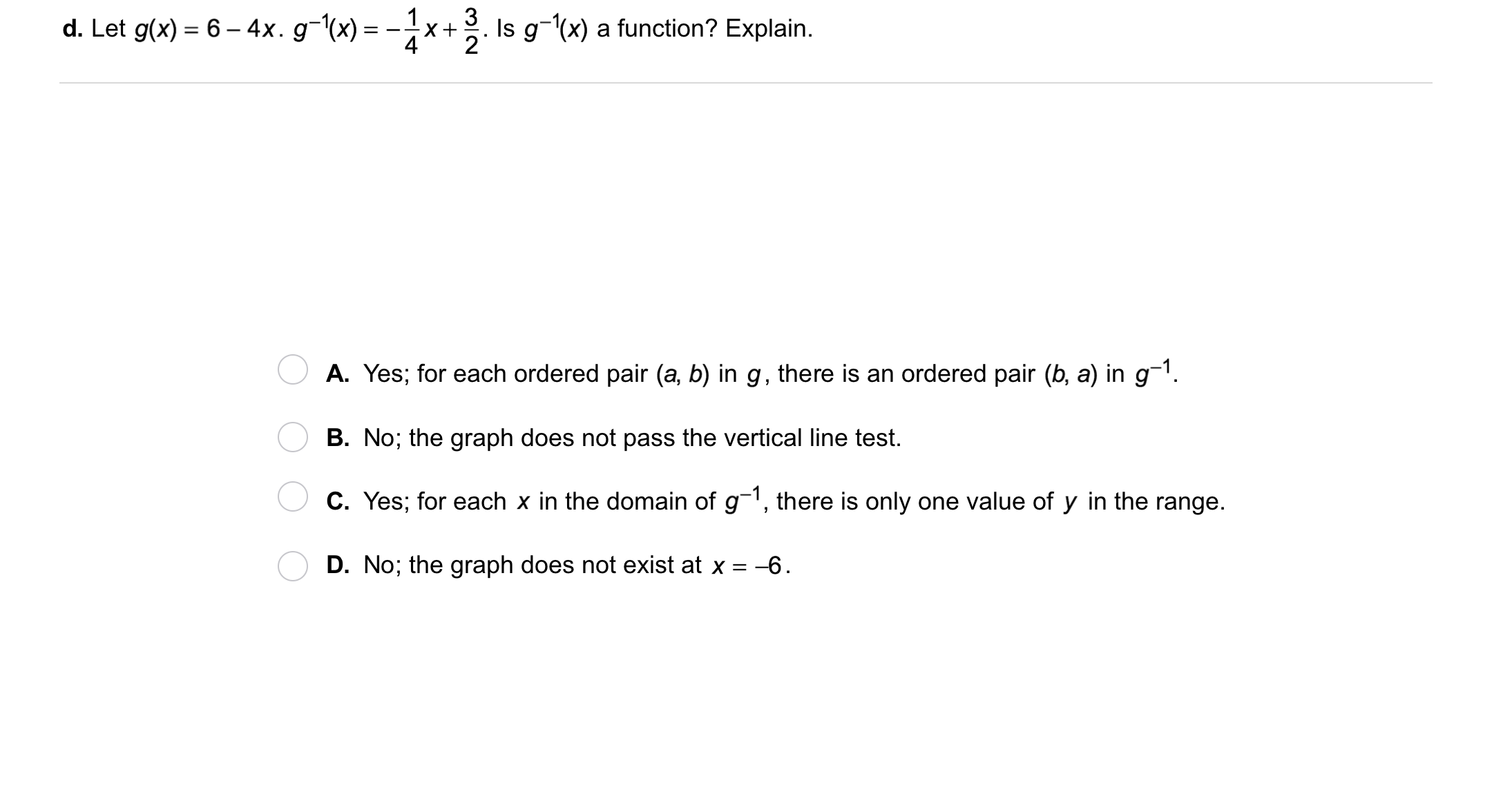
Problem 4 Got It?
Video Check: Select all that apply with regards to the video embedded directly above this item.
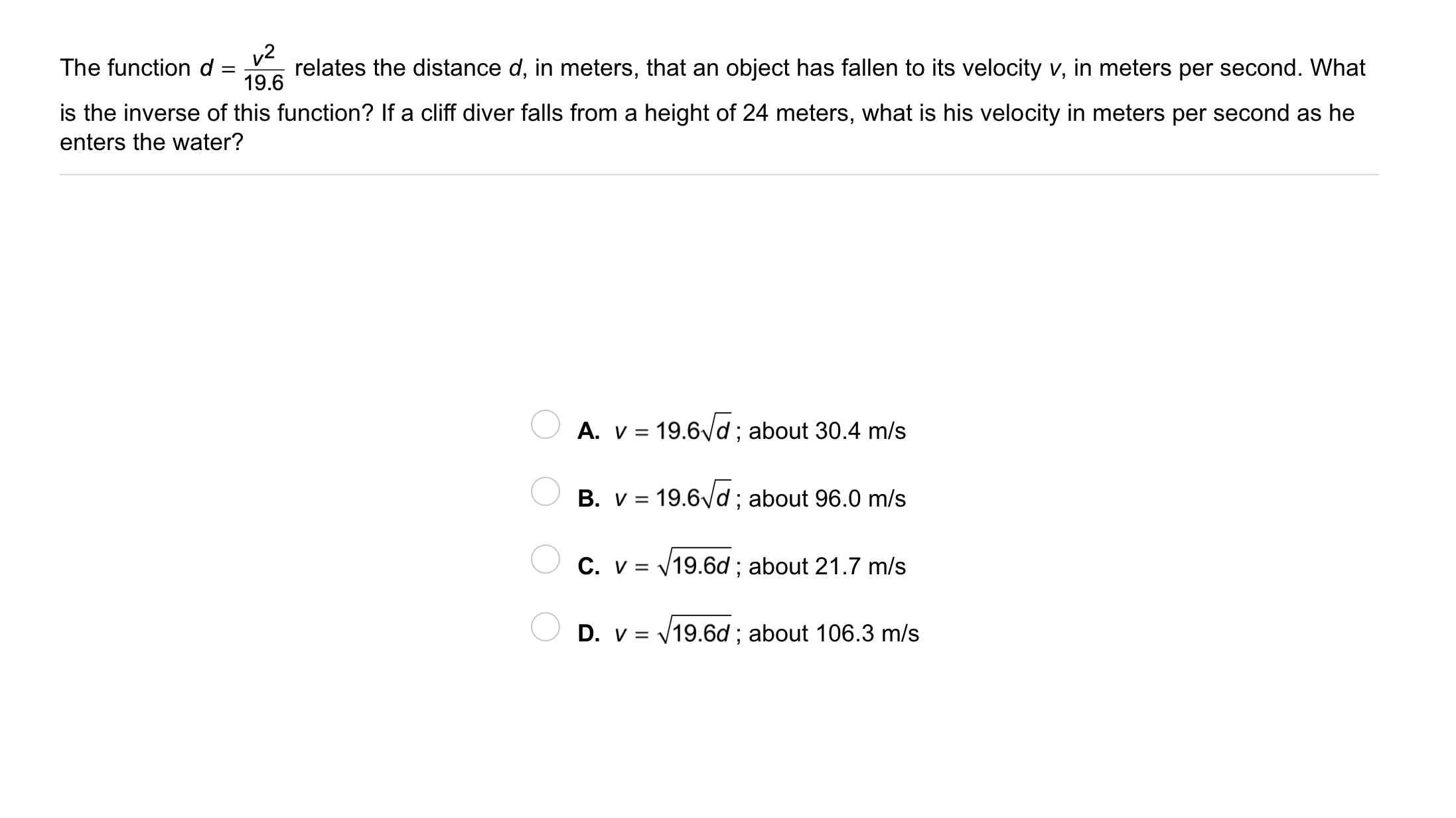
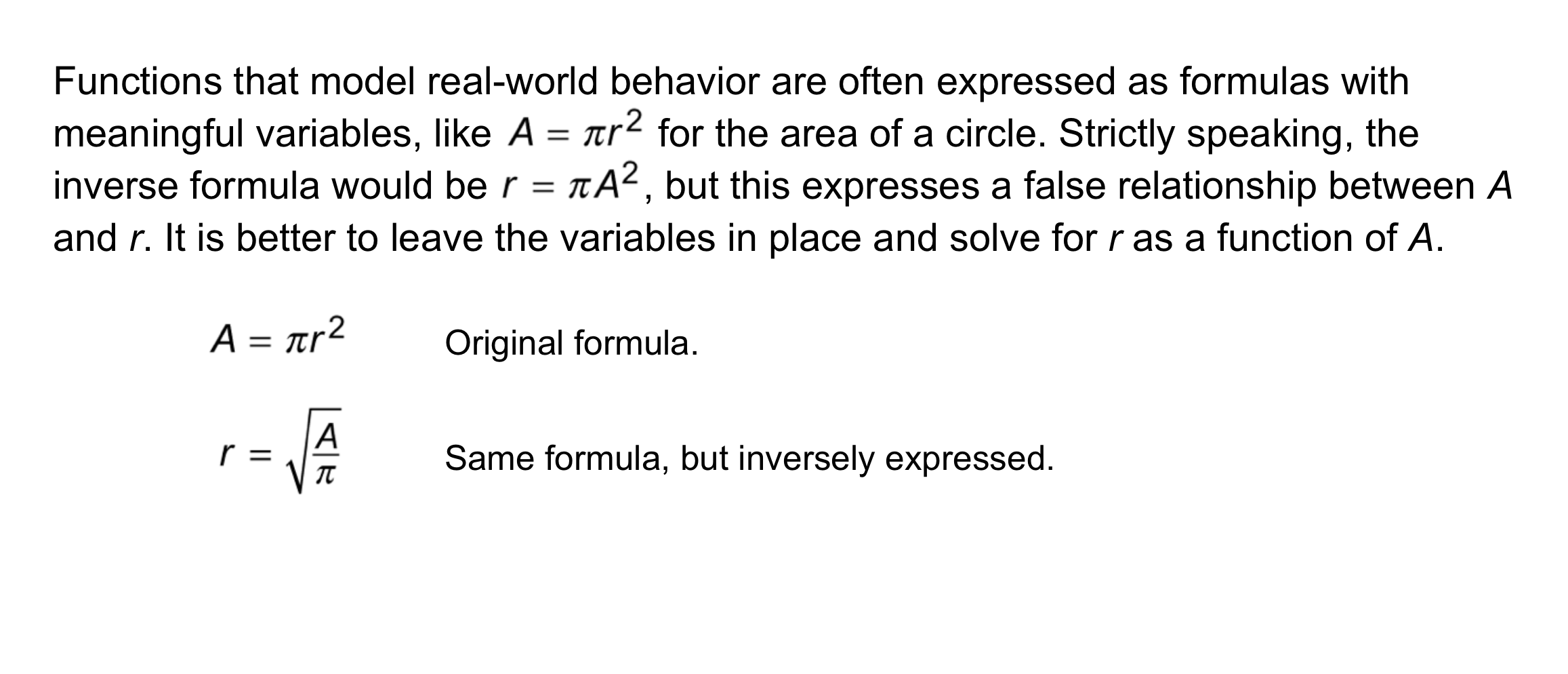
Problem 5 Got It? The function d, below, relates the distance d, in meters, that an object has fallen to its velocity, v, in meters per second.
What is the inverse of this function?
If a cliff diver falls from a height of 24 meters, what is his velocity in meters per second as he enters the water?
Video Check: Select all that apply with regards to the video embedded directly above this item.

Take Note: What is a one-to-one function ?
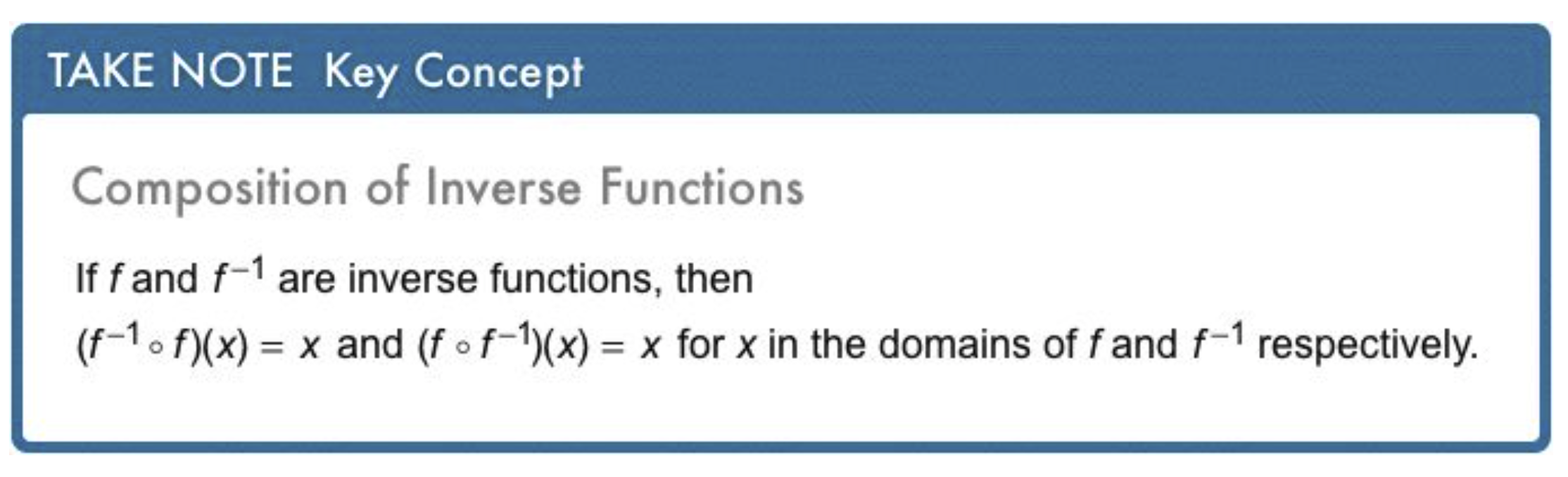
Take Note: What happens when you compose a function and its inverse?
For example, consider:
NOTE: This is NOT a fill-in-the-blank item. You should reply with at least one sentence to answer the question above.
Problem 6 Got It? Given g(x) below, find g-1(x).
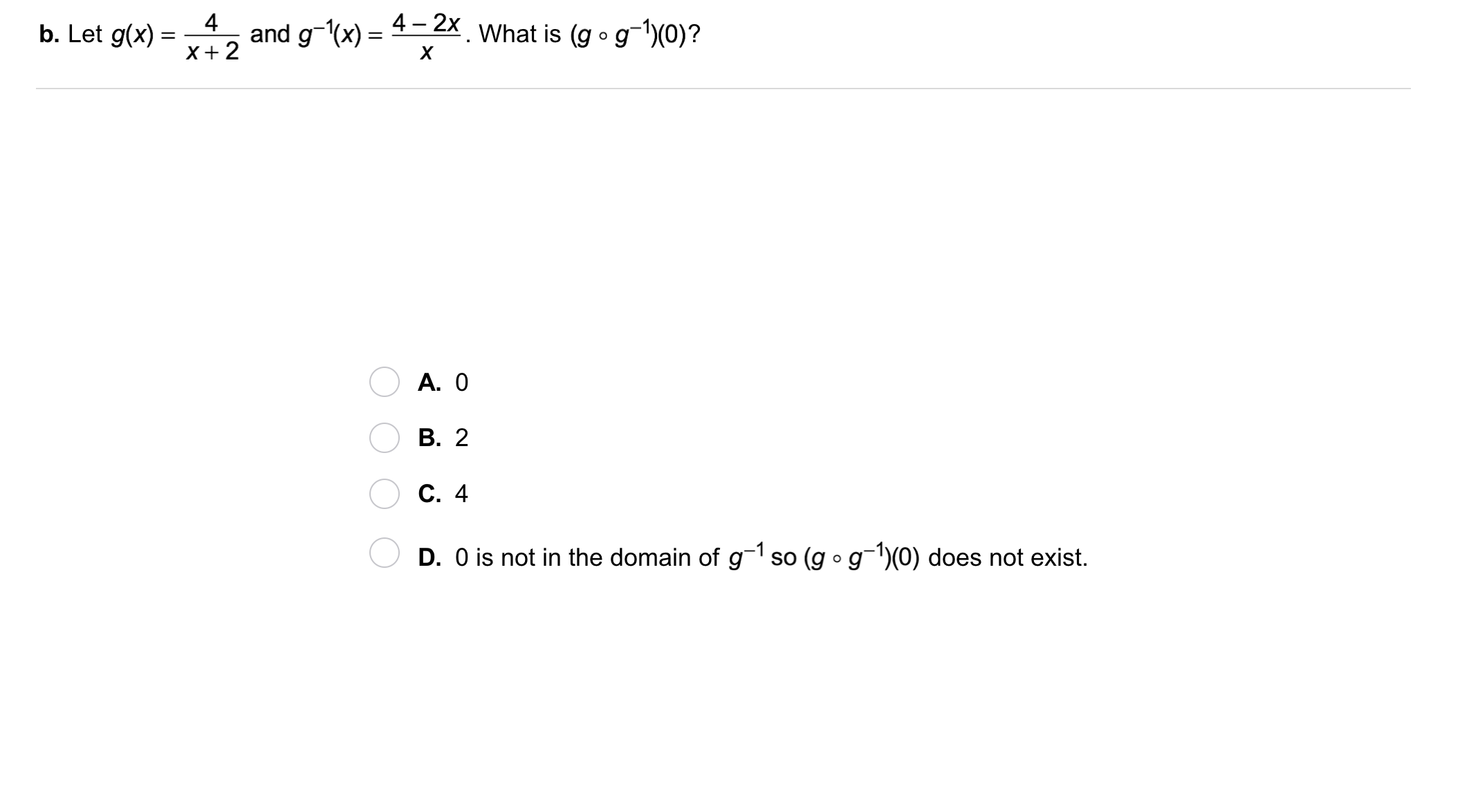
Problem 6 Got It?
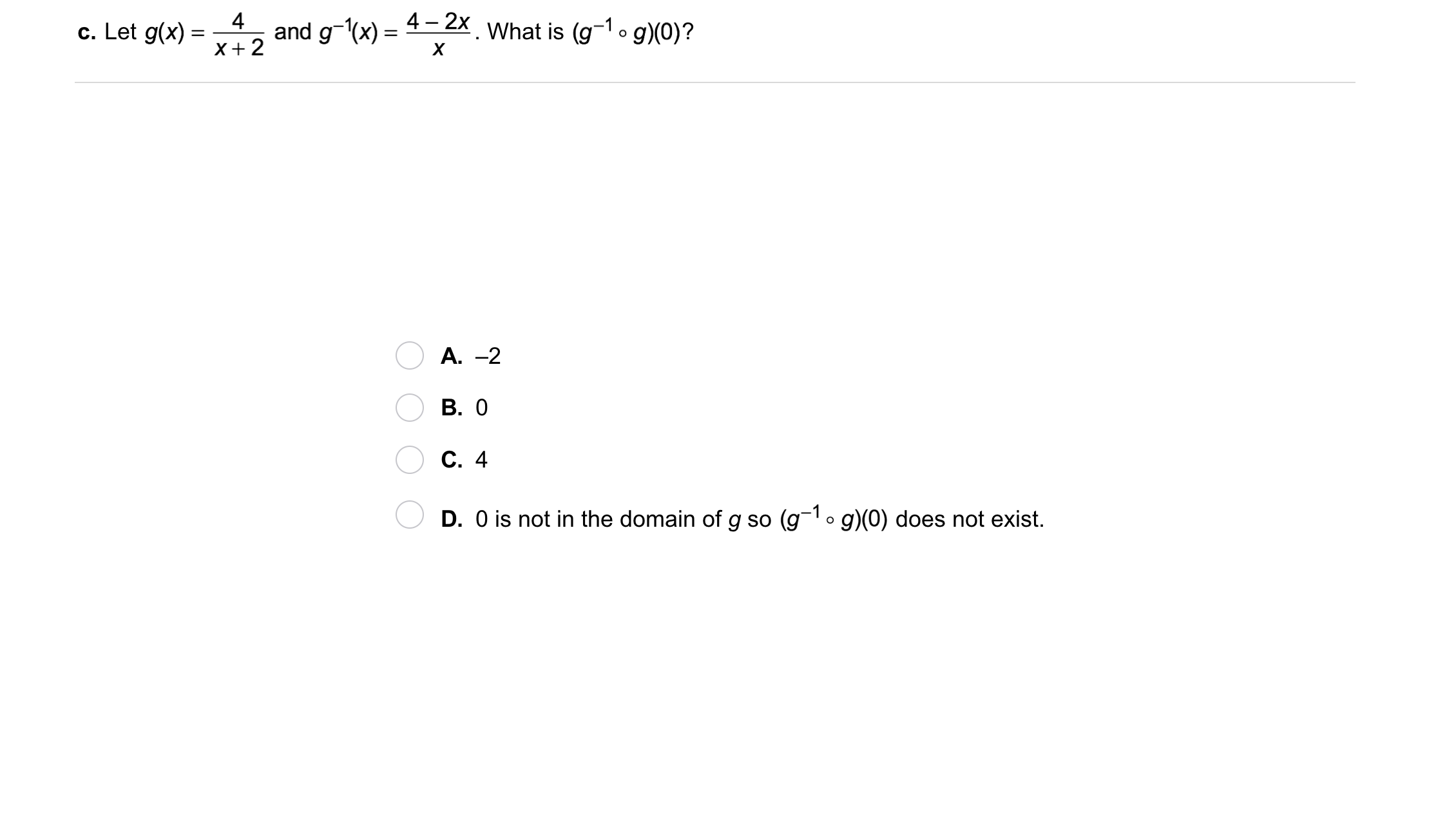
Problem 6 Got It?
HINT: You do not actually have to compose these functions. Consider how the composition of any function and its inverse simplifies.

🧠 Retrieval Practice:
Summarize the mathematical content of this lesson. What topics, ideas, and vocabulary were introduced?