Wave Properties

Last updated almost 7 years ago
7 questions
Note from the author:
Basic properties of transverse and longitudinal waves
Information and graphics adapted from https://www.acs.psu.edu/drussell/demos/waves/wavemotion.html

Longitudinal Waves

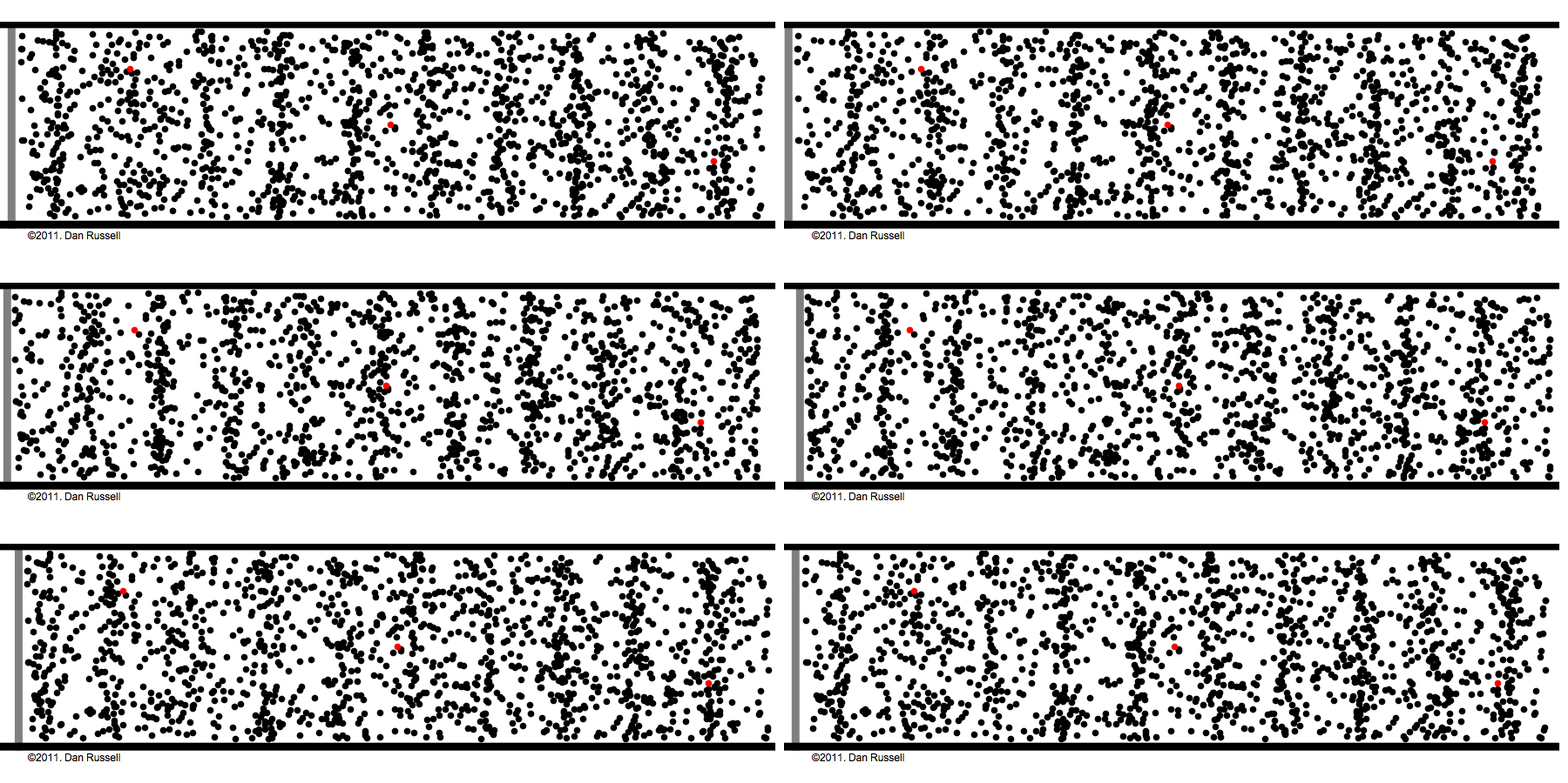
In a longitudinal wave the particle displacement is parallel to the direction of wave propagation. The animation below shows a one-dimensional longitudinal plane wave propagating (moving) down a tube. The particles do not move down the tube with the wave; they simply oscillate back and forth about their individual equilibrium positions. Pick a single particle and watch its motion. The wave is seen as the motion of the compressed region (ie, it is a pressure wave), which moves from left to right.


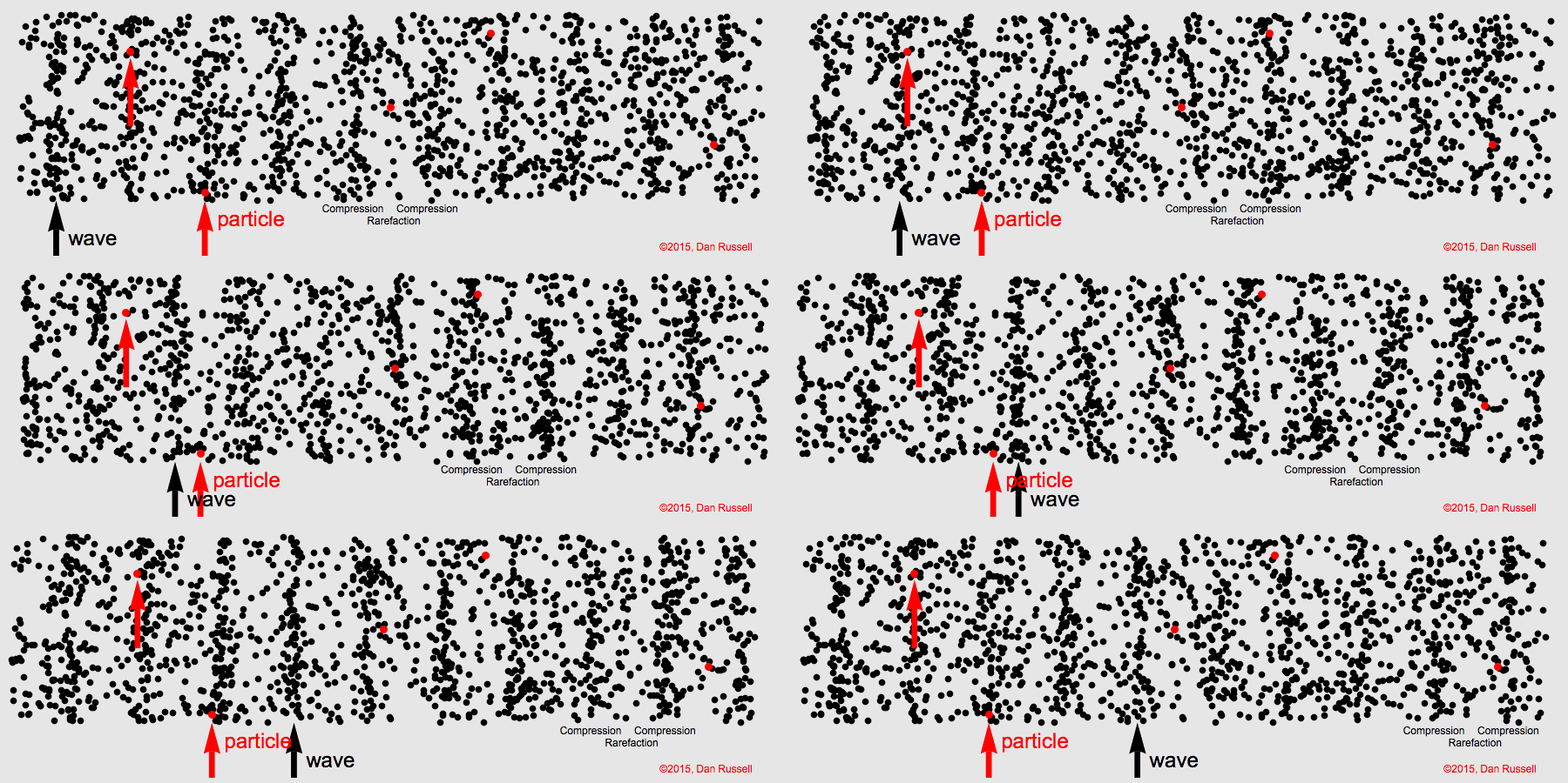
The second animation below shows the difference between the oscillatory (back-and-forth) motion of individual particles and the propagation (movement) of the wave through the medium. The animation also identifies the regions of compression and rarefaction.


The P waves (Primary waves) in an earthquake are examples of Longitudinal waves. The P waves travel with the fastest velocity and are the first to arrive.

To see a animations of spherical longitudinal waves check out:
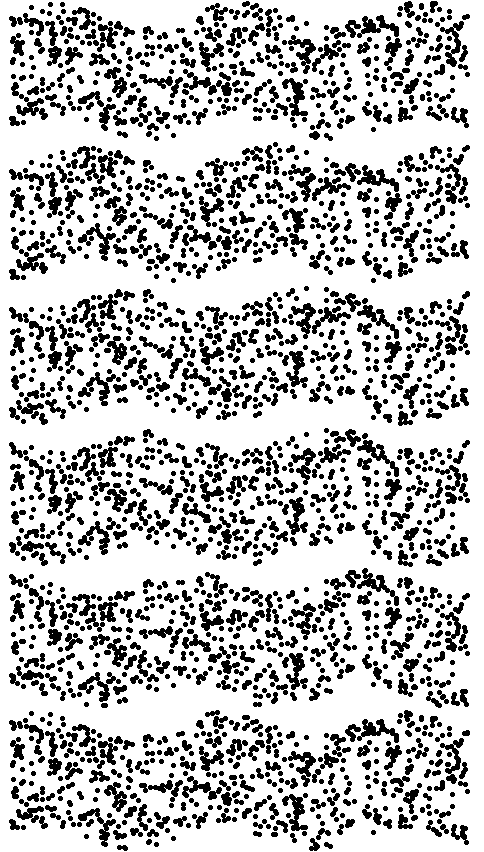
  • Sound Radiation from Simple Sources
  • Radiation from Cylindrical Sources
1

Look at the animations of longitudinal waves above. What happens to the particles of matter (red dot) as the waves move through them?

1

The P-waves move fastest and arrive first. (This is why they're called Primary Waves.)

1

In a longitudinal wave the particles move ______________________ to the direction of the wave.

Transverse Waves

In a transverse wave the particle displacement is perpendicular to the direction of wave propagation. The animation below shows a one-dimensional transverse plane wave propagating from left to right. The particles do not move along with the wave; they simply oscillate (move) up and down about their individual equilibrium positions as the wave passes by. Pick a single particle and watch its motion.


The S waves (Secondary waves) in an earthquake are examples of Transverse waves. S waves propagate (move) with a velocity slower than P waves, arriving several seconds later.

1

Look at the animation of the transverse wave above. What happens to the particles of matter (red dot) as the waves move through them?

1

In a transverse wave the particles move ______________________ to the direction of the wave.

1

The S-waves move fastest and arrive first. (This is why they're called Secondary Waves.)

Water Waves

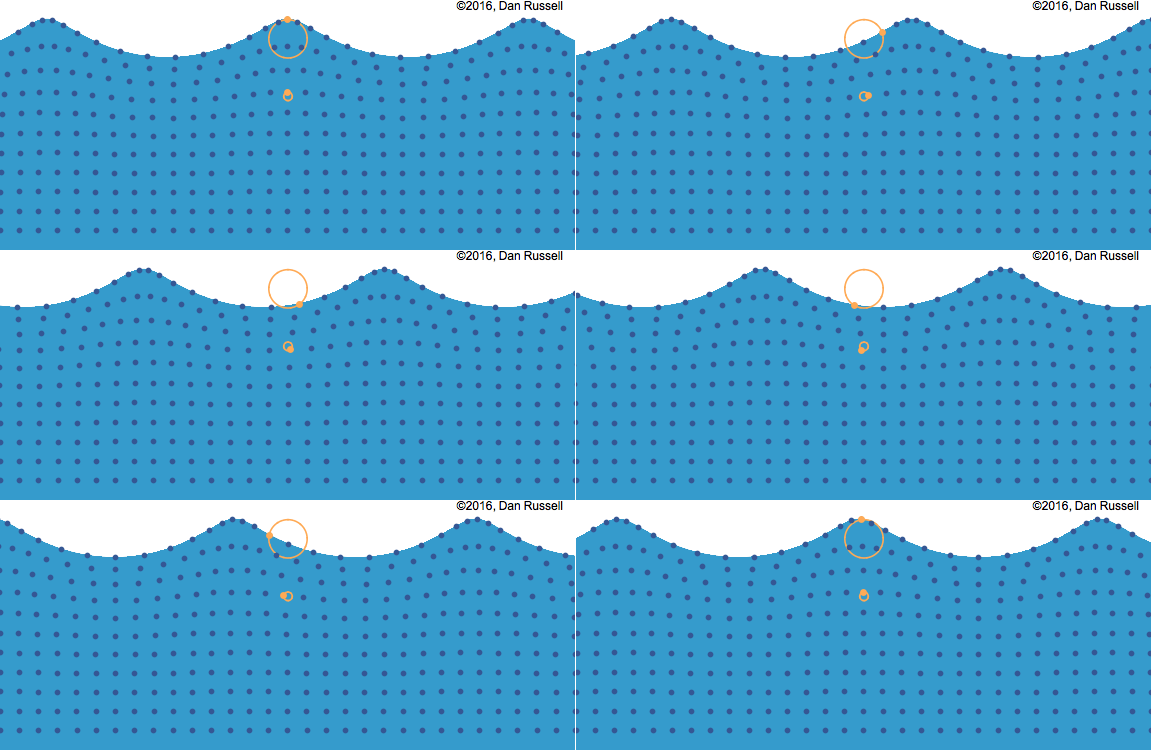
Water waves are an example of waves that involve a combination of both longitudinal and transverse motions. As a wave travels through the waver, the particles travel in clockwise circles. The radius of the circles decreases as the depth into the water increases. The animation at right shows a water wave travelling from left to right in a region where the depth of the water is greater than the wavelength of the waves. I have identified two particles in orange to show that each particle indeed travels in a clockwise circle as the wave passes.

1

Look at the animation of the water wave above. If you were on a surf board in the ocean, how would you move in relation to the wave?