Heredity, Punnet Squares, and Pedigrees
star
star
star
star
star
Last updated almost 7 years ago
37 questions
1
What is a trait?
What is a trait?
1
What is Heredity?
What is Heredity?
1
What is a gene?
What is a gene?
1
What is an Allele?
What is an Allele?
1
TRUE OR FALSE: You get one allele for a trait from you mom, and one from you dad.
1
What did Gregor Mendel discover about heredity?
1
Fill in the blank: _________________ Alleles - An allele that covers another allele.
1
Fill in the blank: ______________________ Alleles - An allele that is covered, or hidden by another allele.
1
Select all answers that are correct.
1
How are alleles represented?
1
Which of the following are corrent. They may be more than one correct answer.
1
Which of the following is the correct defintion of Genotype
1
Which of the following is the correct defintion of Phenotype
1
Select all that are an example of a Genotype.
1
Select all that are an example of a Phenotype.
1
Which definitions are correct?
1
1
Select the correct defintions.
1
Circle the genotypes that are homozygous and underline the genotytpes that are heterozygous.
1
Fill in the missing information for the Punnett square below
1
Fill in the missing information for the Punnett square below
1
Fill in the missing information for the Punnett square below
1
Fill in the missing information for the Punnett square below
1
Fill in the missing information for the Punnett square below
1
Find the probabilty of each possible genotype and phenotype using the punnett square above.
1
Find the probabilty of each possible genotype and phenotype using the punnett square above.
1
Find the probabilty of each possible genotype and phenotype using the punnett square above.
1
Find the probabilty of each possible genotype and phenotype using the punnett square above.
1
In a pedigree certain symbols mean different things. Draw the correct symbols next to their meaning.
1
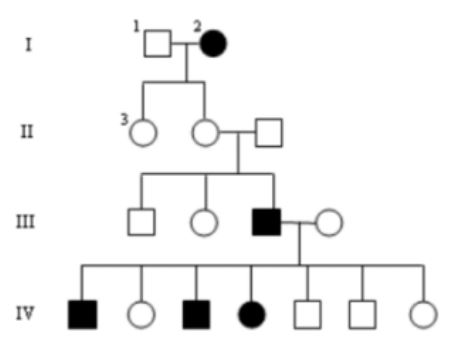
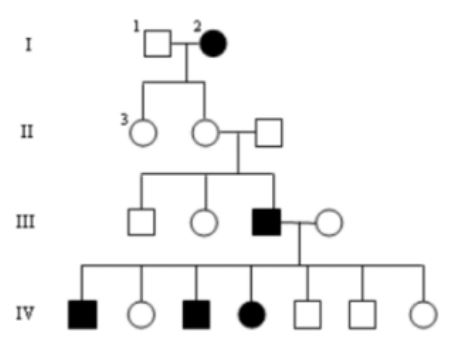
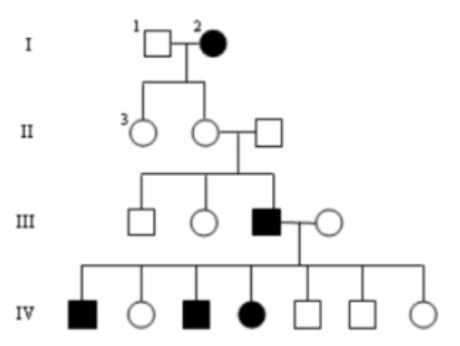
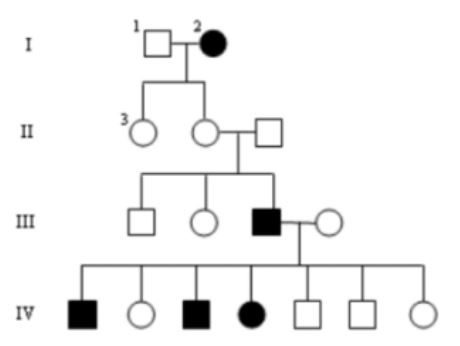
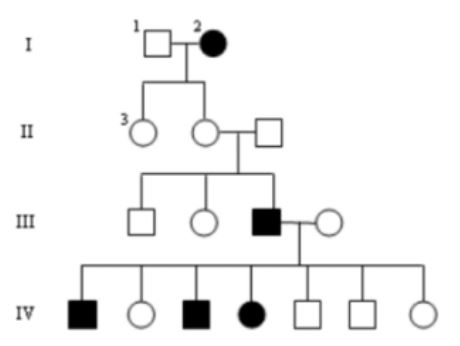
How many males are there?
1
How many males have hemophilia?
1
How many females are there?
1
How many females have hemophilia?
1
How many marrages are there?
1
How many children did the couple in gerenation 3 (III) have?
1
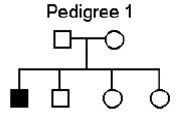
Pedigree 1 shows a family of parrots. One offspring shows the trait for blue feathers. (R = red feathers, r = blue feathers).
Do you think blue feathers is dominant or recessive? How did you know? Support your answer.
Pedigree 1 shows a family of parrots. One offspring shows the trait for blue feathers. (R = red feathers, r = blue feathers).
Do you think blue feathers is dominant or recessive? How did you know? Support your answer.
1
Create your own pedigree or make one up! You must show 3 generations.
Ideas on who to include: You, your parents, Aunts/Uncles, your grandparents, grandparents siblings, your great-grandparents. See mine below!
Create your own pedigree or make one up! You must show 3 generations.
Ideas on who to include: You, your parents, Aunts/Uncles, your grandparents, grandparents siblings, your great-grandparents. See mine below!