Bird Beak Lab
star
star
star
star
star
Last updated over 7 years ago
22 Nsɛmmisa
Hyɛ no nsow a efi ɔkyerɛwfo no hɔ:
To better understand Natural Selection and Darwin's Finches
To better understand Natural Selection and Darwin's Finches
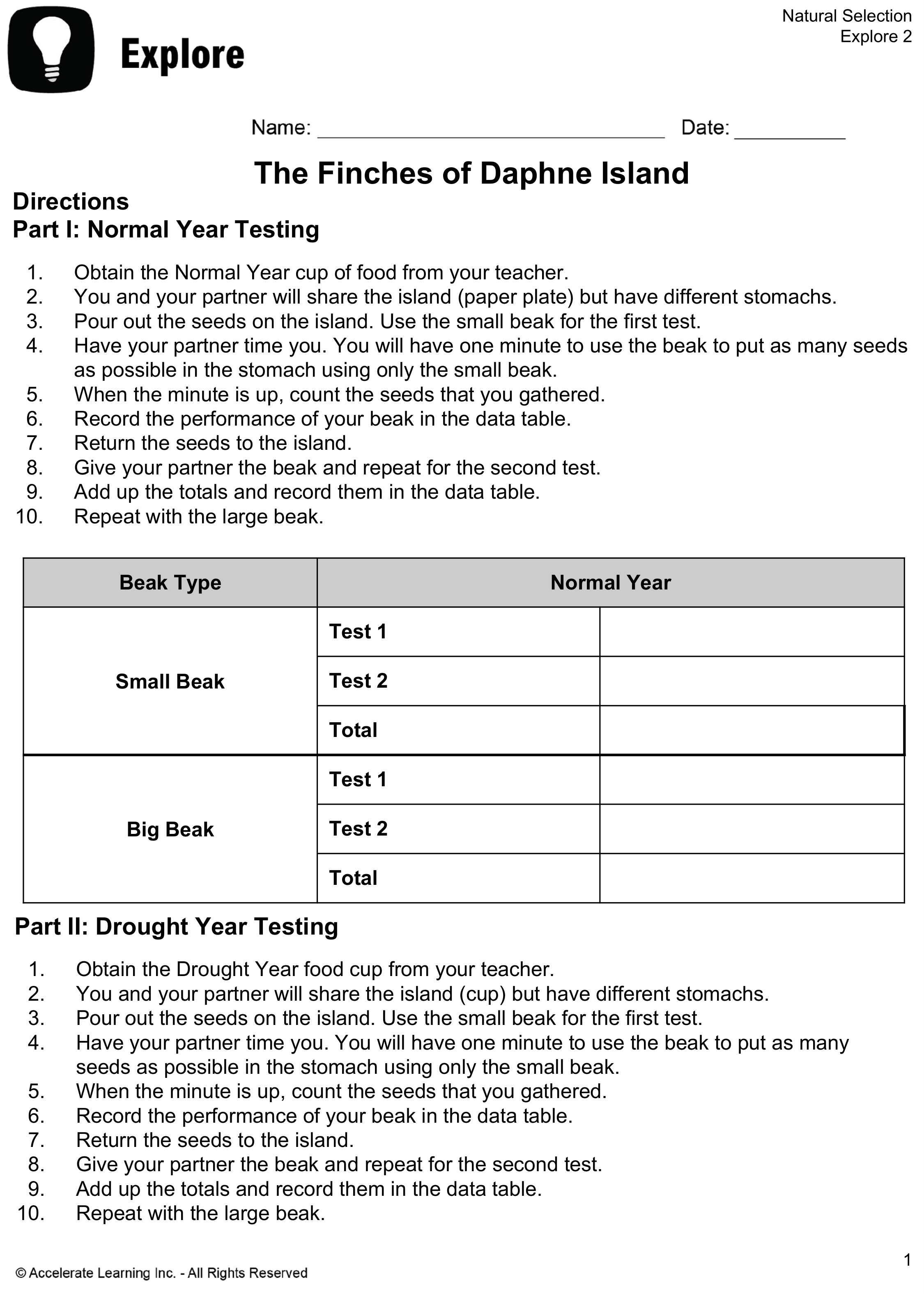
Enter the number of seeds collected for the small beak in test 1:
Enter the number of seeds collected for the small beak in test 2:
TOTAL number of seeds collected from the small beak:
Enter the number of seeds collected for the big beak in test 1:
Enter the number of seeds collected for the big beak in test 2:
TOTA number of seeds collected for the BIG Beak:
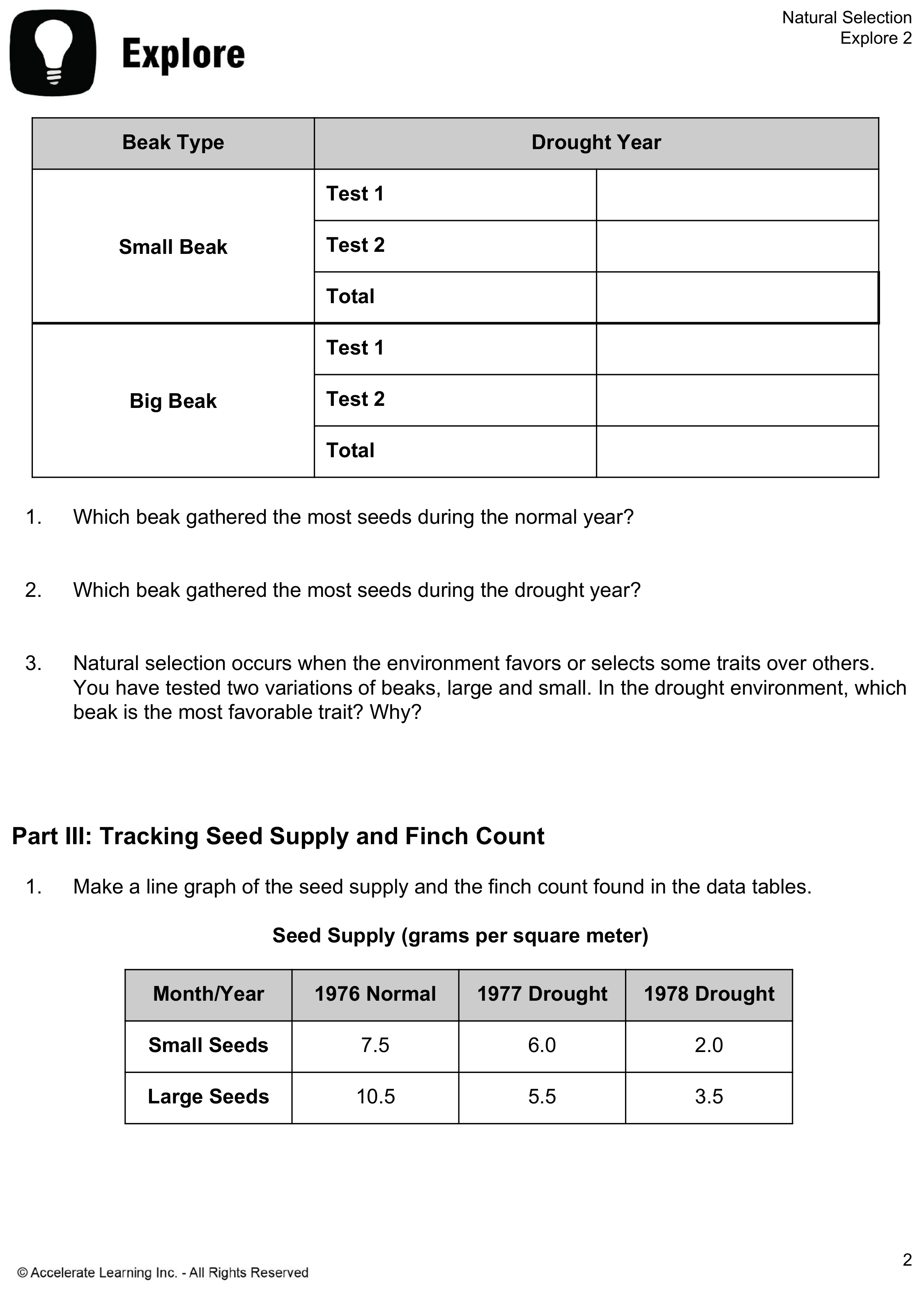
Drought Year: Enter the number of seeds collected for the small beak in test 1:
Drought Year: Enter the number of seeds collected for the small beak in test 2:
TOTAL number of seeds collected from the small beak:
Drought Year: Enter the number of seeds collected for the big beak in test 1:
Drought Year: Enter the number of seeds collected for the small beak in test 2:
TOTAL number of seeds collected from the small beak:
Which beak gathered the most seeds during the normal year?
Which beak gathered the most seeds during the drought year?
Natural selection occurs when the environment favors or selects some traits over others. You have tested two variations of beaks, large and small. In the drought environment, which beak is the most favorable trait? Why?
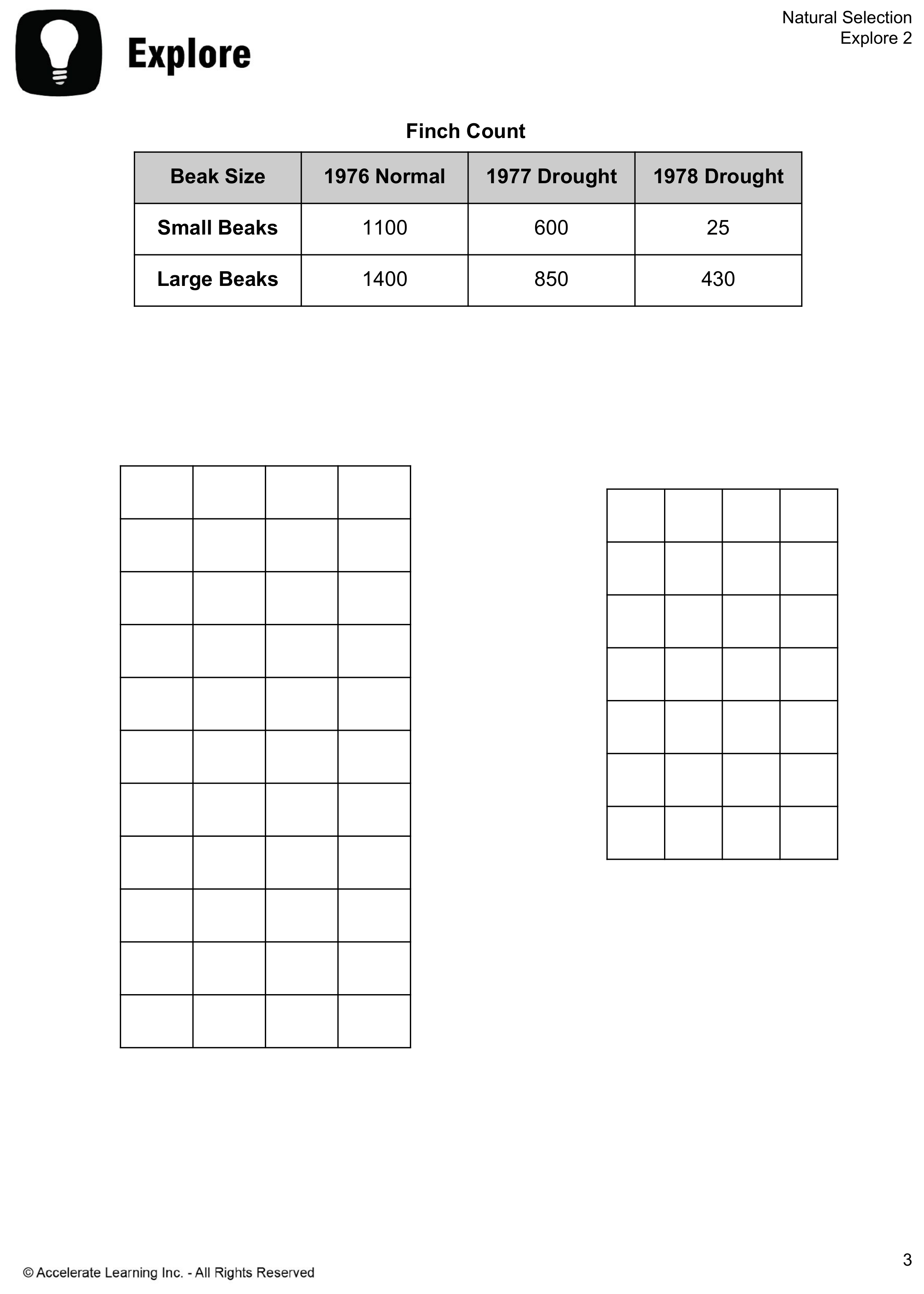
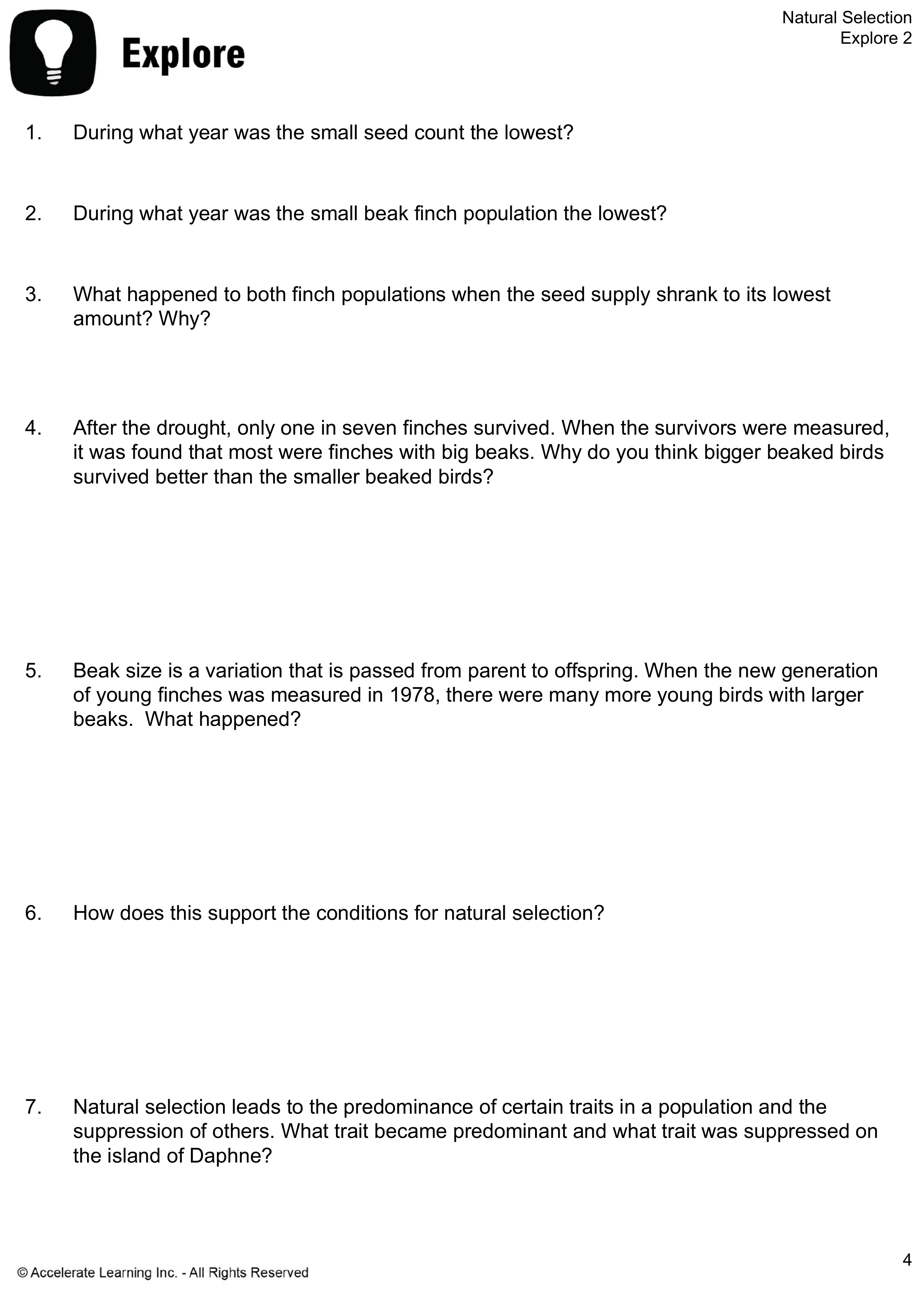
During what year was the small-seed count the lowest?
During what year was the small beak finch population the lowest?
What happened to both finch populations when the seed supply shrank to its lowest amount? Why?
After the drought, only one in seven finches survived. When the survivors were measured, it was found that most were finches with big beaks. Why do you think bigger beaked birds survived better than the smaller beaked birds?
Beak size is a variation that is passed from parent to offspring. When the new generation of young finches was measured in 1978, there were many more young birds with larger beaks. What happened?
How does this support the conditions for natural selection?
Natural selection leads to the predominance of certain traits in a population and the suppression of others. What trait became predominant (the stronger/better trait) and what trait was suppressed (weaker trait) on the island of Daphne?