What is the text structure for the article below?
Get into the Loop!
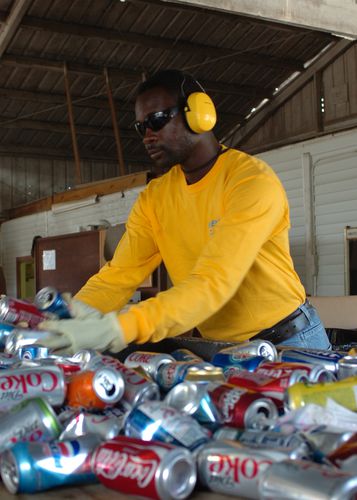
Did you ever wonder what happens to the aluminum cans you recycle? Weekly Readerwatched a recycling center in action at the Garbage Museum in Stratford, Connecticut. Here's the steps to recyclying alumimun cans.
1. Sort and Separate
Trucks drop off aluminum cans that are mixed with massive loads of plastic bottles and glass. The trash travels along conveyor belts to be sorted and separated.
2. Compress the Mess.
Machines compress aluminum cans into giant bales.
3. Close the Loop.
The bales are sold to companies that turn the recycled cans into something usable. From recycled aluminum cans, more cans are made. When you buy recycled products, you "close the loop."
Do Your Bit—Reuse and Recycle!
Each American throws away about 5 pounds of garbage each day. Earth Day, April 22, reminds people how important it is to reduce waste. Here are some ways:
Carry a lunch box instead of a paper lunch bag, and pack food in reusable containers.
Use both sides of a sheet of paper.
Donate old clothing and toys to a charity.
Make a compost pile using food scraps, leaves, and grass clippings. Composting is nature's way of recycling. Plants and other wastes decompose, or rot, and nourish the soil.
Recycle plastic and glass bottles and jars, newspapers, and aluminum cans. Recycling just one aluminum can will save enough energy to run your TV for three hours!
What is the text structure for the article below?
Get into the Loop!
Did you ever wonder what happens to the aluminum cans you recycle? Weekly Readerwatched a recycling center in action at the Garbage Museum in Stratford, Connecticut. Here's the steps to recyclying alumimun cans.
1. Sort and Separate
Trucks drop off aluminum cans that are mixed with massive loads of plastic bottles and glass. The trash travels along conveyor belts to be sorted and separated.
2. Compress the Mess.
Machines compress aluminum cans into giant bales.
3. Close the Loop.
The bales are sold to companies that turn the recycled cans into something usable. From recycled aluminum cans, more cans are made. When you buy recycled products, you "close the loop."
Do Your Bit—Reuse and Recycle!
Each American throws away about 5 pounds of garbage each day. Earth Day, April 22, reminds people how important it is to reduce waste. Here are some ways:
Carry a lunch box instead of a paper lunch bag, and pack food in reusable containers.
Use both sides of a sheet of paper.
Donate old clothing and toys to a charity.
Make a compost pile using food scraps, leaves, and grass clippings. Composting is nature's way of recycling. Plants and other wastes decompose, or rot, and nourish the soil.
Recycle plastic and glass bottles and jars, newspapers, and aluminum cans. Recycling just one aluminum can will save enough energy to run your TV for three hours!