1
CCR.R.1
1
CCR.R.2
1
CCR.R.1
1
CCR.R.1
Which period is your ELA 10 class?
What is your name?
Use the following vocabulary words to answer the vocabulary questions below (Not all words will be used).
Bias
Equity
White Privilege
Civil Rights Movement
Agency
Code Switching
Inclusion
Jim Crow
Multiracial
Race
Black Power Movement
Racial Identity
Nationalist
Rhetoric
Supremacy
Xenophobia
____________ is the ability to feel empowered to take control of your own choices and actions, and advocate for yourself.
_____________ emphasized racial pride, economic empowerment, and the creation of political and cultural institutions for African-American people in the United States.
_______________ is the fair treatment, access, opportunity, and advancement for all people.
________________ were state and local laws that enforced racial segregation throughout the United States and particularly in the South.
________________ is a belief that one’s own race is inherently superior to other races and that white people should have power over people of other races.
__________________ is a person’s identification with a particular race that shares common characteristics with that person.
___________________ is the belief that some people, races, ideas, etc., are valued more than others; a prejudice for or against something
__________________ is when a person of color consciously or unconsciously changes their speech, behaviors, or other traits in order to conform to / fit in with Eurocentric society.
_________________ is the act of creating environments in which any individual or group can be and feel welcomed, respected, supported, and valued to fully participate
__________________ was a decades-long struggle in the United States, with the goal of enforcing constitutional and legal rights for African Americans that other Americans already enjoyed.
Use R.A.C.E. to answer two of the five short answer response questions. Each answer should be a minimum of four sentences, and follow conventional grammar rules (i.e. proper spelling, capitalization, and structure-no bullet points or abbreviations).
Once you finish your exam, you may answer an additional question for extra credit, but you must finish the exam in its enteriety first before beginning the extra credit response.
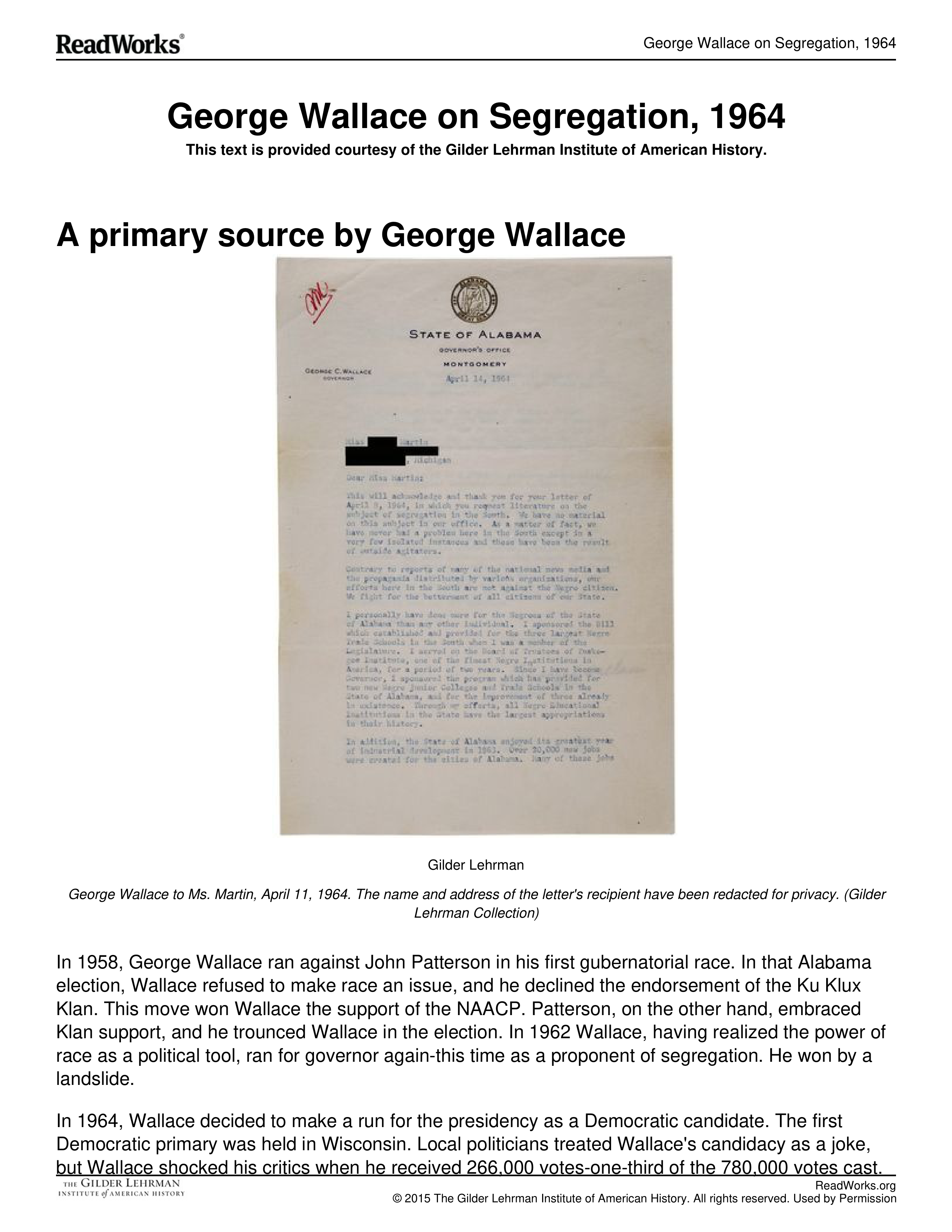
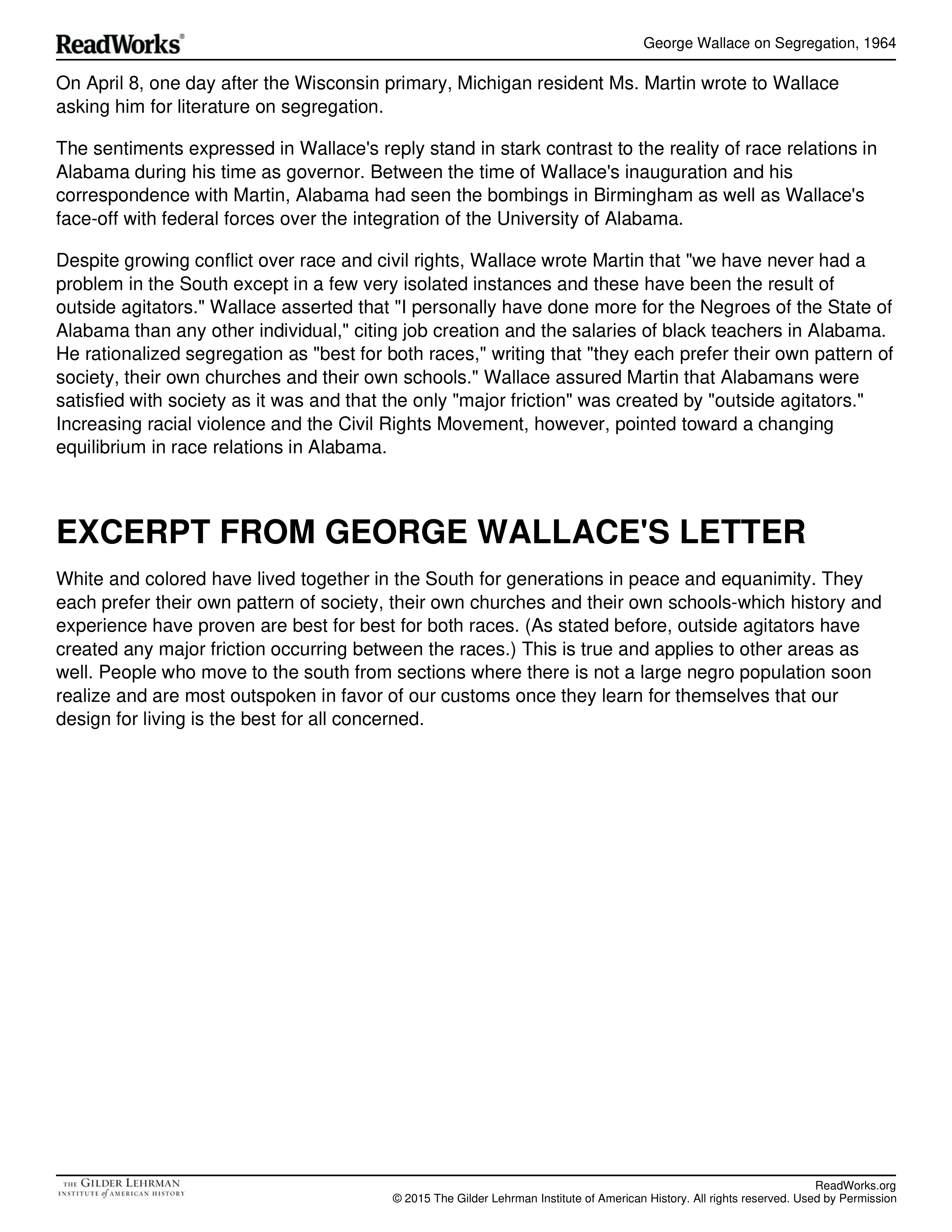

Based on information in the text, how would the author of the text about George Wallace's letter best describe race relations in Alabama during Wallace's term as governor?
Extra Credit - R.A.C.E. Short Answer Response:
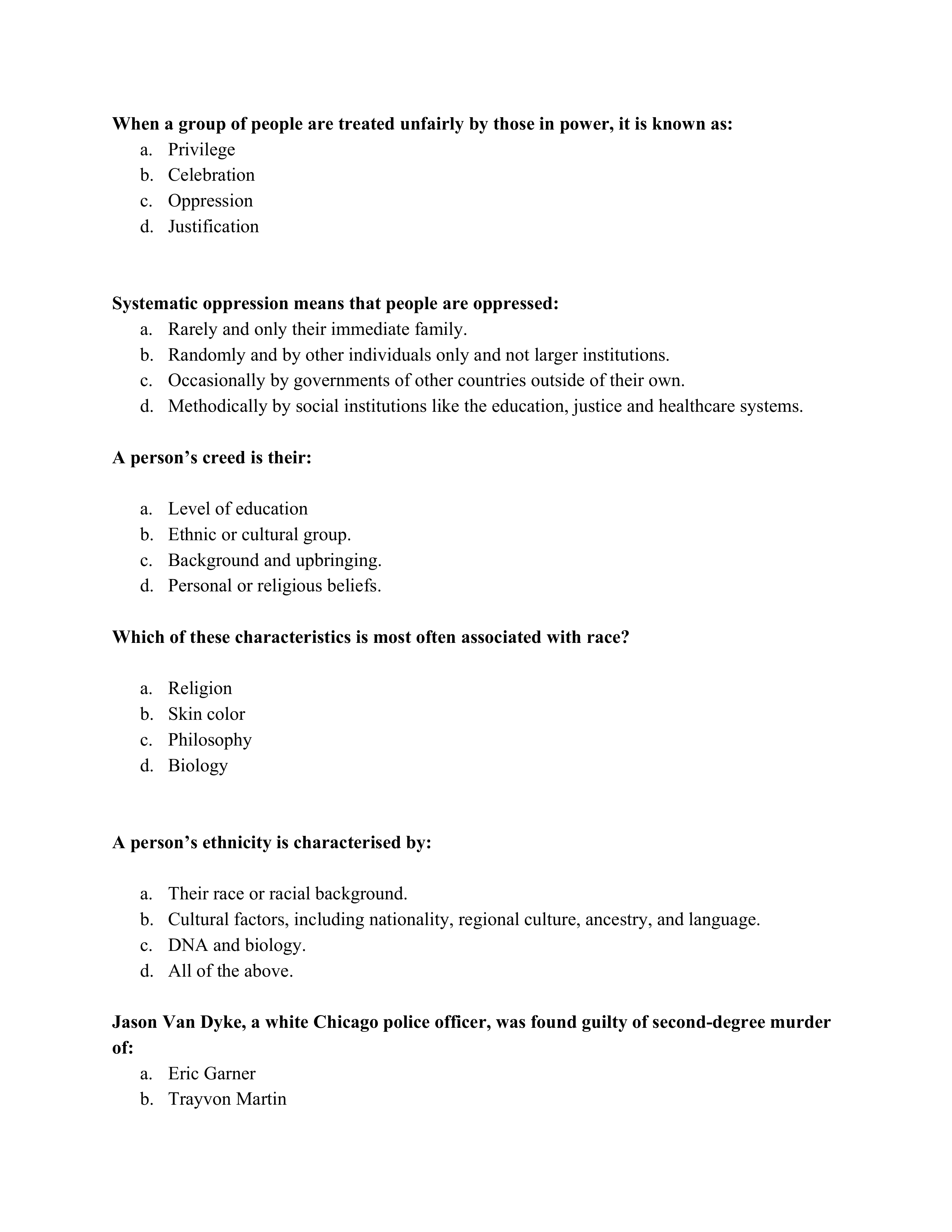
Which of the following is true of the Black Power Movement?
Race is a concept that has most often been used to:
A large social idea created from other smaller ideas is called a(n)
When Blimes from the Flocabulary video on Racial Perspectives talks about privilege, she is:
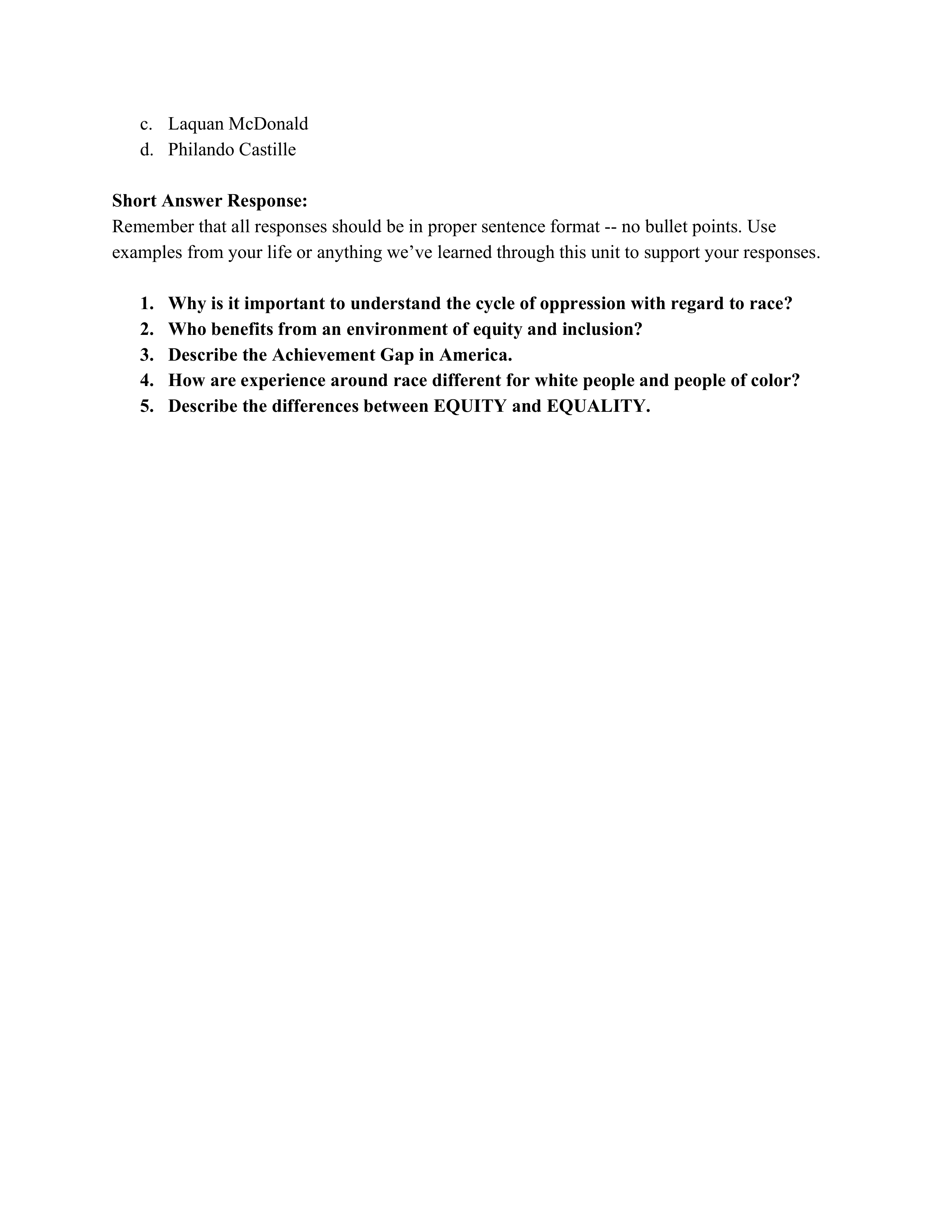
When a group of people are treated unfairly by those in power, it is known as:
Systematic oppression means that people are oppressed:
A person’s creed is their:
Which of these characteristics is most often associated with race?
A person’s ethnicity is characterised by:
Jason Van Dyke, a white Chicago police officer, was found guilty of second-degree murder of:
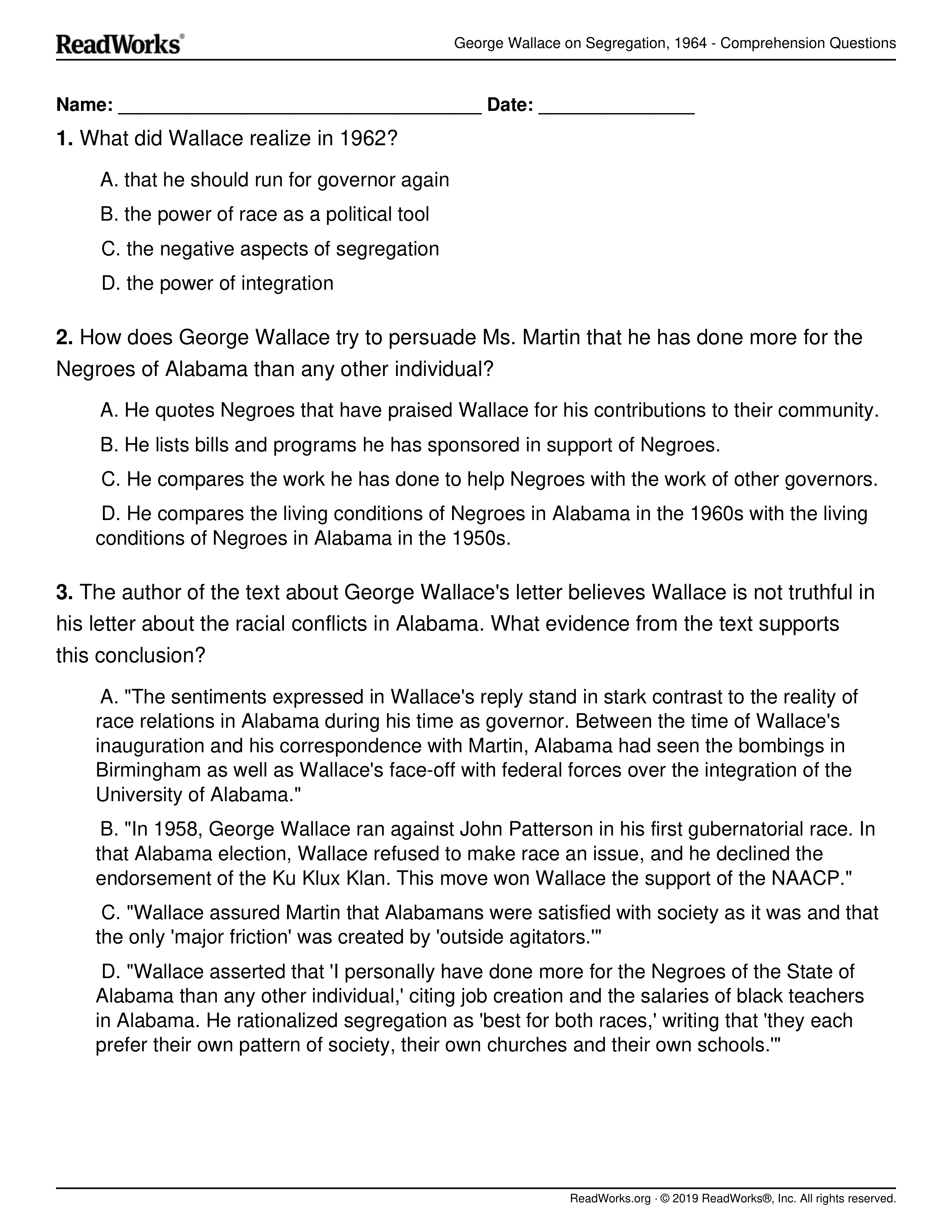
What did Wallace realize in 1962?
How does George Wallace try to persuade Ms. Martin that he has done more for the Negroes of Alabama than any other individual?
The author of the text about George Wallace's letter believes Wallace is not truthful in his letter about the racial conflicts in Alabama. What evidence from the text supports this conclusion?
What is this text mostly about?
Based on this evidence, what is the meaning of the phrase "outside agitators" in this excerpt?