Weslandia Test
star
star
star
star
star
Last updated over 7 years ago
18 Nsɛmmisa
1
1
1
1
1
1
1
1
1
1
1
1
1
1
1
1
1
1
Read this poem about a secret place. Then answer the questions that follow.
Under the Back Porch
Our house is two stories high
shaped like a white box.
There is a yard stretched around it
and in back
a wooden porch.
Under the back porch is my place.
I rest there.
I go there when I have to be alone.
It is always shaded and damp.
Sunlight only slants through the slats
in long strips of light,
and the smell of the damp
is moist green,
like the moss that grows here.
My sisters and brothers
can stand on the back porch
and never know
I am here
underneath.
It is my place.
All mine.
Virginia Hamilton
"Our house is two stories high shaped like a white
box."
Which sentence uses the word stories in the same way?
Why does the speaker like to rest under the back porch?
In this poem, “the smell of the damp” reminds the speaker of the
Which words mean the opposite of underneath?
Explain why the back porch is a special place for the speaker. Use details from the poem.
Directions: Read the following passage. The passage has been assigned as a PDF in Google Classroom and must be annotated there. It is copied here for consistent reference while answering the Multiple Choice questions. Use information from the passage to answer the questions.
Weslandia
by Paul Fleischman
“Of course he’s miserable,” moaned Wesley’s mother. “He sticks out.” “Like a nose,” snapped his father. Listening through the heating vent, Wesley knew they were right. He was an outcast from the civilization around him.
He alone in his town disliked pizza and soda, alarming his mother and the school nurse. He found professional football stupid. He’d refused to shave half his head, the hairstyle worn by all the other boys, despite his father’s bribe of five dollars.
Passing his neighborhood’s two styles of housing—garage on the left and garage on the right—Wesley alone dreamed of more exciting forms of shelter. He had no friends, but plenty of tormentors.
Fleeing them was the only sport he was good at.
Each afternoon his mother asked him what he’d learned in school that day.
“That seeds are carried great distances by the wind,” he answered on Wednesday.
“That each civilization has its staple food crop,” he answered on Thursday.
“That school’s over and I should find a good summer project,” he answered on Friday.
As always, his father mumbled, “I’m sure you’ll use that knowledge often.”
Suddenly, Wesley’s thoughts shot sparks. His eyes blazed. His father was right! He could actually use what he’d learned that week for a summer project that would top all others. He would grow his own staple food crop—and found his own civilization!
The next morning he turned over a plot of ground in his yard. That night a wind blew in from the west. It raced through the trees and set his curtains snapping. Wesley lay awake, listening. His land was being planted.
Five days later the first seedlings appeared.
“You’ll have almighty bedlam on your hands if you don’t get those weeds out,” warned his neighbor.
“Actually, that’s my crop,” replied Wesley. “In this type of garden there are no weeds.”
Following ancient tradition, Wesley’s fellow gardeners grew tomatoes, beans, Brussels sprouts, and nothing else. Wesley found it thrilling to open his land to chance, to invite the new and unknown.
The plants shot up past his knees, then his waist. They seemed to be all of the same sort. Wesley couldn’t find them in any plant book.
“Are those tomatoes, beans, or Brussels sprouts?” asked Wesley’s neighbor.
“None of the above,” replied Wesley.
Fruit appeared, yellow at first, then blushing to magenta. Wesley picked one and sliced through the rind to the juicy purple center. He took a bite and found the taste an entrancing blend of peach, strawberry, pumpkin pie, and flavors he had no name for.
Ignoring the shelf of cereals in the kitchen, Wesley took to breakfasting on the fruit. He dried half a rind to serve as a cup, built his own squeezing device, and drank the fruit’s juice throughout the day.
Pulling up a plant, he found large tubers on the roots. These he boiled, fried, or roasted on the family barbecue, seasoning them with the plant’s highly aromatic leaves.
It was hot work tending his crop. To keep off the sun, Wesley wove himself a hat from strips of the plant’s woody bark. His success with the hat inspired him to devise a spinning wheel and loom on which he wove a loose-fitting robe from the stalks’ soft inner fibers.
Unlike jeans, which he found scratchy and heavy, the robe was comfortable, reflected the sun, and offered myriad opportunities for pockets. . . .
His domain, home to many such innovations, he named “Weslandia.”
1. Part A
Which conclusion can you draw about Wesley based on the passage?
Part B Which detail from the passage supports this conclusion?
2. Part A
Which word best describes Wesley at the beginning of the story?
2. Part B Which quotation from the passage best supports your answer to Part A?
3. Part A
How does Wesley respond to the challenge of his summer project?
3. Part B Which phrase from the passage does not support your answer to Part A?
4. Part A
Based on context clues from the sentence “These he boiled, fried, or roasted on the family barbecue, seasoning them with the plant’s highly aromatic leaves,” what does the word “seasoning” mean?
4. Part B . Which word from the sentence best helped you answer Part A?
5. Part A
Which meaning of the homograph “plot” is used in the sentence “The next morning he turned over a plot of ground in his yard”?
5. Part B Which detail is the best clue to the meaning of the homograph?
6. Part A
What is the meaning of the idiom “shot sparks” in the sentence “Suddenly, Wesley’s thoughts shot sparks”?
6. Part B . Which context clue best helped you figure out the meaning of the idiom?
Writing – Extended Response
(Write your essay in google docs. Then copy it and come back and paste it here.)
You have read texts about how people sometimes need to be alone.
Weslandia
“Under the Back Porch,”
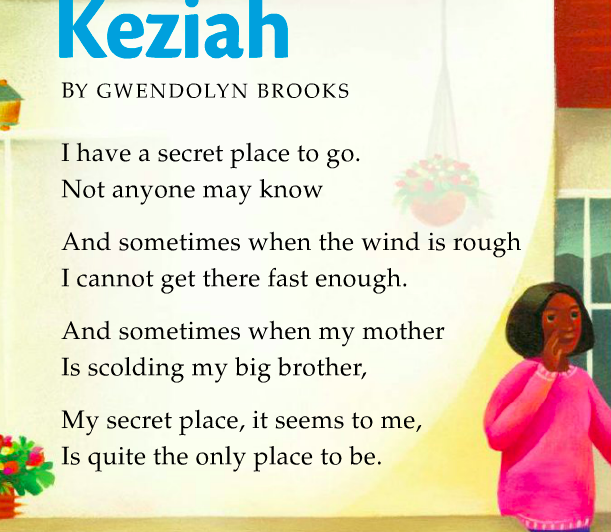
"Keziah"
Imagine that you are Wesley, alone in his garden. Write a story about being alone from Wesley's point of view. Use descriptions and sensory details from the texts to establish the situation, convey experiences, and to show Wesley’s responses.
Remember to include all the elements of a good story and follow the conventions of standard English grammar, capitalization, punctuation, and spelling.