Colonial Era Funerary Art
star
star
star
star
star
Last updated almost 6 years ago
22 Nsɛmmisa
1
1
1
1
1
1
1
1
1
1
1
1
1
1
What is funerary art? (You will probably need to look this up on the internet.)
In which state is the video filmed?
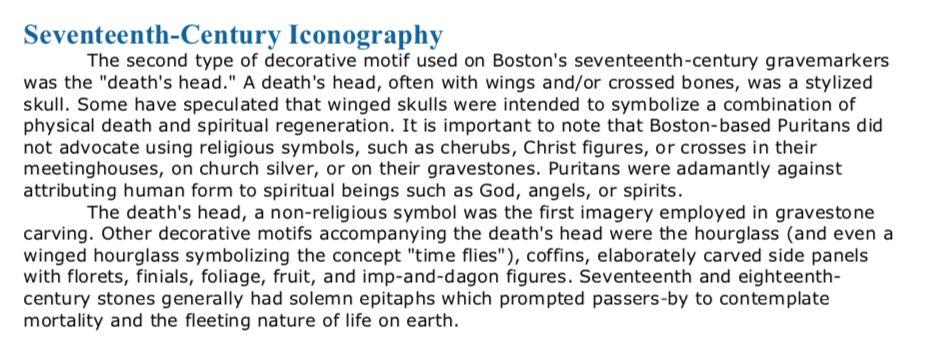
What types of images are found on the grave markers?
Which of the motifs symbolizes eternity?
What does the hour glass symbolize?
What do the markers (and how they change over time) tell us about society?
Why did the early Puritans not put crosses on their churches or tombstones?
What other sorts of art work or decorations are found on 17 century tombstones?
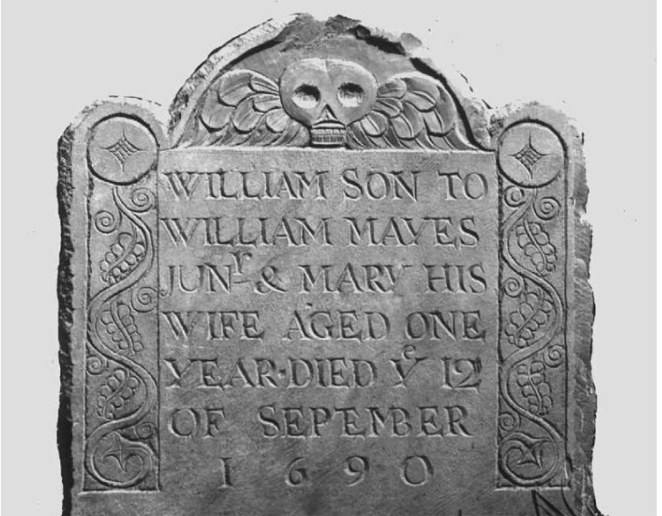
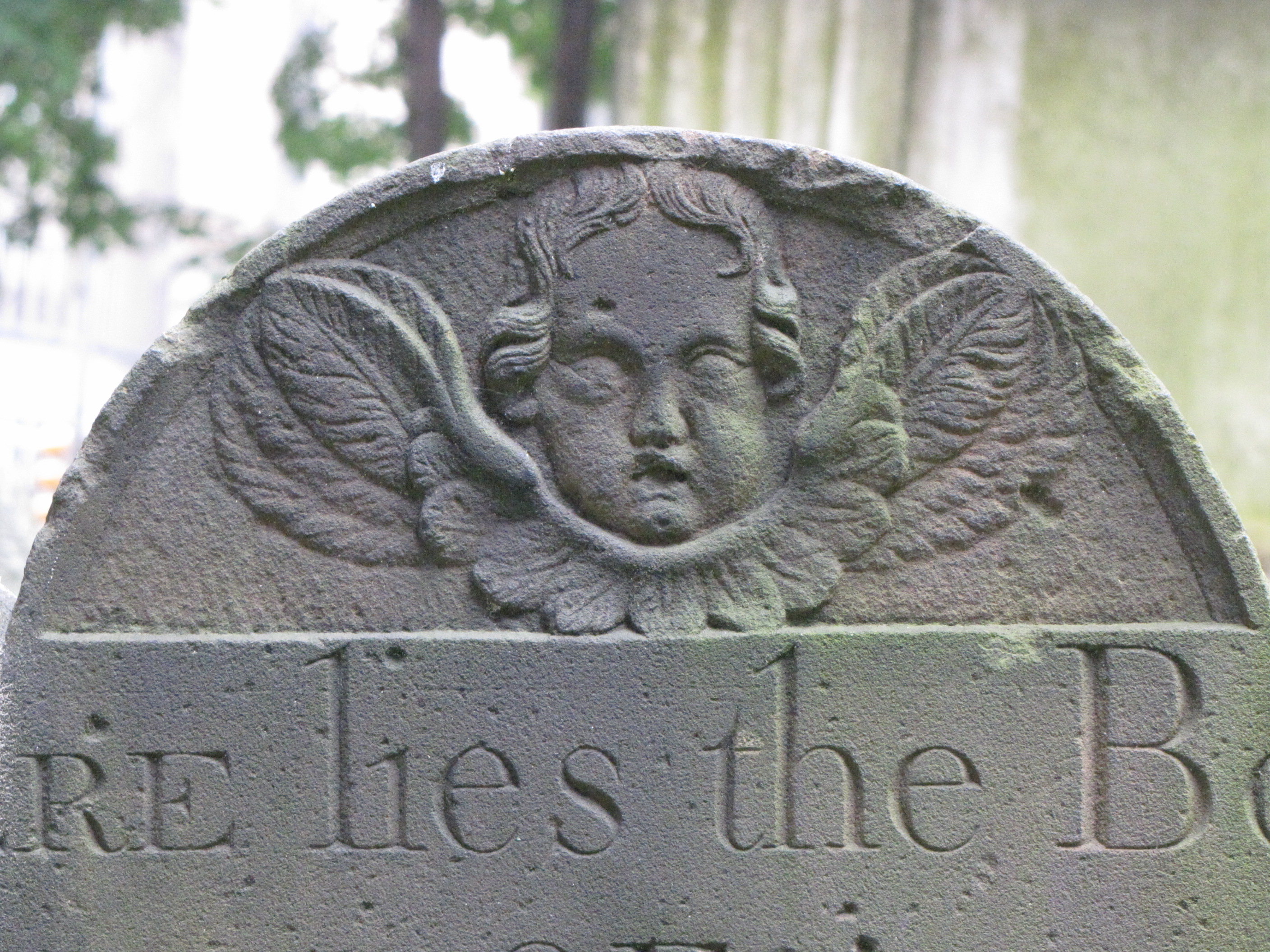
Look at the top of this tombstone. What image is this?
What other bits of decoration do you see on that tombstone?
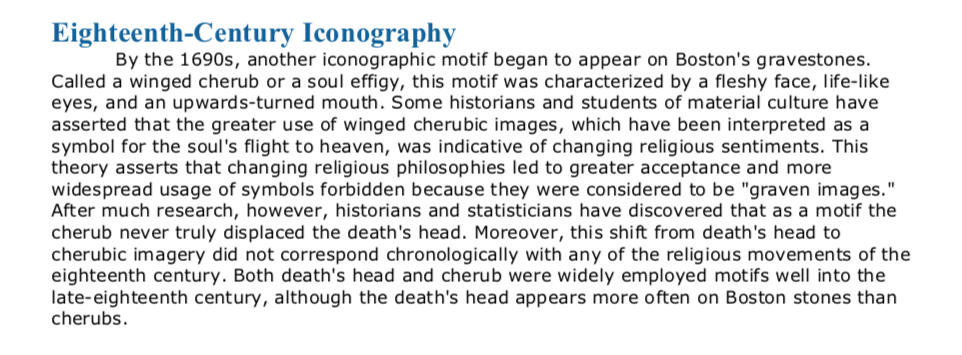
What do some historians think the winged cherub symbolizes?
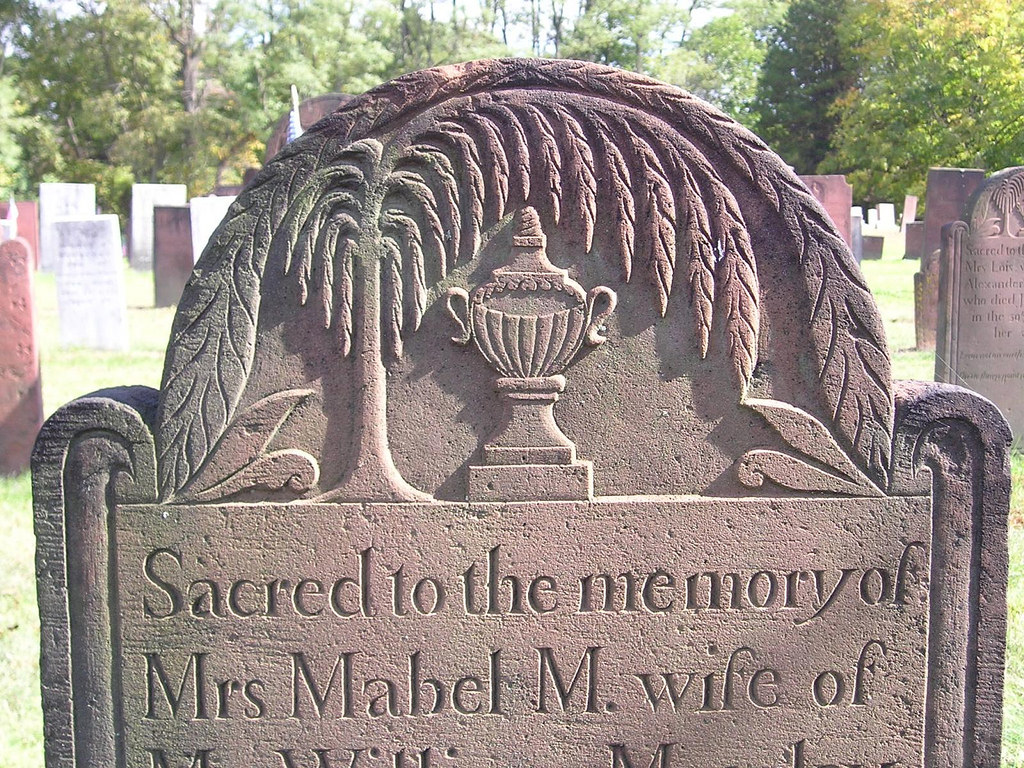
What image is this?
What image is this?
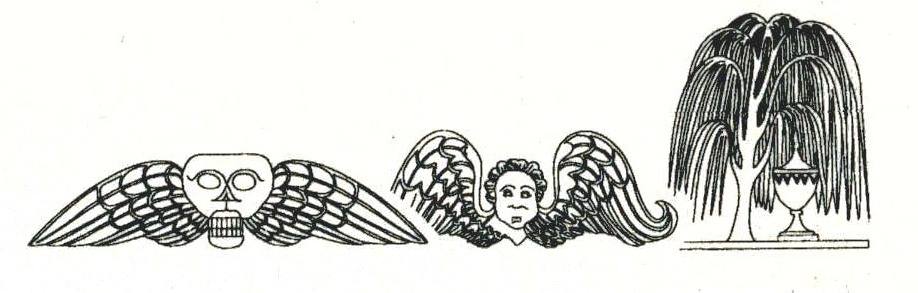
What three images do you see above?
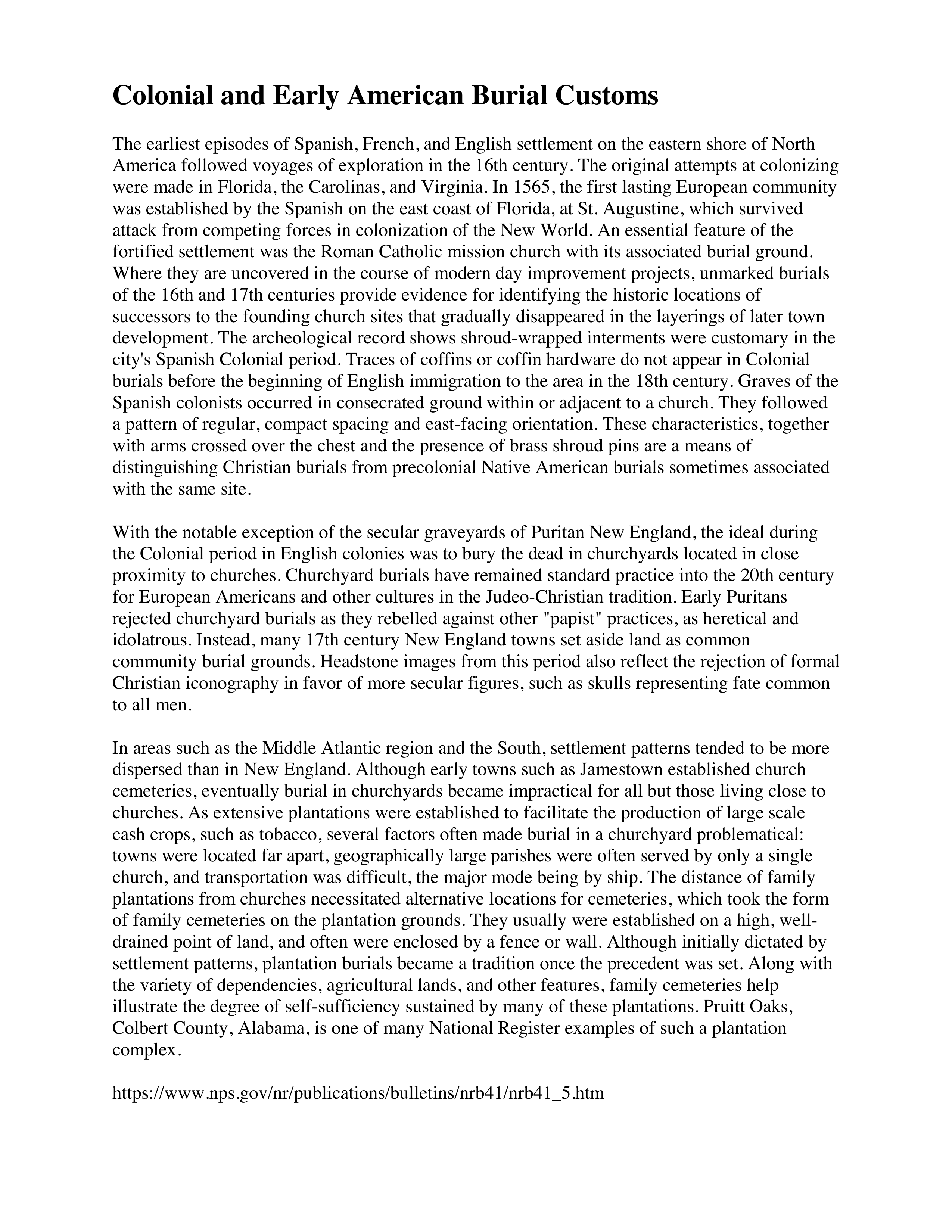
Where was the first lasting European community founded in present day USA?
Who founded it?
How are the burial sites of the Christian colonists distinguished from those of the Native Americans?
Where were the graveyards of New England colonists usually located?
Why did some early Puritans set aside common secular grounds for burials?
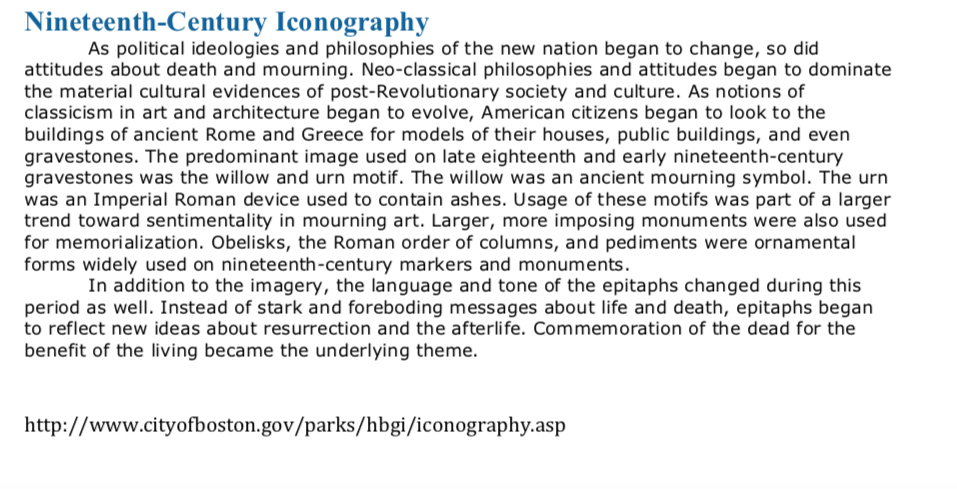
What types of images are found on these tombstones?
Why were churchyard burials problematic in the south?
Where did they bury their dead instead?