Geometry Unit 5 EOC Review
star
star
star
star
star
Last updated over 6 years ago
25 Nsɛmmisa
0
1
1
1
1
1
1
1
1
1
1
1
1
1
1
1
1
1
1
1
1
1
1
1
1
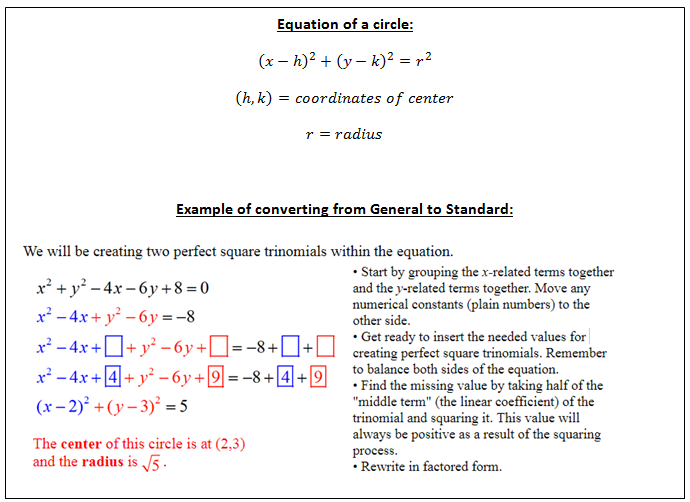
This unit investigates coordinate geometry. Students look at equations for circles and use given information to derive equations for representations of these figures on a coordinate plane. Students also use coordinates to prove simple geometric theorems using the properties of distance, slope, and midpoints. Students will verify whether a figure is a special quadrilateral by showing that sides of figures are parallel or perpendicular.
Identify the center and radius of each circle by dragging it into the correct box on the right.
Center: (2, -1)
Center: (-2, 1)
radius = 5
radius =
A city has a population of 6,688 people. The area of the city is approximately 7.2 square miles. How many people per square mile live in the city? (Round to the nearest tenth.)
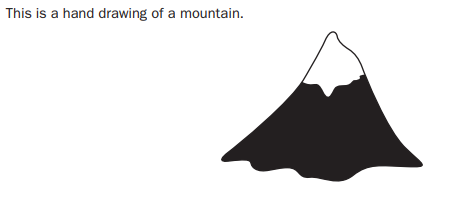
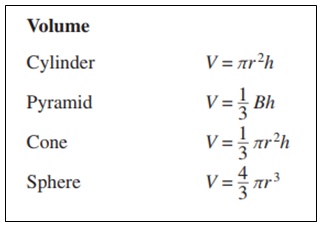
Which geometric shape could be used to BEST estimate the total amount of earth the mountain is made of?
Which is an equation for the circle with a center at (–2, 3) and a radius of 3? (Select two.)
Complete the square to convert the circle equation from general to standard form.
1.
What is the center of the circle with the equation:
What is the radius of the circle with the equation:
Which information is needed to show that a quadrilateral is a parallelogram?
Which points are on a circle with a center of (3, –9) and a radius of 5? (Choose 3)
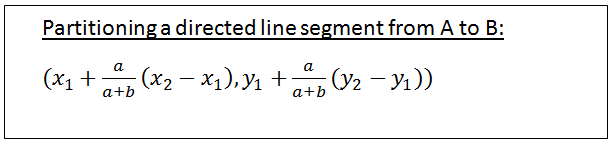
Given the points P(2, –1) and Q(8, 2), what are the coordinates of the point on directed line segment PQ that partitions PQ in the ratio 2:1?
Write the equation of a line that is parallel to y = 3x + 4 through the point (1, 5).
Write the equation of a line that is perpendicular to y = 2x - 7 through the point (2, -3).
Which of the following lines is parallel to y = 3x + 5?
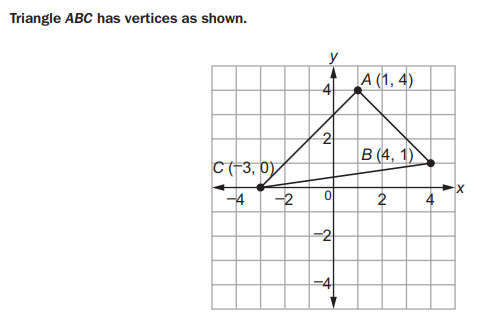
What is the area of the triangle?
What is the equation of this circle?
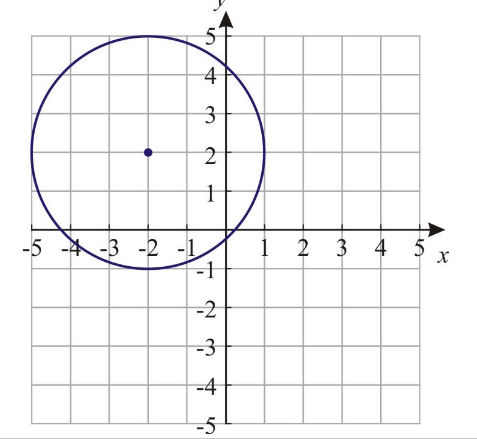
What is the radius of the circle with the equation:
What is the midpoint of the segment with endpoints (7, 2) and (-1, 8)?
The coordinates of the vertices of a triangle are (3, 3), (9, 3), and (3, 6). Which of the following accurately describes the triangle?
The center of a circle is (4, –2) and its radius is 6. Which point lies OUTSIDE of the circle?
What is the area of a rectangle with vertices at (4, 2), (4, 6), (7, 2) and (7, 6)?
What is the perimeter of a rectangle with vertices at (4, 2), (4, 6), (7, 2) and (7, 6)?
A box is designed so that 4 cans of soup fit tightly into the box, as shown below. Each can has a diameter of 6 centimeters and a height of 10 centimeters. What is the volume of the box?
A city planner laid out a small town on a grid, where each unit on the grid is 5 feet by 5 feet or 25 square feet. The town's park is shown on the grid below.
What is the AREA of the town to the nearest square foot?
A city planner laid out a small town on a grid, where each unit on the grid is 5 feet by 5 feet or 25 square feet. The town's park is shown on the grid below.
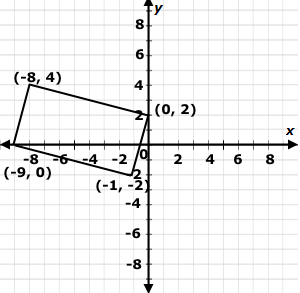
What is the PERIMETER of the town to the nearest foot?
A cylindrical tube is designed so three tennis balls, with a diameter of 3 inches each can fit vertically stacked inside of it. What is the volume of this tube to the nearest cubic inch?