Log in
Sign up for FREE
arrow_back
Library

Cellular Respiration

star
star
star
star
star
Last updated over 3 years ago
15 questions
2
2
2
2
2
2
2
2
2
2
2
2
2
2
5
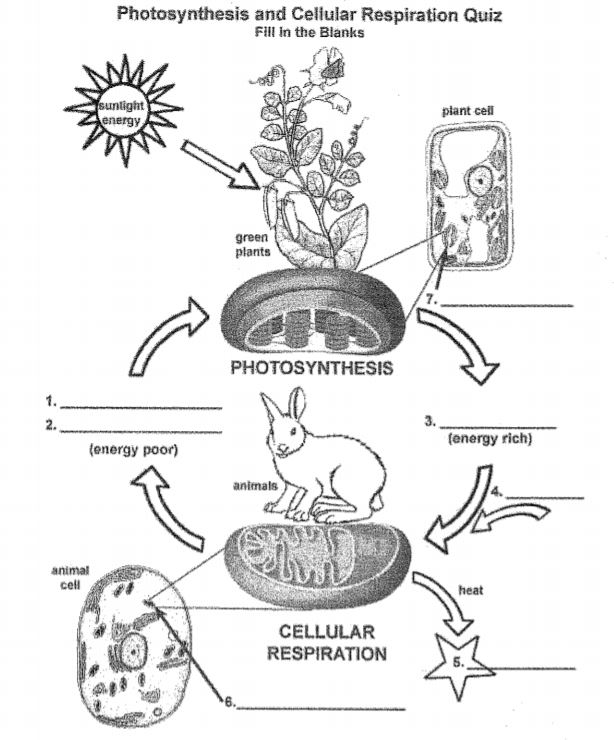
Use the model above to answer the following questions. The Question numbers correspond to the number on the model.
Question 1
1.

Question 2
2.

Question 3
3.

Question 4
4.

Question 5
5.

Question 6
6.

Question 7
7.

Question 8
8.

Question 9
9.

Question 10
10.

Question 11
11.

Question 12
12.

Question 13
13.

Question 14
14.

Question 15
15.

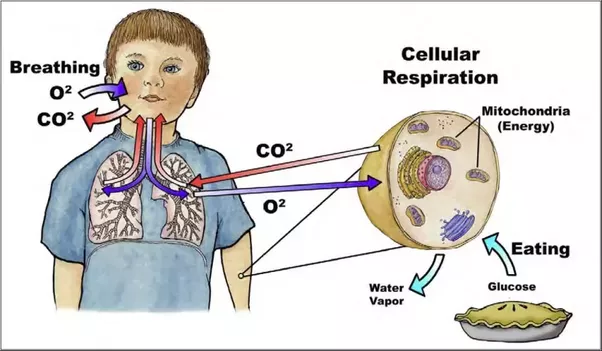
The model is showing cellular respiration. Explain the model. What three body systems are involved in the process of cellular respiration.

What do plants absorb from the roots for photosynthesis? (Reactant)
ATP
C6H12O6
Sunlight
H2O
What molecule do plants take in from their stomata for photosynthesis?
ATP
Glucose
CO2
Water
What do plants make during photosynthesis that is the basis for energy for all living things? (product)
ATP
C6H12O6
CO2
H2O
What molecule do plants make during photosynthesis that all living things need for respiration? (product of photosynthesis=reactant of cellular respiration)
O2
C6H12O6
CO2
H2O
What is the energy called that is produced by all cells during cellular respiration?
Glucose
Carbon Dioxide
ATP
energy
Cellular respiration takes place in this organelle of the cell.
chloroplast
mitochondria
cell membrane
cell
Photosynthesis takes place in this organelle of the plant cell.
chloroplast
mitochondria
cell membrane
cell
Why do all living things need oxygen?
a. to be used by cells to release energy from glucose
b. to be used by our cells for chemical reaction
c. for cellular respiration
d. all of the above
What is cellular respiration?
a. The process by which air is converted into energy.
b. The process by which glucose and oxygen is converted into energy.
c. When producers use sunlight and CO2 to make their own food.
d. When plants turn sunlight and oxygen into potential energy.
Which of the equation is a balanced equation for cellular respiration?
6CO2 + 6H2O →C6H12O6 + 6O2
C6H12O6 →6CO2 + 6H2O
C6H12O6 + 6O2 → 6CO2 + 6H2O
6O2 + 6H2O →C6H12O6 +6O2
Why are chemical changes different from physical changes?
a. A new substance is formed
b. Bonds are broken and new bonds are formed
c. atoms are rearranged into different molecules
d. all of the above
Which one of these is not a sign of a chemical change?
a. Change in shape
b. Bubbling
c. Change in temperature
d. precipitate is formed
Which of the following statements best defines the law of conservation of mass?
a. Mass cannot be created but it can be destroyed under extreme pressure
b. Mass cannot be conserved during a chemical reaction; a ittle bit of mass is always lost.
c. The mass of a closed system cannot change over time; mass cannot be created nor destroyed.
d. When added to a system, energy can destroy mass.
Which equation shows that a mass is conserved in a chemical equation?
a. 2Al + 2O2 → 2Al2O2
b. 2Al + 2O2 → Al2O3
c. 4Al + 3O2 → 2Al2O3
d. None of the Above