Week 3 Science: Night & Day

Last updated over 5 years ago
15 questions
1

Look at the tree and its shadow below.
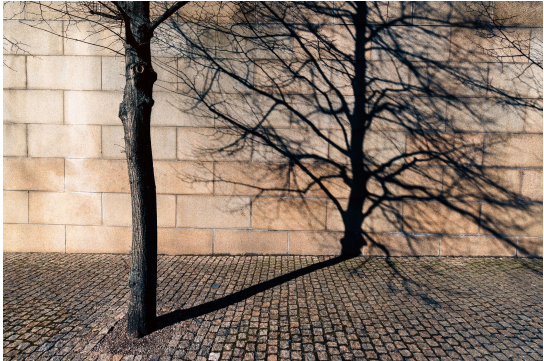

What do you think will happen to the tree’s shadow throughout the day?

Student A believes the tree’s shadow will not change, as Earth is stationary.

Student B believes that the tree’s shadow will move throughout the day because of Earth’s rotation.

Student C believes that the shadow’s direction will depend on the weather.

With whom do you most agree? Circle your answer, and discuss it with your neighbor.
1

Does everyone on Earth experience night at the same time? Why or why not?

1

If Earth rotated at a greater speed on its axis, what would happen to the length of each day on Earth?

1

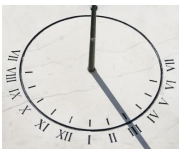
Why does a sundial only measure time for about 12 hours?

1

Describe the relationship between Earth’s rotation and a sundial.

1

Use the shadows to label the following times on the sundial below: 6 a.m., 9 a.m., 12 p.m., 3 p.m., and 6 p.m.

1

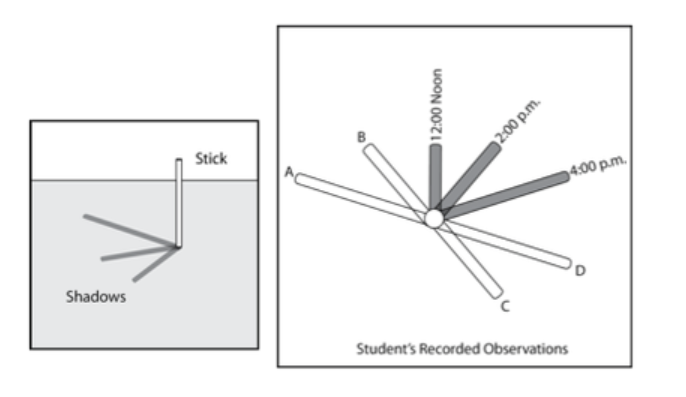
A student placed a stick in the ground and recorded the position of its shadow throughout the day as the Sun moved through the sky. Which outline on the student’s recorded observations represents where the shadow was at 8:00 in the morning?

1

Saturn rotates on its axis approximately once every 10 hours. From this information, it can be concluded that Saturn will differ from Earth in which of the following ways?

1

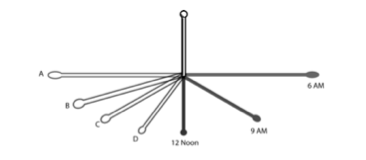
The illustration below shows where the shadow of a flagpole fell at 6:00 AM, 9:00 AM, and 12:00 noon on a particular day. Which point on the diagram represents where the shadow can be predicted to fall at 4:30 pm?


For those that are intersted, here is how to build your own sundial: copy and past this link into your browser: https://www.wikihow.com/Make-a-Sundial or checkout the video below.
Now that we understand day and night and the movement of Earth around the Sun, let's talk about the Seasons, Equinox and Solstice.
1

Which of the following is primarily responsible for the changing of seasons on Earth?

1

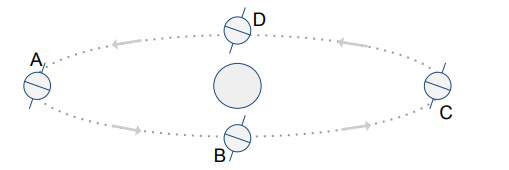
Drag the label of the position for each solar event in the NORTHERN HEMISPHERE to the correct catagory

  • Item 1
  • A
  • B
  • C
  • D
  • Summer Solstice
  • Autumnal Equinox
  • Winter Solstice
  • Vernal Equinox
1

Drag the label of the position for each solar event in the SOUTHERN HEMISPHERE to the correct catagory

  • Item 1
  • A
  • B
  • C
  • D
  • Summer Solstice
  • Autumnal Equinox
  • Winter Solstice
  • Vernal Equinox
1

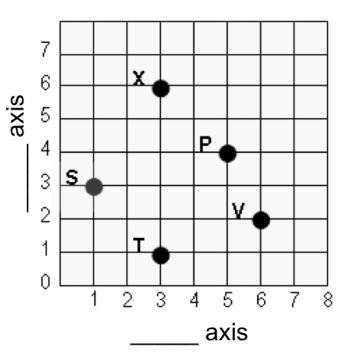
Name the point that represents the ordered pair (6, 2).
Hint: the 1st number tells how far over to count, and the 2nd number tells how high to go.

1

Name the ordered pair that is at point X.

1

Name the point that represents the ordered pair (1, 3).