Log in
Sign up for FREE
arrow_back
Library

Animal Behavior Chapter 27 Questions & Practice Quizzes

star
star
star
star
star
Last updated over 6 years ago
40 questions
Note from the author:
Ottawa High School Curriculum 2019 Biology textbook McDougal Littell ed 2008
0
0
0
1
1
1
1
1
1
1
1
1
2
2
2
2
2
1
1
1
1
1
1
1
1
1
1
1
1
1
1
1
1
1
1
1
1
1
1
1
The worksheet is set to show whether you have an answer correct or not. You are able to submit and come back into the program and make corrections. Short answer questions will be graded by the teacher so you may not see whether you have points for those questions until the teacher has time to grade your response.
Question 1
1.

Last Name First Name

Question 2
2.

Class Period

Question 3
3.

Date

Question 4
4.

If a behavior necssary for suvival does not result from a certain stimulus, the animal may not survive. Animals that respond correctly to a stimulus have a greater chance of survival.

Question 5
5.

An internal stimulus like the change in day length and temperature might signal an Alaskan caribou that it is time to migrate.

These are external stimuli.
Question 6
6.

An external stimulus like a hormonal change or being hungry due to a lack of food availability might signal an Alaskan caribou that it is time to migrate.

There are internal stimuli.
Question 7
7.

The relationship between an animal's behavior and homeostasis includes behaviors that will maintain the best conditions for survival for the animal.

Question 8
8.

A peacock uses its colorful train of feathers to attract a mate. A factor that may limit how large a feather train may grow includes the affect the train may have on individual fitness.

Question 9
9.

Identify the stimuli in this scene and whether it is internal or external (type internal or external for your answer):
a) Your alarm clock wakes you up and you get ready for school.

Question 10
10.

Identify the stimuli in this scene and whether it is internal or external (type internal or external for your answer):
b) You eat breatkast but then eat one more slice of toast.

Question 11
11.

Identify the stimuli in this scene and whether it is internal or external (type internal or external for your answer):
c) After stepping outside, you go back in to get a lighter jacket.

Question 12
12.

A zookeeper needs to use a scale to measure the weight of an otter. How might she use operant conditioning to get the otter onto the scale?

Operant Conditioning includes positive and negative rewards
Question 13
13.

Gray wolves live in packs with about 6 to 15 members. Young pups remain behind while the older animals hunt for prey as a group. They often seek out old, sick, and slower prey animals. All of the adults regurgitate food for the pups. Suggest a cost for adult wolves resulting from their feeding behavior.

Question 14
14.

Gray wolves live in packs with about 6 to 15 members. Young pups remain behind while the older animals hunt for prey as a group. They often seek out old, sick, and slower prey animals. All of the adults regurgitate food for the pups. Suggest a cost for the pups resulting from the adult gray wolf's feeding behavior.

Question 15
15.

Gray wolves live in packs with about 6 to 15 members. Young pups remain behind while the older animals hunt for prey as a group. They often seek out old, sick, and slower prey animals. All of the adults regurgitate food for the pups. Suggest a benefit for the adult wolves resulting from their feeding behavior.

Question 16
16.

Gray wolves live in packs with about 6 to 15 members. Young pups remain behind while the older animals hunt for prey as a group. They often seek out old, sick, and slower prey animals. All of the adults regurgitate food for the pups. Suggest a second benefit for the adult wolves resulting from their feeding behavior.

Question 17
17.

Gray wolves live in packs with about 6 to 15 members. Young pups remain behind while the older animals hunt for prey as a group. They often seek out old, sick, and slower prey animals. All of the adults regurgitate food for the pups. Suggest a benefit for the pups resulting from the adult gray wolf's feeding behavior.

Question 18
18.

Why do you think the baby elephants are traveling between the adult elephants?

Question 19
19.

Describe a cost for the adult/parent elephants for this type of behavior.

Question 20
20.

Describe a benefit for the adult/parent elephants for this type of behavior.

Question 21
21.

Describe a benefit for the baby elephants for this type of behavior.

Question 22
22.

If there is a benefit, does it outweigh the cost? Explain your answer.

Question 23
23.

Using the chart above, what behavior did the bears engage in most of the time?

Question 24
24.

Using the chart above, do the bears interact more often with other bears or with different animals in the park?

Question 25
25.

Using the chart above, what can you infer about the habitat based on the data for foraging and eating?

Question 26
26.

Students plan an experiment to determine whether fish exhibit different feeding behaviors when presented with food flakes of different colors. The students predict that fish will be able to see brightly colored flakes more easily and will therefore eat more of these flakes. This prediction most closely resembles a scientific _____________.

Question 27
27.

A female ground squirrel may send out a call warning her offspring that a predator is near. Often, the mother sacrifices her own life since the predator can move easily and locate her from the call. Even though this behavior results in death, it is beneficial to her in that ...........

Question 28
28.

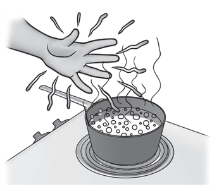
This action illustrated above will most likely result in a response produced by the ......

Question 29
29.

When a frog hunts, it catches its prey with one flick of its long, sticky tongue. Energy obtained from eating the insect that is not stored in newly made body structures is..........

Question 30
30.

Which of the following best illustrates natural selection?

Question 31
31.

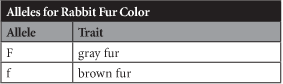
Review Question: Use the tabe above to answer this question. In a hypothetical rabbit species, females prefer to mate with brown males over gray males. Fur color is a trait controlled by one gene that can occur in a dominant form (F) or a recessive form (f). A gray female mates with a gray male and both of the parents are heterozygous for fur color. They produce a brown male offspring. How is this possible?

Question 32
32.

Go to classzone.com and take the Practice Quiz for Chapter 27.1. Complete the quiz and receive 100%. Screenshot the quiz and enter the picture here.

Question 33
33.

Go to classzone.com and take the Practice Quiz for Chapter 27.2. Complete the quiz and receive 100%. Screenshot the quiz and enter the picture here.

Question 34
34.

Go to classzone.com and take the Practice Quiz for Chapter 27.3. Complete the quiz and receive 100%. Screenshot the quiz and enter the picture here.

Question 35
35.

Go to classzone.com and take the Practice Quiz for Chapter 27.4. Complete the quiz and receive 100%. Screenshot the quiz and enter the picture here. You may have to look up some terms in this section that weren't directly discussed during your lecture and ppts.

Question 36
36.

Go to classzone.com and take the Practice Quiz for Chapter 27.5. Complete the quiz and receive 100%. Screenshot the quiz and enter the picture here. You may have to look up some terms in this section that weren't directly discussed during your lecture and ppts.

Question 37
37.

Go to Classzone.com --> Animated Biology --> Unit 8: Animals --> Chapter 27: Behavioral Costs and Benefits. When you have been successful keeping your hummingbird alive for the day and have more energy than when you started the day, take a screenshot and attach it here.

Question 38
38.

Read the Mutts cartoon above. Describe what type of animal behavior the cartoon is describing and why it is "funny".

Question 39
39.

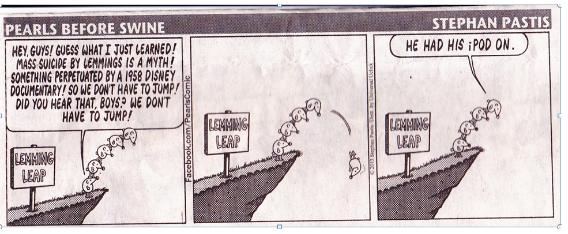
Read the Pearls Before Swine cartoon above. Describe what type of animal behavior the cartoon is describing and why it is "funny".

Question 40
40.

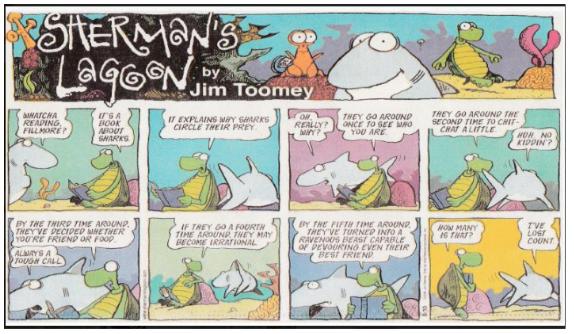
Read the Sherman's Lagoon cartoon above. Describe the type of animal behavior the cartoon is describing and why it is "funny".