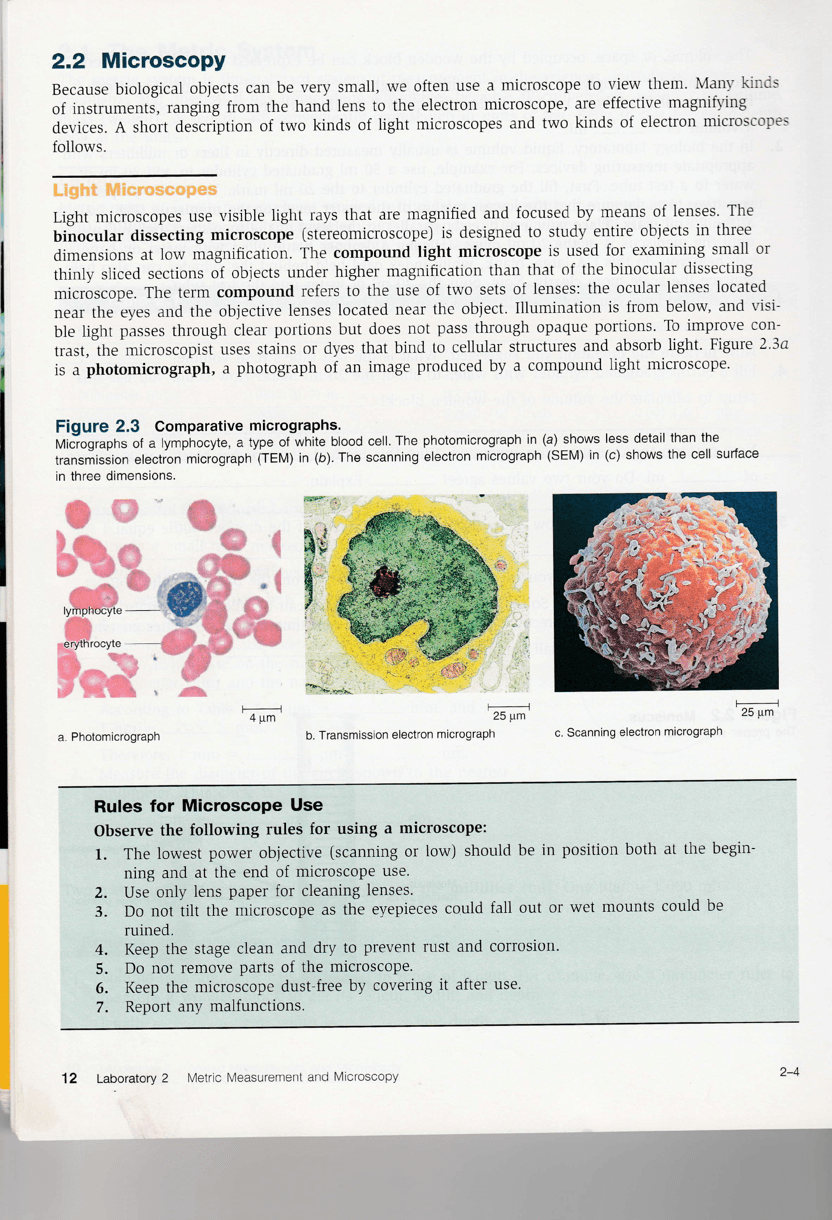
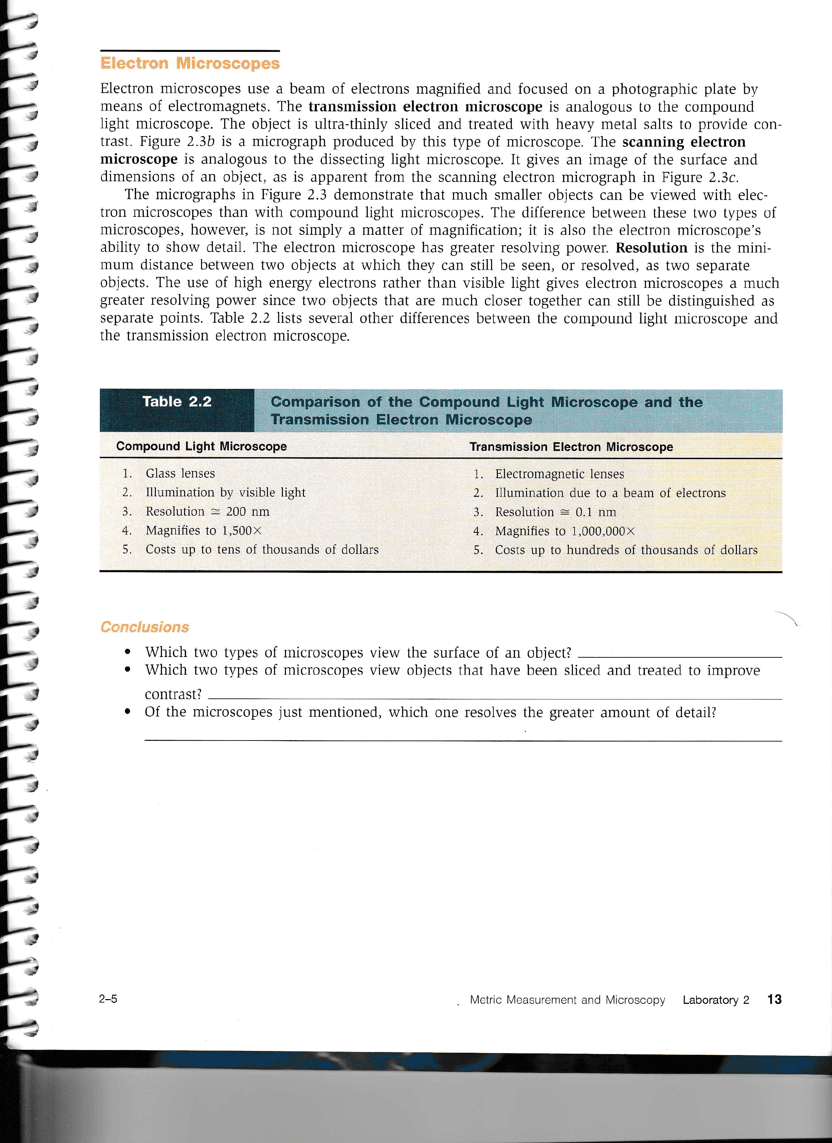
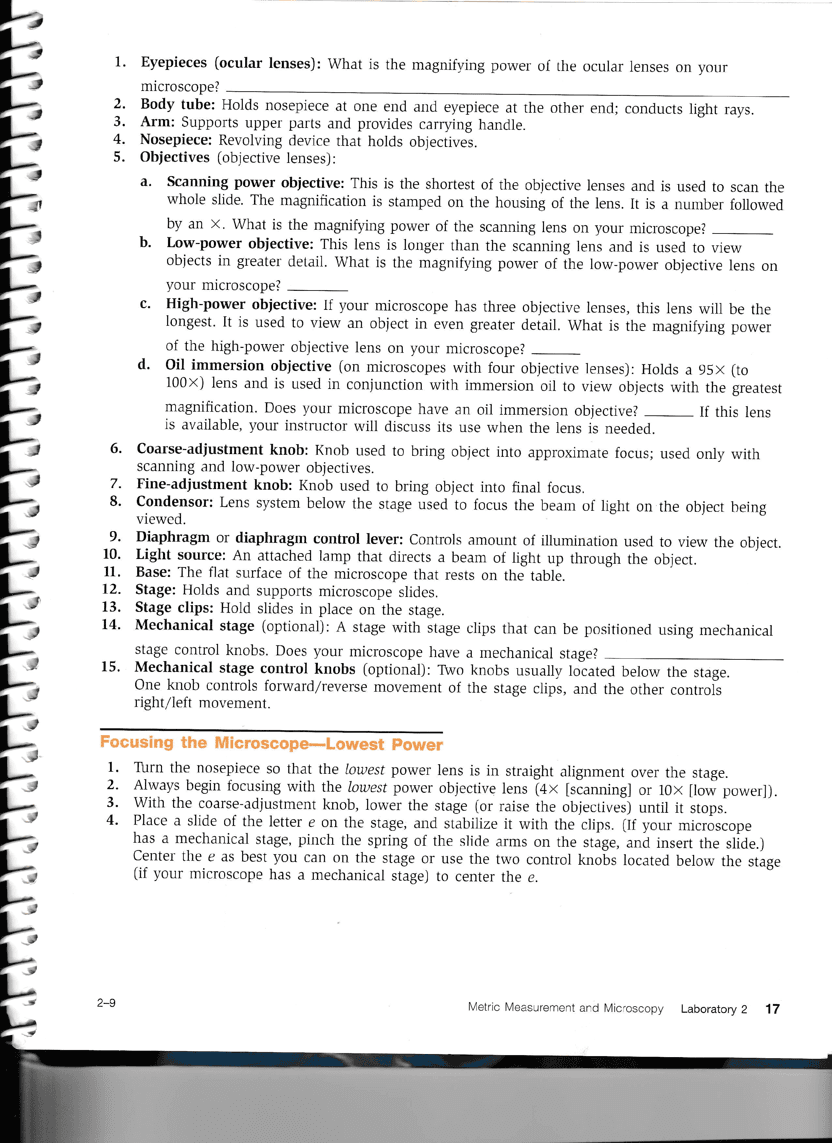
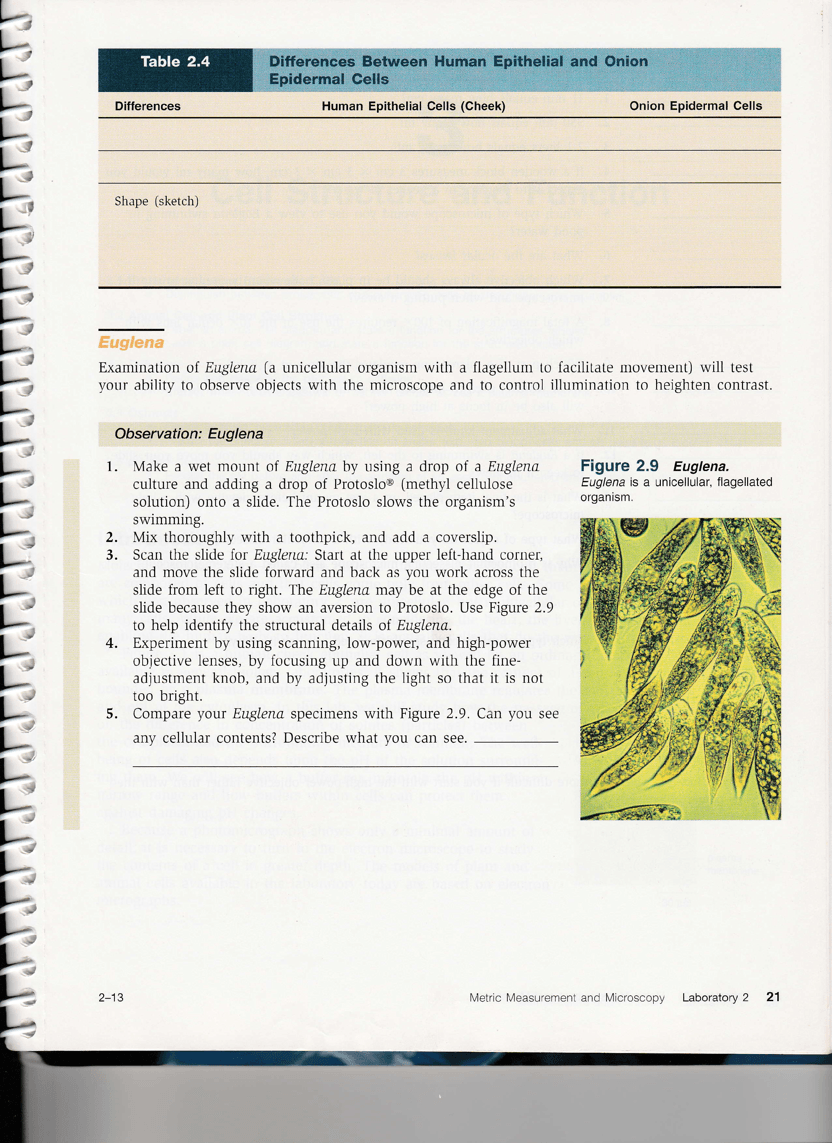
Lab 2 Metric Measurement and Microscopy - College Biology
star
star
star
star
star
Last updated over 6 years ago
97 questions
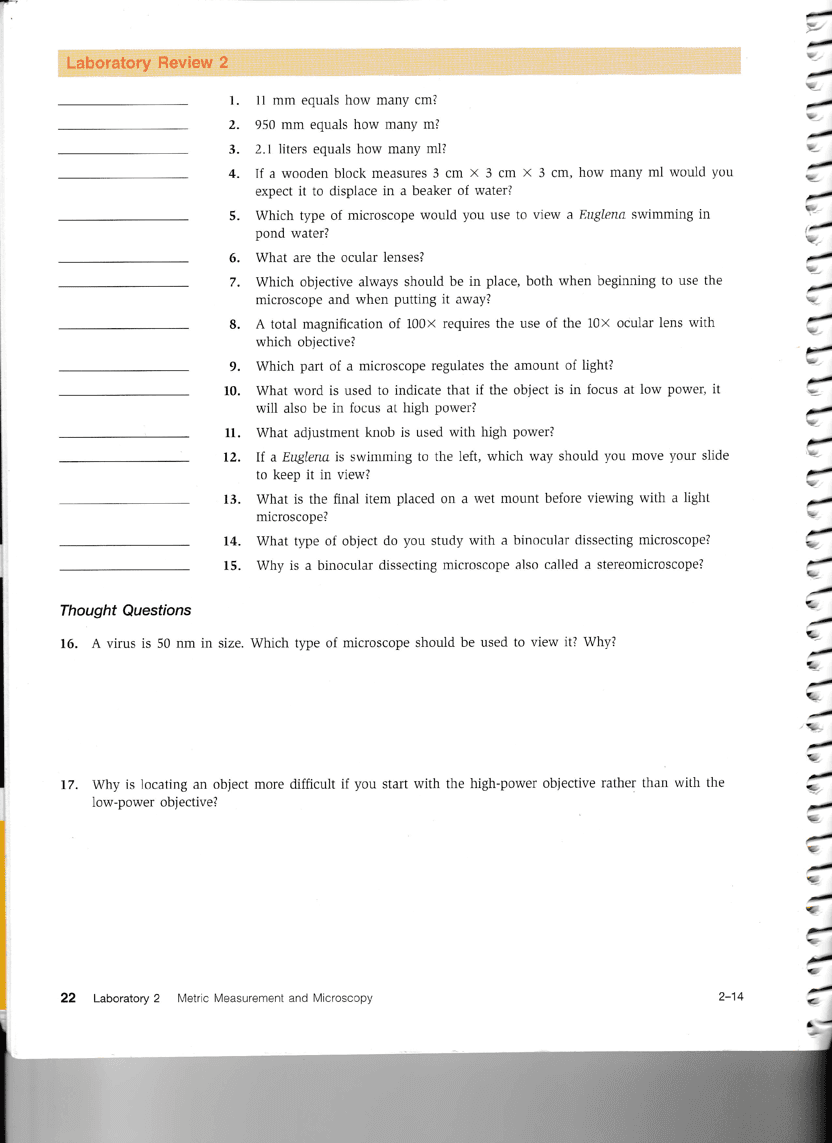
Lab Sheets to be completed, 100 pts
0
Question 1
1.
LastName FirstName
1
1
1
1
1
1
1
1
1
1
1
1
1
1
1
1
1
1
1
1
1
1
1
1
1
1
1
Question 28
28.
(no capital letters)
1
1
Instructions Figure 2.4
When entering the parts of the microscope on the picture, use the exact name of the part given to you on the following page (pg 15).
1
1
1
Question 33
33.
(your answer will be a number followed by "x" - no spaces between)
1
1
1
Question 36
36.
Use the full name of the parts listed on the next page (17) to fill-in the blanks. Do not use capital letters.
1
1
1
1
1
1
1
1
1
1
1
1
1
1
1
Question 51
51.
enter the number followed by "x" - no spaces
1
1
1
1
1
1
Question 57
57.
Use a lower case "e" and approximate font size 11 or 12. Draw the letter "e" as it appears on the slide. What you see with your eyes before you put it under the microscope. [If easier, you may do this on the white sheet of paper you already used above to draw a specimen.]
1
1
1
You do not have to do the "Explain" on #4 under Observation: Invresion.
1
1
1
1
1
1
1
1
1
1
Question 70
70.
no capital letters, type the term as written in #3
the outside layer around a cell
1
Question 71
71.
the area where DNA is stored in eukaryote cells
1
1
1
1
Question 75
75.
1
1
2
Substitution of Euglena Specimen
You will get a sample of "pond" water and locate a moving microorganism instead of using a Euglena culture.
1
1
1
1
2
1
1
1
1
1
1
1
1
1
1
1
1
1
2
Question 2
2.
answer with a number rounded to the closest whole number - don't enter units
(cm)
Question 3
3.
(answer with a number - don't enter units) ______mm
Question 4
4.
(answer with a number, remember you need a "0" placeholder in front of a decimal
number, units already listed on the blank line)
Question 5
5.
(give answer as a number, zero placeholder in front of decimals, units are
already listed)
Question 6
6.
Question 7
7.
Question 8
8.
Question 9
9.
Question 10
10.
Question 11
11.
Question 12
12.
Question 13
13.
Question 14
14.
(don't round off decimal number)
Question 15
15.
(do not round off)
Question 16
16.
Question 17
17.
(answer with a number, don't put "ml" after your answer)
Question 18
18.
Question 19
19.
Question 20
20.
Question 21
21.
Question 22
22.
Question 23
23.
Question 24
24.
Question 25
25.
Question 26
26.
Question 27
27.
Question 29
29.
(no capital letters)
Question 30
30.
(no capital letters)
Question 31
31.
(no capital letters)
Question 32
32.
(do not use capital letters)
Question 34
34.
Question 35
35.
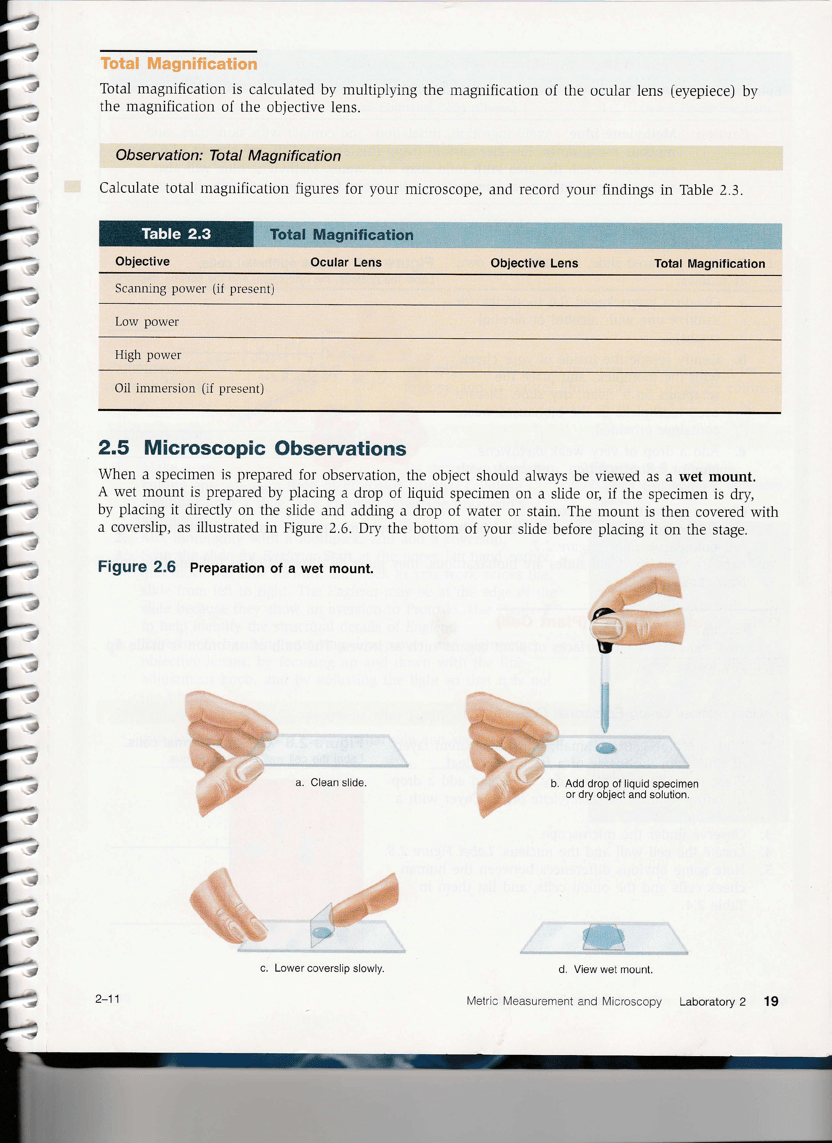
#6. Use a piece of blank white paper to draw your object inside a circle as shown. (You can use your lab manual copy to trace the circle onto the piece of white paper.) The object you draw should be done in pencil. Use black for the outer circle and any other color for the inner circle. The circles don't have to be "perfect". You will have to submit this drawing separately as a hard copy to the class basket. Be sure you put your name on your drawing.
Instructions for Compound Light Microscope
Question 37
37.
Question 38
38.
Question 39
39.
Question 40
40.
Question 41
41.
controls the quantity of light going through the lens
Question 42
42.
helps focus light
Question 43
43.
Question 44
44.
Question 45
45.
(this is the large knob)
Question 46
46.
(this is the small knob)
Question 47
47.
(on some microscopes this is optional, but we have these knobs on our
microscopes)
Question 48
48.
Question 49
49.
Question 50
50.
(this is the part that revolves the objectives)
Question 52
52.
enter the number followed by "x" with no spaces
Question 53
53.
enter the number followed by "x" - no spaces
Question 54
54.
enter the number followed by "x" - no spaces
Question 55
55.
Question 56
56.
Question 58
58.
Draw what the letter "e" looks like while viewing through the microscope. The "e" should be upright and normal when you place it on your slide and under the
lens. Be sure the "e" is lower case and about font size 11 or 12. [Again, if it is easier, you can draw this on your white sheet of paper. ]
Question 59
59.
Which best describes how the letter "e" looks through the microscope?
Question 60
60.
Question 61
61.
Question 62
62.
Question 63
63.
Not Applicable
Question 64
64.
Question 65
65.
Question 66
66.
Not applicable
Question 67
67.
Question 68
68.
Question 69
69.
Not applicable
Question 72
72.
the clear watery fluid that fills cells and facilitates transportation of food,
etc, inside the cell
Question 73
73.
Question 74
74.
only plant cells have this outside layer that covers the cell membrane
Question 76
76.
Question 77
77.
Question 78
78.
Sketch the general shape of an animal cell and of a plant cell.
Question 79
79.
Using your live and moving organism located in the pond water, compare it to the
picture of Euglena Fig. 2.9. Describe what you can see inside your organism. The
best viewing will be under high power, however, it is a little tricky to keep
your moving specimen within the small field of view.
Question 80
80.
only type the number
Question 81
81.
enter number, remember that you need a "0" placeholder in front of the decimal
place
Question 82
82.
type only the number - not the units
Question 83
83.
type the number and units
Question 84
84.
give the name of the microscope and type "microscope"
use the full name as given in your lab
Question 85
85.
Question 86
86.
Question 87
87.
Question 88
88.
be sure you spell it correctly to get credit for your answer