1
1
1
1
1
1
1
1
1
1
1
Understanding how heat is transferred is crucial to comprehending the mechanisms behind weather patterns, climate change, and the behavior of Earth's systems. Heat can be transferred through three fundamental processes: convection, conduction, and radiation. Let's explore each of these concepts and their significance in the world around us.
Convection is the process of heat transfer that occurs through the movement of fluids or gases. When a fluid or gas is heated, its particles gain energy and move faster, becoming less dense. The less dense hot material rises while the cooler, denser material sinks. This creates a cycle of rising and sinking motion called .
Conduction is the transfer of heat through direct between substances. In this process, heat energy is passed from one particle to another within a solid object or between two objects in contact. For example, when you touch a hot stove, heat is conducted from the stove's surface to your hand, resulting in the sensation of heat.
Radiation is the transfer of heat through . Unlike convection and conduction, radiation does not require a medium to transfer heat. The Sun is an excellent example of a radiant heat source. It emits energy in the form of electromagnetic waves, including visible light, infrared radiation, and ultraviolet radiation. When sunlight reaches Earth, some of the energy is absorbed by the atmosphere, land, and water, while the rest is reflected back into space. This absorption and reflection of radiation influence temperature patterns on our planet and play a significant role in Earth's climate.
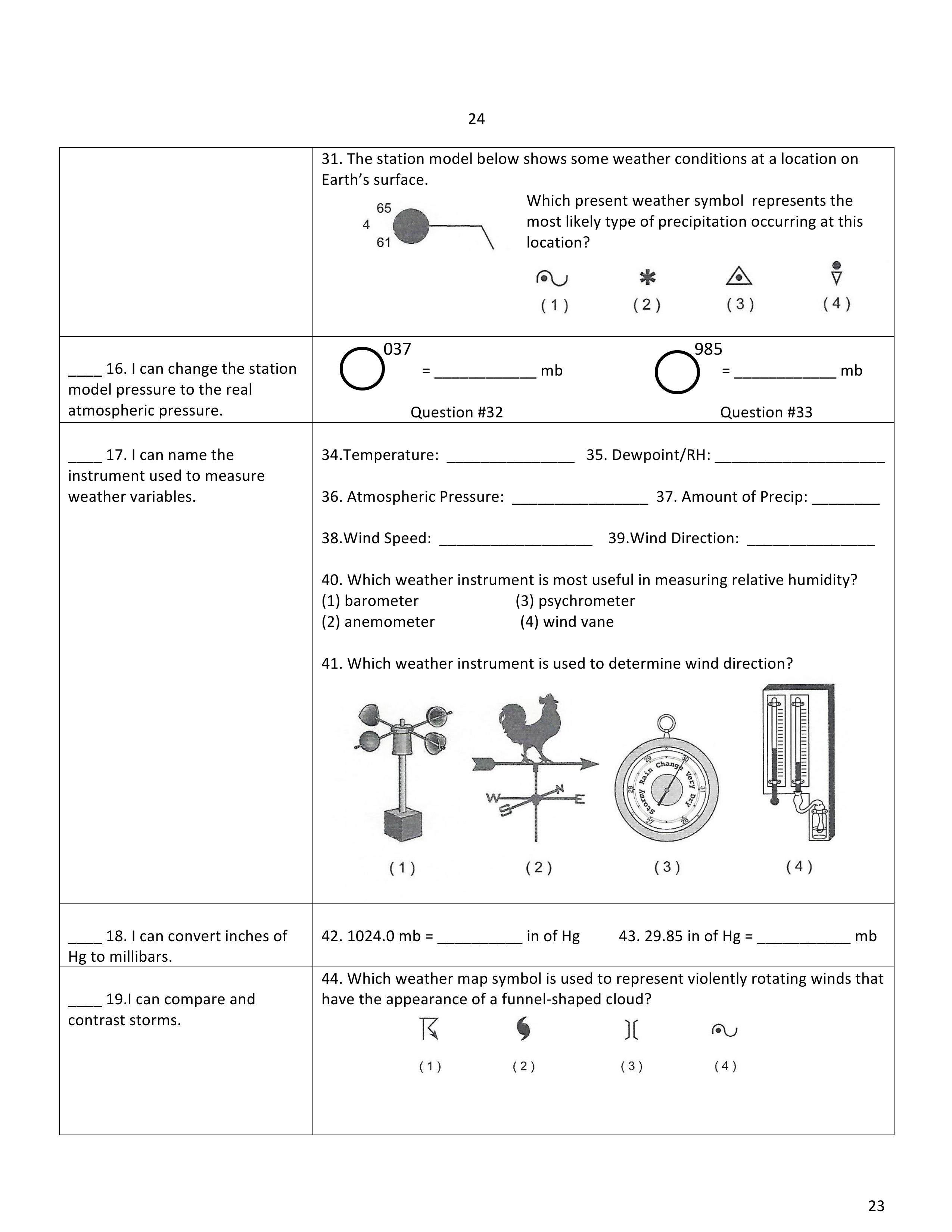
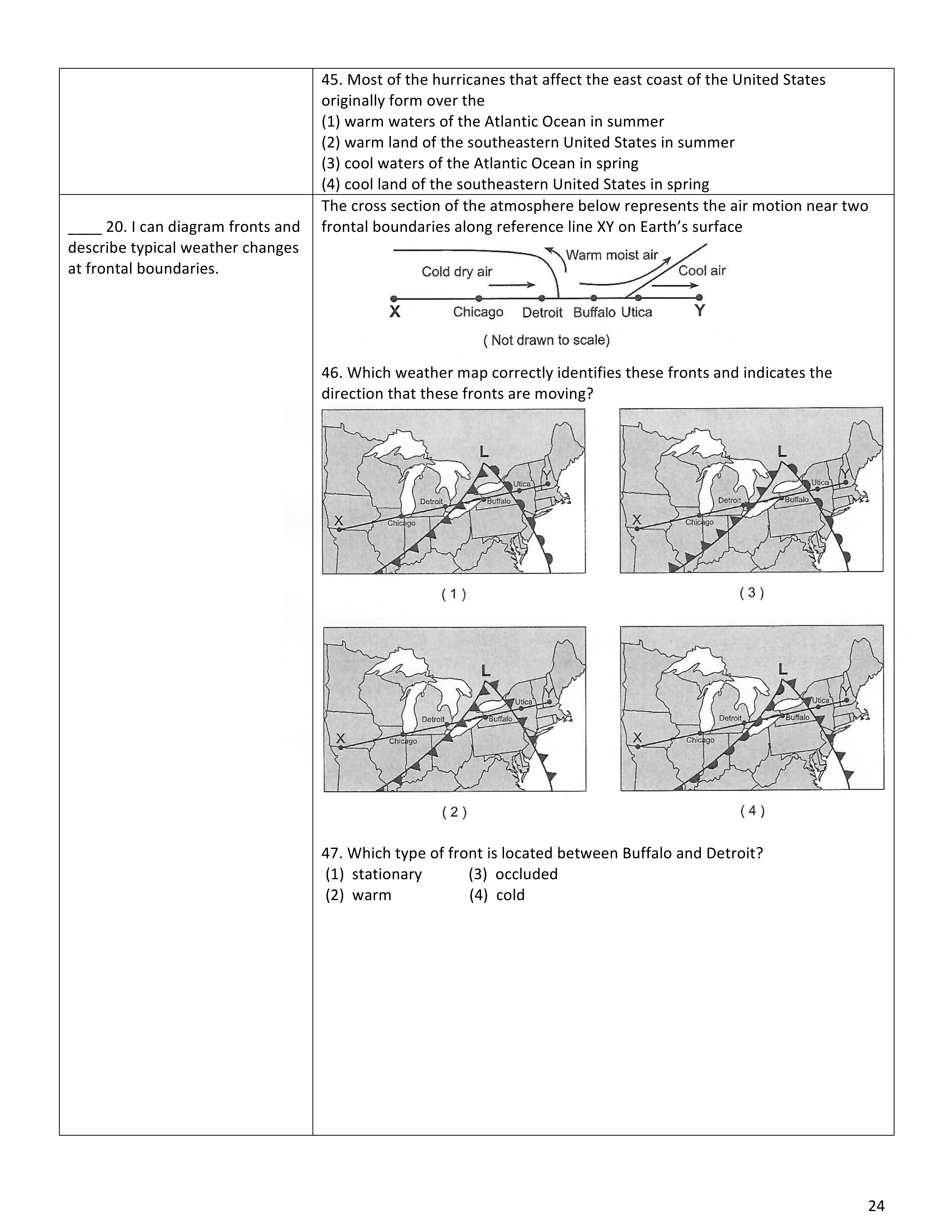
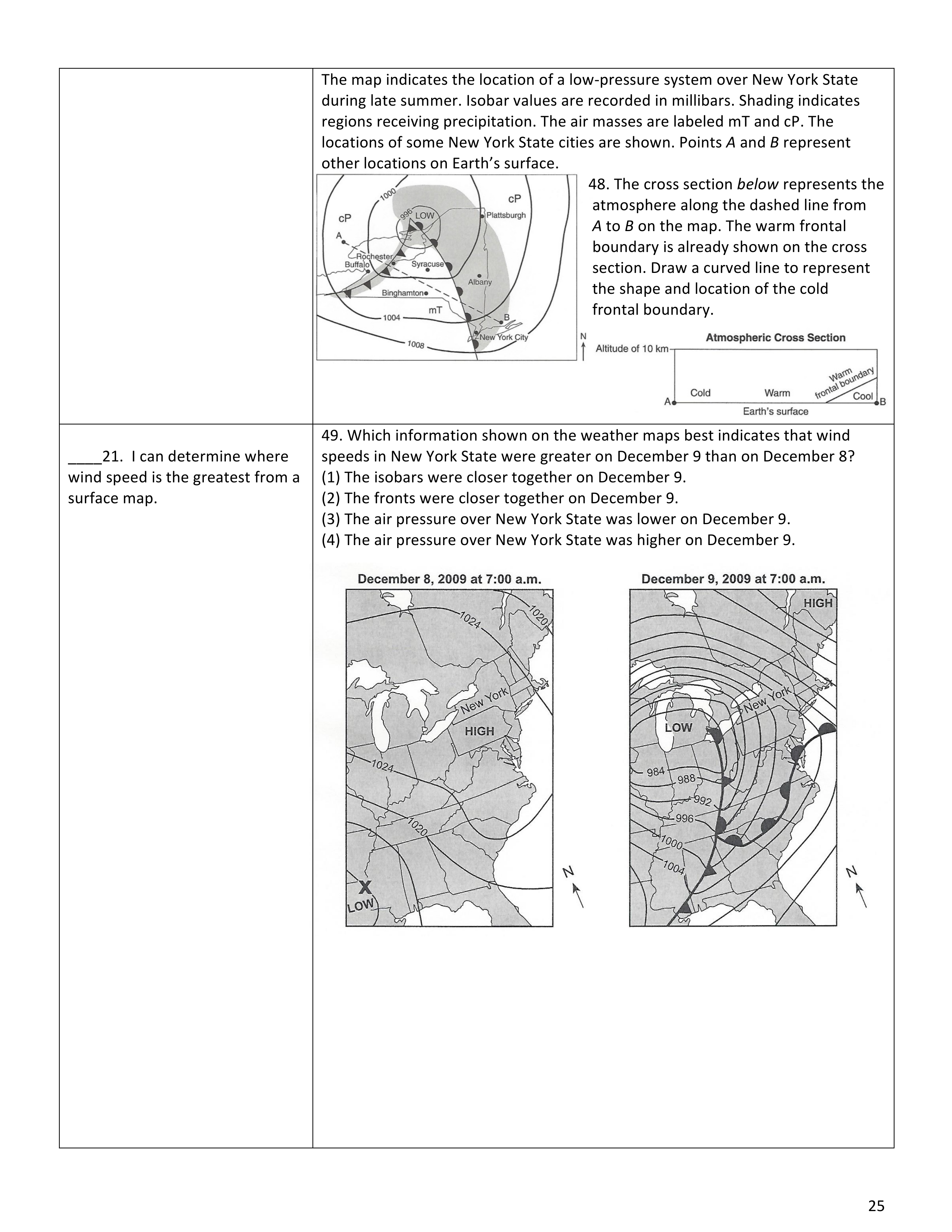
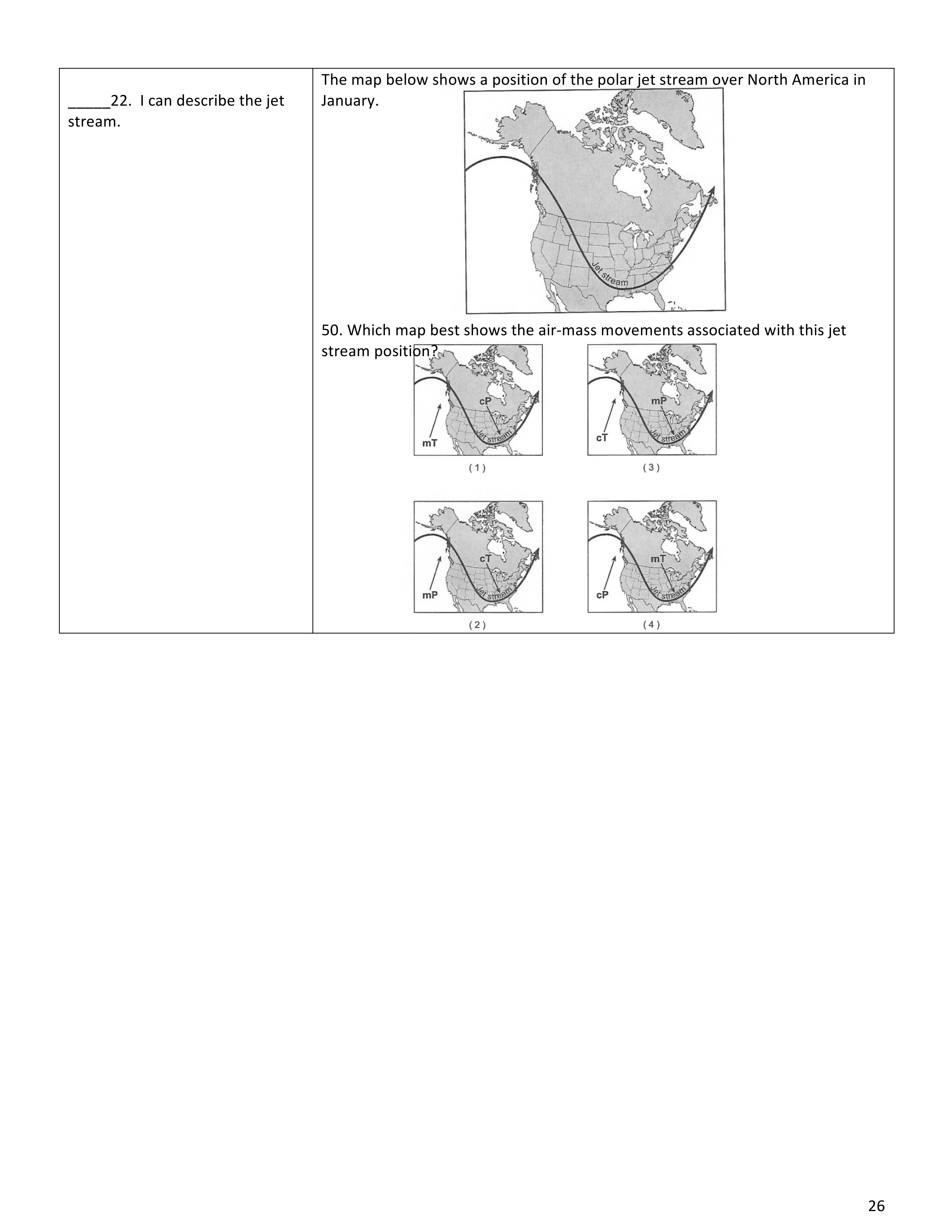
Weather refers to the daily conditions of the atmosphere at a specific time and place. Understanding weather patterns and their impact is an essential part of our lives. Let's explore some key concepts related to weather:
The atmosphere is a layer of gases that surrounds the Earth. The is a region of Earth's stratosphere that absorbs most of the Sun's ultraviolet radiation. It protects us from the Sun's harmful rays and keeps the planet warm. It is made up mostly of nitrogen and oxygen, with smaller amounts of other gases. Within the atmosphere there are several temperature zones. The is the lowest layer and contains nearly all of the clouds. The next sphere is the stratosphere followed by the mesosphere and thermosphere.
Air pressure is the force exerted by the weight of the air. Differences in air pressure create winds, which move air from areas of high pressure to areas of low pressure. Meteorologists use to measure air pressure.
Temperature measures how hot or cold the air is. It affects our comfort and plays a significant role in weather patterns. measure temperature, usually in degrees Celsius or Fahrenheit.
Humidity refers to the amount of moisture in the air. High humidity makes the air feel sticky, while low humidity can make it feel dry. are used to measure humidity.
helps us understand how moisture in the air can condense into water droplets. It refers to the temperature at which the air becomes saturated with water vapor, causing condensation to occur. When the air reaches its dew point temperature, water vapor changes into liquid water, creating dew or fog. The dew point is influenced by factors such as humidity and air temperature. Higher humidity levels lead to a higher dew point, meaning the air can hold more moisture before condensing. Likewise, colder air temperatures result in a lower dew point. Scientists use a in order to determine the dew point. By studying the dew point, scientists can predict weather patterns and determine the chance of precipitation.
Clouds are visible collections of tiny water droplets or ice crystals in the atmosphere. They form through a process called . When warm, moist air and cools, the water vapor in the air condenses into visible droplets or ice crystals, forming clouds. Clouds play a crucial role in the water cycle and can contribute to the development of precipitation. Studying clouds helps meteorologists understand weather patterns and make predictions about future conditions.
occurs when water droplets or ice crystals in clouds become too heavy and fall to the ground. It can take the form of rain, snow, sleet, or hail. Precipitation is crucial for the water cycle and affects our daily activities.
Wind is the movement of air. It is caused by differences in air pressure and the Earth's rotation. Wind speed and direction are measured using and . Wind plays a vital role in weather patterns and affects how we experience the weather.
ESRT page 1
ESRT page 1
1
2
3
4
Conduction
Convection
Radiation
Which location has the LOWEST relative humidity?