Log in
Sign up for FREE
arrow_back
Library
Week 5 Science: Eclipses & Phases of the Moon
By Scott Osborne (Dr. Osborne)
star
star
star
star
star
Share
share
Last updated over 5 years ago
7 questions
Add this activity
1
1
1
1
1
1
1
Question 1
1.
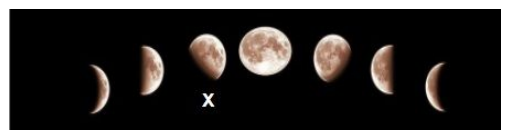
In the diagram, which moon phase is marked with the X?
First quarter
Waning crescent
Waning gibbous
Waxing gibbous
Question 2
2.
Why does the Moon seem to change shape?
As the Moon revolves around Earth, different parts are lit by the Sun.
The viewpoint from Earth of the illuminated side of the Moon changes.
Earth's shadow is blocking light from the Sun.
The way the Moon produces light changes, so we see different shapes.
Question 3
3.
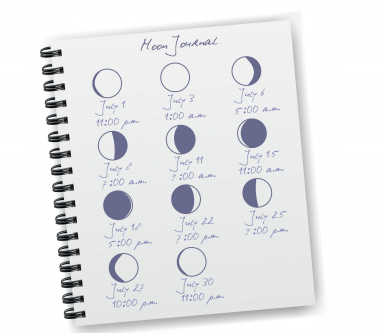
A student observed the Moon every few days for one month and sketched its shape in a journal each night.
Using the space below, provide your best explanation for why the shape of the Moon appeared to change over time.
Question 4
4.
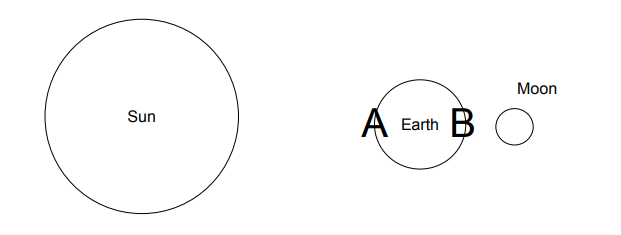
People from Earth at location A would be able to see the lunar eclipse?
True
False
Question 5
5.
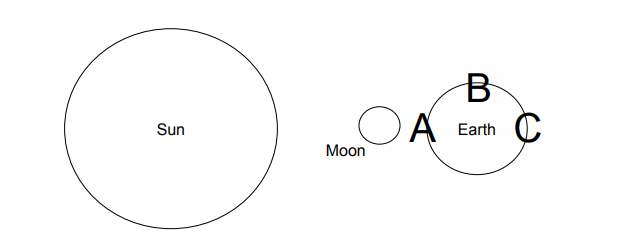
Where on Earth would people be able to see the solar eclipse?
A
B
C
Question 6
6.
Do more people see a solar eclipse or a lunar eclipse? Explain why that would be.
People have the same opportunity to see a solar eclipse as a lunar eclipse.
More people see a lunar eclipse. Since the Sun is so much larger than the Moon, the Moon only blocks out the Sun for about 12 minutes over a relatively small amount of land area on Earth; lunar eclipses can last a couple hours and are seen by a significantly larger area on Earth.
More people see a solar eclipse. Since the moon is between the sun and the Earth more often than the Earth is between the moon and sun, the moon blocks the sun for a solar ecliplse more often.
Question 7
7.
Why do we see a full moon more often than we see an eclipse?
Full moons happen at least once a month due to the relative positions of the Sun, Moon, and Earth. Eclipses are considerably more rare and only happen with the orbits of the Moon, Earth, and Sun align in a specific way.
The moon is closer to the Earth, so we see the full moon more often than we see an eclipse.
We see a full moon about as often as we see an eclipse.