Log in
Sign up for FREE
arrow_back
Library

5.1, 5.2, 5.4 - Volcanoes

star
star
star
star
star
Last updated over 2 years ago
15 questions
5.1 - Intro to Volcanoes
8
4
4
4
5.2 - Types and Explosions
6
4
4
10
1
2
5.4 - Volcanic Gasses
4
4
2
8
10
Question 1
1.

Match the word to the definition.

Draggable itemarrow_right_altCorresponding Item
Pahoehoe
arrow_right_alt
A hole in Earth's surface through which magma, hot gases, ash, and rock fragments escape from deep inside the planet.
Caldera
arrow_right_alt
A dense wave of superheated air and rock that moves as a fluid from an erupting volcano
Magma
arrow_right_alt
Molten rock deep within Earth consists of liquids, gases, and particles of rocks and crystals.
Lava
arrow_right_alt
Large circular depression formed when an empty magma chamber causes the collapse of the volcano above it.
Pyroclastic Flow
arrow_right_alt
An upwelling of heat from beneath Earth's crust; often refered to as a Mantle Plume
Hot Spot
arrow_right_alt
Magma at Earth's surface.
Aa
arrow_right_alt
lava flows that have a rough rubbly surface composed of broken lava blocks called clinkers
Volcano
arrow_right_alt
lava that has a smooth, hummocky, or ropy surface
Question 2
2.

Highlight where the "Ring of Fire" is on the planet.

Question 3
3.

What do you notice about the volcanos around the "Ring of Fire" in relation to the plate tectonics?

Question 4
4.

What is the name of the volcano that erupted in 1815, and also blocked some of the sunlight around the world thus lowering the temperature of the planet by 3 degrees Celsius, causing it to be known as the "Year without a summer"?

Question 5
5.

Explain the process a composite volcano goes through that creates its overall shape.

Question 6
6.

What makes a volcano explosive?

Question 7
7.
Lava gets its viscosity from its _______ content.

Meaning the more mafic the lava is the _______ the viscosity.
Question 8
8.

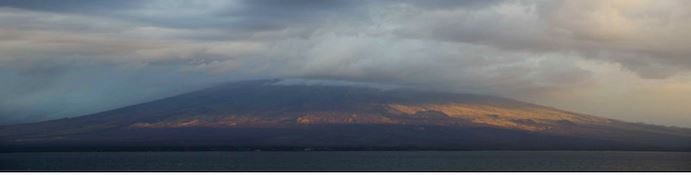
Match the type and properties that led to its formation, to the photo. (Some may be used more than once, or not at all.)

  • low gas content
  • Shield
  • mafic lava
  • high gas content
  • Stratovolcano/Composite
  • Highly Explosive
  • Low Explosive
  • Low Viscocity
  • Cinder Cone
  • felsic lava
  • High Viscocity
Question 9
9.

Yellowstone is likely to erupt in your lifetime.

Question 10
10.

What typically kills the most people when a volcano erupts?

Question 11
11.

Check off all of the gasses that typically come out of a volcanic eruption.

Question 12
12.
Most of the gas that comes from a volcanic eruption is _______ , and the second most gas is _______ .
Question 13
13.
Mt. St. Helens was an explosive eruption because the magma under the mountain had access to __________.
Question 14
14.

What connects the concept 'Lava Viscosity' and 'Volcanic Explosiveness'?

Question 15
15.

On the gradient, write the words from the given word bank where they occur in alignment with destructiveness (explosivity).