Log in
Sign up for FREE
arrow_back
Library

2.1 Rock...s

star
star
star
star
star
Last updated over 2 years ago
12 questions
8
4
4
4
4
4
4
4
2
4
4
4
Question 1
1.

In your own words, why are there no fossils in metamorphic or igneous rocks?

Question 2
2.
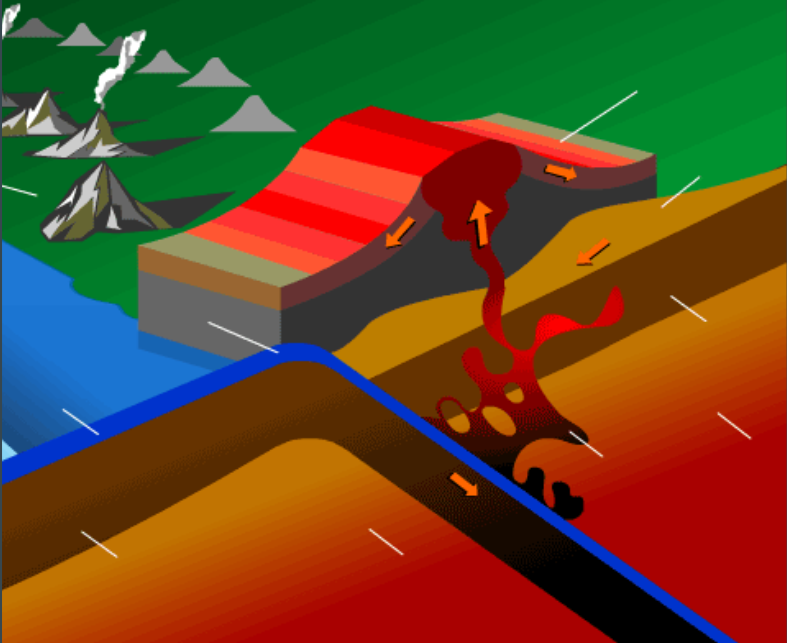
Click and drag the type of rock to its most likley location of being found.
Other Answer Choices:
metamorphic
igenous
sedimentary
Question 3
3.

Question 4
4.

What geological process changes sediment to a sedimentary rock?

Question 5
5.

What geologic process can change granite (igneous rock) into gneiss (metamorphic rock)?

Question 6
6.

Question 7
7.

Question 8
8.

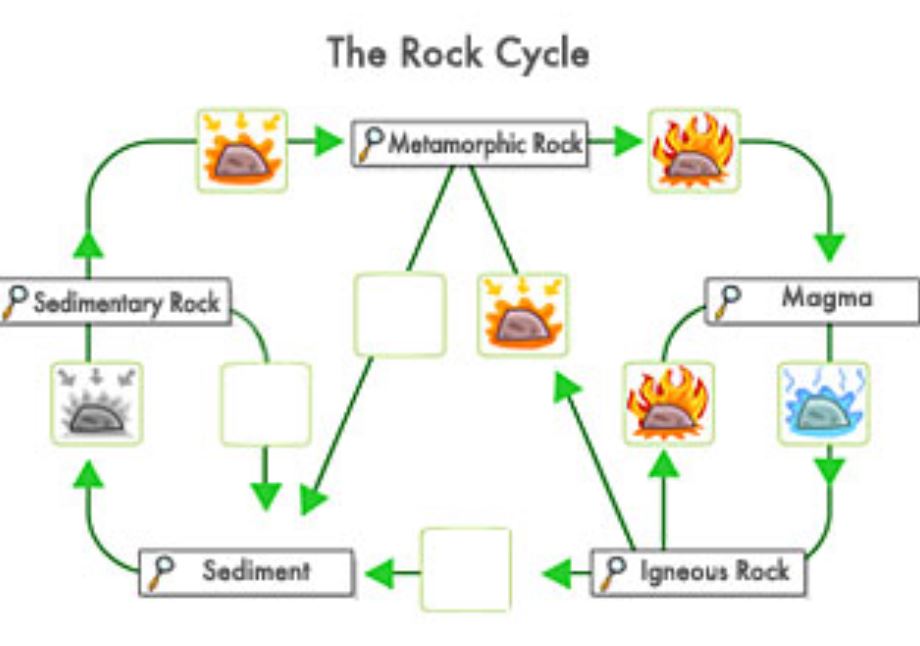
What is missing from the rock cycle?

Question 9
9.
What process does a sedimentary rock go through to become a metamorphic rock?

Other Answer Choices:
cooling
melting
heat and pressure
weathering and erosion
compacting and cementing
Question 10
10.

Question 11
11.

Question 12
12.

What geologic process can change any type of rock into sediment?

Between what temperatures do rocks tend to melt?
220 to 500 degrees Celsius
50 to 100 degrees Celsius
600 to 1,300 degrees Celsius
130 to 200 degrees Celsius
Select characteristics found in sedimentary rocks.
sand or pebbles
gas bubbles
crystals
ribbonlike layers
fossils
glassy surfaces
Select characteristics found in metamorphic rocks.
crystals
ribbonlike layers
gas bubbles
sand or pebbles
glassy surfaces
fossils
What is the cycle that transforms sediment into shale (sedimentary), shale into slate (metamorphic), and slate into magma?
compacting and cementing, heat and pressure, melting
weathering and erosion, compacting and cementing, cooling
melting, heat and pressure, cooling
cooling, melting, heat and pressure
What is the cycle that transforms magma into granite, granite into sand, and sand into sandstone?
cooling, weathering, compacting and cementing
weathering and erosion, compacting and cementing, cooling
melting, heat and pressure, cooling
compacting and cementing, heat and pressure, melting