Algebra 2 5-3 Guided Practice: Solving Polynomial Equations
star
star
star
star
star
Last updated over 3 years ago
23 Nsɛmmisa

3
20
A.SSE.2
3

3
8
3
10
A.SSE.2
3

Video Check: Select all that apply with regards to the video embedded directly above this item.
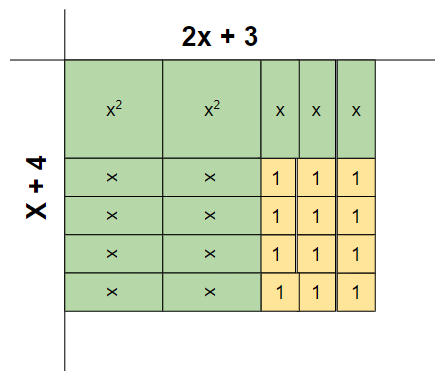
Solve It! Can you arrange all of these pieces to make a rectangle with no pieces overlapping and no gaps?
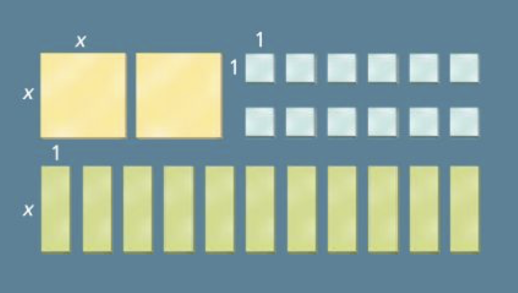
The pieces have been recreated as virtual algebra tiles in a Google Drawing.
1. Click here to create a copy of that Google Drawing.
2. Arrange the tiles on the Google Drawing to form a rectangle with no pieces overlapping and no gaps.
3. Take a screenshot of your completed work.
4. Upload your screenshot to the canvas. Resize if necessary.
You may also do similar work with real algebra tiles (ask your teacher for them), or with the digital algebra tiles at Polypad. Just capture and upload or paste an image of your final arrangement to the canvas.
Solve It! Takeaway:
The rectangle you created in the Solve It! is a geometric model of a polynomial.
In a rectangle, area = length times width:
The area of the rectangle you created in the Solve It! is the sum of the areas of each algebra tile:
That simplifies to
Length times width equals area, so the length of the rectangle you created is one factor of the area polynomial. The width of the rectangle is the other factor of the area polynomial.
One rectangle model of the polynomial is shown below.
Note
Algebra tiles are available in both digital and physical formats and can be used to factor a wide variety of polynomial expressions.
Video Check: Select all that apply with regards to the video embedded directly above this item.

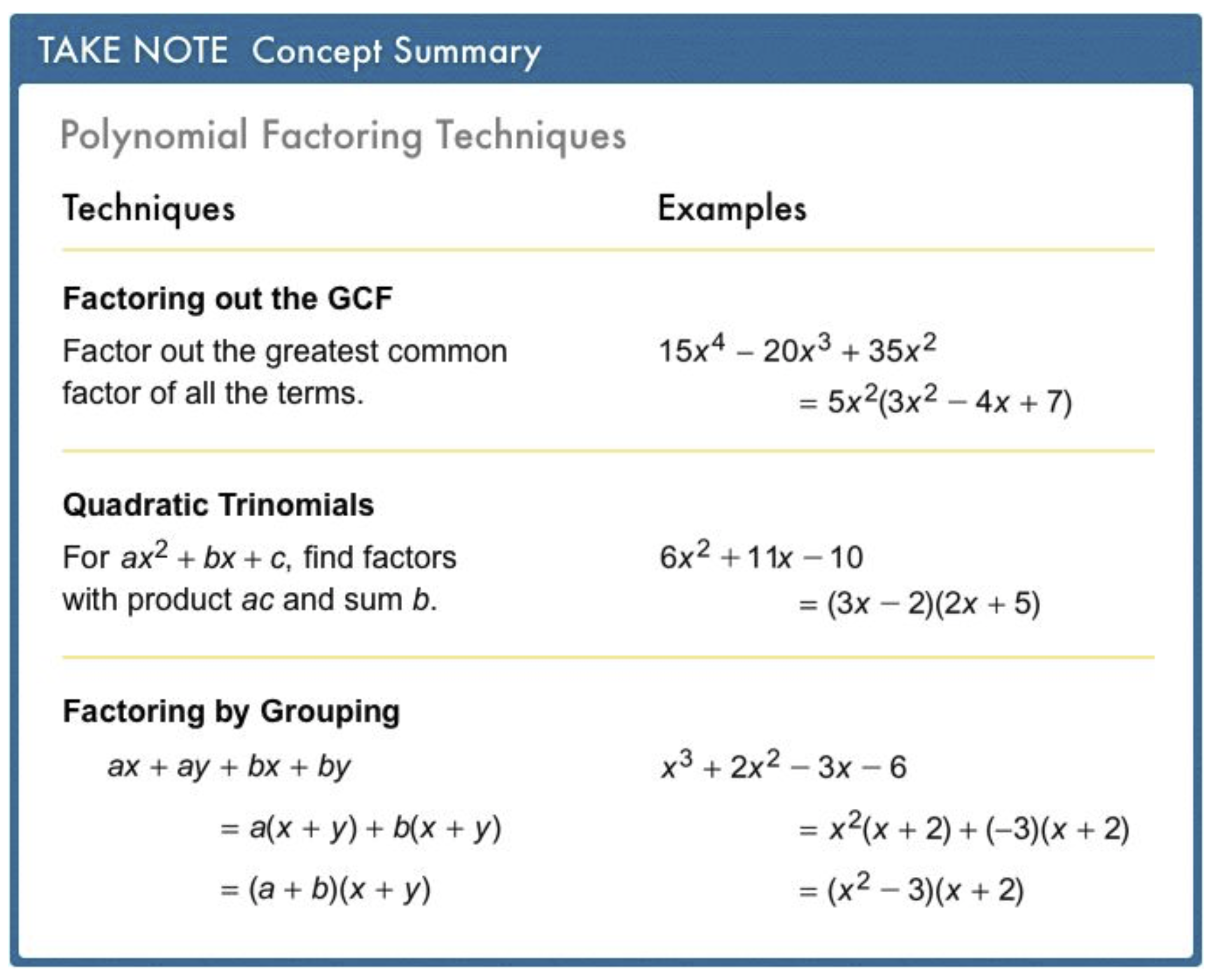
Take Note: Place these steps in the correct order for solving polynomial equations using factors.
✏️ This is a good 4-step process to add to your notes.
Factor the remaining trinomial
Factor out the GCF (if there is one)
Use the Zero Product Property to find the roots
Write the equation in standard form
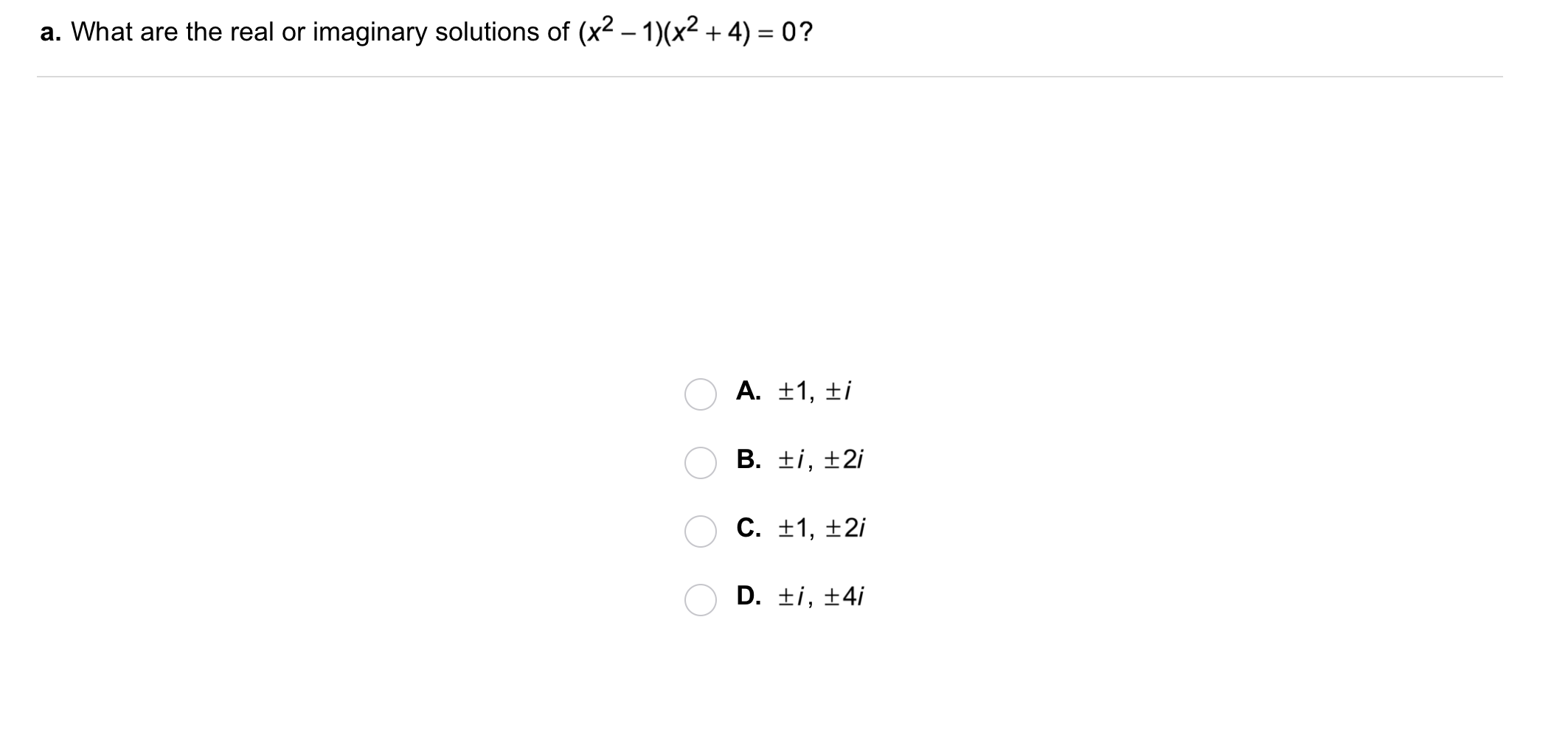
Problem 1 Got It?
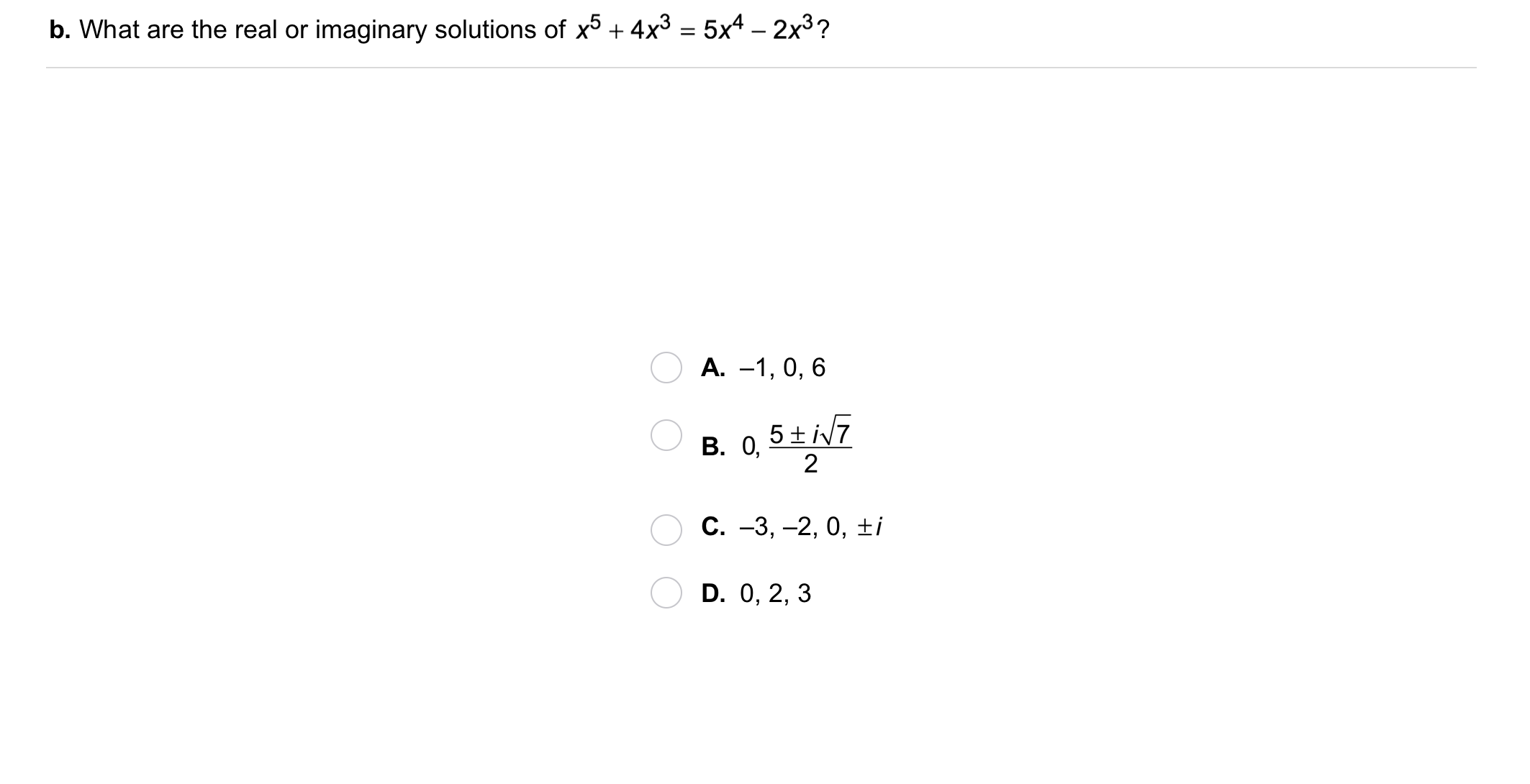
Problem 1 Got It?
Video Check: Select all that apply with regards to the video embedded directly above this item.

Take Note: Classify each expression on the left based on its type.
You may need to zoom out to see all of the items. You can also place each item from the left column by selecting it (click it) then selecting (clicking on) the category for it.
Difference of squares
Sum of cubes
Difference of cubes
None of these
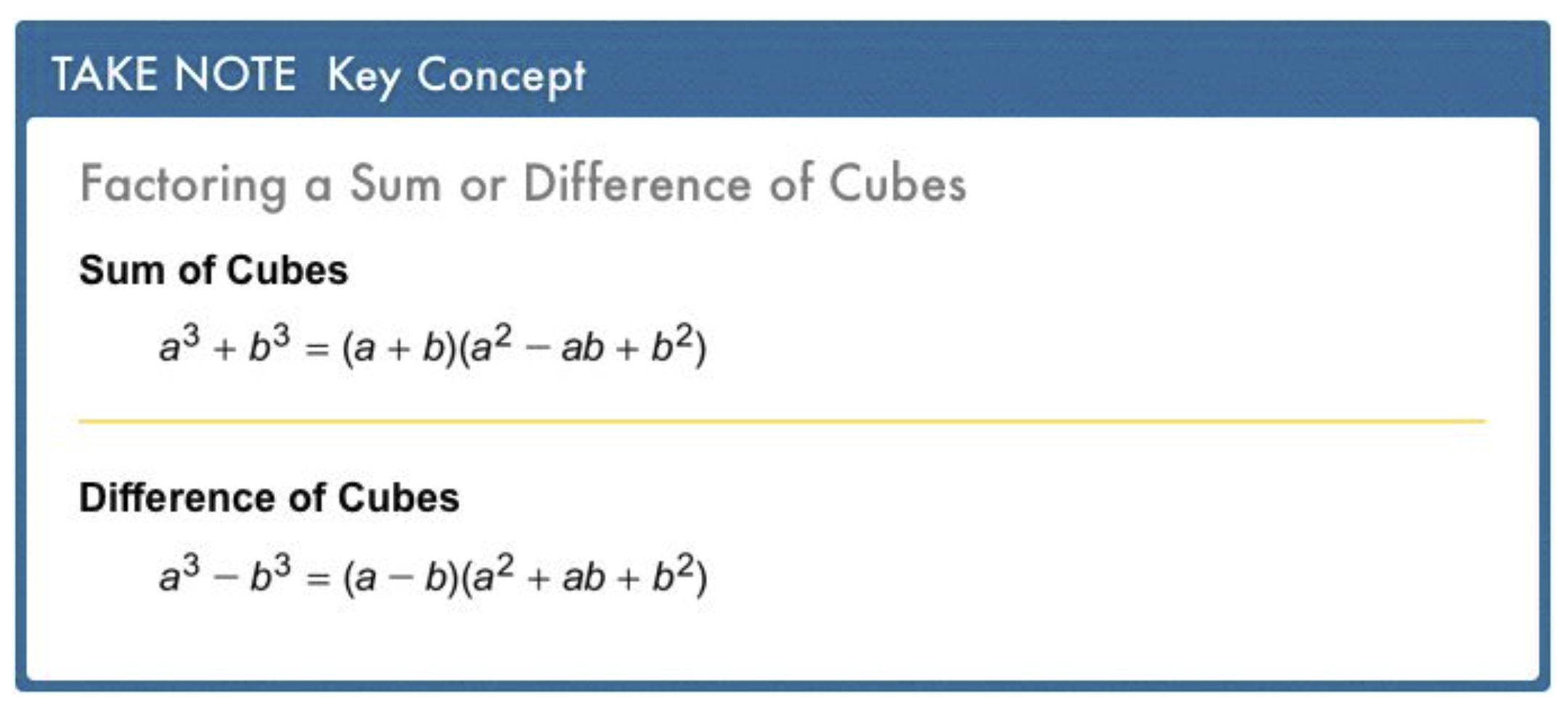
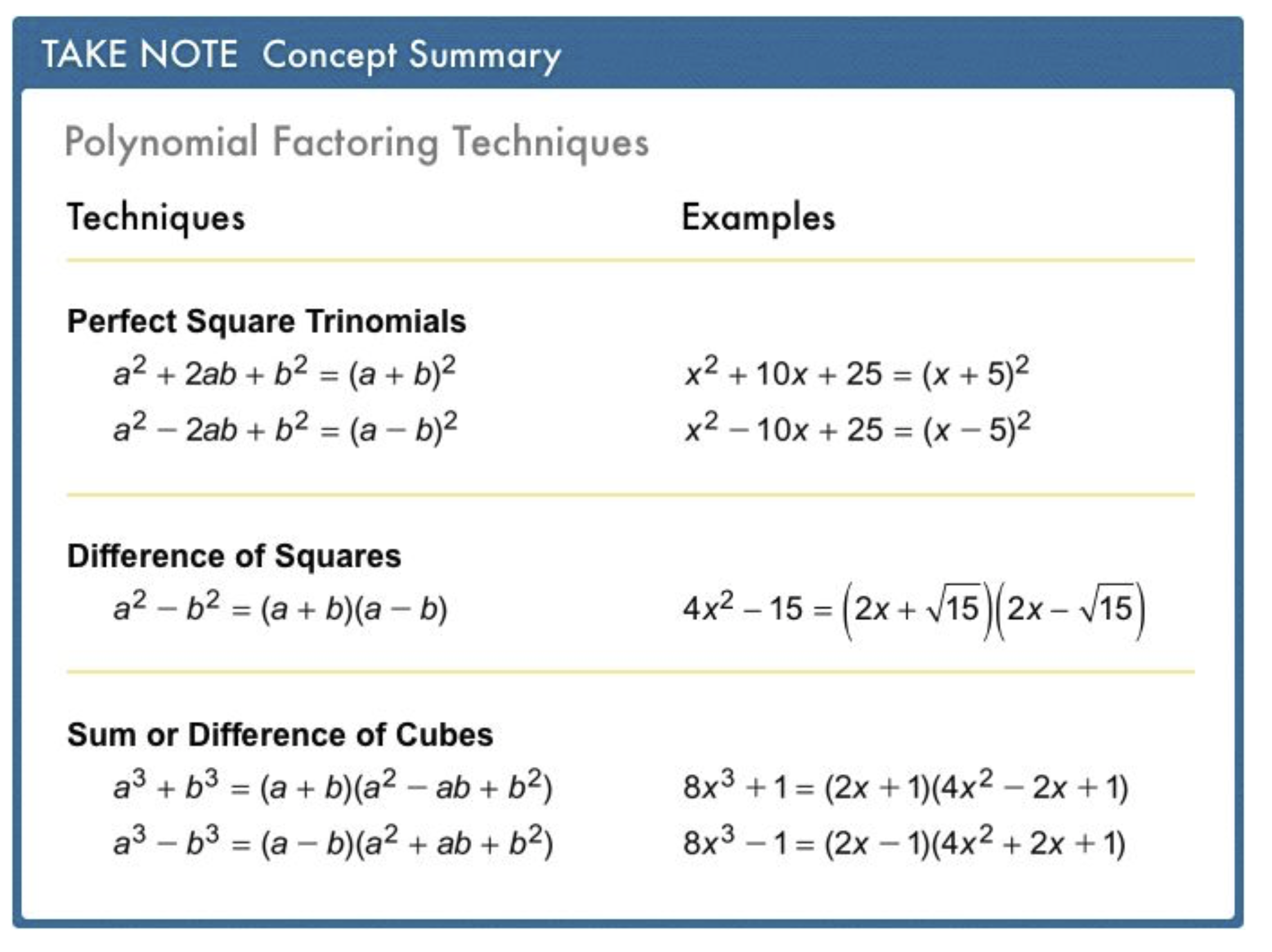
Take Note: Why is it helpful to recognize special expressions like differences of squares and cubes and sums of cubes?
Take Note: Fill in the blank to factor the perfect square trinomial.
x2 + 10x + 25 = (x +
Take Note: Fill in the blanks to factor the difference of squares.
4x2 - 36 = (2x +
Take Note: Fill in the blanks to factor the sum of cubes.
27x3 + 8 = (3x +
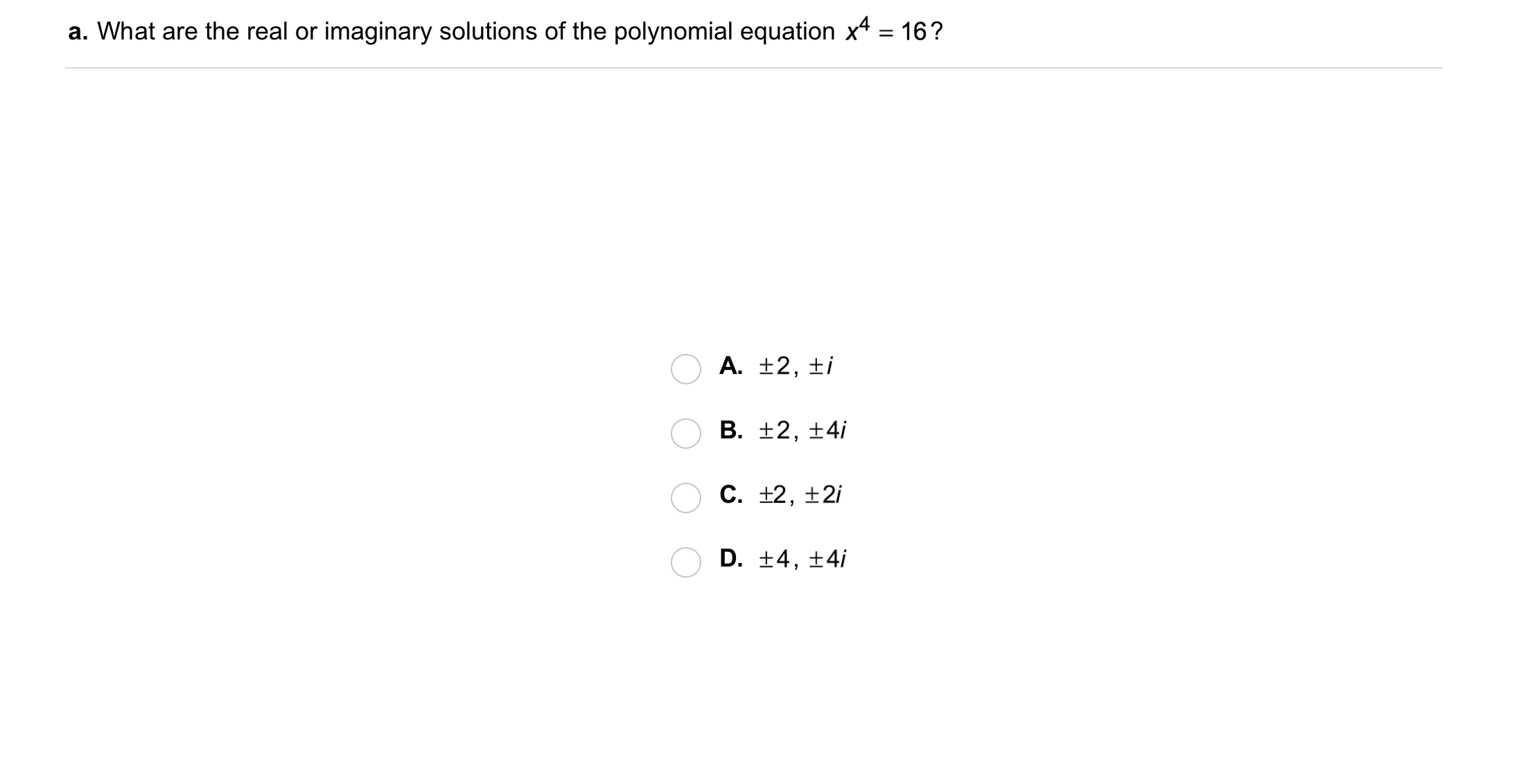
Problem 2 Got It?
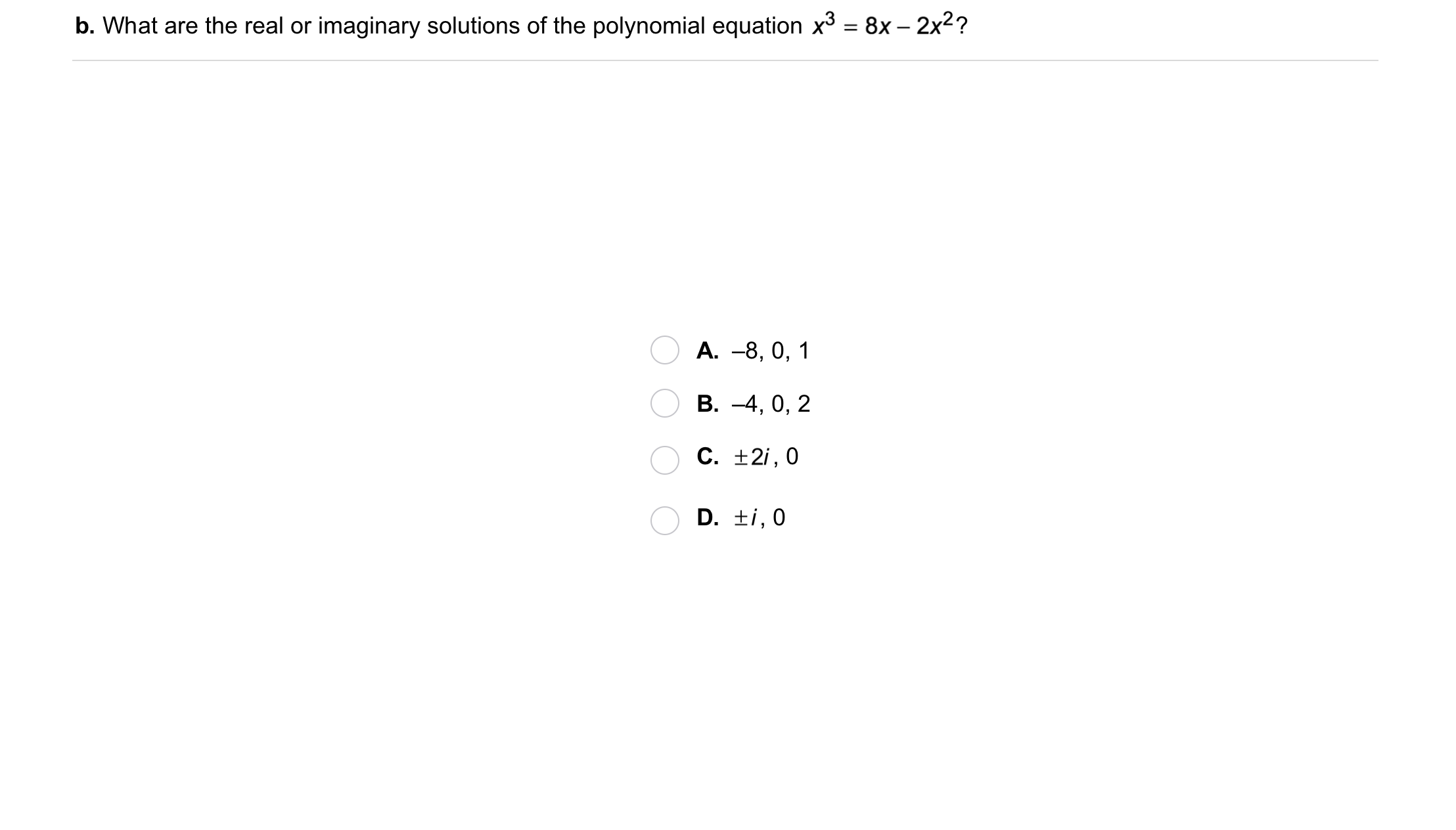
Problem 2 Got It?
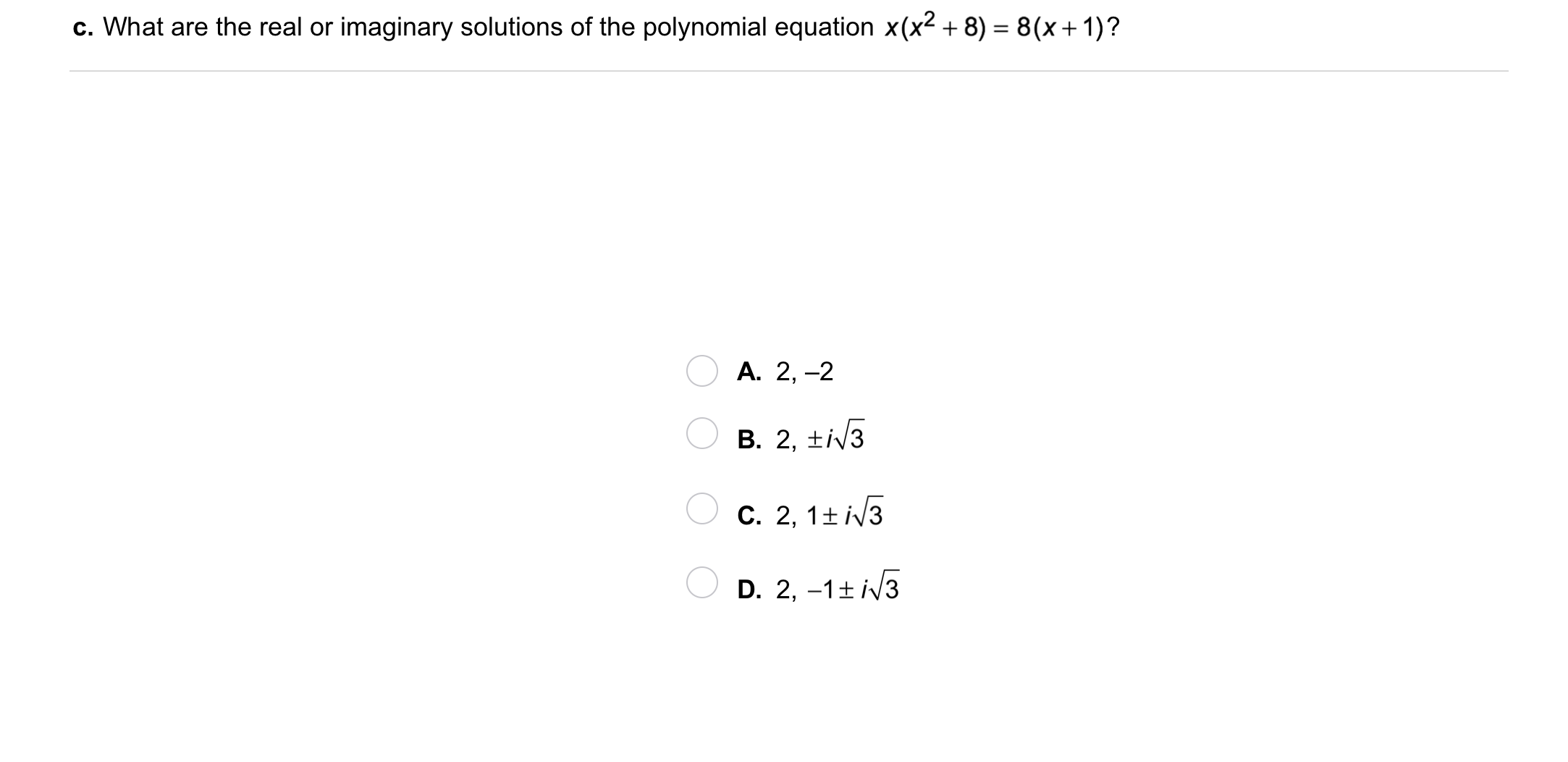
Problem 2 Got It?
HINT: Watch out for a difference of cubes as you solve the equation. Then, factor it accordingly.
Video Check: Select all that apply with regards to the video embedded directly above this item.
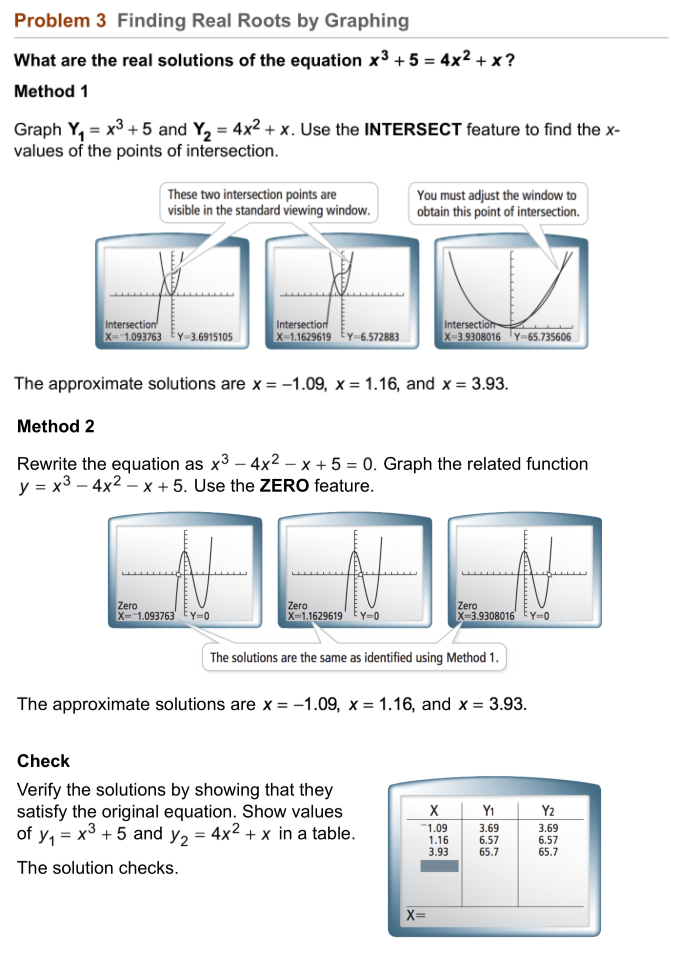
Take Note: Summarize Method 1 from Problem 3. You may use the canvas to help illustrate your written summary.
Take Note: Summarize Method 2 from Problem 3. You may use the canvas to help illustrate your written summary.
Problem 3 Got It? What are the real solutions of the equation? Select all that apply.
Problem 3 Got It? Reasoning: In Problem 3, which method seems to be an easier and more reliable way to find the solutions of an equation? Explain.
Video Check: Select all that apply with regards to the video embedded directly above this item.
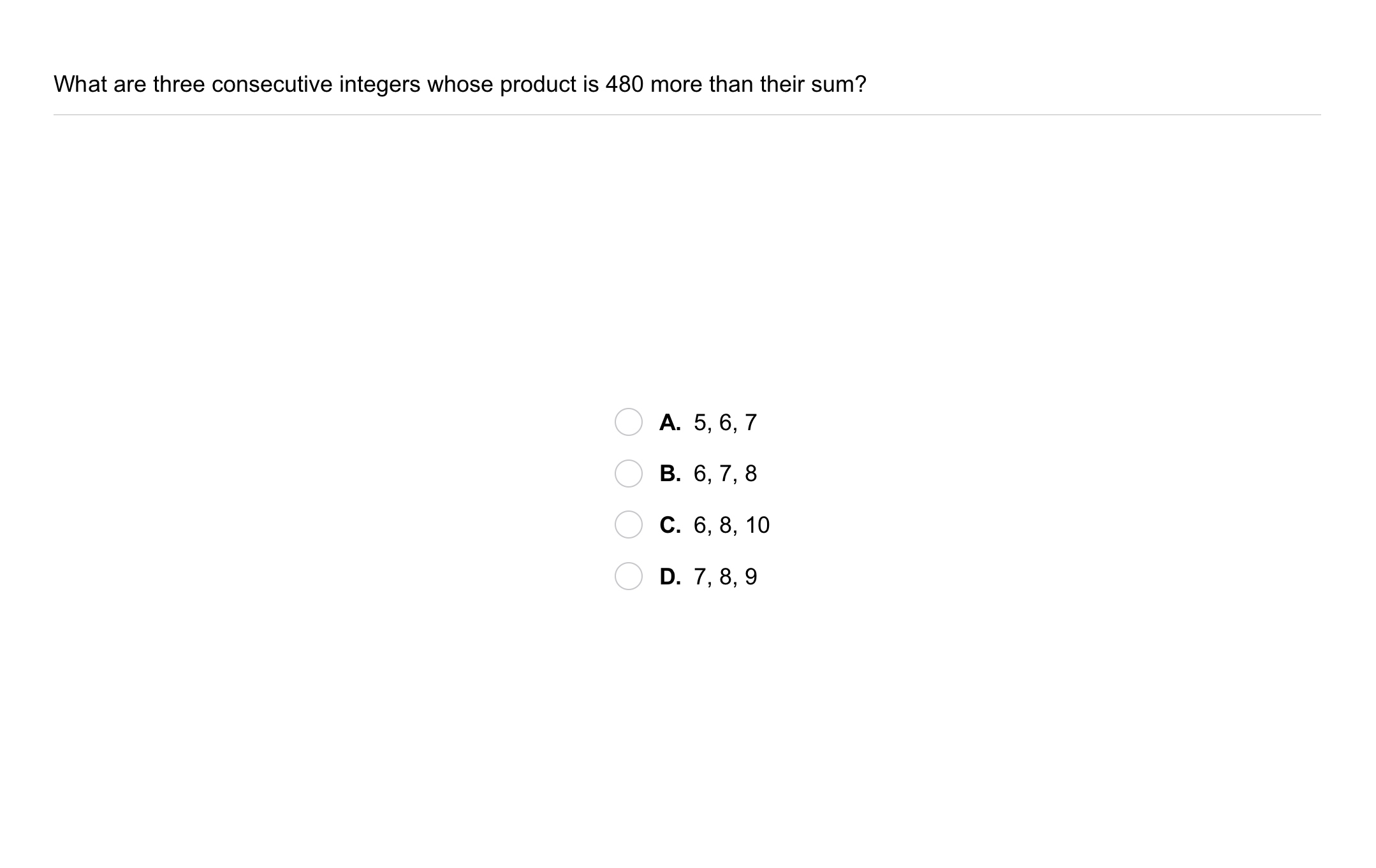
Problem 4 Got It?

🧠 Retrieval Practice:
Summarize the mathematical content of this lesson. What topics, ideas, and vocabulary were introduced?