Algebra 2 5-3 Independent Practice: Solving Polynomial Equations
star
star
star
star
star
Last updated over 4 years ago
14 Nsɛmmisa




10
A.SSE.2
10
A.SSE.2
10
A.SSE.2
10
A.SSE.2
10
A.SSE.2
10
10
A.SSE.2
10
A.SSE.2
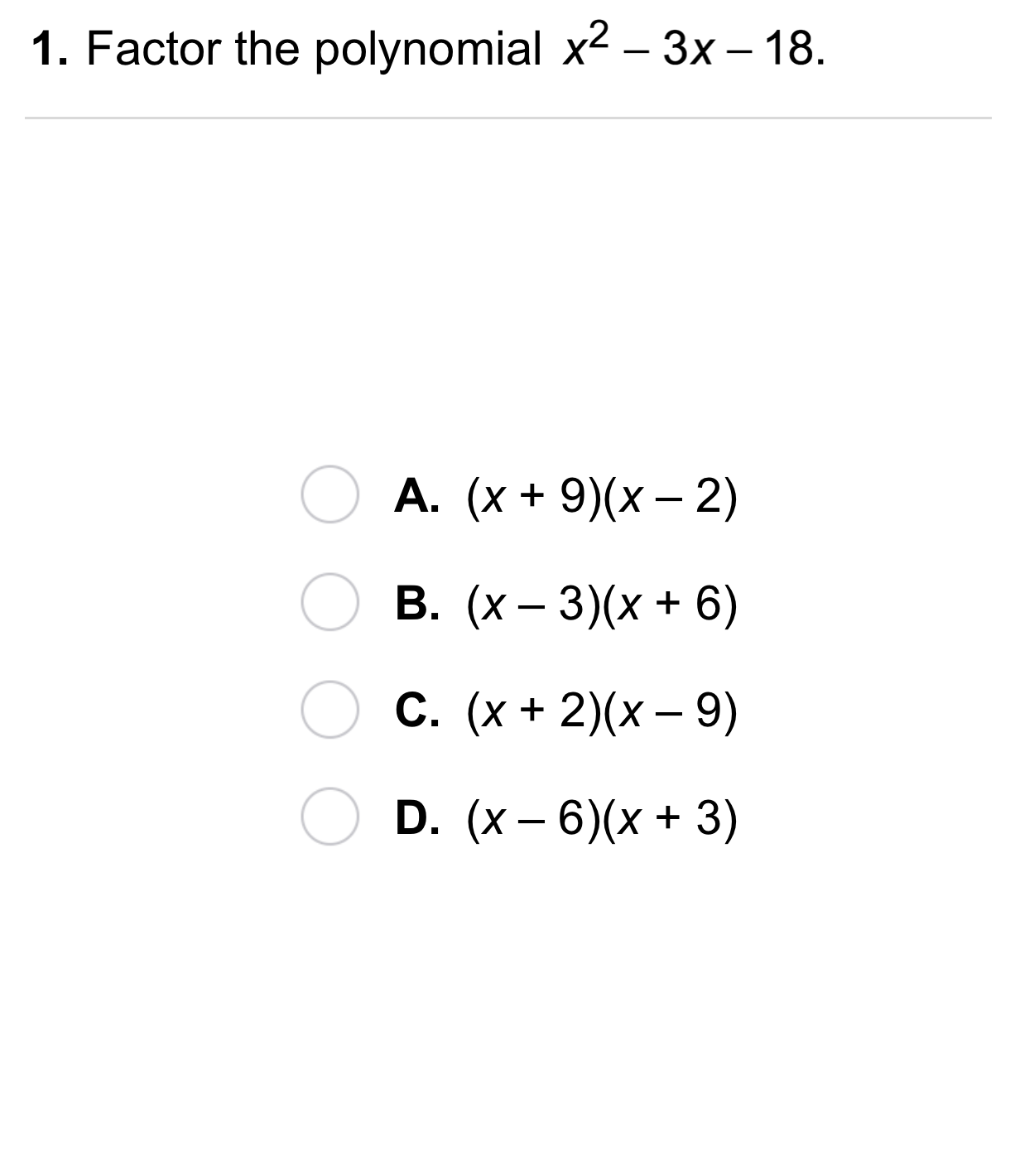
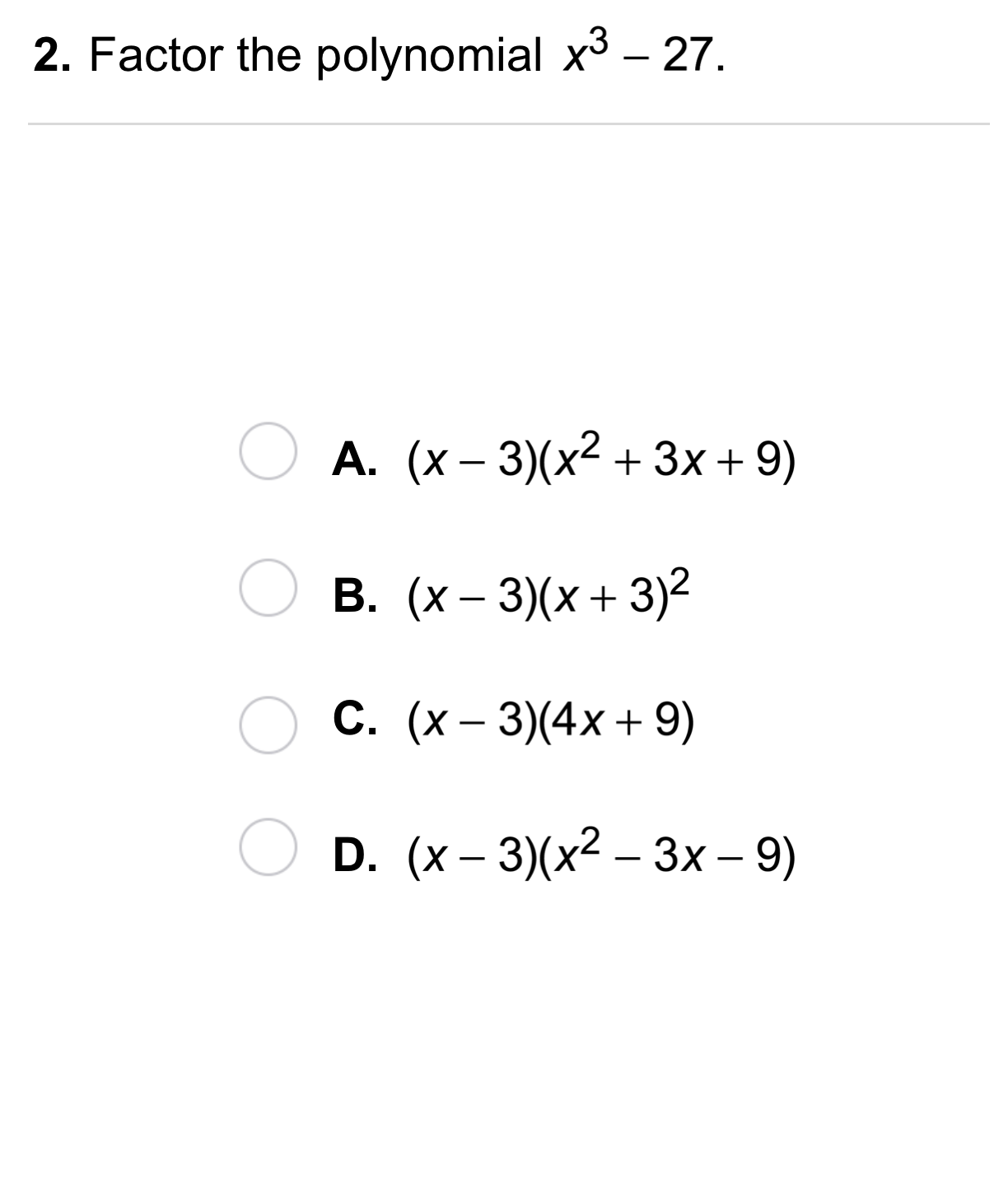
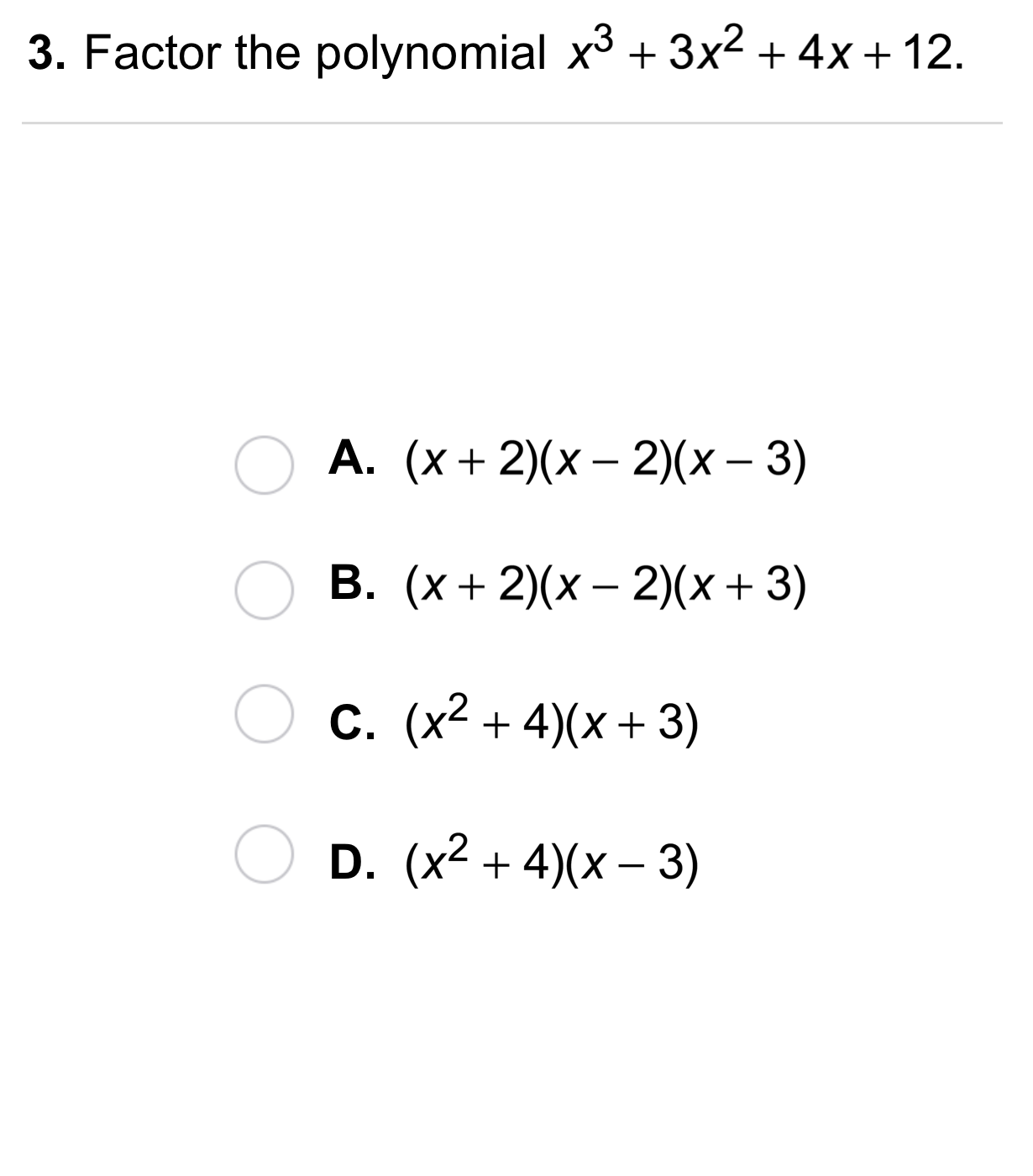
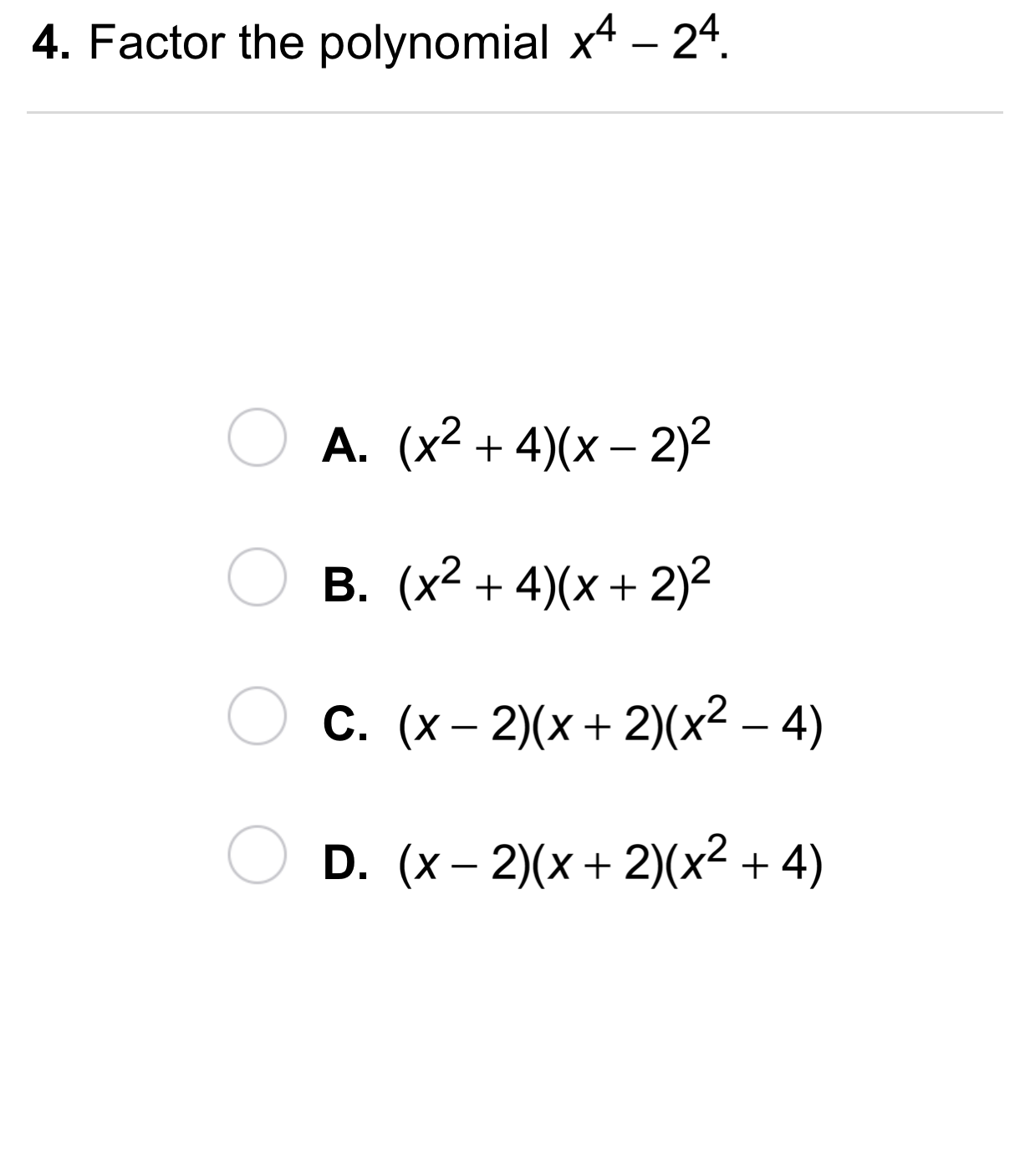
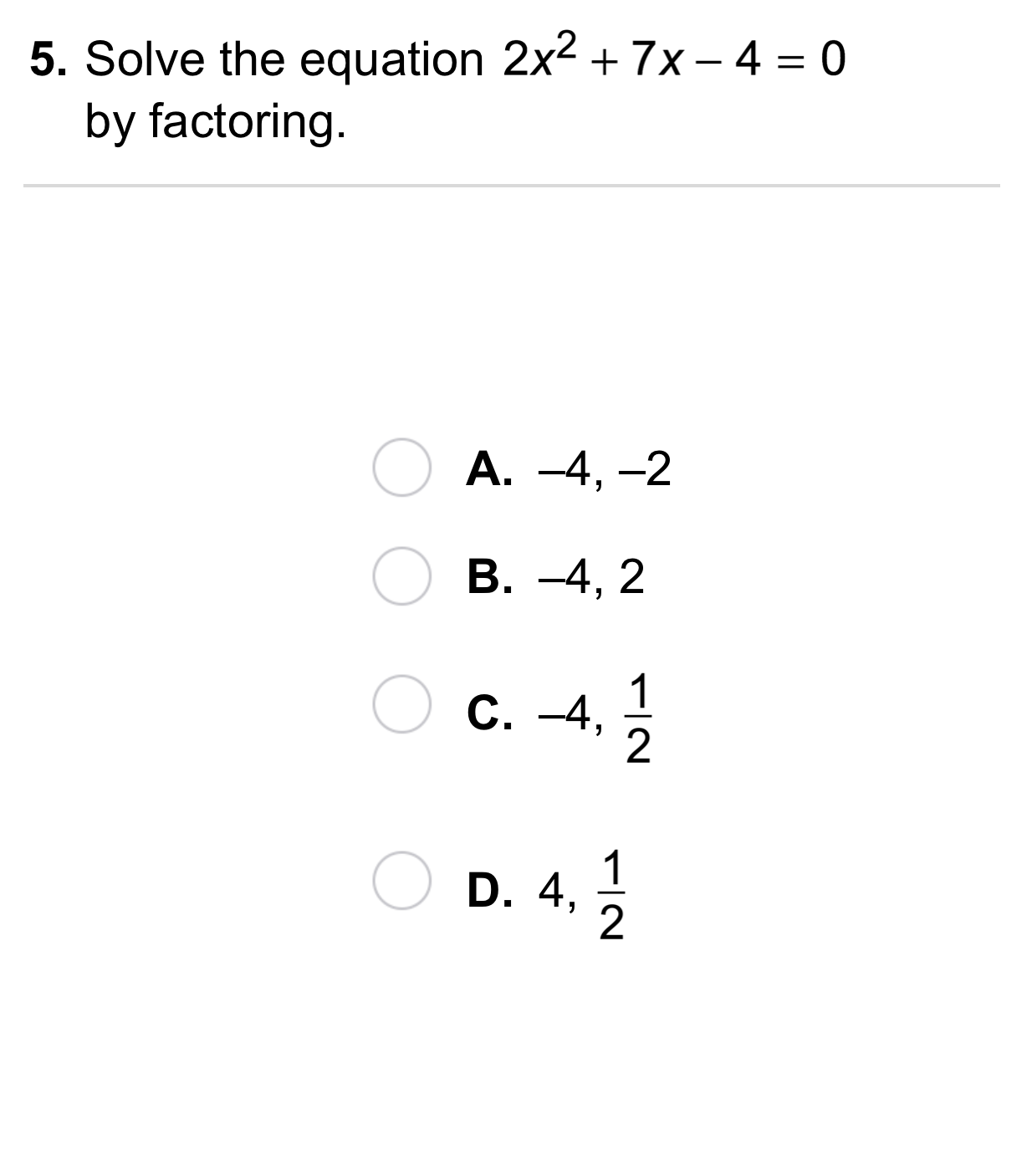
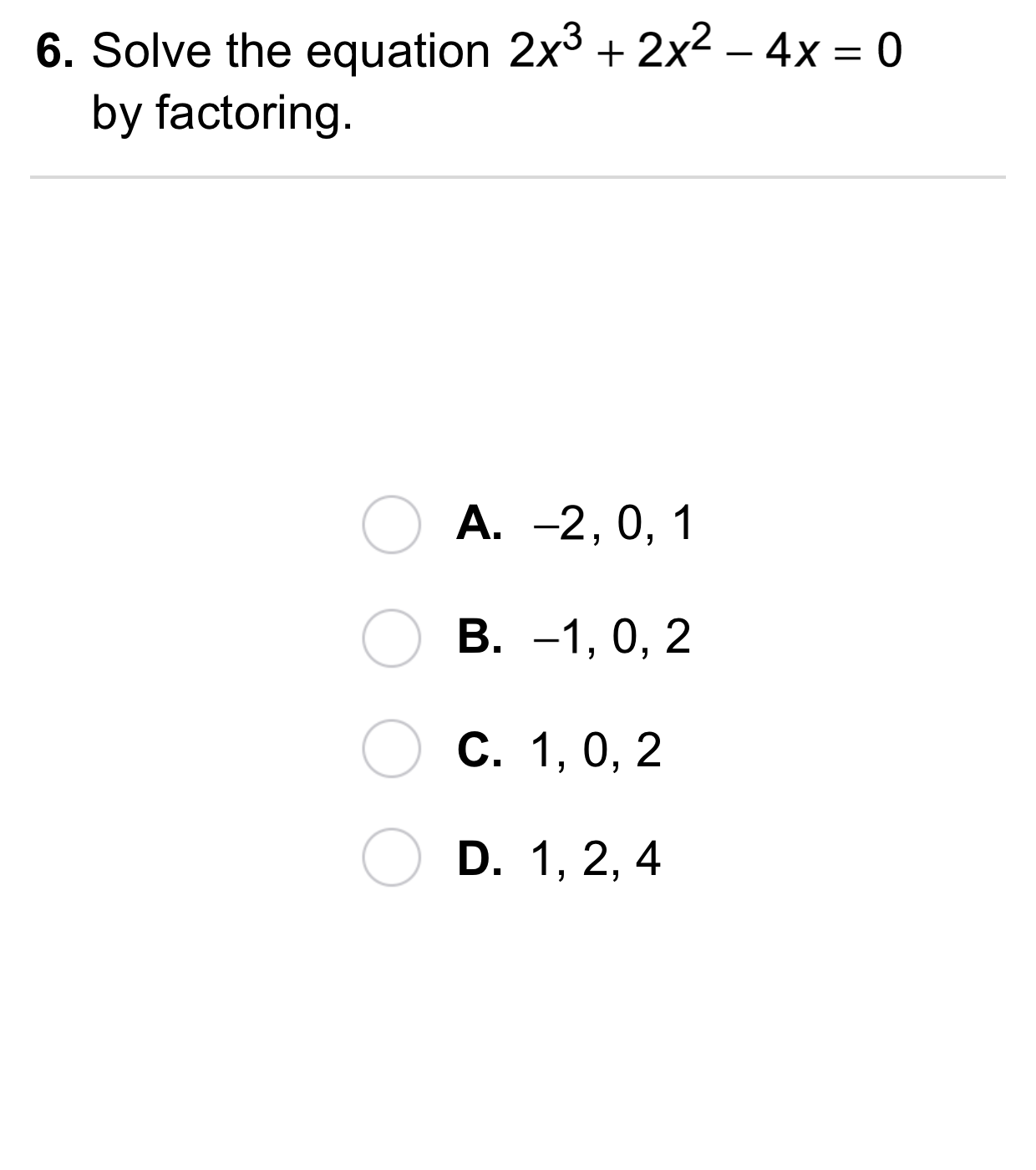
Vocabulary: Identify the expression as a sum of cubes, difference of cubes, or difference of squares.
Vocabulary: Identify the expression as a sum of cubes, a difference of cubes, or a difference of squares.
NOTE: A Take Note: Concept Summary table in the Guided Practice activity indicates that
While it may be useful to factor the expression this way in specific situations, we will only consider expressions to be differences of squares if the constant is a perfect square.
For example,
Vocabulary: Identify the expression as a sum of cubes, difference of cubes, or difference of squares.
Vocabulary: Identify the expression as a sum of cubes, difference of cubes, or difference of squares.
Vocabulary: Identify the expression as a sum of cubes, difference of cubes, or difference of squares.
Reasoning: Which method of solving polynomial equations will not identify the imaginary roots? Explain.
Reasoning: Show two different ways to find the real roots of the polynomial equation. Show your steps.
You may also complete your work on paper or on a whiteboard and upload a clear picture of it to the canvas.
Reflection: Math Success
