Algebra 2 7-6 Guided Practice: Natural Logarithms
star
star
star
star
star
Last updated almost 4 years ago
22 Nsɛmmisa

3
10
F.LE.4

3

3
3

3
20

Video Check: Select all that apply with regards to the video embedded directly above this item.
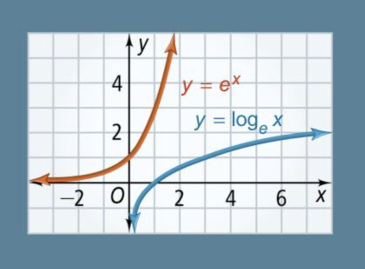
Solve It! A function f is bounded above if there is some number B that f(x) can never exceed. The exponential function base e shown here is not bounded above.
Yes
No
3
2
Not bounded above
Is the logarithmic function base e bounded above?
If the logarathmic function base e is bounded above, find a bounding number. If not, drag "Not bounded above" into this category.
Video Check: Select all that apply with regards to the video embedded directly above this item.

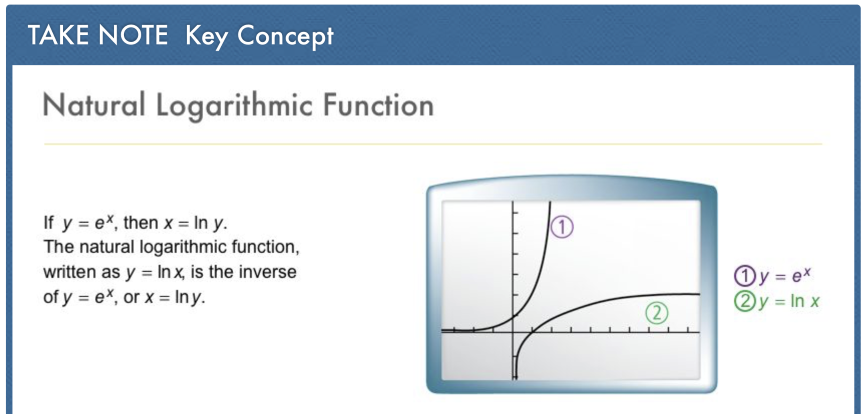
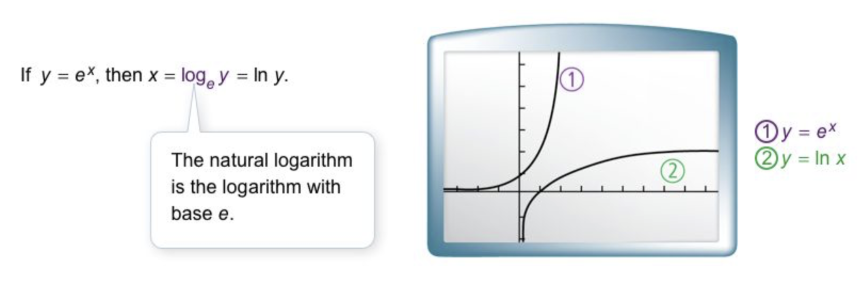
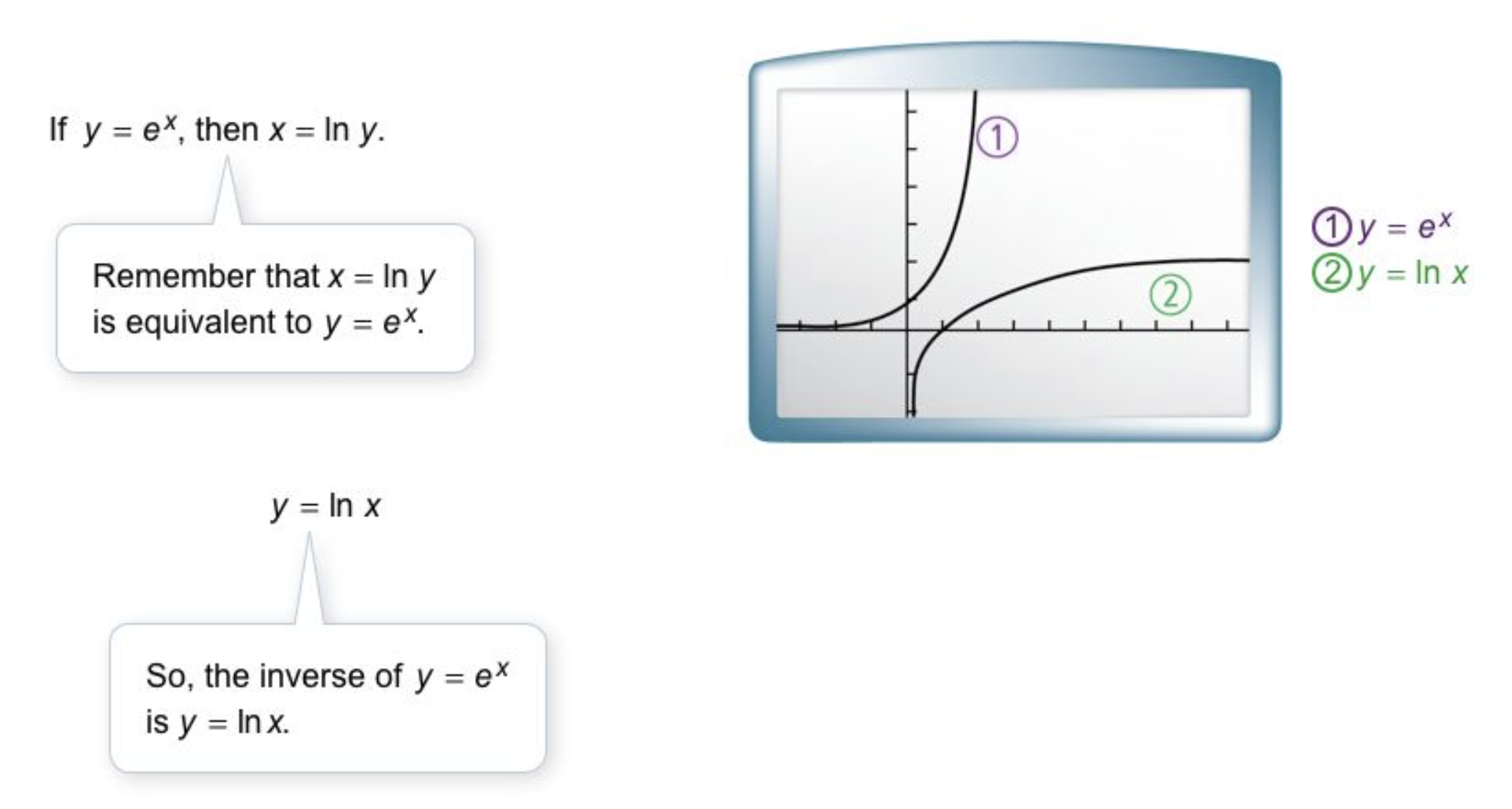
Take Note: Define the natural logarithmic function.
Take Note: Write the numeric value of e to the nearest hundredth.
Take Note: Graphing
At desmos.com, graph the parent natural logarithmic function,
Zoom and pan your graph to establish an appropriate viewing window.
Capture a screenshot of your graph and add it to the Formative canvas.
Take Note: The graphs of

Problem 1 Got It?
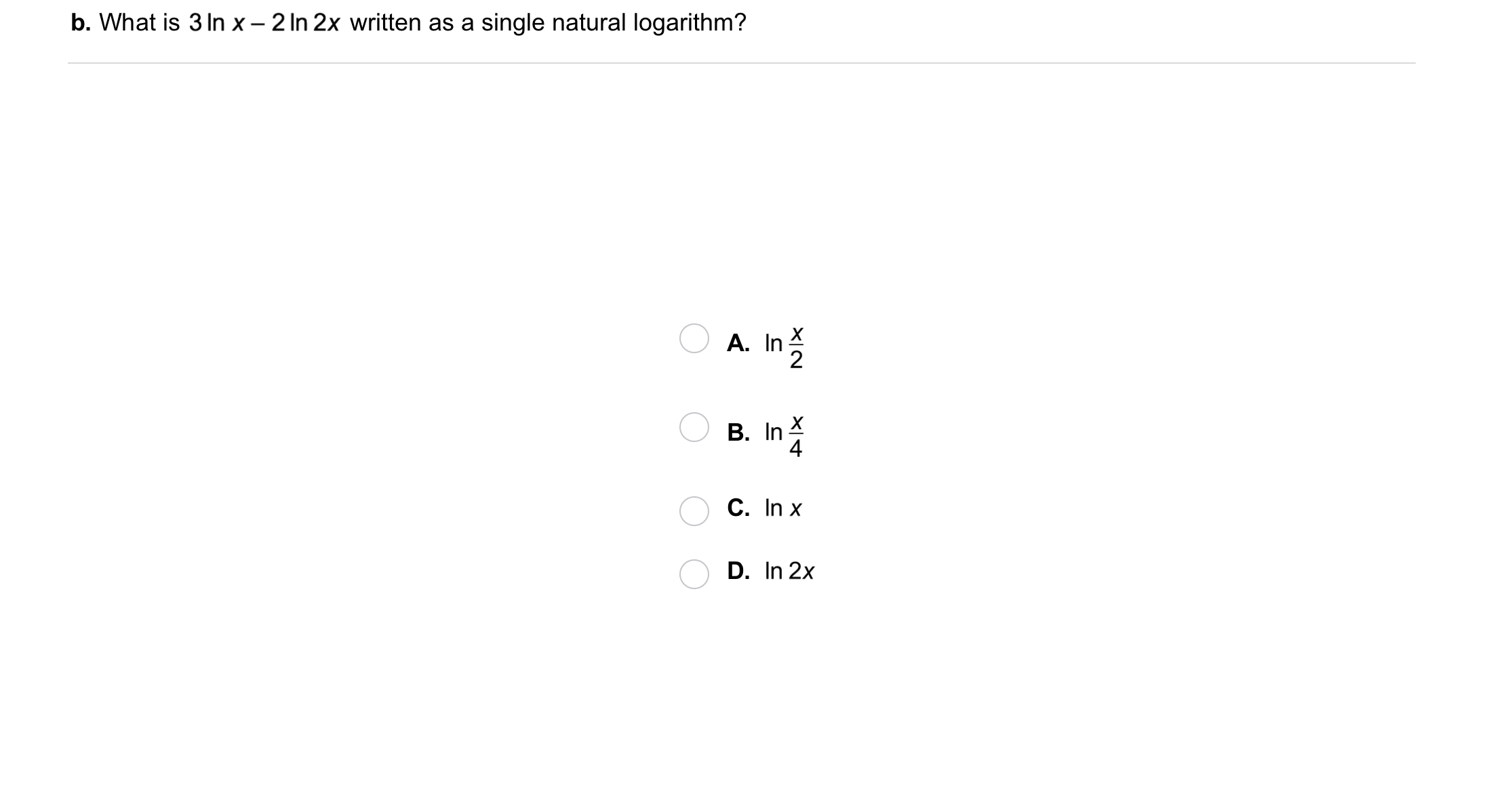
Problem 1 Got It?
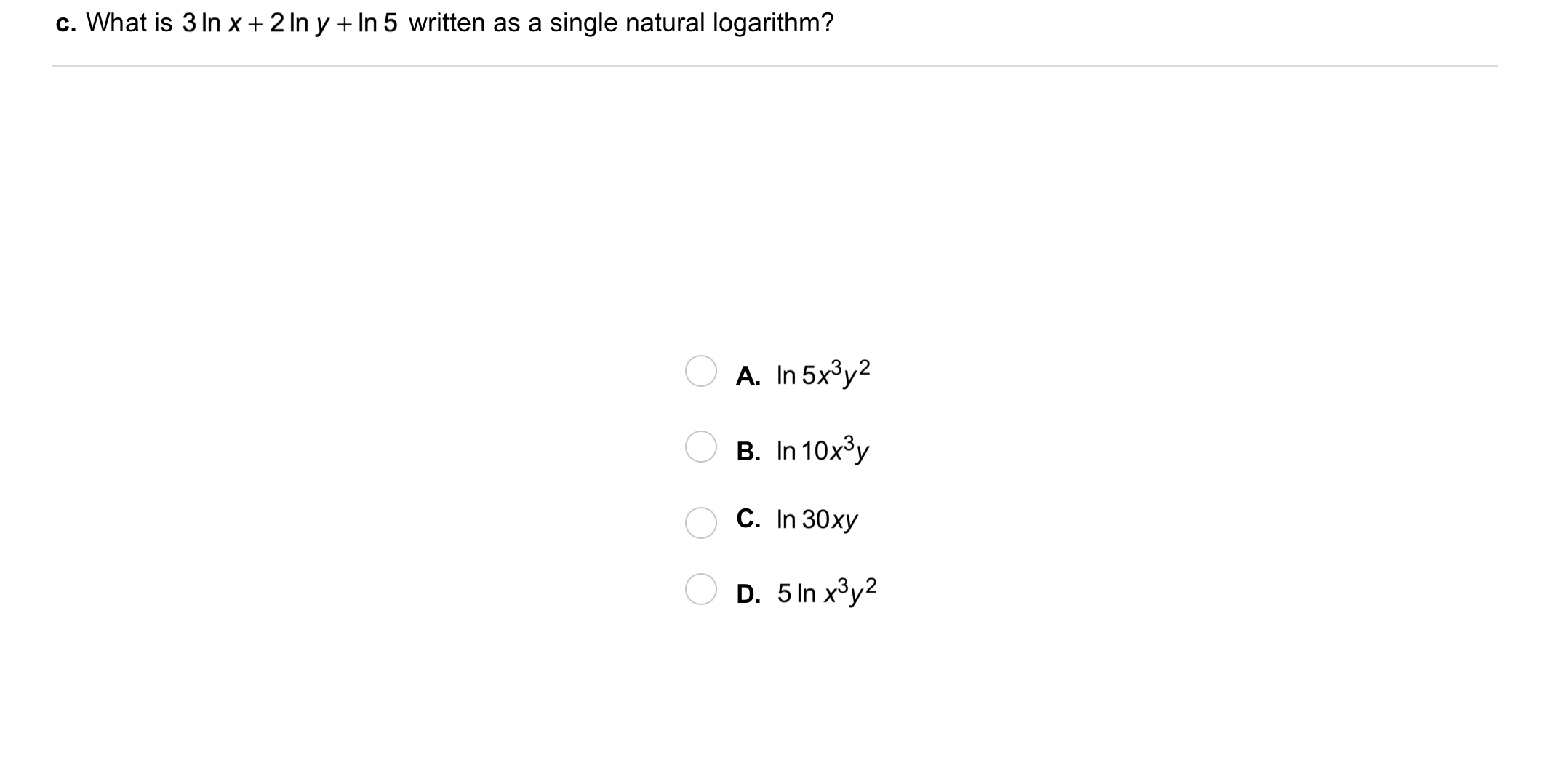
Problem 1 Got It?
Video Check: Select all that apply with regards to the video embedded directly above this item.
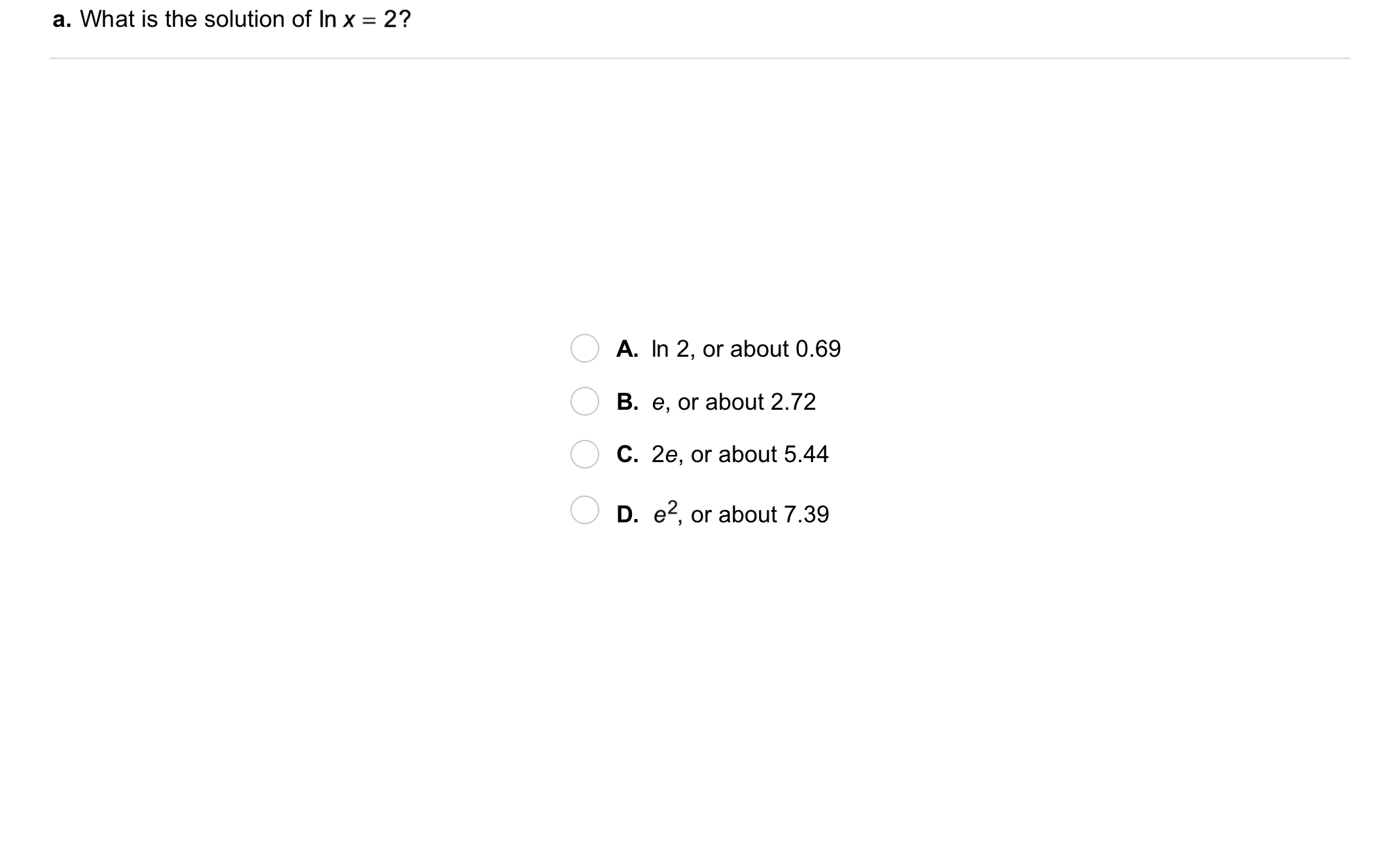
Problem 2 Got It?
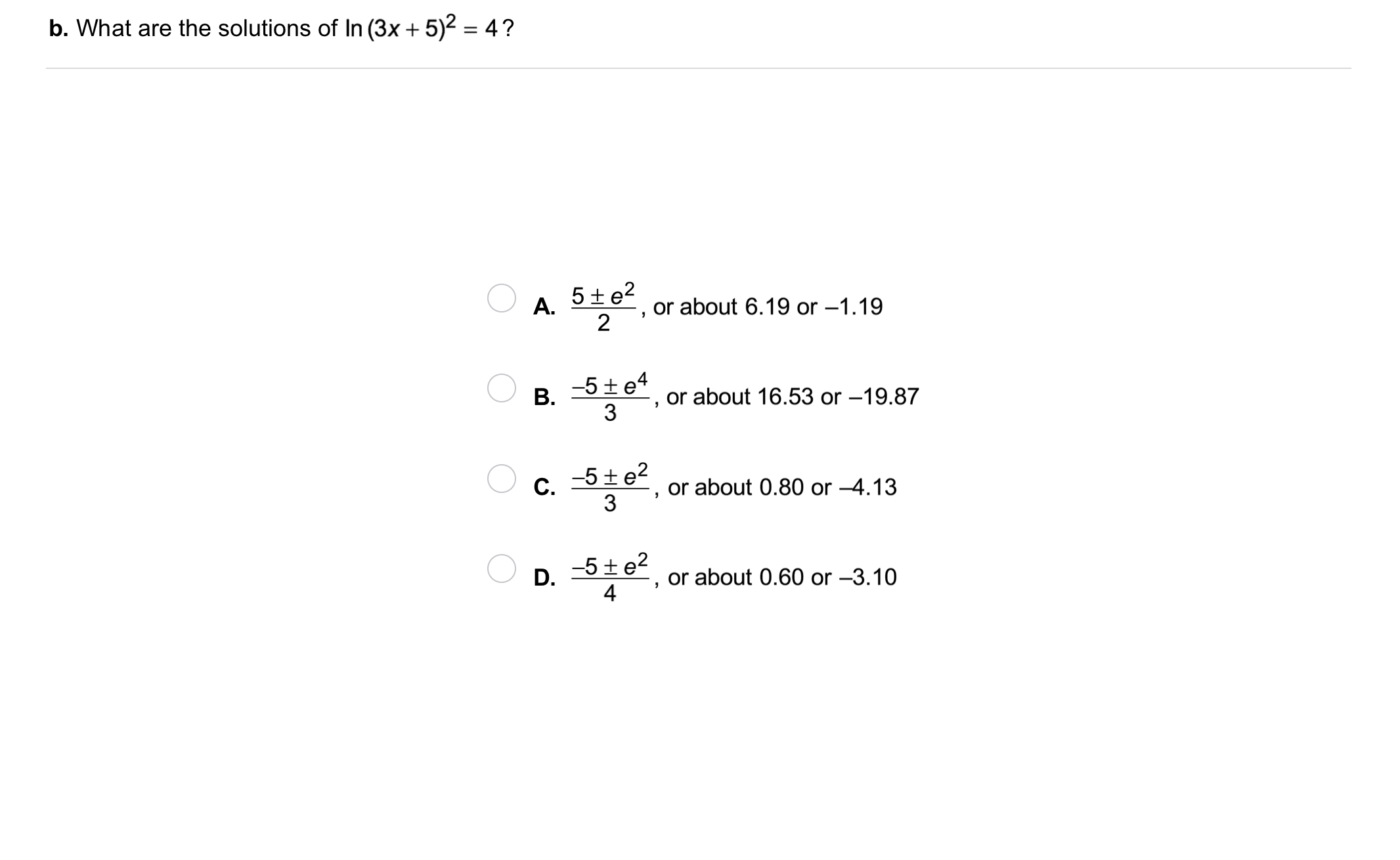
Problem 2 Got It?
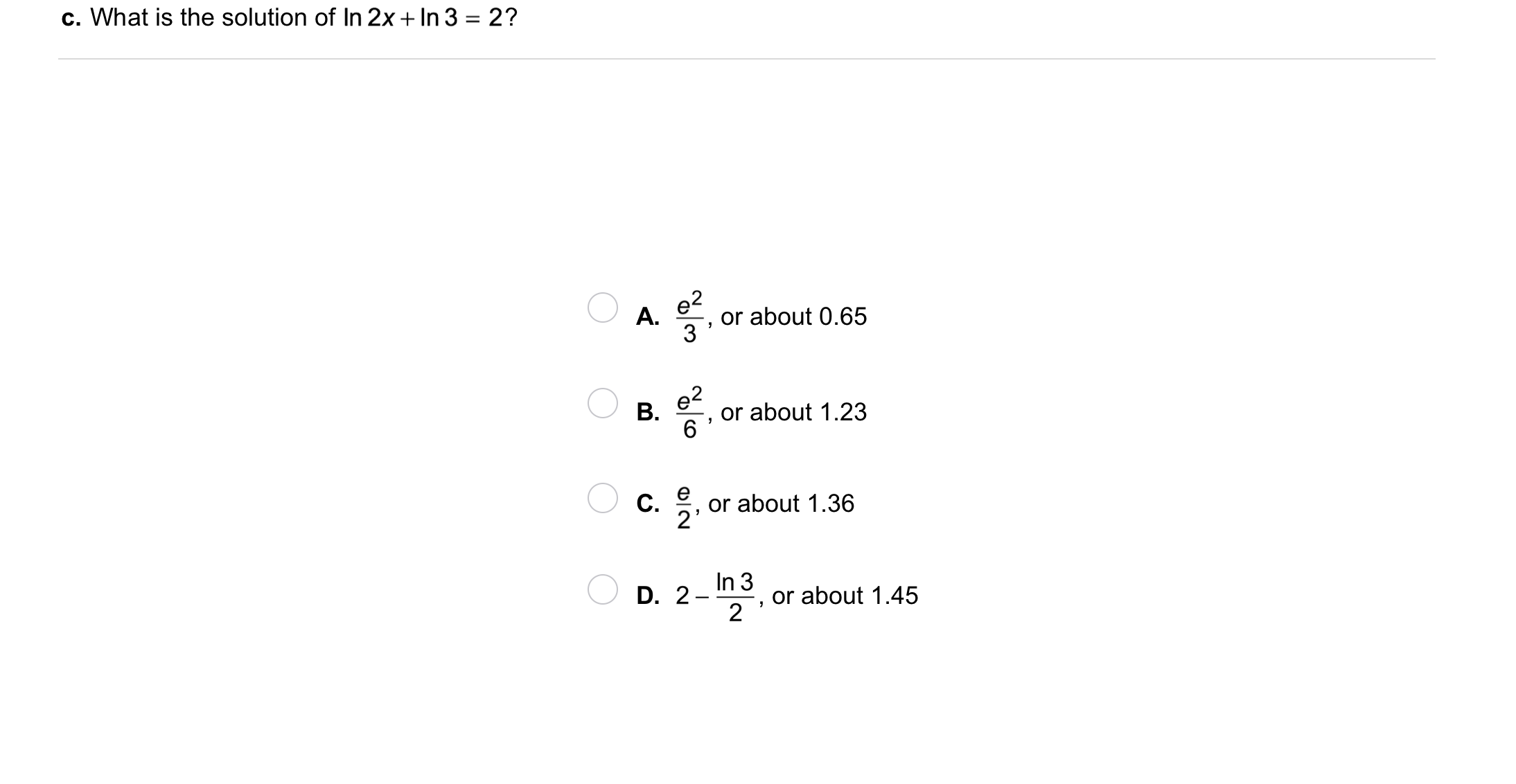
Problem 2 Got It?
Video Check: Select all that apply with regards to the video embedded directly above this item.

Take Note: Summarize the process of solving a natural log equation that is demonstrated in Problem 3.
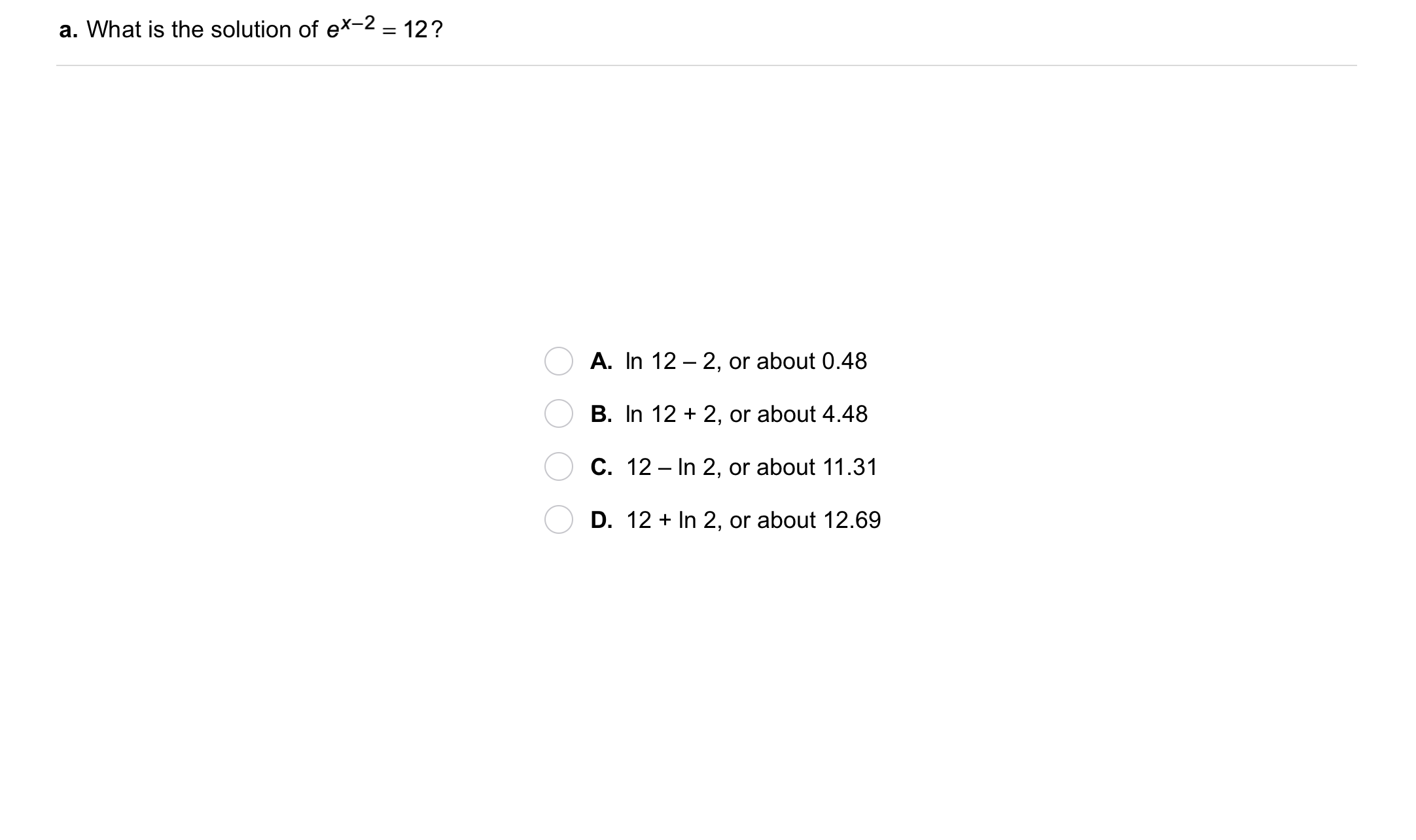
Problem 3 Got It?
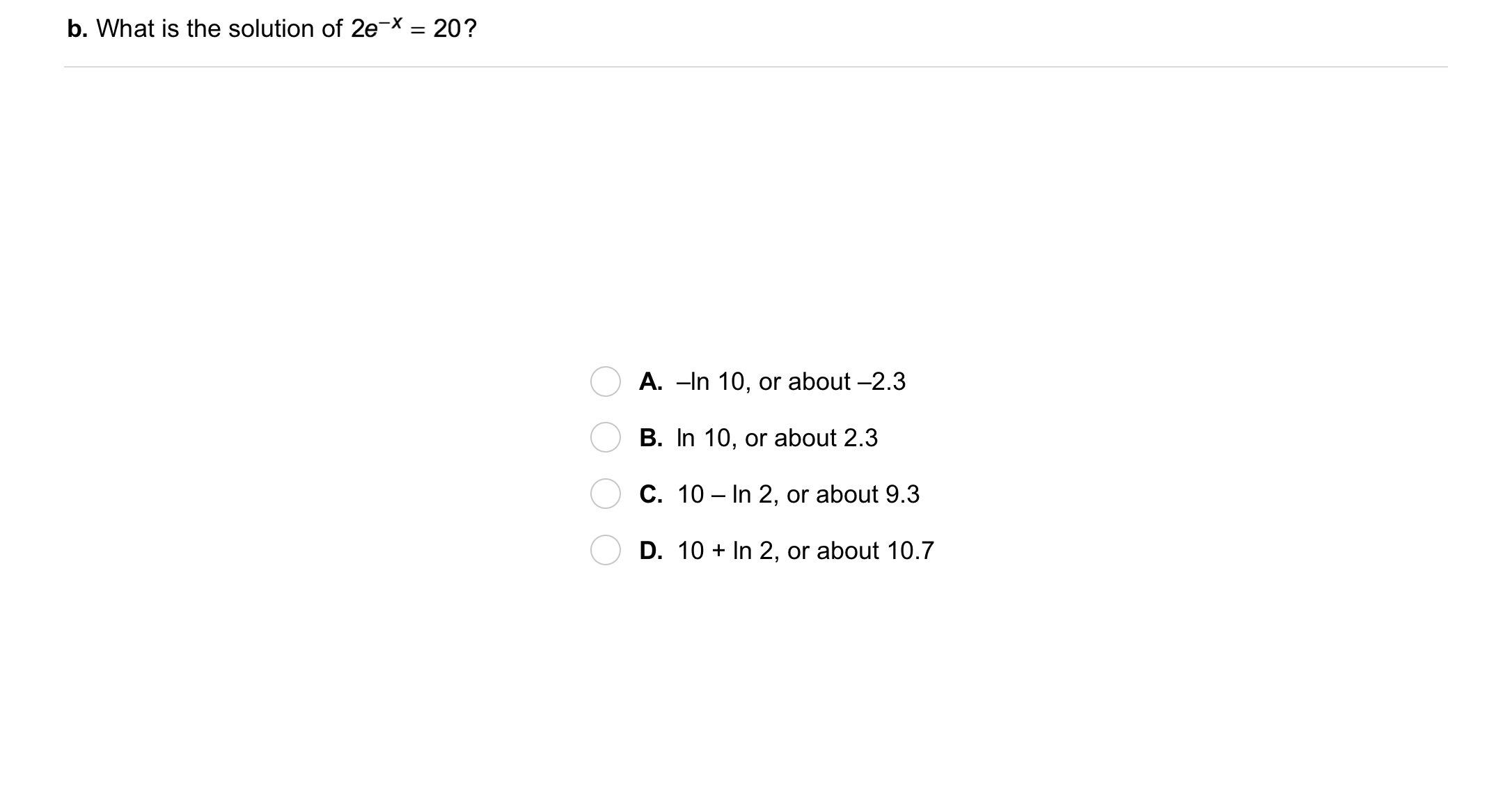
Problem 3 Got It?
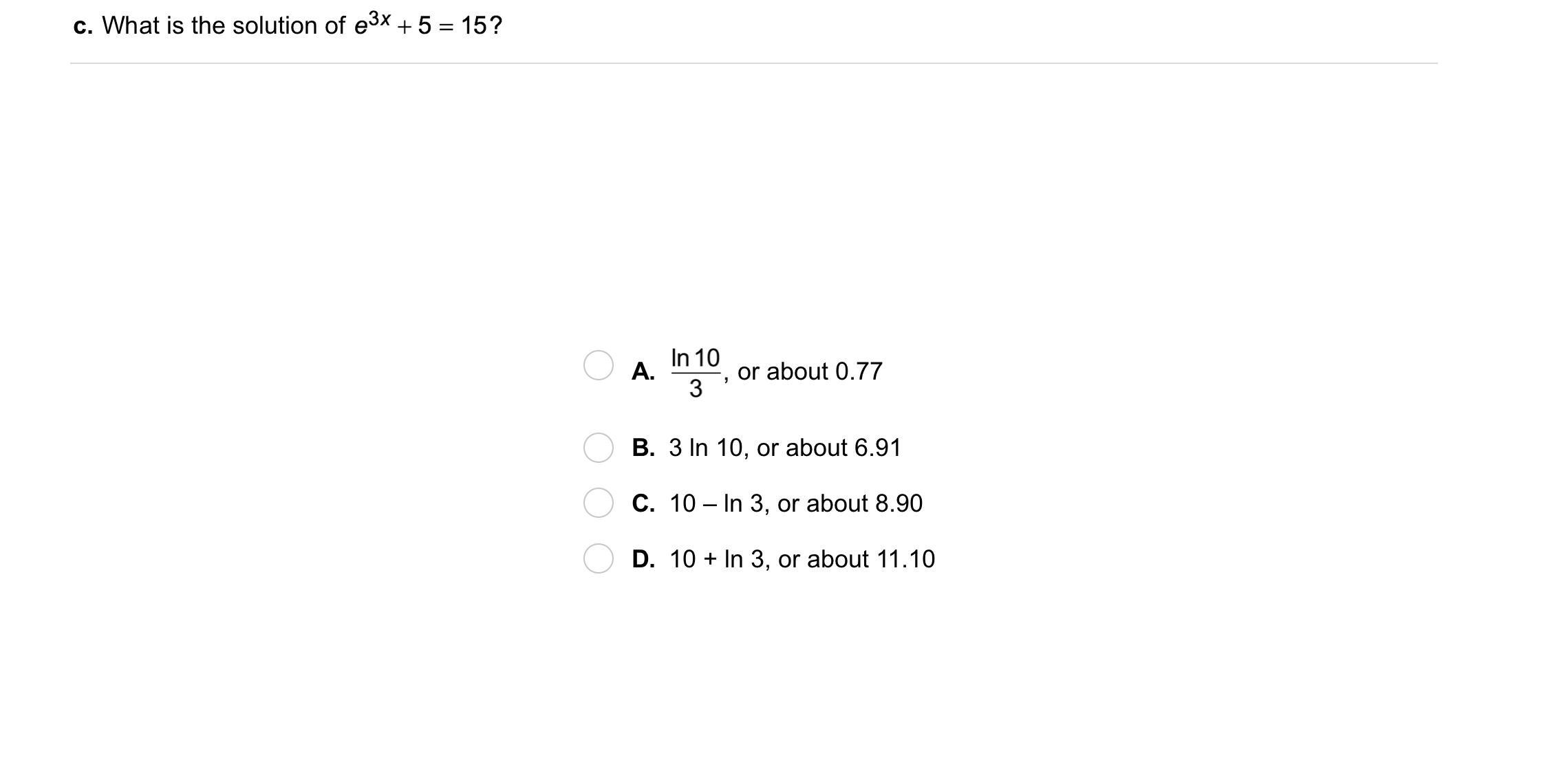
Problem 3 Got It?
Video Check: Select all that apply with regards to the video embedded directly above this item.
Problem 4 Got It? Space: A spacecraft can attain a stable orbit 300 km above Earth if it reaches a velocity of 7.7 km/s. The formula for a rocket's maximum velocity v in kilometers is shown below.
The booster rocket fires for t seconds and the velocity of the exhaust is c km/s. The ratio of the mass of the rocket filled with fuel to its mass without fuel is R.
PART 1: Yes. The maximum firing velocity of 15 km/s is greater than the 7.7 km/s needed for a stable orbit.
PART 1: No. The maximum firing velocity of 5.4 km/s is less than the 7.7 km/s needed for a stable orbit.
PART 2: Yes. You can increase the mass ratio R, increase the exhaust velocity c, or decrease the firing time t until v > 7.7 km/s.
PART 2: No. No matter how the mass ratio R, exhaust velocity c, and firing time t are adjusted, v will remain less than 7.7 km/s.
PART 1: A booster rocket for a spacecraft has a mass ratio of about 15, an exhaust velocity of 2.1 km/s, and a firing time of 30 s. Can the spacecraft achieve a stable orbit 300 km above Earth? Explain.
PART 2: Reasoning: Suppose a rocket, as designed, cannot provide enough velocity to achieve a stable orbit. Could alterations to the rocket make a stable orbit achievable? Explain.

🧠 Retrieval Practice:
Summarize the mathematical content of this lesson. What topics, ideas, and vocabulary were introduced?