Log in
Sign up for FREE
arrow_back
Library
P6 Final Exam 2018
By Nobert Roy
star
star
star
star
star
Share
share
Last updated over 6 years ago
30 questions
Add this activity
Note from the author:
1
1
1
1
1
1
1
1
1
1
1
1
1
1
1
1
1
1
1
1
1
1
1
1
1
1
1
1
1
1
All about force and electricity
Question 1
1.
Question 2
2.
Question 3
3.
Question 4
4.
Question 5
5.
Question 6
6.
Question 7
7.
Question 8
8.
Question 9
9.
Question 10
10.
Question 11
11.
Question 12
12.
Question 13
13.
Question 14
14.
Question 15
15.
Question 16
16.
Question 17
17.
Question 18
18.
Question 19
19.
Question 20
20.
Question 21
21.
Question 22
22.
Question 23
23.
Question 24
24.
Question 25
25.
Question 26
26.
Question 27
27.
Question 28
28.
Question 29
29.
Question 30
30.
What is the name for
negative charges
?
Protons
Electrons
Neutrons
Atoms
Which charges are
free
to move from one object to another?
Electrons
Protons
Neutrons
Diptons
If an object has
more
PROTONS than electrons, what is the charge?
Negative
Neutral
positive
None of the above
The act of charging materials by
rubbing
them together is called:
Charging by contact
Charging by friction
Charging by induction
Charging by reflex
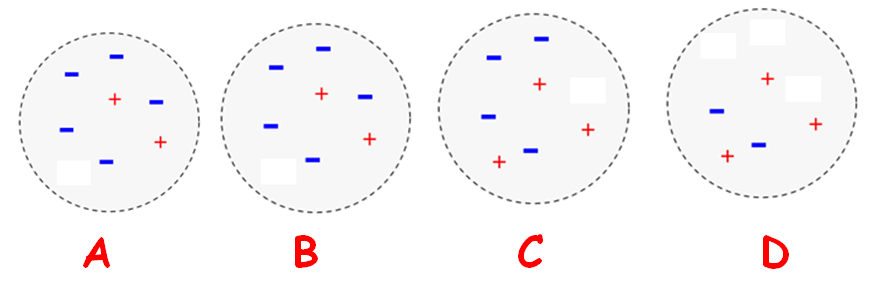
Image
A
above shows an object that is:
Positive
Negative
Neutral
None of the above
Image
B
above shows an object that is:
Positive
Negative
Neutral
None of the above
Image
C
above shows an object that is:
Positive
Negative
Neutral
None of the above
Image
D
above shows an object that is:
Positive
Negative
Neutral
None of the above
If you bring a charged object near, but
not touching
an object, the process is called:
Charging by contact
Charging by friction
Charging by Induction
None of the above
You
rub
a neutral object with a cloth. Which particles are transferred to the cloth?
Protons
Electrons
Neutrons
Nerons
When you charge
by contact
the object will get what charge fromthe charged object?
It will get the same charge
It will get the opposite charge
It will get no charge
None of the above
Which of the following is
NOT
an insulator?
wood
Plastic
copper
Glass
Which of the following is
NOT
a conductor?
Water
Metal
Rubber
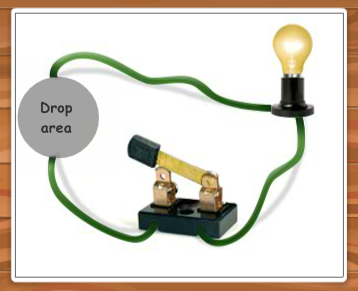
You
What is
missing
in the circuit above?
Bulb
Wire
Switch
cell
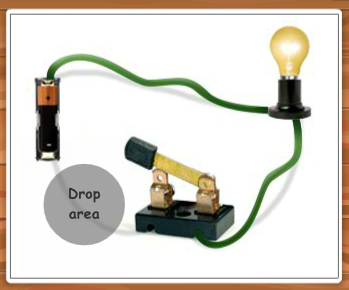
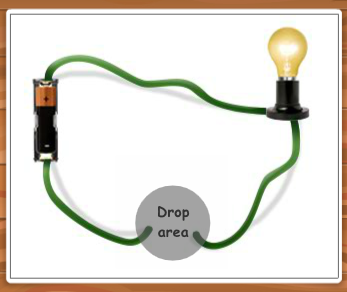
What is
missing
in the circuit above?
Bulb
Wire
Switch
Cell
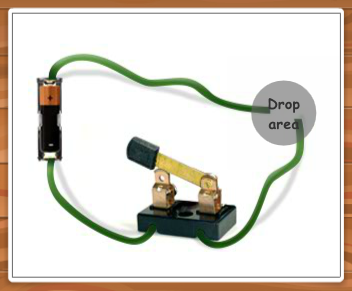
What is
missing
in the circuit above?
Bulb
Wire
Switch
cell
Bulb
Wire
Switch
Cell
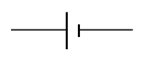
For what is this electrical symbol?
resistor
cell
buzzer
closed switch
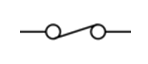
For what is this electrical symbol?
open swich
motor
buzzer
closed switch
For what is this electrical symbol?
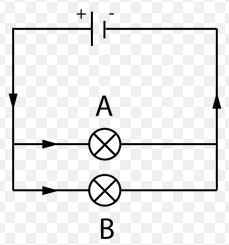
parrallel electric circuit
parallel open electrical circuit
series electrical circuit
series incomplete electrical circuit
For what is this electrical symbol?
parallel complete electrical circuit
series complete electrical circuit
parallel open electrical circiut
series open electrical circuit
When electric current creates magnetism it is known as:
electricity
current
electromagnetism
resultan force
To complete a circuit the switch must be:
open
closed
unattached
none of the above
In a parallel circiut the current________________________.
splits and goes through two components.
makes one circle
stays in one path
None of the above
In a series circuit, if one bulb goes out_________________________________.
the all go out
the rest stay on
half stay on and half go out
nothing happens
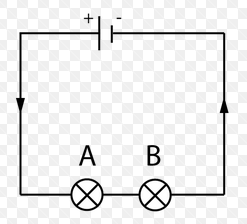
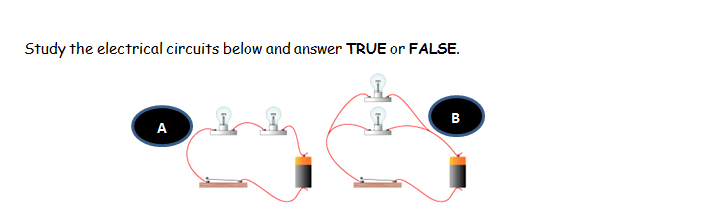
Circuit
'B'
in the diagram above is a parrallel circuit.
True
False
Circuit
'B'
has no electrical
wire.
True
False
In circuit ‘
A’
if one bulb is broken the other will not work.
True
False
When the switches are
open
the current goes through the path.
True
False
When the switches are
closed
the current goes through the path.
True
False