Log in
Sign up for FREE
arrow_back
Library
Story Elements Study Guide
By Joanna Cerisano
star
star
star
star
star
Share
share
Last updated over 6 years ago
18 questions
Add this activity
1
2
3
4
5
6
7
8
9
10
11
12
13
zoom_in
1
1
1
1
1
1
1
1
1
1
1
1
1
14
15
16
17
18
zoom_in
1
1
1
1
1
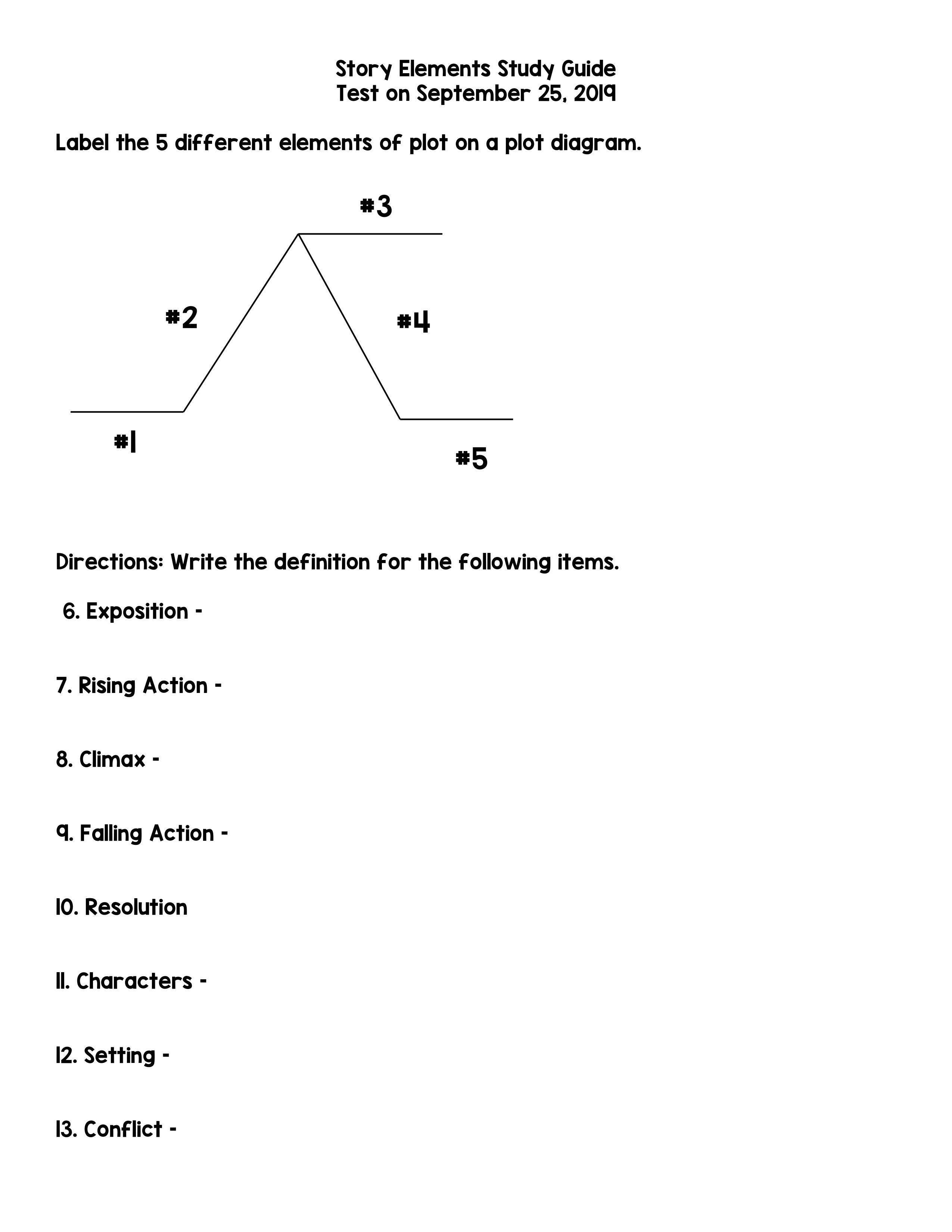
Question 1
1.
Exposition
Question 2
2.
Rising Action
Question 3
3.
Climax
Question 4
4.
Falling Action
Question 5
5.
Resolution
Question 6
6.
What is the definition of exposition?
A. The turning point in the story. The most interesting part.
B. The beginning of the story where characters and setting are introduced.
C. All of the events in the story leading up to the climax.
D. All of the events after the climax. The conflict begins to get resolved.
E. How the story ends and how the conflict gets resolved.
Question 7
7.
What is the definition of rising action?
A. All of the events after the climax. The conflict begins to get resolved.
B. How the story ends and how the conflict gets resolved.
C. The turning point in the story. The most interesting part.
D. All of the events in the story leading up to the climax.
E. The beginning of the story where characters and setting are introduced.
Question 8
8.
What is the definition of climax?
A. All of the events in the story leading up to the climax.
B. The beginning of the story where characters and setting are introduced.
C. All of the events after the climax. The conflict begins to get resolved.
D. How the story ends and how the conflict gets resolved.
E. The turning point in the story. The most interesting part.
Question 9
9.
What is the definition of falling action?
A. All of the events after the climax. The conflict begins to get resolved.
B. How the story ends and how the conflict gets resolved.
C. The beginning of the story where characters and setting are introduced.
D. The turning point in the story. The most interesting part.
E. All of the events in the story leading up to the climax.
Question 10
10.
What is the definition of resolution?
A. The turning point in the story. The most interesting part.
B. The beginning of the story where characters and setting are introduced.
C. All of the events after the climax. The conflict begins to get resolved.
D. All of the events in the story leading up to the climax.
E. How the story ends and how the conflict gets resolved.
Question 11
11.
What is the definition of characters?
A. Where and when the story takes place
B. People and animals in the story
C. The problem in the story
Question 12
12.
What is the definition of setting?
A. Where and when the story takes place
B. People or animals in the story
C. The problem in the story
Question 13
13.
What is the conflict in the story?
A. Where and when the story takes place
B. People or animals in the story
C. The problem in the story
Question 14
14.
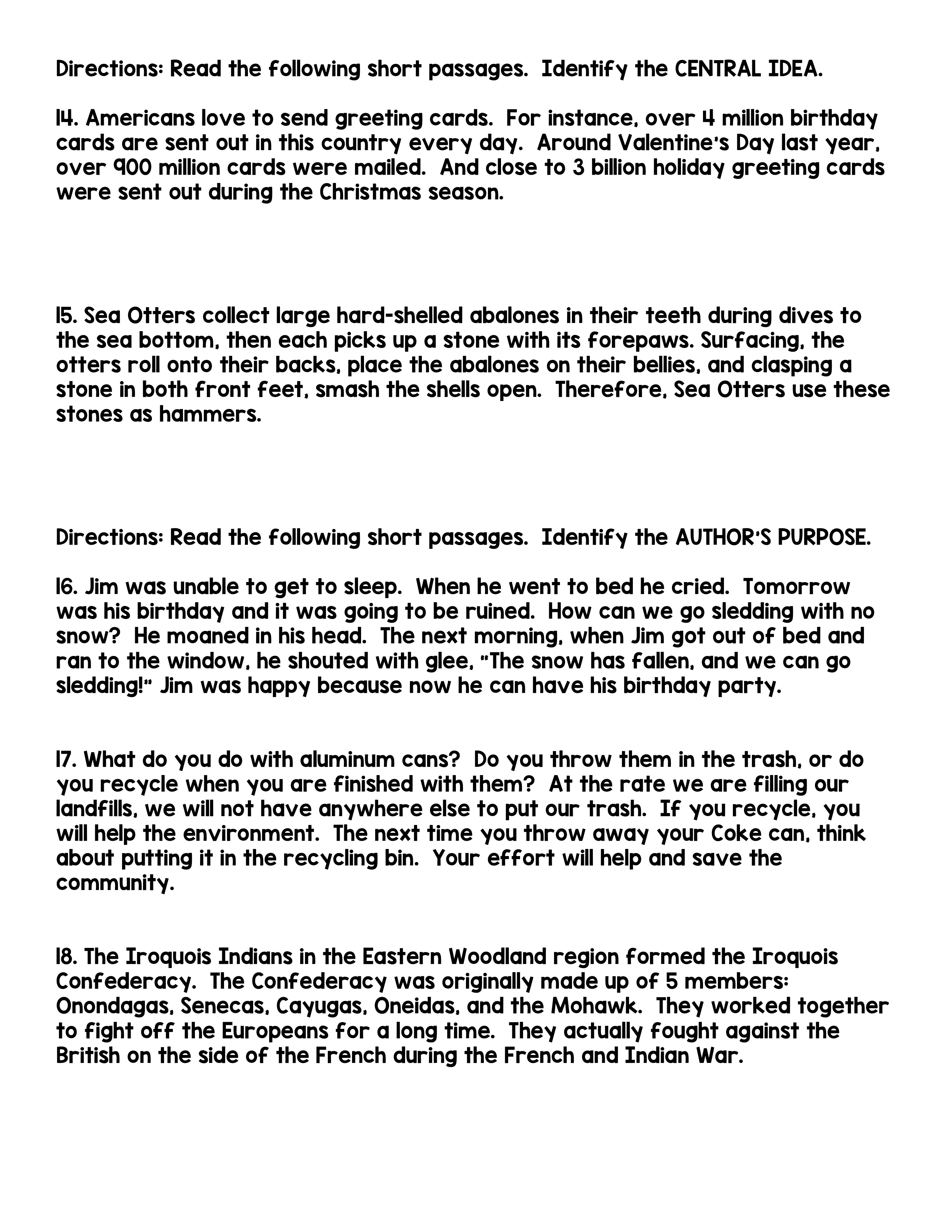
What is the central idea of the following passage?
A. Greeting cards are expensive to buy.
B. Americans love sending greeting cards.
C. Valentine's Day is the most popular holiday.
D. Everyone always gets a greeting card on their birthday.
Question 15
15.
What is the central idea of the following passage?
A. Sea Otters are cute animal.
B. There are large rocks in the ocean.
C. Sea Otters like to swim on their bellies.
D. Sea Otters use stones as hammers.
Question 16
16.
What is the author's purpose?
A. persaude
B. inform
C. entertain
Question 17
17.
What is the author's purpose?
A. persaude
B. inform
C. entertain
Question 18
18.
What is the author's purpose?
A. persaude
B. inform
C. entertain