Log in
Sign up for FREE
arrow_back
Library
10_Phys Summative Unit 2 Trim 2
By Lester Orellana
star
star
star
star
star
Share
share
Last updated almost 6 years ago
35 questions
Add this activity
Note from the author:
Energies and the thermal physics.
1
1
1
1
1
1
1
1
1
1
1
1
1
1
1
1
1
1
1
1
1
1
1
1
1
1
1
1
1
1
1
1
1
1
1
Question 1
1.
The measure of energy transfer that occurs when an object is moved over a displacement by an external force in the same direction
Work
Kinetic Work Energy
Lifting an object with Potential Energy
Kinetic Energy
Question 2
2.
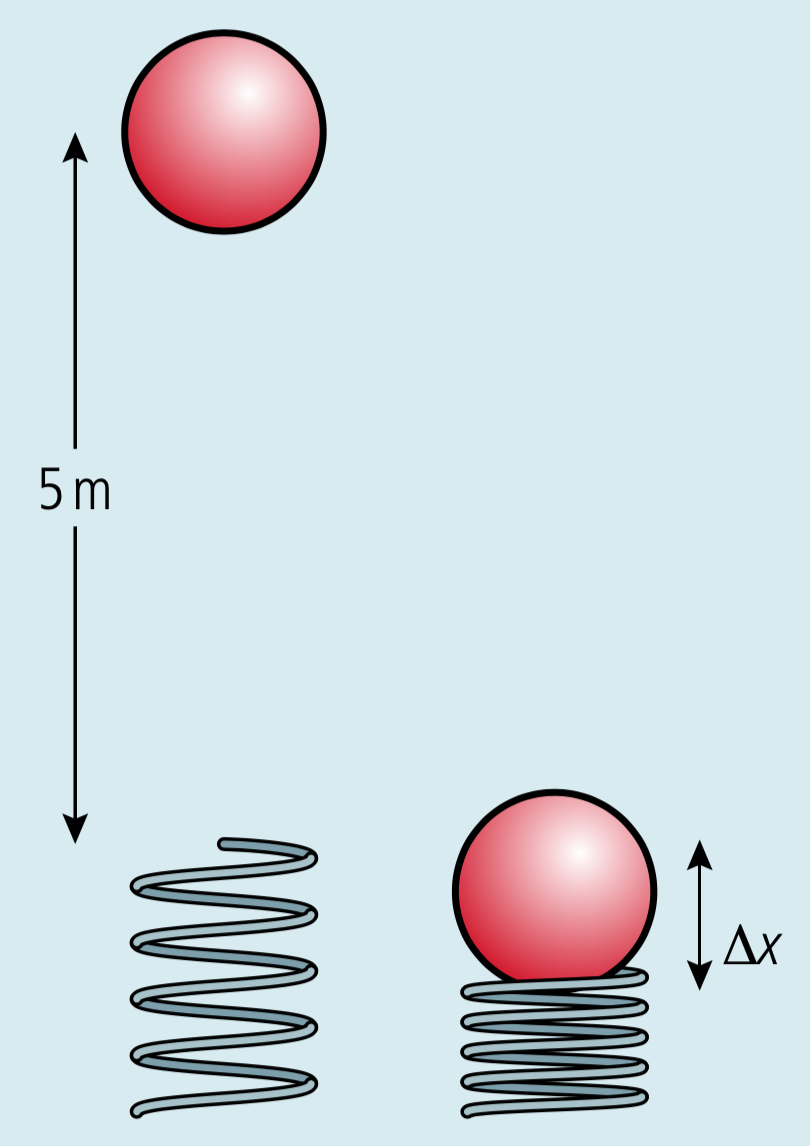
Write the
equation
of conservation of energy:
E
k
= GPE + E
p
E
k
= GPE
E
k
+ GPE = E
k
+ E
p
E
k
= GPE + E
k
Question 3
3.
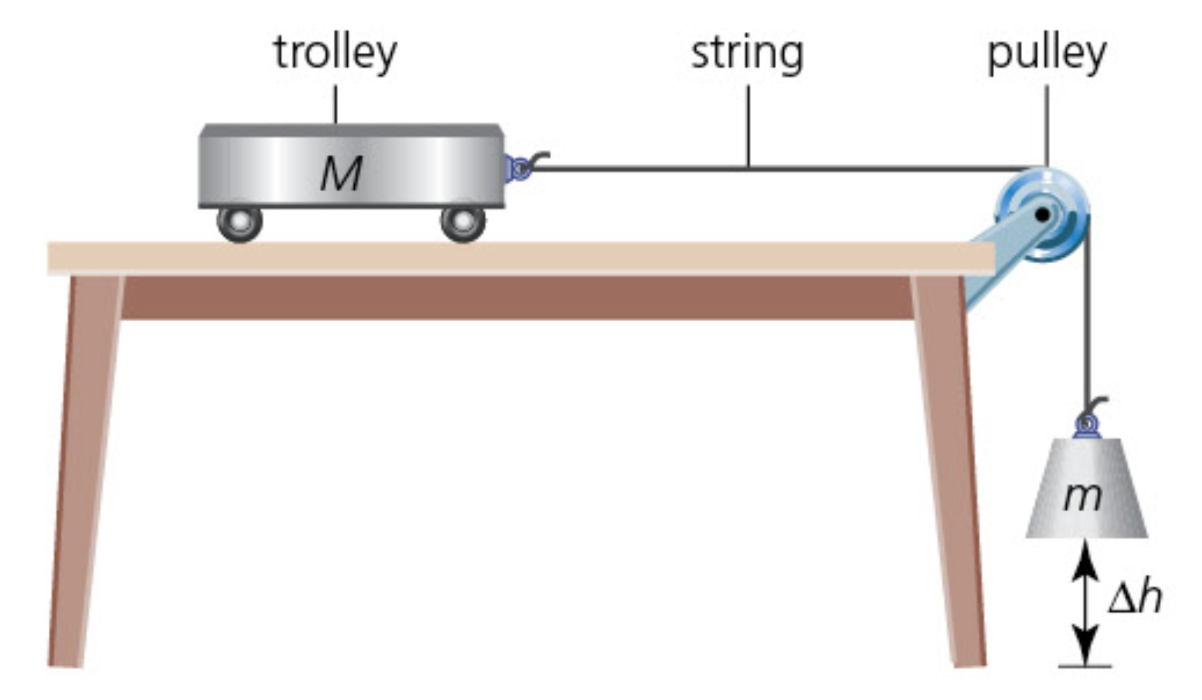
Find the
equation
of conservation of energy for this problem:
E
K
= E
P
+ GPE
E
K
= E
P
GPE = E
P
GPE = E
K
Question 4
4.
Before
the trolley is moving, Find all the possible initial energies in both bodies:
GPE
M
+ GPE
m
GPE
M
EK
M
+ GPE
m
GPE
m
Question 5
5.
The trolley moved and right before object m hits the ground, What are the final energies?
E
K m
+ E
K M
EKM
E
K M
+ ∆Q
m
GPE
M
+ E
K M
Question 6
6.
The capacity for doing work.
Heat
Unbalanced force
Kinetic Energy
Energy
Question 7
7.
GPE is the ________ an object has due to its position above a relative ground.
displacement
work
distance
energy
Question 8
8.
___ is an energy stored as a result of deformation of an elastic object
Spring Constant
Force of Spring
Elastic Potential Energy
Elastic Spring Constant
Question 9
9.
____ is the total of the potential energy between molecules and their random kinetic energy.
Internal Heat
Internal Energy
Internal Work
Latent Heat
Question 10
10.
In E
k
= 1/2 m v
2
... the unit for the letter "m" is:
mass
kilograms
Newtons
Joules
Question 11
11.
The letter "k" represents
Spring Latent
Elastic Constant
Spring Elastic
Spring Constant
Question 12
12.
The work done can be like:
Change in Spring Constant
Change of Force
Change in Energy
Change in Velocity
Question 13
13.
The Internal Energy here is
Small Random Kinetic Energy and large Potential Energy
Just Random Kinetic Energy
Just Random Kinetic Energy and small Potential Energy
Large Random Kinetic Energy and small Potential Energy
Question 14
14.
Temperature is:
Average Internal Energy of Molecules
Average Random Energy of Molecules
Average Potential Energy of Molecules
Average Randome Kinetic Energy of Molecules
Question 15
15.
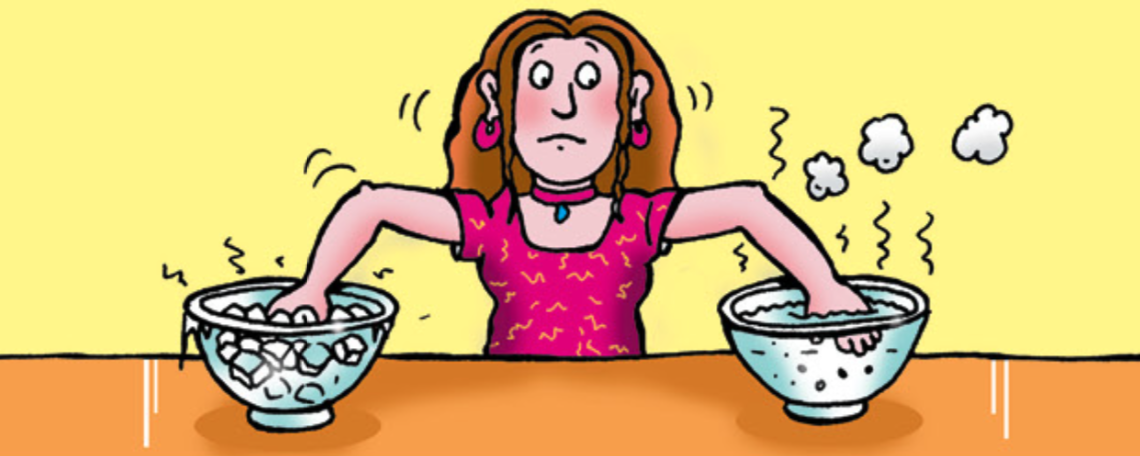
The bowl that is on the right hand of the girl will ...
gain energy because the ice will freeze.
lose energy because the ice will melt.
gain energy because the ice will melt.
lose energy because the ice will freeze.
Question 16
16.
Heat is
Transfer of Random Kinetic Energy
Transfer of potential energy
Transfer of internal energy
Transfer of thermal energy
Question 17
17.
The heat will only flow from ...
Low Temperature object to Higher temperature object.
High Temperature object to lower temperature object.
Question 18
18.
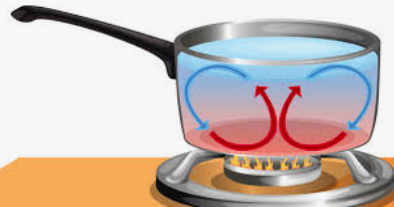
The type of transfer of Heat is ...
Convection, because is in contact the metal and the fluid.
Conduction, because is in contact with the metal and the liquid.
Conduction, because is using the fluids
Convection, Because is using the fluids.
Question 19
19.
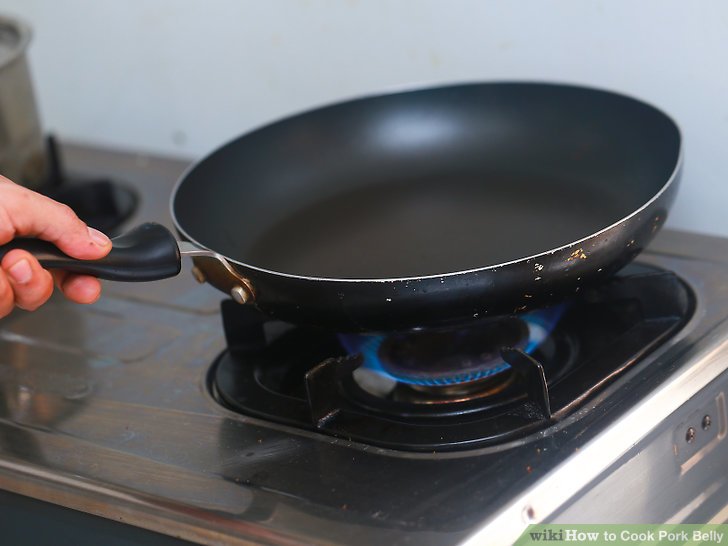
What should be the specific heat capacity (c) of the handle?
Low "c", takes a short time to change 1 ºC in 1 kg
High "c", takes a short time to change 1 ºC in 1 kg
High "c", takes a lot of time to change 1 ºC in 1 kg
Low "c", takes a lot of time to change 1 ºC in 1 kg
Question 20
20.
Melting and Evaporation. The characteristic they have in common is ...
Both need the same Potential Energy of molecules
Both change the Average Random Kinetic Energy
Both change the Potential Energy of molecules
Both need different temperature
Question 21
21.
is the process where it breaks the chemical bonds
Melting
Evaporation
Freezing
Condensation
Question 22
22.
is the process where molecules used to be fixed but now are flexible.
Condensation
Freezing
Evaporation
Melting
Question 23
23.
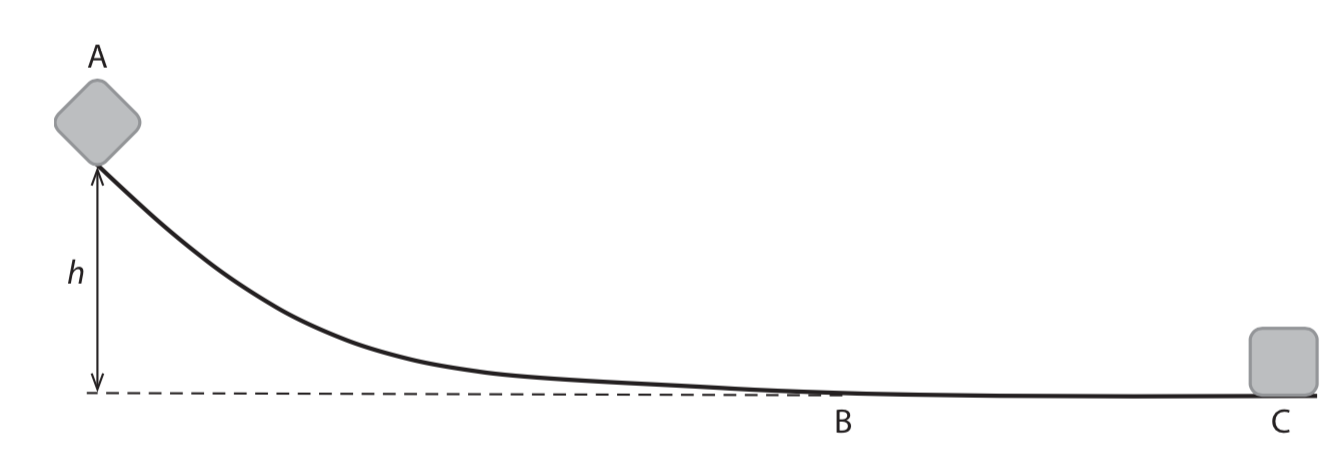
If there is friction in one of the sections of the path, Where must be the section used to stop the sliding object?
h
A - h
B - C
A - B
Question 24
24.
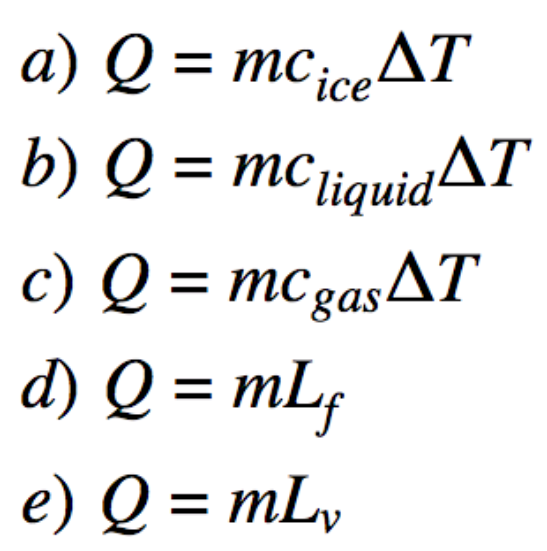
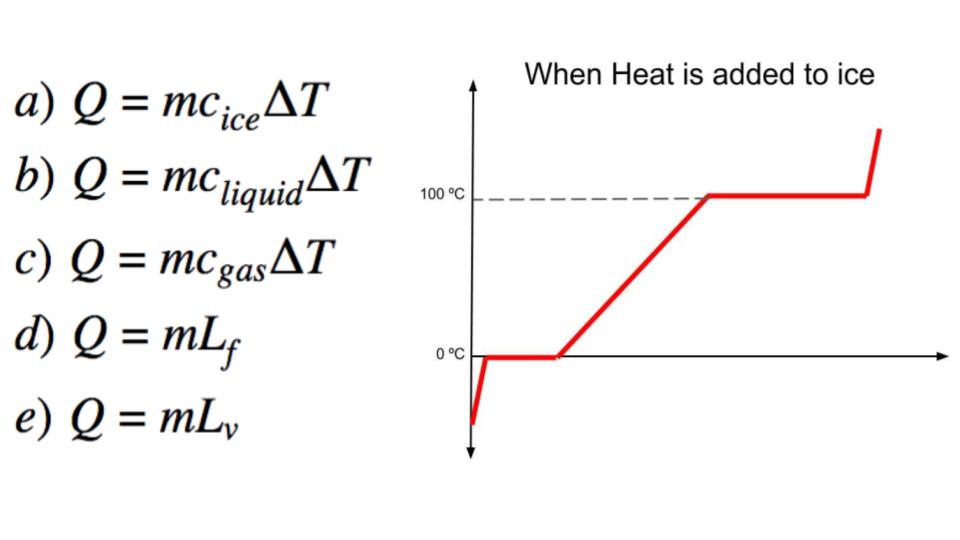
What is the energy needed in the melting process?
d
b
c
a
e
Question 25
25.
What is the energy needed in the condensation process?
e
c
d
a
b
Question 26
26.
What is the energy needed to change the average random kinetic energy in the gas?
b
a
d
c
e
Question 27
27.
What is the energy needed to change the average random kinetic energy in the solid?
e
b
d
a
c
Question 28
28.
What is the energy needed to break the chemical bonds?
c
d
b
a
e
Question 29
29.
What is the energy needed to melt ice 0ºC to water liquid 0ºC?
a
a + c
c
d
b + d
Question 30
30.
The heat needed to convert ice -20ºC to liquid water 0ºC
a + e
a + d
d + e
d + b
Question 31
31.
The heat needed to convert ice 0ºC into gas at 100ºC
d + c + a
d + b + c
d + b + e
d + c + e
Question 32
32.
The heat needed to convert liquid at 0ºC into a gas at 100ºC.
d + a
b + d
b + e
d + e
Question 33
33.
The heat needed to convert ice at 0ºC into a gas at 150ºC.
d + a + e + b
d + b + e + a
d + a + e + c
d + b + e + c
Question 34
34.
The heat needed to convert liquid at 0ºC into gas at 150ºC.
b + e + c
b + e + d
d + b + c
d + b + a
Question 35
35.
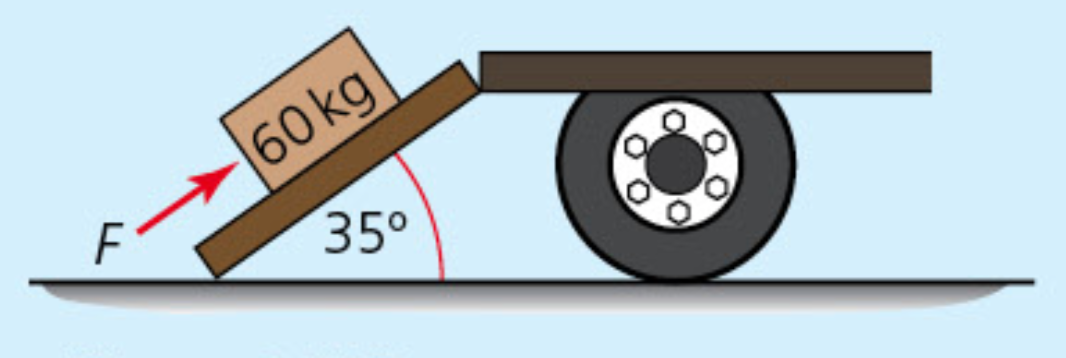
How much is the weight of the box?
60 N
60 x 35º
60 x 9.81
60 kg