Lesson 1: Mathematical Relationships

Last updated about 6 years ago
5 questions
Does it seem that every year your textbooks have more pages in them than the books you used in the previous year? And does it also seem thath they get heavier each year? If you have noticed these changes, you have made an observation. If you have wondered whether the increase in pages causes the increase in weigh, you are asking if the two factors are related. You are thinking like a scientist. If you decided to count pages and weigh the books to investigate your observation, you would be acting like a scientist.
1

What do you think it means to "act" like a scientist?

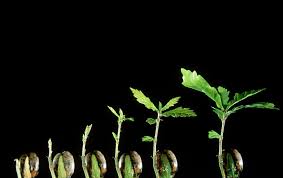
Scientists ask questions about the world around them. They make observations and conduct experiments to try to answer their questions. In their experiments, they collect observations and measurements called data. Observations can be in the form of written description or picutures. For example, a scientist studying plant growth might include drawings or photographs of plants as part of the data gathered.

1

How do scientists try to answer their questions?

1

What is data?

1

What is one way scientists can record observations?

When scientists study data, or information they collect in an experiment, they look for relationships between sets of numbers. For example, in the plant study shown above, the results indicate the taller the plant grows, the more leaves it has. A study of metals may show that the more a metal rod is heated, the longer it becomes. You noticed that the more pages a textbook has, the more it weighs. These are qualitative statements. They describe relationships in words.

When numbers are used to describe the results of an experiment, the statement is quantitative. You can remember the difference between the two kinds of statements if you rememebr that a quantity refers to a number or an amount. Try telling the difference between qualitative and quantitative data in the exercise below.
8

Identify the following observations as quantitative or qualitative.

  • The solution became hotter.
  • Temperature change: 22 C to 86 C
  • The insect was large.
  • The fossil is dated at 15,680 years old
  • The fossil looked old.
  • Length = 2.1 cm
  • The car moved fast.
  • Speed: 100 km/hr
  • QUANTITATIVE
  • QUALITATIVE