Speed, Acceleration, and Momentum
star
star
star
star
star
Last updated almost 7 years ago
14 Nsɛmmisa
10
10
10
10
10
10
10
10
10
10
10
10
10
10
Which best describes average speed?
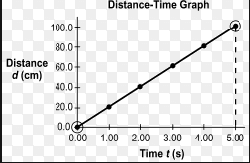
Look at the distance-time graph above. What is the total distance traveled?
Refer to the graph above again. Over what period of time does the motion occur?
Look at the graph above. Given that speed = distance / time, calculate the speed of the object. Show your work in the space below.
A kayaker paddles along a river for four hours. In that time, she manages to move a total of 20 miles. What is the average speed of the kayak for this trip?
What is acceleration? Type a definition for this term in your own words.
What is the formula for acceleration? Make sure your answer includes a key explaining what a, vf, vi, and t stand for.
A ball begins rolling down a hill. After 5 seconds, its velocity is 10 meters per second. What is the acceleration of the ball? See page 346 in your book for help!
A vehicle brakes from 30mph to 5 mph over a period of 10 seconds. What is the vehicles acceleration?
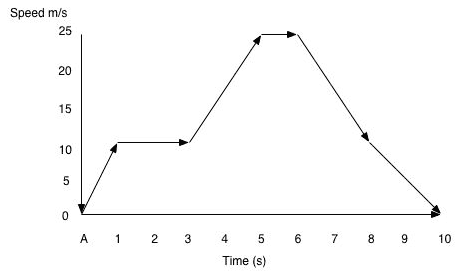
Over which time period does positive acceleration occur?
Over which time period does negative acceleration occur?
What is the formula for momentum? Be sure to include a key showing what p, m, and v stand for.
Which has the most momentum?
Which has the most momentum?