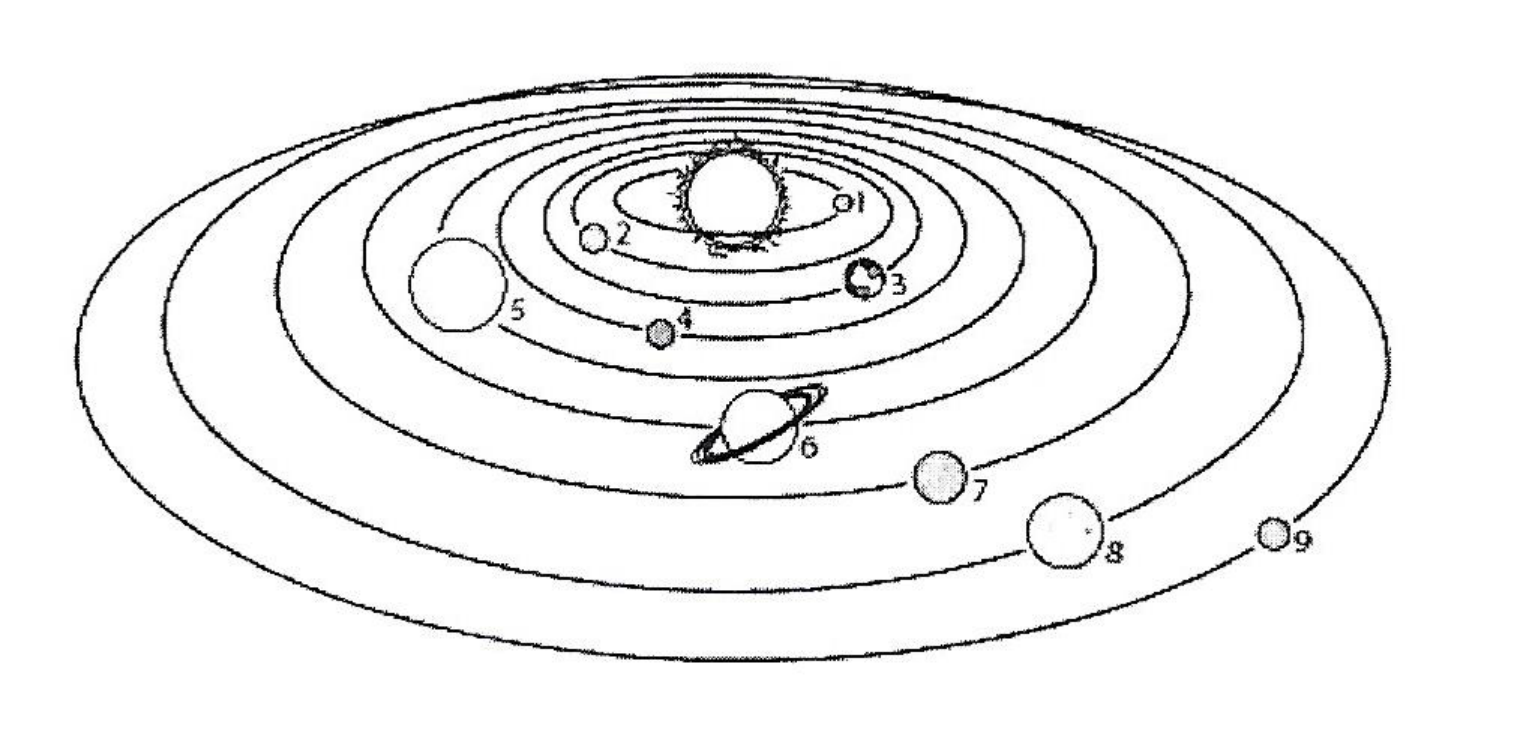
To which of the two main groups of planets does Earth belong?
What tool made possible the discovery of additional planets?
A common method for scientists to measure distances within the solar system is to use
What evidence suggests that Mars once had a warmer climate?
Which terrestrial planet has a day that is over two Earth months long?
Why is Venus sometimes called Earth's twin?
What is one factor that makes life possible on Earth?
What does the extra energy that Saturn gives off suggest about the planet?
Why is the planet Uranus considered a gas giant?
What is unusual about Pluto's moon Charon?
What evidence supports the current theory about our moon's origin?
What causes the phases of the moon?
What happens during a total solar eclipse?
Why do planets or moons with atmospheres have fewer impacts?
What is the main difference between an asteriod and a meteoroid?
Why are the inner planets called terrestrial planets?
What is the most useful unit for measuring distances within the solar system?
Why do active planets generally have fewer impacts than bodies like the moon?
What is one way that gas giants differ from the terrestrial planets?
What is the evidence that Mars once had liquid water?
Which of the following is evidence that Pluto is not a gas giant?
Which of these average distances is the astronomical unit based on?
How do gas giants differ from terrestrial planets?
Which number represents the orbit of Venus?
Beyond what numbered orbit are the comets of the Kuiper belt found?
Word Bank
Earth Mars Jupiter Venus meteorite(s) prograde motion retrograde motion asteriod(s) gas giant retrograde prograde terrestrial planets comet(s) meteor(s) satellite(s) phases solar eclipse lunar eclipse period of rotation period of revolution
_______________ are meteoroids that fall to Earth.
Word Bank
Earth Mars Jupiter Venus meteorite(s) prograde motion retrograde motion asteriod(s) gas giant retrograde prograde terrestrial planets comet(s) meteor(s) satellite(s) phases solar eclipse lunar eclipse period of rotation period of revolution
Most asteriods in our solar system are found between ___________________ and _____________________.
Word Bank
Earth Mars Jupiter Venus meteorite(s) prograde motion retrograde motion asteriod(s) gas giant retrograde prograde terrestrial planets comet(s) meteor(s) satellite(s) phases solar eclipse lunar eclipse period of rotation period of revolution
The counterclockwise spin of a planet or moon as seem from above the planet's North Pole is _________________.
Word Bank
Earth Mars Jupiter Venus meteorite(s) prograde motion retrograde motion asteriod(s) gas giant retrograde prograde terrestrial planets comet(s) meteor(s) satellite(s) phases solar eclipse lunar eclipse period of rotation period of revolution
Unlike most planets, Venus has a(n) __________________ rotation, which means that it appears to spin in a clockwise direction.
Word Bank
Earth Mars Jupiter Venus meteorite(s) prograde motion retrograde motion asteriod(s) gas giant retrograde prograde terrestrial planets comet(s) meteor(s) satellite(s) phases solar eclipse lunar eclipse period of rotation period of revolution
A meteoroid is called a(n) ___________________ only after it has struck Earth's surface.
Word Bank
Earth Mars Jupiter Venus meteorite(s) prograde motion retrograde motion asteriod(s) gas giant retrograde prograde terrestrial planets comet(s) meteor(s) satellite(s) phases solar eclipse lunar eclipse period of rotation period of revolution
The inner planets of our solar system are called ________________________.
Word Bank
Earth Mars Jupiter Venus meteorite(s) prograde motion retrograde motion asteriod(s) gas giant retrograde prograde terrestrial planets comet(s) meteor(s) satellite(s) phases solar eclipse lunar eclipse period of rotation period of revolution
Some scientists refer to _______________ as "dirty snowballs" because they are composed of ice, rock and cosmic dust.
Word Bank
Earth Mars Jupiter Venus meteorite(s) prograde motion retrograde motion asteriod(s) gas giant retrograde prograde terrestrial planets comet(s) meteor(s) satellite(s) phases solar eclipse lunar eclipse period of rotation period of revolution
When the Earth's shadow falls on the moon, a ________________ occurs.
Word Bank
Earth Mars Jupiter Venus meteorite(s) prograde motion retrograde motion asteriod(s) gas giant retrograde prograde terrestrial planets comet(s) meteor(s) satellite(s) phases solar eclipse lunar eclipse period of rotation period of revolution
The amount of time an object takes to orbit around another body once is its ____________________.
Word Bank
Earth Mars Jupiter Venus meteorite(s) prograde motion retrograde motion asteriod(s) gas giant retrograde prograde terrestrial planets comet(s) meteor(s) satellite(s) phases solar eclipse lunar eclipse period of rotation period of revolution
The amount of time an object takes to rotate once is its _____________________.
Word Bank
Earth Mars Jupiter Venus meteorite(s) prograde motion retrograde motion asteriod(s) gas giant retrograde prograde terrestrial planets comet(s) meteor(s) satellite(s) phases solar eclipse lunar eclipse period of rotation period of revolution
The different appearences of the moon are called __________________.
Word Bank
Earth Mars Jupiter Venus meteorite(s) prograde motion retrograde motion asteriod(s) gas giant retrograde prograde terrestrial planets comet(s) meteor(s) satellite(s) phases solar eclipse lunar eclipse period of rotation period of revolution
When the moon's shadow falls on part of the Earth, a ____________________ occurs.
Word Bank
Earth Mars Jupiter Venus meteorite(s) prograde motion retrograde motion asteriod(s) gas giant retrograde prograde terrestrial planets comet(s) meteor(s) satellite(s) phases solar eclipse lunar eclipse period of rotation period of revolution
Frozen bodies made of ice, rock and dust are called _____________________.
Word Bank
Earth Mars Jupiter Venus meteorite(s) prograde motion retrograde motion asteriod(s) gas giant retrograde prograde terrestrial planets comet(s) meteor(s) satellite(s) phases solar eclipse lunar eclipse period of rotation period of revolution
Small, rocky bodies that revolve around the sun are called _____________________.
Word Bank
Earth Mars Jupiter Venus meteorite(s) prograde motion retrograde motion asteriod(s) gas giant retrograde prograde terrestrial planets comet(s) meteor(s) satellite(s) phases solar eclipse lunar eclipse period of rotation period of revolution
Bright streaks of light that result when rocky bodies burn up are called ____________________.
Contains the five planets farthest from the sun.
A group of very large planets that are composed mainly of gases.
Contains the four planets that are located closest to the sun.
A unit of measurement based on the average distance between Earth and the sun.
A group of planets whose surfaces are hard and rocky.
This planet is known for its spectacular ring system.
This planet's year is only 88 Earth days long.
This planet had a storm system called the Great Dark Spot.
This is the only planet known to contain life as we know it.
This inner planet spins with a retrograde motion.