Outcomes for pets at animal shelters 10/28
What happens to shelter dogs and cats has changed considerably over the past decade.
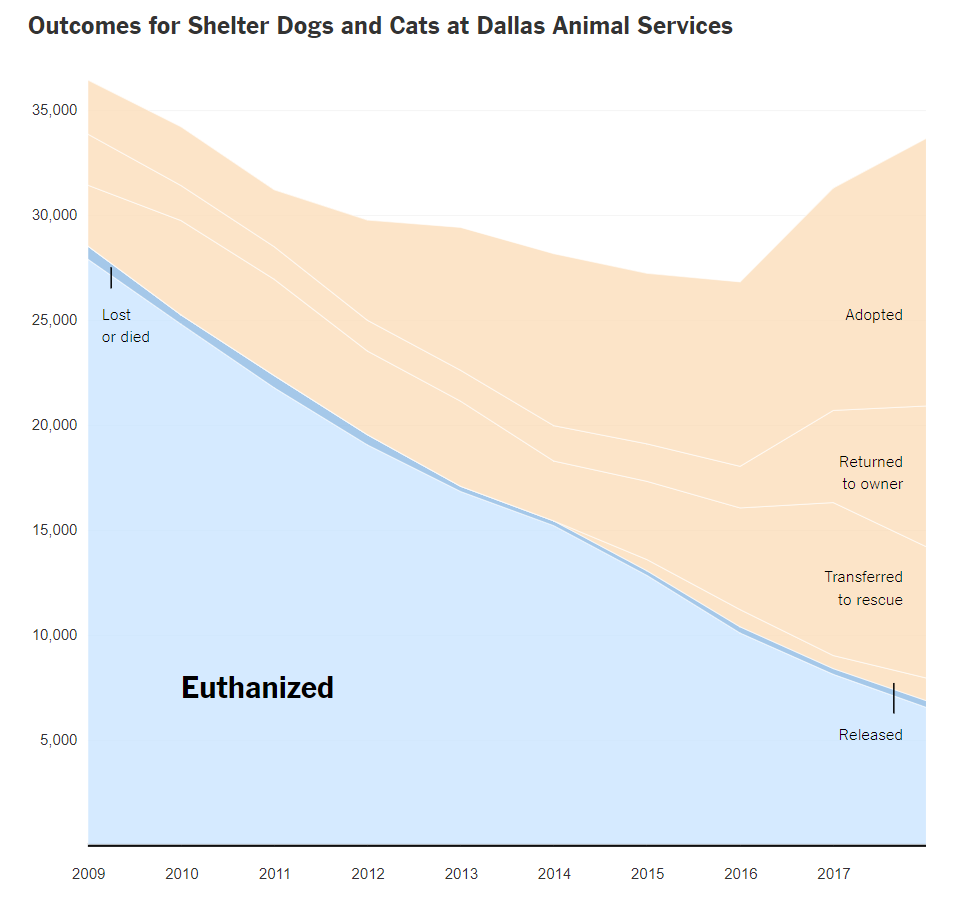
This graph originally appeared elsewhere on NYTimes.com. Dallas Animal Services operates a city shelter and has an “open admissions” policy, which means the agency is required to take in any animal, regardless of its health or behavior. Animals that are “adopted” are adopted directly from the shelter. “Transferred to rescue” means the animal has been transferred to an independent rescue agency.
Note: A stacked area time-series graph shows trends over time and compares the relative sizes of subgroups of a whole. The comparison may be of absolute numbers or percentages.
In the pet euthanasia graph, the time period is 2009 - 2018. Outcomes of shelter dogs and cats in the Dallas public shelter is divided into subgroups of those who were euthanized, adopted, returned to owner, transferred to rescue agency, released elsewhere, or lost or died. The subgroup statistics are the number of all shelter dogs and cats and sum to the total number of animals.