Log in
Sign up for FREE
arrow_back
Library
Physical and Chemical Changes in Digestion
By Katharine Rodriguez
star
star
star
star
star
Share
share
Last updated over 6 years ago
17 questions
Add this activity
1
1
1
1
1
1
1
1
1
1
1
1
1
zoom_in
1
2
zoom_in
1
Question 2
2.
The job of the digestive system is to _______.
deliver nutrients to cells.
break down large food particles into very small pieces.
make polysaccharides.
deliver proteins
3
zoom_in
1
Question 3
3.
When food is simply being broken down into smaller pieces by the teeth, this is an example of __________.
digestion
circulation
physical change
chemical change
4
zoom_in
1
Question 4
4.
Which of the following are NOT chemical changes that take place in the mouth?
teeth tearing food apart
Saliva starts to break the bonds of starches apart.
Enzymes in the saliva begin to break down food.
None of these are chemical changes.
5
zoom_in
1
Question 5
5.
What type of digestion takes place in the esophagus?
Physical
Chemical
Both
None
Question 6
6.
Which of the following is a physical change that takes place in the stomach?
Digestive enzymes break down food
Hydrocholoric acid in the stomach breaks food down into smaller pieces.
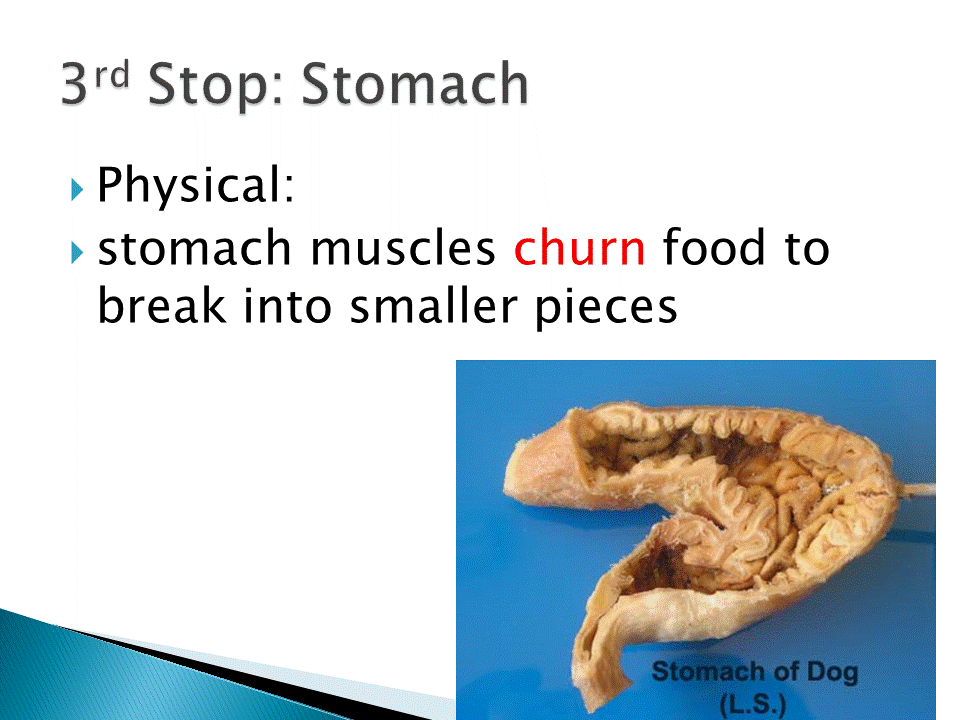
Muscle churning causes the food to break into smaller pieces
Enzymes from the liver break down fats
Question 7
7.
Which of the following is a chemical change that takes place in the stomach?
Muscle churning causes the food to break into smaller pieces.
Movement of the esophagus pushes food to the stomach.
Saliva breaks down carbohydrates into smaller pieces.
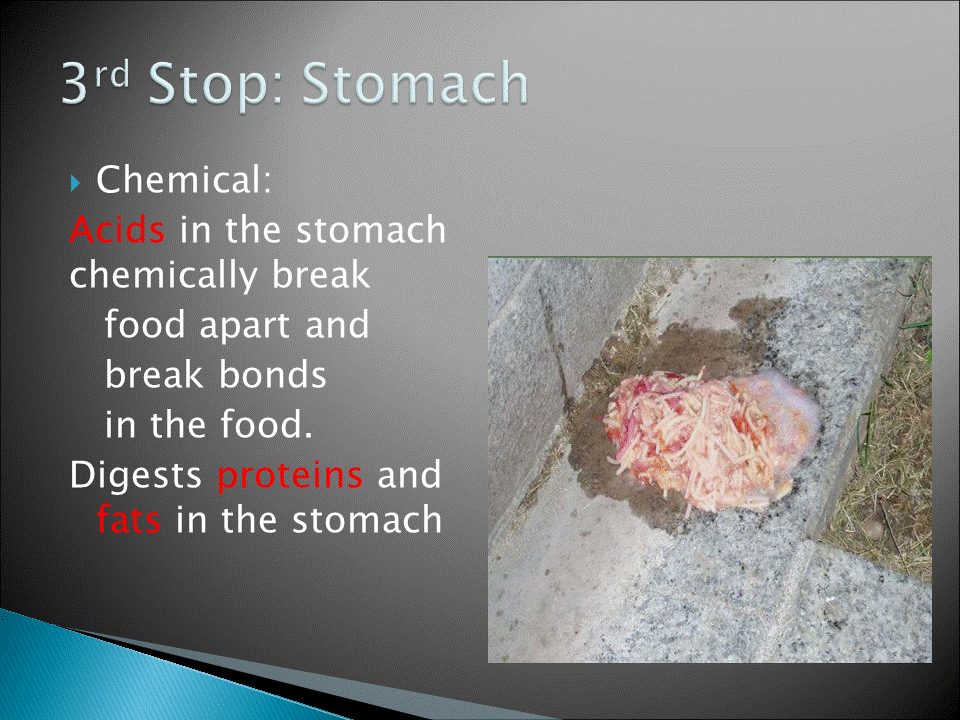
Acids in the stomach break down food into smaller pieces.
Question 8
8.
What kind of changes occur in the small intestine?
physical changes
chemical changes
covalent changes
Both physical and chemical changes
Question 9
9.
Which of the following is a chemical change that occurs in the small intestine?
Muscles churning to break food down into smaller pieces
Digestive enzymes from the liver, gall bladder and pancreas break down food into smaller pieces.
Burning of food to break down into smaller pieces
Absorption of food into the bloodstream
Question 10
10.
Most chemical digestion takes place in the small intestine.
True
False
Question 11
11.
In the small intestine, food is now small enough to enter the blood stream.
True
False
Question 12
12.
Why does food from the small intestine need to enter the blood stream?
So that it may be delivered to all of the body's cells for the cells to use for energy.
So that the food may be excreted through the excretory system.
So that it may be further broken down by the red blood cells.
So that it may be excreted through the respiratory system.
Question 13
13.
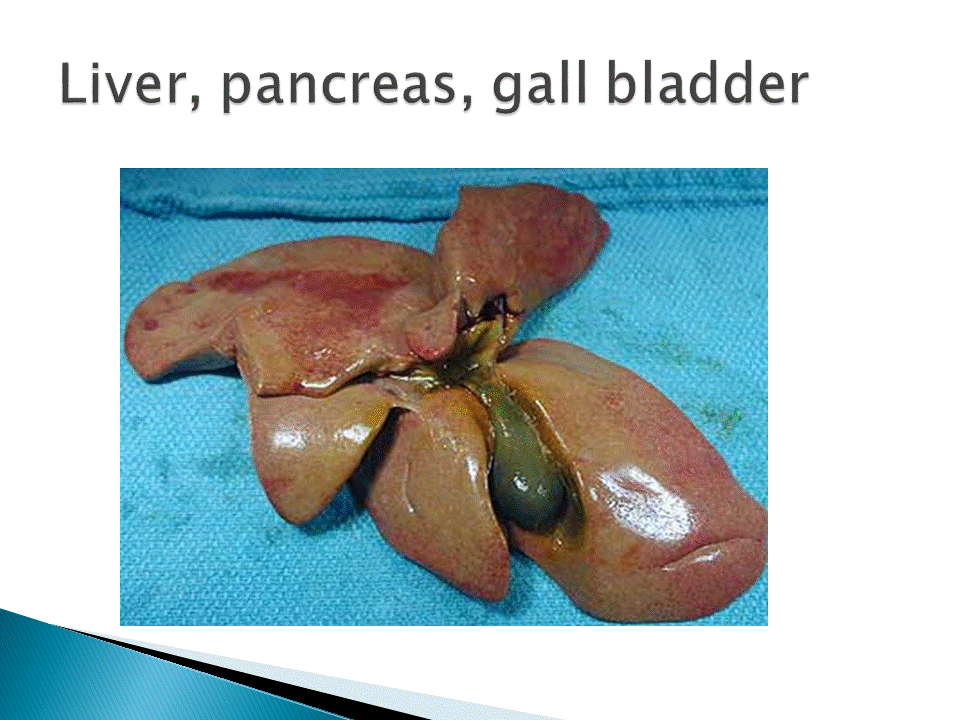
The Gall Bladderstores an enzyme that helps break down ______.
carbohydrates
proteins
fats
sugar
Question 14
14.
The function of the pancreas is to ___________.
break down fats
Churn food to break down into smaller pieces
it is a storage tank for enzymes
produce enzymes to break down food and help the body use sugar.
Question 15
15.
The liver makes ______________.
Insulin that helps the body use sugar.
Bile which helps the body break down fats.
Produces saliva which helps the body break down carbohydrates.
Hydrochloric acid which helps the body break down food.
Question 16
16.
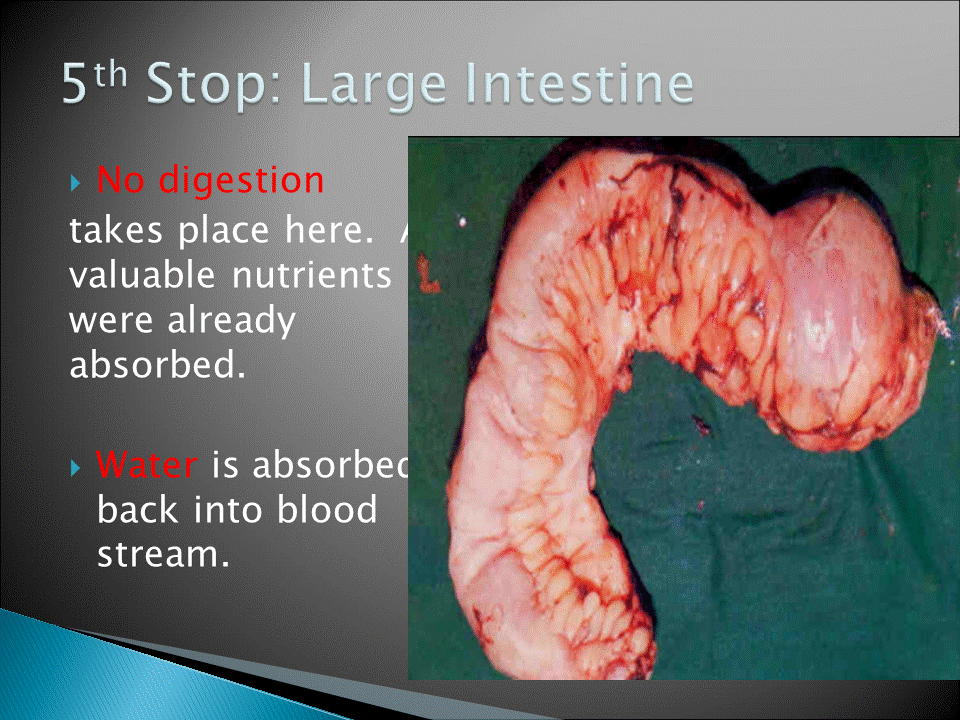
The function of the large intestine is to:
Absorb left over water from the undigested material
Absorb nutrients into the blood stream
Break down the remaining undigested material
The large intestine has no function.
Question 17
17.
What type of energy is being released from food as it is being broken down?
Kinetic
Radiant
Potential
Chemical
Question 1
1.
What is the difference between a physical change and a chemical change?
A. Physical changes happen at a molecular level and chemical changes are changes in the state of matter.
B. Chemical changes are reversible and physical changes are not.
C. Chemical changes happen at a molecular level and are not reversible. Physical changes are changes in state of matter and can be reversed.
D. Physical changes result from chemical reactions while chemical changes are changes to it's physical properties.