Grade 6 SS Midterm 2020
star
star
star
star
star
Last updated over 6 years ago
24 Nsɛmmisa

4
4
4
4
4
4
4
4
4
4
4
4
4
4
4
4
4
4
4
4
4
4
4
8
Based on this document, what was one of the effects of the Neolithic Revolution?
Neolithic societies could be considered more complex because:
One of the negative effects of the Neolithic Age mentioned in the comic could have been:
One change that is not a result of the Neolithic Revolution?
DOCUMENT #2
In 1754 B.C., Hammurabi conquered and united all the cities of Mesopotamia under his rule. Although he was a brutal warrior, his greatest achievement was his code of laws, which he had engraved on a towering stone monument. Hammurabi’s Code was not the first, but it was the most complete set of laws that has survived. It is important because it created a set of rules that helped to govern a civilization while trying to protect people even if they had little political power. It called for different punishments based on the class of the lawbreaker and the victim of the crime. In the Code, punishments often fit the crime by demanding and “eye for an eye” or a “tooth for a tooth”.
The following are three of the 282 laws in the Code of Hammurabi:
Law # 229. If a builder builds a house for some one, and does not construct it properly, and the house which he built fall in and kill its owner, then that builder shall be put to death.
Law # 230. If it kills the son of the owner, the son of that builder shall be put to death.
Law # 231. If it kills a slave of the owner, then he shall pay slave for slave to the owner of the house.
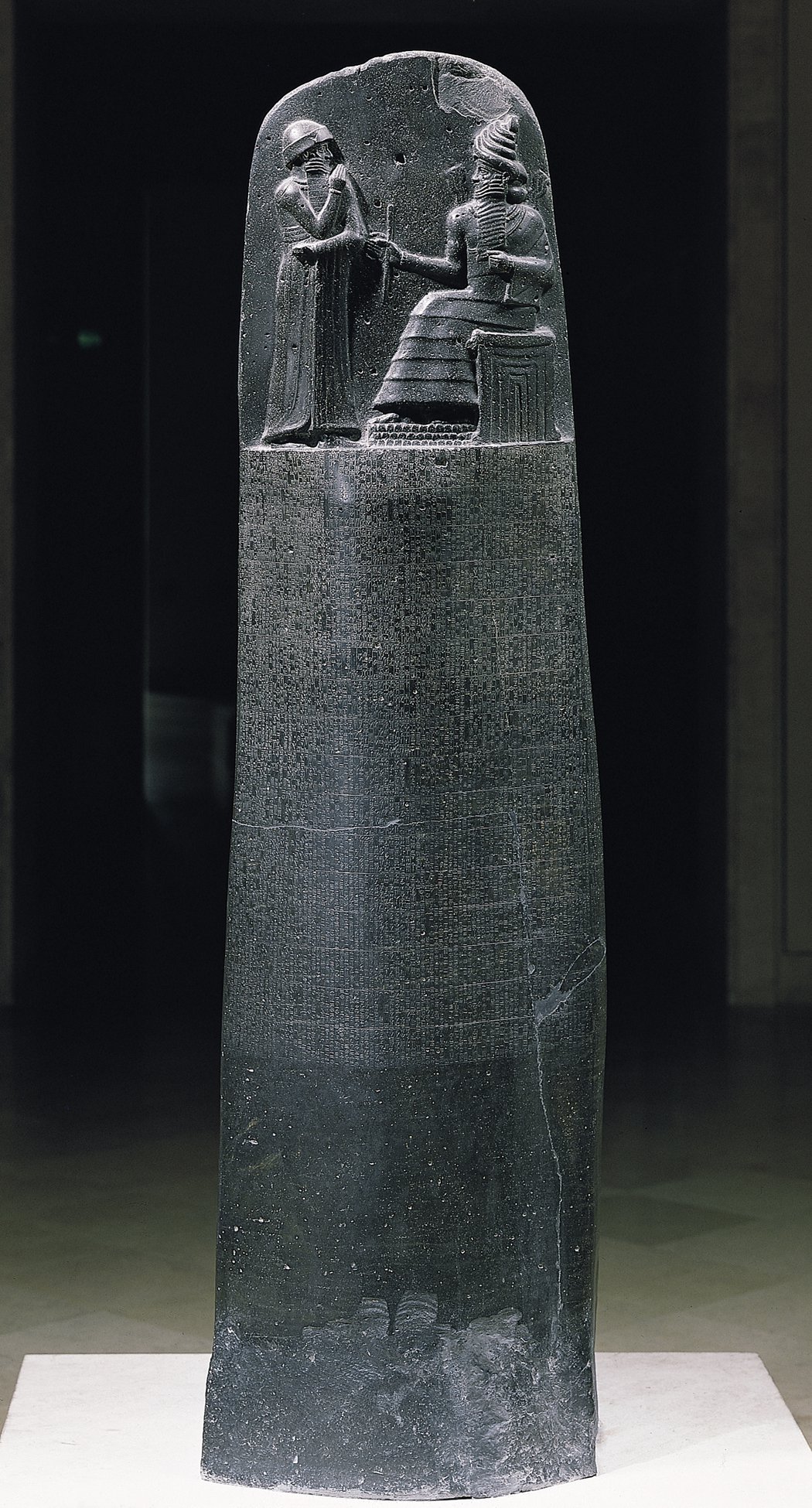
Although Hammurabi conquered all the city-states of Mesopotamia, he is most famous for:
Hammurabi's Code was significant to society because it established
What is meant by “eye for an eye” or “tooth for a tooth”?
Why were these laws so important?
DOCUMENT #3
Sumerians and Akkadians practiced polytheism, the worship of many gods. They believed that keeping the gods happy was the key to their own happiness and prosperity. On the other hand, if the gods were angry, they might bring suffering and disaster. Sumerians built huge temples called ziggurats. They believed these temples linked Earth with the heavens and linked people with the gods.
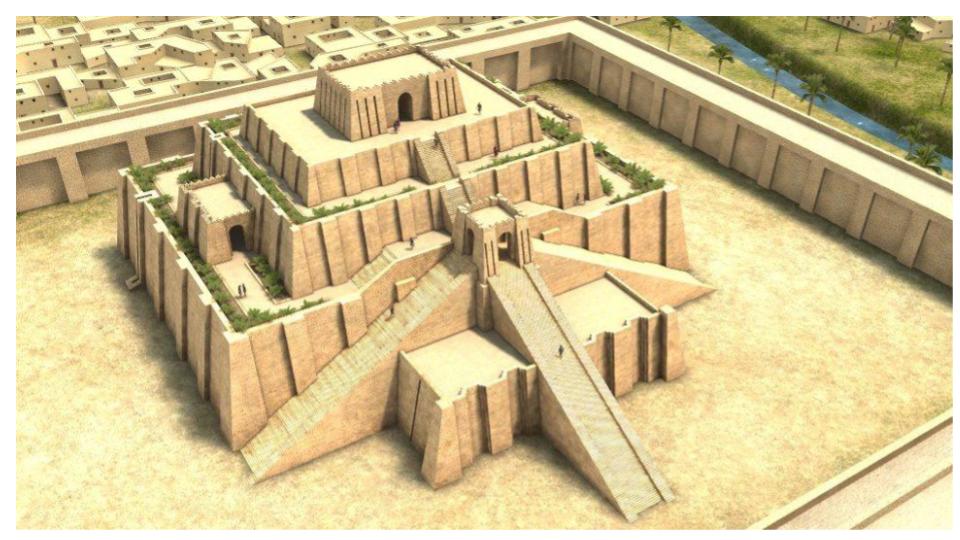
Ziggurats were buildings used for
Based on the size of the ziggurat and the number of stairs, what can be inferred about the value the Sumerians placed on their gods?
Based on the text, the Sumerians and the Akkadians looked to their gods for:
Ziggurats were mainly found:
DOCUMENT #4
Ancient Egyptian pharaohs, or god-kings, had workers build huge pyramids to serve as tombs. Egyptians believed that their kings could take their possessions with them after death. As a result, pharaohs were buried with their possessions. Below is a diagram of a pyramid.
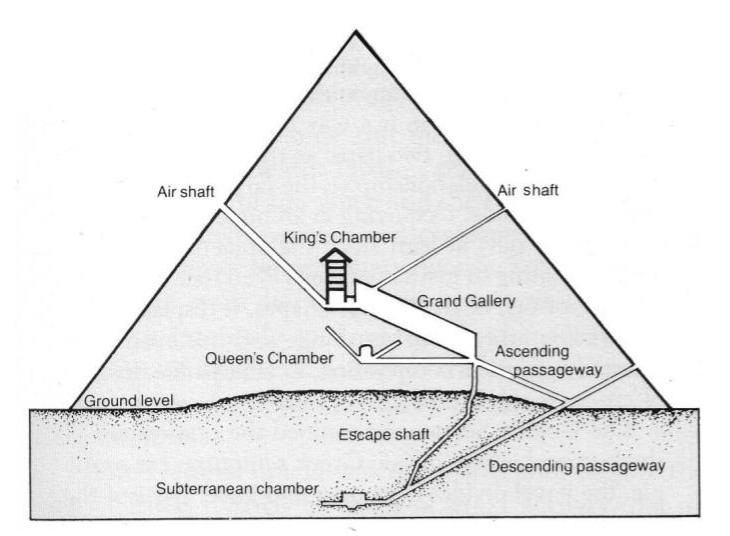
The building of elaborate tombs reflected the Egyptians’ belief in
According to the diagram, where was the king’s (pharaoh’s) chamber located?
The diagram shows many passageways in the tomb. One reason for this could have been
DOCUMENT #5
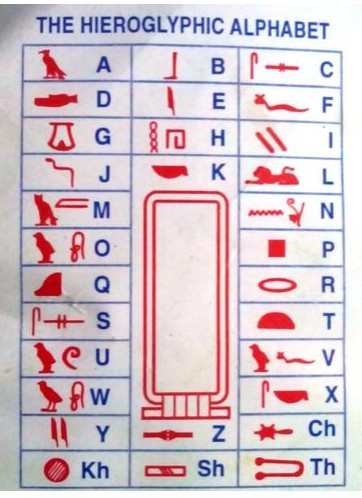
We know about the pharaohs of ancient Egypt because of the written records that were left. These records were kept in hieroglyphics, a system of writing that was based on pictures. Unlike Sumerian cuneiform writing, hieroglyphics represented ideas or objects, but could also stand for sounds. They could be carved into clay or stone, but could also be written on to papyrus, the first paper, which was developed by the Egyptians and made it easier to keep records.
What was hieroglyphics?
What invention did the Egyptians develop that made keeping records in hieroglyphics easier?
How did hieroglyphics differ from cuneiform?
Hieroglyphics was a complicated writing system. What was used to decipher this ancient form of writing?
DOCUMENT #6
Ancient Egypt
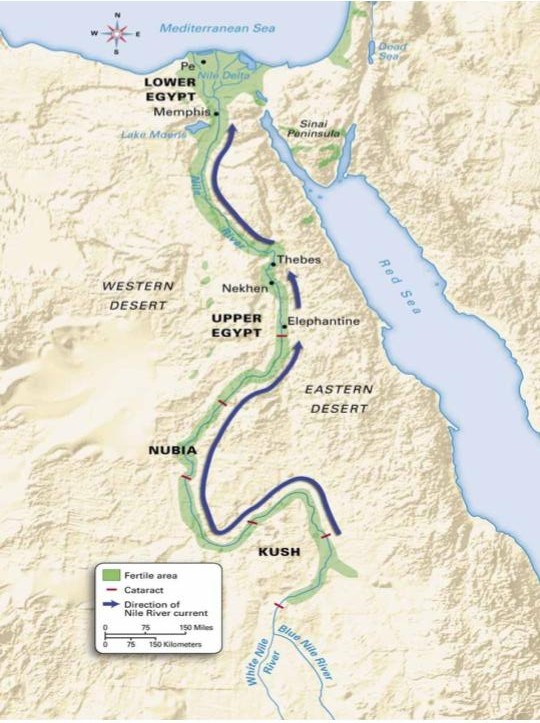
Using the map of Ancient Egypt, answer questions 20-23 below.
In which direction does the Nile River flow?
Where in Egypt is the land most fertile?
Into which sea does the Nile River flow?
If you were traveling from Pe to Memphis, about how many miles would you travel?
SECTION 2 - SHORT RESPONSE QUESTION (8 points)
Technology is a driving force throughout the course of human development.
Choose a group of early humans (Paleolithic/Neolithic) or a river valley civilization (Mesopotamia/Egypt). Then describe one technological development and explain how this development impacted their lives in two different ways.
(Use RACES) to complete this response in one paragraph.)