The History of Dogs (Due Mon., Jan. 13)
star
star
star
star
star
Last updated over 6 years ago
13 Nsɛmmisa

8
8
What do the images AND the title of this article tell us about the history of dogs?
On page 24, the author writes that thousands of years, wolves were "generally wary of people." She means that wolves mostly
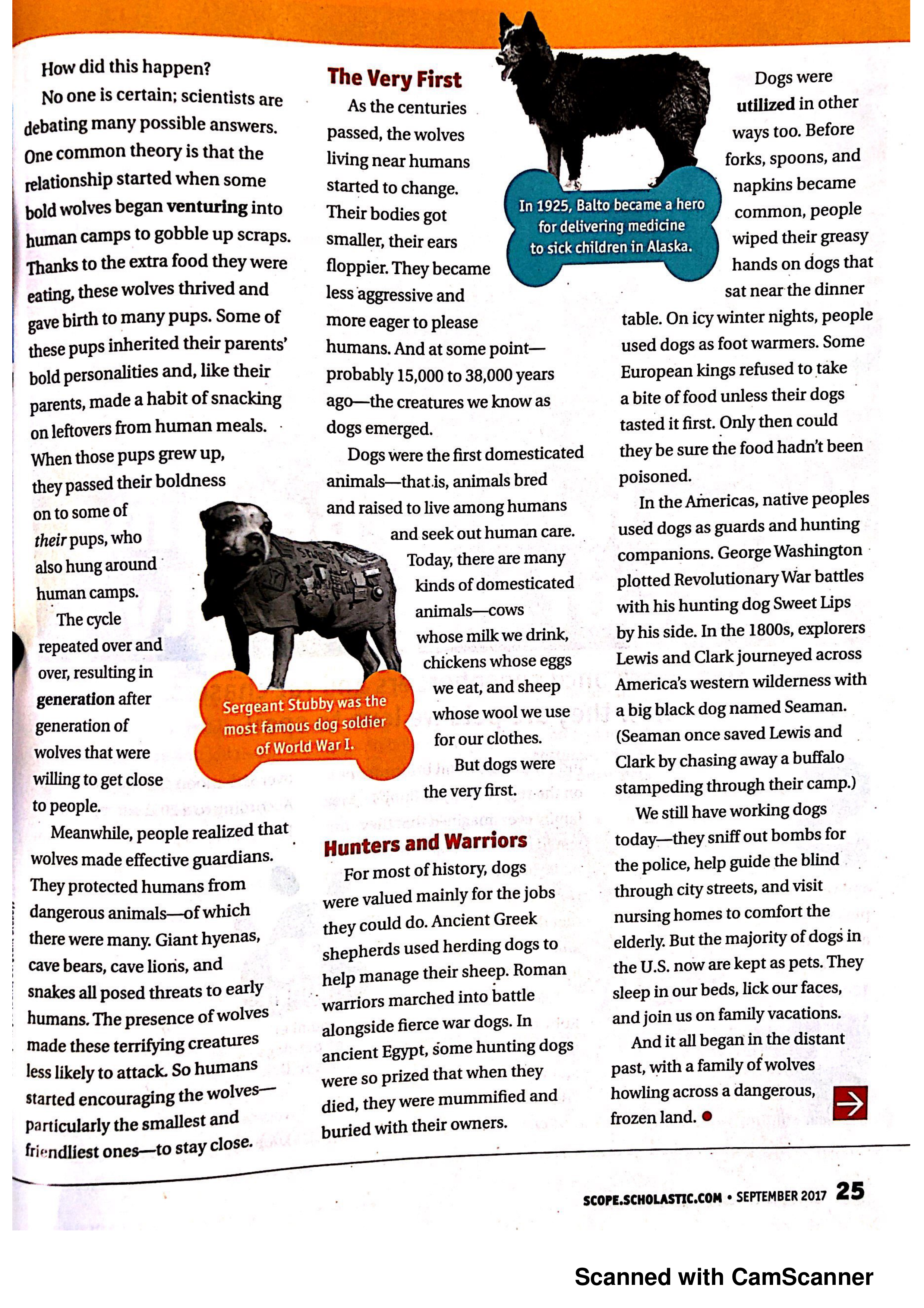
Which text structure is used in the section "Teaming Up" in this article?
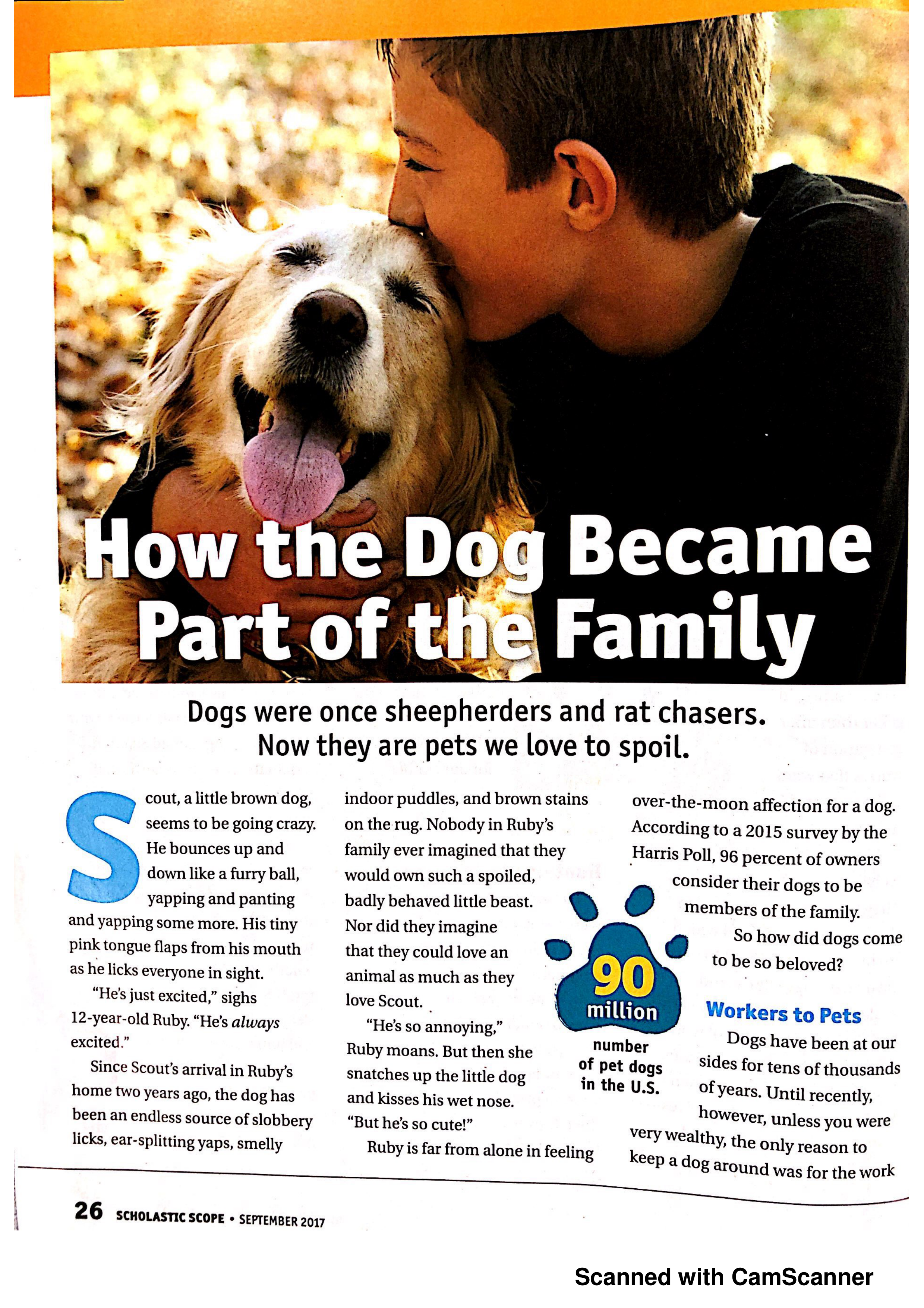
Why did the author include this statistic?
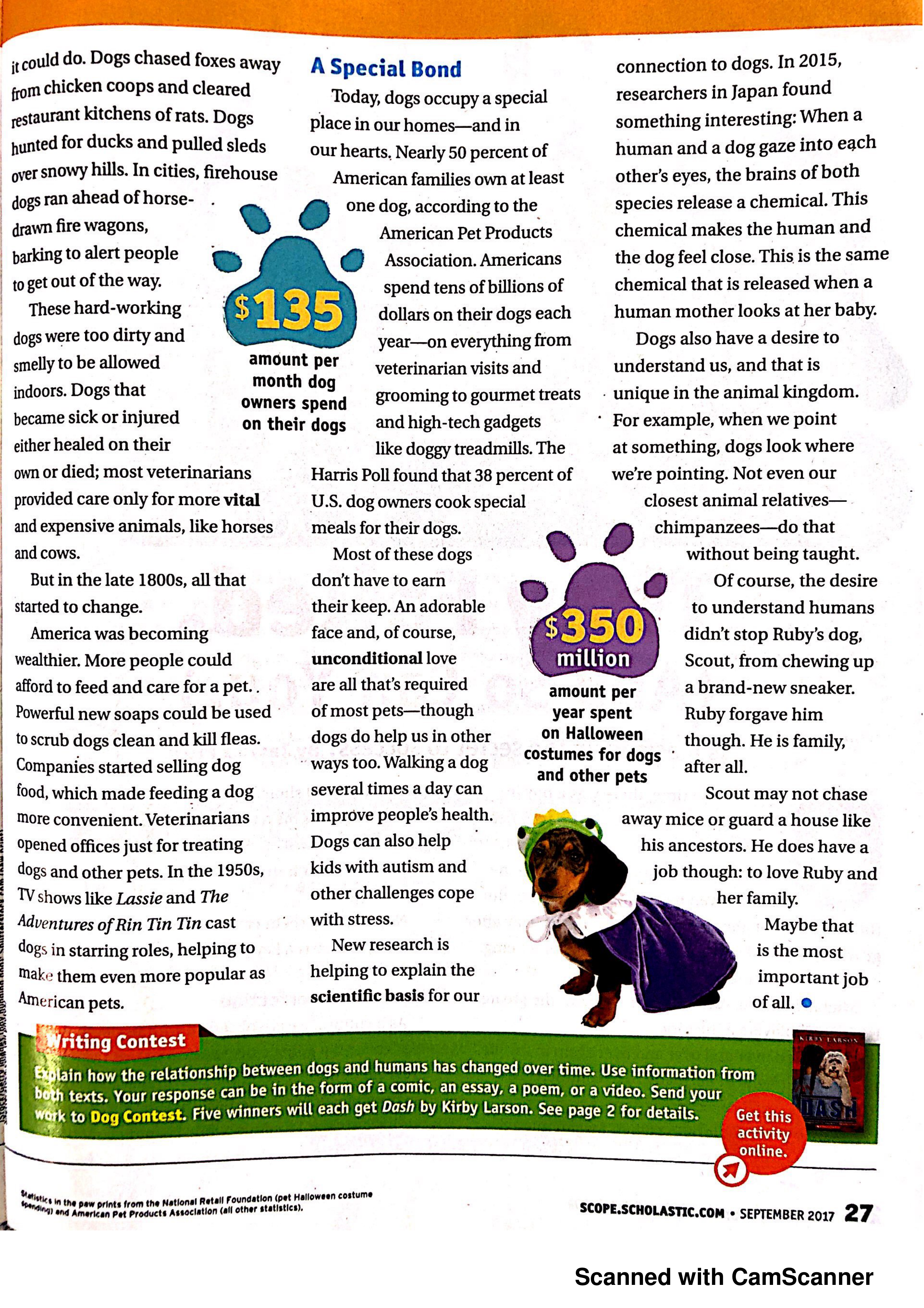
The dog-human relationship has changed a lot over the millennia. In what way has it stayed the same? Use text evidence from both articles to suppport your answer. Provide a solid paragraph using evidence and analysis.
What does the author compare and contrast in the section "Hunters and Warriors?"
Which section of "How the Wolf Became the Dog" expresses a similar idea to the central idea of the complete second article?
In this section, "Workers to Pets," which text structure is used?
What would be another appropriate subheading for the section "A Special Bond?"
The paw print on page 27 notes that each year, people spend $350 million on Halloween costumes for dogs and other pets. This supports the idea that today,
Which of the following expresses a central idea of the article "How the Dog Became Part of the Family?"
All of the following statements are supported by information in both articles EXCEPT which?
In this second article, Which answers show TWO causes of the following effect: "In the late 1800s, more Americans started keeping dogs as pets." CHOOSE TWO.